🎙️Ecstatic to share a podcast interview with @drjohnm from @Sensible__Med about analytic flexibility and nutritional epidemiology.🍎🥩
Hear the podcast: https://t.co/vpUY5tVp3Z
Read the paper: https://t.co/cGwWK8mlWZ
@MacAnesthesia@HEI_mcmaster@machealthsci
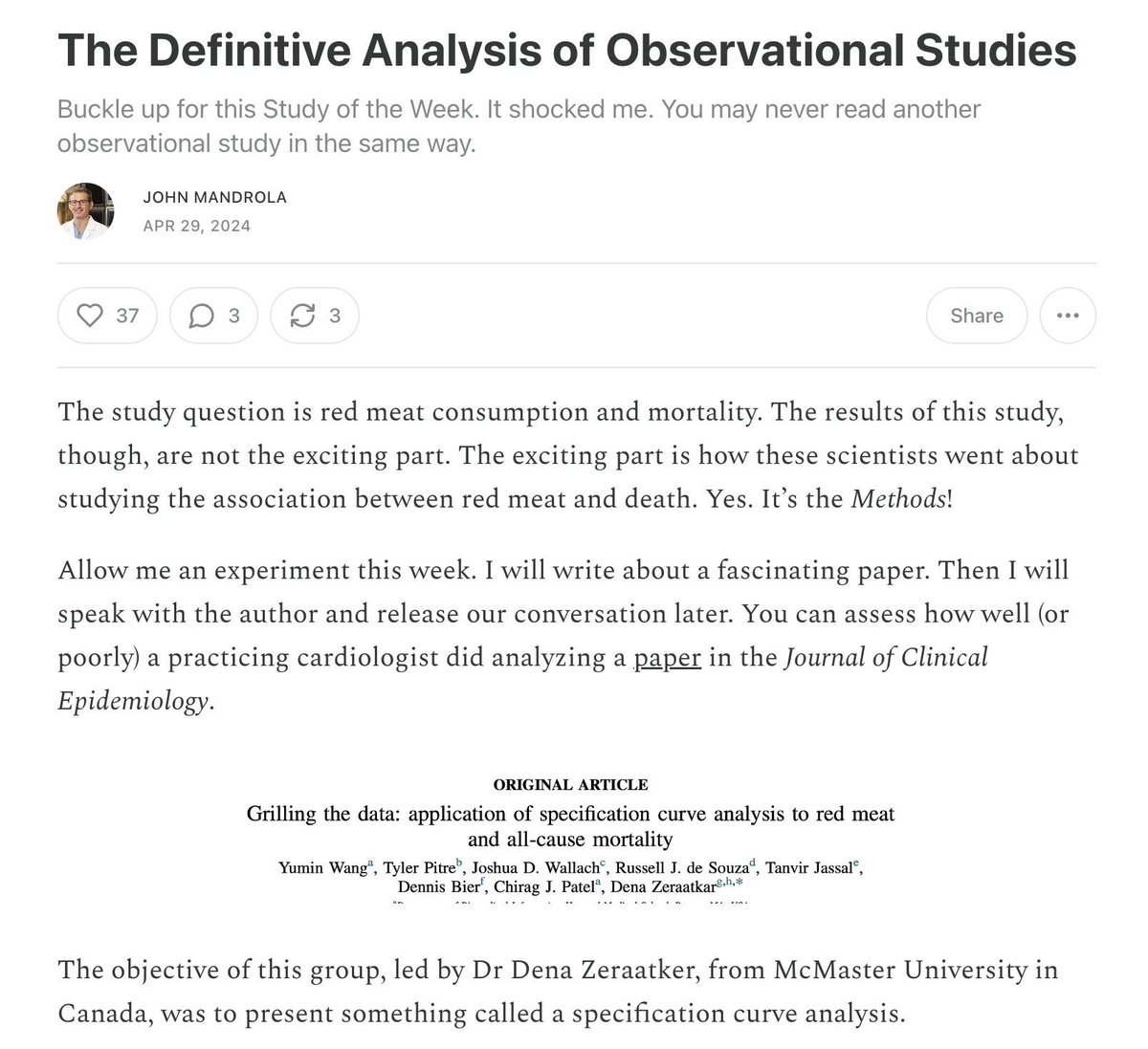
You all. I found a beautiful study to write about @Sensible__Med. A new way to analyze observational studies.
Gosh, I am excited. Not only to find this study but also to talk with senior author @DenaZera
Post here https://t.co/vcLCk9UJUO
Podcast tomorrow.
💊 What do drug treatments actually offer people living with fibromyalgia?
Our review is out in BMJ Medicine.
Bottom line: benefits are mostly small, and evidence is low certainty. Honest conversations about expectations are key.
https://t.co/rDNaSQunYr
Our @BMJMedicine network meta-analysis (151 trials) found no moderate or high-certainty evidence that any drug provides important benefits for fibromyalgia.
Some drugs may help some patients - evidence is low certainty and benefits are typically small:https://t.co/aa7aVEVWQT
Grilling the data: application of specification curve analysis to red meat and all-cause mortality
https://t.co/pH1Bi579LC via @DenaZera et al
&
The Definitive Analysis of Observational Studies
https://t.co/rHxgzblojz via @drjohnm
A systematic review takes one to two years. Very little of that time goes to thinking. It goes to moving citations between disconnected tools.
We built CoreSR to strip that out and return the reviewer's time to judgment.
https://t.co/iv5AnOM8WE
https://t.co/eszXttb0Jk
Weeks of manual synthesis reduced to less than 10 minutes.
Watch how CoreSR runs a Bayesian NMA + automated GRADE assessment instantly.
Watch below 👇 #EvidenceBasedMedicine@GuyattGH@Bram_Rochwerg@DenaZera
Vist https://t.co/0VpU3A6PYQ
"A significant fraction of the reporters covering the FDA and pharmaceutical industry have developed, over years of access journalism, a set of relationships and sympathies that align them more closely with the companies they cover than with the regulatory mission"
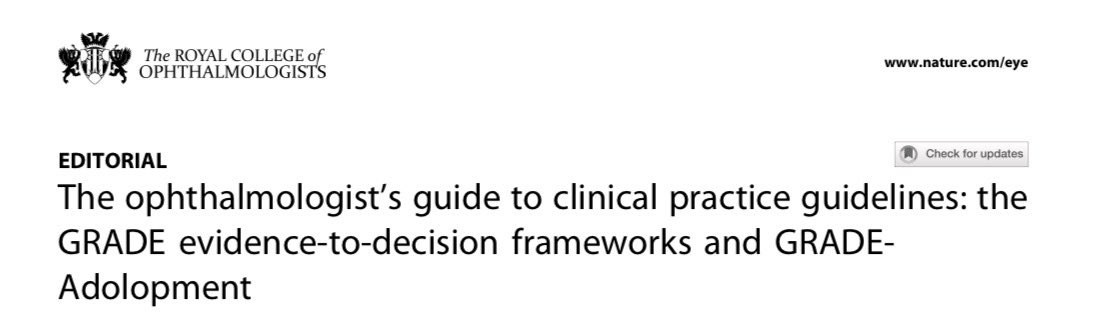
👁️ Our editorial outlines how ophthalmologists, researchers, and guideline developers can use the GRADE evidence-to-decision (EtD) and the GRADE-Adolopment to create trustworthy clinical practice guidelines.
🔗 Full editorial: https://t.co/YBpDHS5dlo
NEW @bmj_latest research by @DenaZera and colleagues reviews evidence from randomised trials assessing the effectiveness of strategies to deprescribe benzodiazepines and closely related sedative hypnotics
https://t.co/LpCLEHgPnP
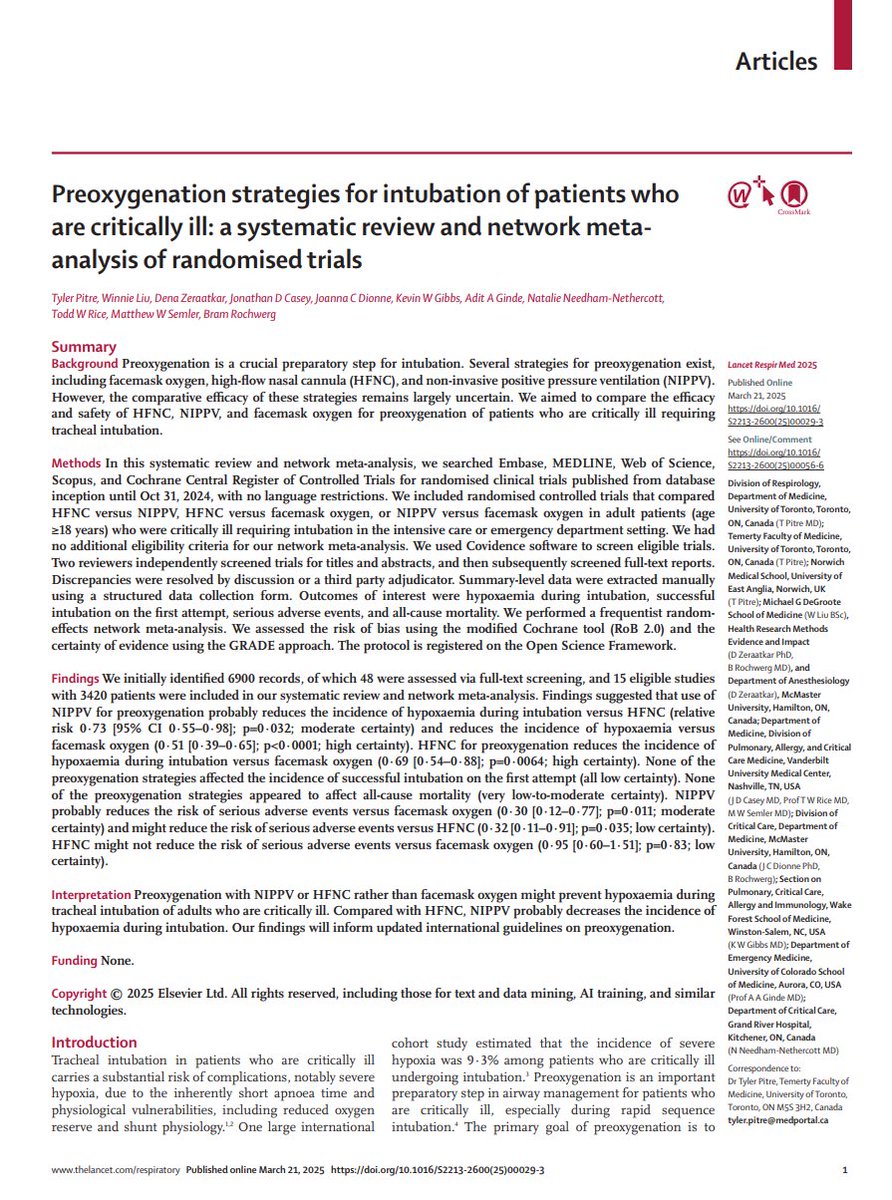
🚨 Excited to share our new paper in @LancetRespirMed 🚨
Our systematic review & network meta-analysis compares preoxygenation strategies for critically ill patients needing intubation. NIPPV tops HFNC & facemask in reducing hypoxaemia.
🔍 Study Highlights
• Systematic review & network meta-analysis of 15 RCTs (n=3420)
• Compared HFNC, NIPPV, and facemask oxygen for preoxygenation
• NIPPV likely best at reducing hypoxaemia during intubation
– vs HFNC: RR 0.73 (moderate certainty)
– vs facemask: RR 0.51 (high certainty)
• HFNC better than facemask: RR 0.69 (high certainty)
• No strategy improved first-attempt intubation success
• NIPPV may reduce serious adverse events vs HFNC/facemask
• No clear mortality difference between methods
• Data used to inform upcoming international airway guidelines
🧠 Implications: NIPPV may be preferred in high-risk or critically ill patients; findings support evidence-based guideline updates
https://t.co/rlIWdLUzWM
@UofT_DoM@MacDeptMed@Bram_Rochwerg@DenaZera@HEI_mcmaster
🚨 New Clinical Guidelines Alert 🚨
A major review recommends against commonly used interventional procedures like epidural injections, nerve blocks & ablations for chronic spine pain
Why? ❌ Similar benefits to sham, potential risks, & high costs
https://t.co/NAhSj0wEPM
What leads us to ignore experts isn't their knowledge. It's their arrogance.
Evidence: Scientists are more credible when they admit what they don't know, acknowledge what they got wrong, and update their views.
Trust is earned by expressing humility, not by asserting authority.
🇨🇦 A recent webinar explored how @AMMICanada, @GovCanHealth and @Firstline are partnering to develop evidence-based national antimicrobial prescribing guidelines.
We’re proud to work with these incredible teams, including the AMMI Guidelines Panel: Chair: Dr. @deb_yamamura, Dr. @DenaZera Dr. Mark Loeb, Dr. Nicole Le Saux, Dr. Peter Daley, Dr. @rwittmer3 , Dr. @ATseChangMD , Dr. @BRxAD , Dr. Philippe Morency-Potvin, Dr. Kevin Afra, Dr. Alyssa Ness and Dr. @TimLauRx .
View the full presentation slides here: https://t.co/m10nR9JjSk
Cognitive behavioral therapy aids patients with long COVID, finds a recently published review from Dena Zeraatkar (@DenaZera), assistant professor @MacAnesthesia and @HEI_mcmaster, and colleagues.
https://t.co/t5Z8KrAh2U
A new study by researchers with @MacAnesthesia and @HEI_mcmaster has found cognitive behavioural therapy and a program of physical and mental rehab likely improve symptoms of long COVID.
https://t.co/enacwzeoKt
Led by researchers at @McMasterU, a new study suggests that rehabilitation and talk therapies can help reduce long Covid symptoms and that “no compelling evidence supported the effectiveness” of other treatments, including certain drugs or oxygen therapy.
https://t.co/qkgyQj4cGZ