PhD student at the Fischer-Friedrich Lab, @FischerFriedLab, PoL, TU Dresden. Looking at cellular proliferation and epithelial-mesenchymal transition in cancer.
My PhD work is now available in bioRxiv! https://t.co/IvHQxxPyul We investigated how mesenchymal-epithelial transition affects tumor growth, focusing on cell adhesion signaling pathways and morphology-driven changes in the interactions with immune cells ⬇️🧵@FischerFriedLab
A new CRISPR approach developed by a team led by Jennifer Doudna can selectively destroy cancer cells carrying p53 mutations—one of the most common drivers of cancer—while sparing healthy cells. A promising step toward tackling “undruggable” cancers.
https://t.co/XrHGED9UHy
Congrats to our latest graduate Gina Dimari 🤩🥳💐@FischerFriedLab@PoLDresden freshly defended @tudresden_de Faculty of Biology. Thanks to collaborators of the project Alexander Wurm and Anke Fuchs recently published @iscience
Why do secondary #tumors go for #MET during the metastatic cascade? Our new study suggests that immune evasion—rather than faster proliferation—might give them the edge.
👉 https://t.co/P6LcdmRSqX
#CancerResearch#TumorBiology#Immunology#Metastasis
Exciting news for new #students! This year our #international 'Physics of Life' MSc program will offer 3 #scholarships - share and spread the word! 🤓
Learn more: https://t.co/6xlVZOinsS
Students receive €300/month for 1 year, funded by Friends & Supporters of TU Dresden
The biotech company Colossal Biosciences declared on Monday it had “resurrected” the dire wolf. The bold claim was immediately met with skepticism and outrage from scientists on social media. https://t.co/PlEEsbxO7E
Taking phones off the internet boosts mental health.
People were randomly assigned to block mobile internet for 2 weeks. They socialized, exercised, and read more—and became happier, less depressed & anxious, and more focused.
Being unglued from devices is good for well-being.
☕️Afonso et al. show that, during #anaphase, chromosome movement can be driven by large cytoplasmic flows. These dynein-dependent cytoplasmic flows scale with cell size, slowing in smaller cells, thereby scaling anaphase.
https://t.co/IXOpxXJOKv
#YerbaMate makes the third most popular caffeinated drink in the world, but it’s unrelated to tea and coffee. The first reconstruction of its genome is helping us understand how multiple species have evolved to synthesise caffeine.
https://t.co/ACp25n4XeW
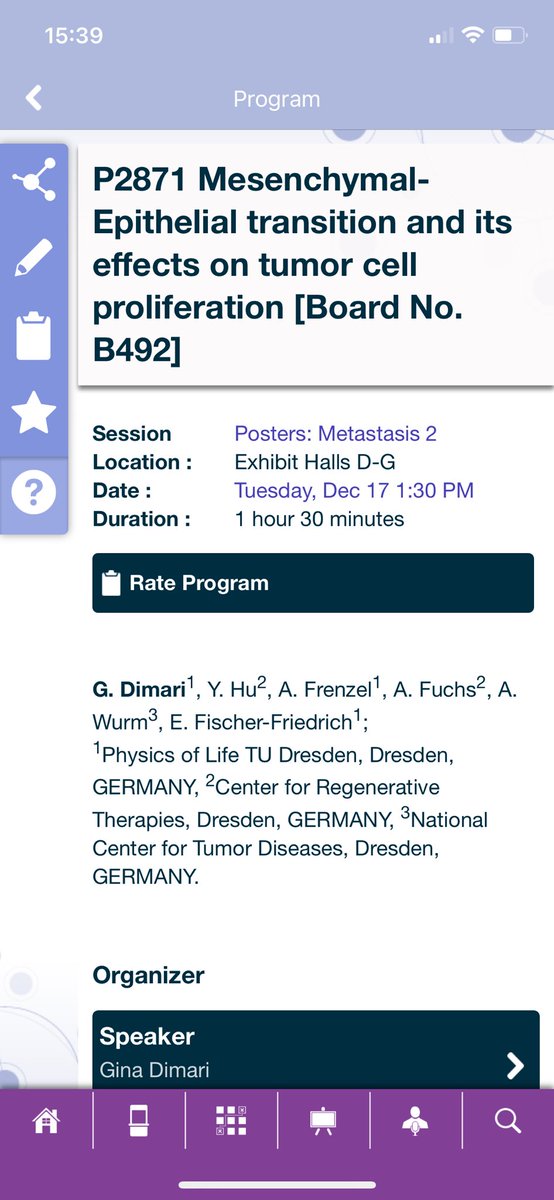
I’m extremely excited to be in sunny San Diego ☀️ attending #CellBio2024 🤩 if you are here too and interested in #EMT, #CancerMetastasis and #CellAdhesion signaling come check my poster P2871 on Tuesday at 1:30 pm at board 492 🙌🏻
This year’s #NobelPrize in Physiology or Medicine honours two scientists for their discovery of a fundamental principle governing how gene activity is regulated. They discovered microRNA, a new class of tiny RNA molecules that play a crucial role in gene regulation.
A @sigtrans_sttt review to get you talking! 💬
A team from Zhengzhou University sheds light into the temporal mechanisms of pre-metastatic niche formation such as #EMT, immunosuppression, #ECM remodeling, and metabolic reprogramming.
📍 https://t.co/CihW70f3UP
@Rajendra_K01 @FischerFriedLab We haven't checked for TGFb signaling in this particular case, however overall RNA changes correlate with the opposite effect of a TGFb-induced EMT as we showed with GSEA (Fig1 and 7).
My PhD work is now available in bioRxiv! https://t.co/IvHQxxPyul We investigated how mesenchymal-epithelial transition affects tumor growth, focusing on cell adhesion signaling pathways and morphology-driven changes in the interactions with immune cells ⬇️🧵@FischerFriedLab
@HJRBio@FischerFriedLab up to a comparable level with MET-induced spheroids. We also see the biggest proliferative difference in degradable matrices, where migration plays a bigger role.
@HJRBio@FischerFriedLab Our main hypothesis is that reduced migratory ability caused by MET could affect access to nutrients and ECM adhesion within the spheroid. Indeed, when blocking actomyosin in mesenchymal spheroids (what impeds migration) we see reduced proliferation 1/2
@Ella_Maru@FischerFriedLab In the case of cell-based therapies one could guess so. However I am not an expert in that field to be able to give you a proper answer :)
And finally, in co-culture with PBMCs, MET-induced tumor spheroids showed reduced PBMC-induced apoptosis and PMBC-infiltration. Most likely due to confined morphology and changes in immunomodulatory molecules. Want to know more? 😁🧐Read our preprint on https://t.co/kmEVfBiCAD