We at BioDimension focus on creating lab-made cutting edge Bioprinted human tissues that would redefine preclinical drug development and replace animal testing in cosmetics and chemicals.
The UK government has partially banned animal testing for cosmetics. But @CrueltyFreeIntl says this covers just 20% of cosmetic chemicals.
We believe that @UKParliament's efforts are a good start to a global ban.
https://t.co/f2VeYU7Js1
#AnimalTesting#cosmetics#future
Why test on the poor animal when it is unclear how much our understanding of aging mechanisms from short-lived model organisms applies to long-lived animals like humans?
This will open the door to animal alternatives and novel drugs!
#biology
Dr Laura Bramwell is investigating the potential for synthetic female sex hormones to target & reduce cell deterioration to provide a springboard for preventative treatments for the common, chronic diseases of ageing.
Help this project - https://t.co/vZM5zn6nBd
#BrighterFuture
Using human cell liver models for testing helps produce a more effective drug than the traditional animal-testing process. The trend of adopting new animal alternatives like artificial tissue models for drug research is rising and this will continue.
@DerbyUni#biotech
Dr Ali Kermanizadeh at @DerbyUni is using a human cell liver model to test how effectively nanomedicine treats liver disease. The nanomedicine is designed to deliver the drug ‘cargo’ slowly & continuously, meaning fewer invasive injections
https://t.co/hRWSrJZmjL
#BSW2023
Read the research article produced by authors from @salkinstitute to know more about modeling neuropsychiatric disorders
"Modeling neuropsychiatric disorders using human induced pluripotent stem cells"
https://t.co/EnF8dLh2k8
A well-written article by @AFR_UK shows how unreliable animal testing could be in assessing disease models for neuropsychiatric disorders.
Yes, artificial lab-made cells can provide human-relevant results for mental health problems.
#mentalhealth
https://t.co/m8e7CF29ST
Postmortem brains are better disease models but they lag in showing the changes that take place in the development of neuropsychiatric disorders which happens early on.
People with different opinions both biased and unbiased in this transition to adopting animal alternatives in preclinical testing are present. But the animal-testing industry is disrupted and the future is more human-relevant alternatives.
#tech
https://t.co/aN8ycyu4q9
"Cells sense and respond to the geometry of surfaces they are exposed to" - @amir_zadpoor chair and professor at @tudelft
These findings can be used in further finding effective tissue repair with less recovery time using #3Dprinting and biomaterials.
https://t.co/r01zAYAqgT
A new #discovery of 3D printing can stimulate cell growth and organ repair!!🔍
A team of researchers from @tudelft found that cells respond to the shape of the surface surrounding them. Few shapes can stimulate the growth of new tissues.
You can find the research article below.
A lot more awareness has to be spread around this topic. All the animal alternative technologies which are cost-effective and efficient in providing reliable results are available. Adaptation should be faster. 🌎
Safe, reliable #animalfree cosmetic testing methods exist and are already being used by beauty industry leaders, yet global regulators are lagging in accepting these methods. 👎
We're promoting a paradigm shift from animal-models to non-animal methods as the gold standard. 🧪🧫
A bioengineered skin of human skin created for grafting has been developed by @Columbia researchers led by Dr. Hasan Erbil Abaci @AbaciLab .
Click the link below to read more:
https://t.co/OQpWuiffRH
@ScienceAdvances@NIH#Engineering#bio
4D Bioprinting is garnering a lot of attention as the volume of scientific literature has increased by ~130% in the last five years. Read the below article by @BusinessWire to know more.
https://t.co/CVXi40Rj3e
#3Dprinting#research#biotech
@thePSCI Its with our utmost gratitude we thank you for this recognition and validation of our hard work.
We at Biodimension Technology Private Limited will continue to strive for our common goal of animal-free testing and redefining the medical research in a more humane way.
We proudly announce with our utmost gratitude for @thePSCI recognizing our effort in our mission towards animal-free medical research !!!
https://t.co/xnBmHsoa3A
There are four types of preclinical testing that you should be aware of:
- In Vivo
- In Vitro
- Ex Vivo
- In Silico
In Vivo and In Vitro are the largely used modes of #preclinical testing.
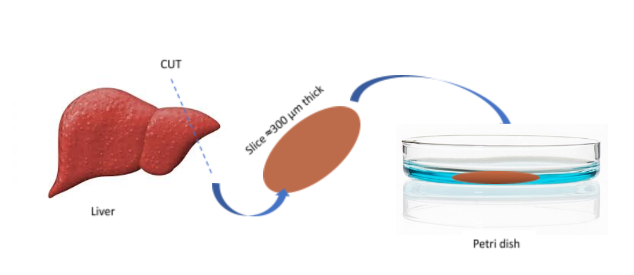
Ex Vivo means "out of the living". Testing is done by extracting tissues or cells naturally and directly from animals. The experimentation or measurement is done in or on tissue with minimal alteration of natural conditions.