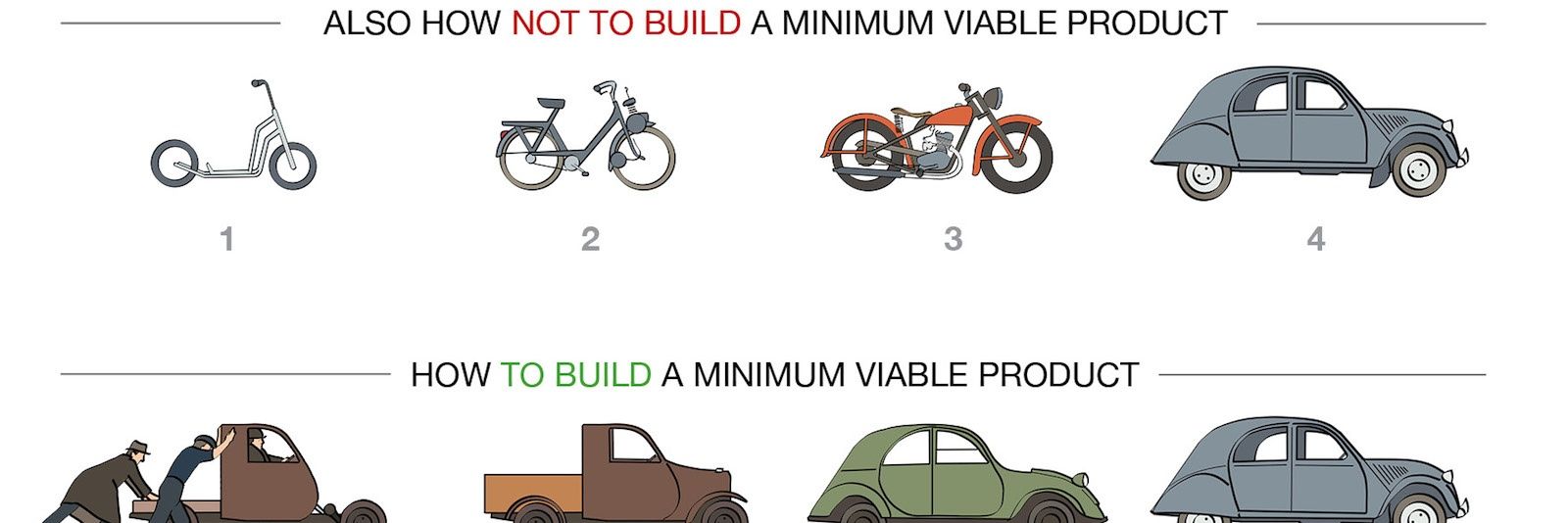
Spotted in the NYC subway. “Zero screen time.” An iPod Shuffle ad in 2026.
When we built the iPod, the goal was the technology disappeared and you could have your music wherever you were. 1,000 songs in your pocket.
Now we’re living through a moment where people are actively looking for ways to disconnect from the infinite feed, algos, and constant notifications. That doesn’t mean technology is bad. It means the best technology understands when to step back.
Not every problem needs another screen, another menu, or another layer of complexity. Constraints create freedom (read: @DavidEpstein new book Inside the Box). And often removing features creates a better product than adding them.
The future of technology shouldn’t just be more engagement. It should help us be more human.
41 kidnappings of crypto holders in France in 3.5 months of 2026.
Why?
🥖 French tax officials selling crypto owners' data to criminals (Ghalia C.) + massive tax database leaks.
Now the state also wants IDs and private messages of social media users.
More data = More victims.
$NKE CEO recently purchased approximately $1 million in shares shortly before the company announced a 1,400-job reduction, primarily in its technology segment, as part of its “Win Now” turnaround strategy.
In 2026, Nike has laid off more than 2,100 employees as part of a broader restructuring effort, aimed at addressing slowing global sales and a projected around 20% decline in China.
Despite China challenges, North America is showing signs of recovery, revenue grew +3% YoY, with wholesale up +11%, driven by stronger partnerships with key retailers such as Dick's Sporting Goods, Foot Locker, and JD Sports. This marks the first time in two years that Nike achieved growth across all channels in the region.
Additionally, the Running category grew +20% globally, validating its athlete-led, segmented, and integrated marketplace approach.
Nike is actively restructuring its cost base to restore profitability. The company recorded a $230-$300 million severance charge, reflecting workforce reductions and operational changes across supply chain, technology, and its Converse division.
The FIFA World Cup (June–July) is expected to provide a boost to sales, particularly in North America. However, the financial impact is more likely to materialize in FY2027 and extend into FY2028, rather than providing an immediate uplift.
As has happened with other companies, insider buying can be a meaningful signal. The CEO has now invested roughly $2 million in the stock within six months, suggesting confidence in the long-term turnaround.
Is this a signal that the stock is undervalued today, or is it still too early?
Anthropic is low key onto something with Claude Design
great onboarding experience (uploaded our design system so it maintains consistent branding)
and then one-shotted a logo animation for extend
Another week on the road meeting with a couple dozen IT and AI leaders from large enterprises across banking, media, retail, healthcare, consulting, tech, and sports, to discuss agents in the enterprise.
Some quick takeaways:
* Clear that we’re moving from chat era of AI to agents that use tools, process data, and start to execute real work in the enterprise. Complementing this, enterprises are often evolving from “let a thousand flowers bloom” approach to adoption to targeted automation efforts applied to specific areas of work and workflow.
* Change management still will remain one of the biggest topics for enterprises. Most workflows aren’t setup to just drop agents directly in, and enterprises will need a ton of help to drive these efforts (both internally and from partners). One company has a head of AI in every business unit that roles up to a central team, just to keep all the functions coordinated.
* Tokenmaxxing! Most companies operate with very strict OpEx budgets get locked in for the year ahead, so they’re going through very real trade-off discussions right now on how to budget for tokens. One company recently had an idea for a “shark tank” style way of pitching for compute budget. Others are trying to figure out how to ration compute to the best use-cases internally through some hierarchy of needs (my words not theirs).
* Fixing fragmented and legacy systems remain a huge priority right now. Most enterprises are dealing with decades of either on-prem systems or systems they moved to the cloud but that still haven’t been modernized in any meaningful way. This means agents can’t easily tap into these data sources in a unified way yet, so companies are focused on how they modernize these.
* Most companies are *not* talking about replacing jobs due to agents. The major use-cases for agents are things that the company wasn’t able to do before or couldn’t prioritize. Software upgrades, automating back office processes that were constraining other workflows, processing large amounts of documents to get new business or client insights, and so on. More emphasis on ways to make money vs. cut costs.
* Headless software dominated my conversations. Enterprises need to be able to ensure all of their software works across any set of agents they choose. They will kick out vendors that don’t make this technically or economically easy.
* Clear sense that it can be hard to standardize on anything right now given how fast things are moving. Blessing and a curse of the innovation curve right now - no one wants to get stuck in a paradigm that locks them into the wrong architecture. One other result of this is that companies realize they’re in a multi-agent world, which means that interoperability becomes paramount across systems.
* Unanimous sense that everyone is working more than ever before. AI is not causing anyone to do less work right now, and similar to Silicon Valley people feel their teams are the busiest they’ve ever been.
One final meta observation not called out explicitly. It seems that despite Silicon Valley’s sense that AI has made hard things easy, the most powerful ways to use agents is more “technical” than prior eras of software. Skills, MCP, CLIs, etc. may be simple concepts for tech, but in the real world these are all esoteric concepts that will require technical people to help bring to life in the enterprise.
This both means diffusion will take real work and time, but also everyone’s estimation of engineering jobs is totally off. Engineers may not be “writing” software, but they will certainly be the ones to setup and operate the systems that actually automate most work in the enterprise.
"Do not learn to code" is the worst career advice of the decade.
People are telling college students to skip Computer Science because AI will just automate it all. Andrew Ng just killed this myth at Stanford with a brilliant analogy.
When he tried to generate images with Midjourney, he typed: "make pretty pictures of robots" and got garbage.
His collaborator, however, understood Art History. He knew the exact vocabulary of lighting, genre, and palette. He spoke the "language of art," and generated masterpieces.
Andrew Ng is seeing the exact same thing happen in software engineering right now.
AI didn't replace the need to understand Computer Science. It made Computer Science the required vocabulary to control the AI.
If you don't understand how computers actually work, you are just typing "make a pretty app" into Cursor and shipping fragile, unscalable logic.
Here is Andrew Ng's exact hiring hierarchy today:
Level 1: 10 years of experience, but codes by hand (He won't hire them).
Level 2: Fresh college grad, but highly fluent in AI-assisted coding (He hires them over the 10-year veteran).
Level 3 (God Tier): Deeply understands CS fundamentals AND uses AI-assisted coding.
When humanity went from punch cards to keyboards, coding got easier, and more people coded. We are at that exact inflection point again.
AI doesn't replace fundamentals. It multiplies them.
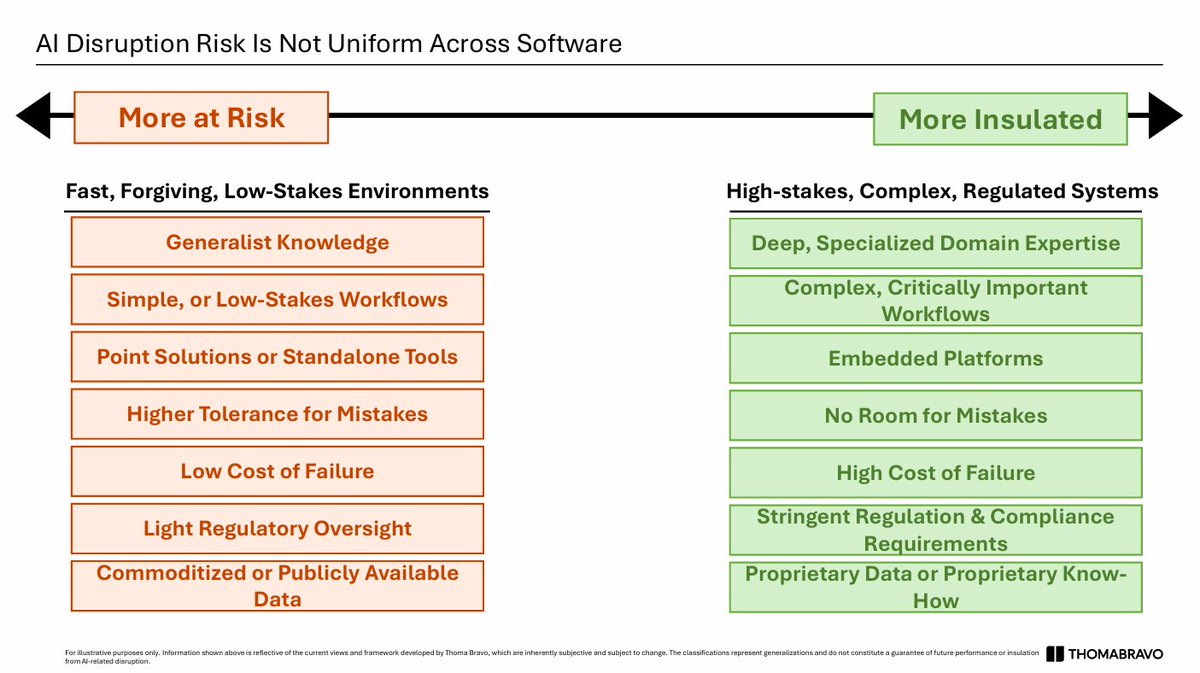
Thoma Bravo draws a line between two types of software companies:
More exposed: simple workflows, generalist knowledge, light regulation, easy to replace.
More protected: zero tolerance for errors, deep domain expertise, heavy compliance, proprietary data, embedded across customer systems.
If one stock defined the SaaS era, it was Constellation Software. It rolled up 500+ niche software firms on premise that their products were so embedded in customers’ workflows that demand was relatively inelastic to steep annual price hikes. It’s now the face of AI disruption.
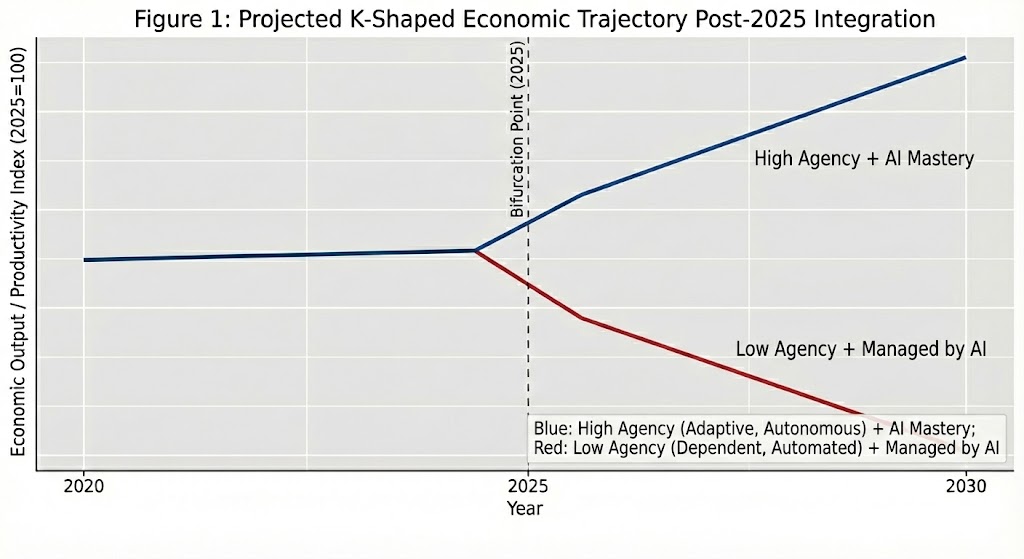
In 10 years, there will be two classes of people.
Economists call it the "K-shaped economy" - and the next 2-3 years will decide which line you're on.
• An overclass that uses AI as a lever to build wealth, automate income, and make decisions at a speed no human can compete with alone.
• And an underclass that gets managed by it.
This isn't just "coming". It's already happening.
Some mind-blowing stats:
• Workers with AI skills earn 56% more than the same job without them. That premium doubled in a single year.
• Industries adopting AI are seeing 3x the revenue growth per employee.
• Meanwhile, 90% of workers haven't taken a single hour of AI training.
• Goldman Sachs estimates 300 million jobs will be affected by AI by 2028. That's 24 months from now.
If you're reading this now and you haven't built systems with AI - haven't automated a single workflow, haven't used it to create anything that makes you money or makes you irreplaceable - you are currently on the wrong line.
That's not an insult. You have the agency to change your trajectory right now.
But six months from now, the gap will be twice as wide. And a year from now, it may not be crossable.
#g9plus Pour les #ESN avec l'IA, "Il y a une vraie prime a l'orchestration et à savoir énoncer une fonctionnalité". "Partager la valeur via la propriété intellectuelle des agents est une alternative au modèle du TJM".
This high speed FPV drone shot chasing athletes with synchronized telemetry got the winter olympics looking like a real life video game. https://t.co/rr69ufAjTR
🦔 Anthropic released a new plugin for Claude Cowork that can track compliance and review legal documents. The update didn't make much noise outside the legal industry when it launched Friday, but it triggered a sell-off in legal software and publishing stocks. Wolters Kluwer dropped 13%, RELX fell 15%, LegalZoom dropped 18%, and Thomson Reuters fell 19%. All four stocks are now down at least 20% year-to-date.
RELX owns LexisNexis. Thomson Reuters owns Westlaw. Both are major legal research platforms that have dominated the industry for decades.
My Take
I wrote about software company loans melting down a few days ago while the rest of the credit market rallied. This is the equity market version of the same fear. Investors are looking at AI tools that can review legal documents and track compliance, and they're repricing what that means for companies whose entire business model depends on selling access to legal research and document services.
These aren't speculative startups. Thomson Reuters and RELX are massive, established companies with entrenched products that law firms have used for years. But when an AI tool can do in minutes what used to require expensive subscriptions and billable associate hours, the math changes. The stocks had already been drifting lower all year. The Anthropic announcement accelerated what was already underway. Venture capital has been pouring money into legal tech startups betting on exactly this kind of disruption. The incumbents are starting to look vulnerable and the market is adjusting accordingly.
Hedgie🤗
The merger of SpaceX and X is one of the most interesting talent and incentive outcomes I have seen in a long time.
It is easy to forget how brutal the transition period at X must have felt for employees.
- Public criticism.
- Revenue uncertainty.
- Equity value effectively collapsing overnight.
Imagine turning up to work each day watching your paper wealth disappear, while still being expected to rebuild the platform from the ground up.
Then imagine the outcome.
Those who stayed, executed, and absorbed the volatility are now being rewarded with the best off market equity you could own.
Pre IPO SpaceX stock, right on the doorstep of what will probably become the largest IPO in history.
It is a powerful reminder that real equity rewards rarely come from comfort.
They come from conviction, pain tolerance, and staying when it would be easier to leave. 💫