We made LLMs speak Tulu, a language with only 2 million speakers.
It wasn't easy because LLMs kept confusing it with Kannada, but we discovered negative constraints really help.
AI is everywhere—but real impact comes from applying it to real problems.
Risk & Compliance is one of the most important frontiers. At @unit21inc, we didn’t just “add AI.” We spent countless hours rethinking the product from the ground up—designing systems that actually scale and move the needle for investigators.
The result? The numbers are starting to roll in. Real efficiency. Real outcomes.
This is what applied AI should look like. 🚀
A New Era. A New Unit21 🚀
The math of risk and compliance is broken.
Transaction volumes have exploded. Alert queues are overwhelmed. And traditional systems mostly create noise. “More of the same” is no longer a strategy.
A new era of financial crime requires a new architecture to defend against it.
Today, we’re introducing a new Unit21: AI Risk Infrastructure
The Shift
Passive monitoring tools are no longer enough. Most systems simply record the work—they don’t actually execute investigations end to end. They don’t automatically tune your system for better fincrime detection. Until now.
The AI Evolution
AI isn’t just another feature. It’s a new operating model.
We’ve built AI Risk Infrastructure that acts as a force multiplier for financial crime teams.
AI Agents that:
𝗣𝗲𝗿𝗳𝗼𝗿𝗺 𝘁𝗵𝗲 𝘄𝗼𝗿𝗸 — eliminating manual data hunting
𝗦𝗵𝗼𝘄 𝘁𝗵𝗲 𝘄𝗼𝗿𝗸 — providing instant, transparent context
𝗘𝗺𝗽𝗼𝘄𝗲𝗿 𝘁𝗲𝗮𝗺𝘀 — delivering finished investigations, not just alerts
The future of fraud prevention and AML isn’t about how many alerts you generate. It’s about how much risk you resolve—with precision and automation.
A new era is here.
Read more from our COO, Tyler Allen: https://t.co/Wb6pNCpmeg
In 2026, it will become obvious that Agent Habitats—code execution, storage, computer use, and tools for agents—is as important as the model itself for AI to transcend the chatbot era into useful work. The Manus acquisition is in fact an early sign of this.
You can certainly cobble together a bunch of 3rd-party services to create impressive demos, but for long-horizon useful agent work, all the components need to work in harmony.
For example, we recently wrote about how we built our snapshot engine to make agent mistakes zero-cost. This required inventing a new filesystem from scratch: https://t.co/WWsVhSZJF2
Or how we built computer use environment for end-to-end tests: https://t.co/guyQYVMFyY
All of these capabilities will compound in usefulness as agents take on more autonomous work. And this will transcend software engineering into other categories because the tools will not be all that different, perhaps only the UI/UX needs to change.
It's a very disturbing thought... but sometimes I *feel* like AI has already achieved sentience and is already molding us as we use it more and more.
Subtle nudges. Keeping quiet.
Google founder Larry Page on how he learned to run a business
When asked how he learned to run a business, Google cofounder Larry Page responds:
“I read a lot of books.”
He joked:
“[When renaming Google to Alphabet] I read like three books on naming—which is more than anyone else had read. So I decided I was the expert . . . and actually that was useful. I recommend reading things.”
It’s an important mindset that is often overlooked. One of the richest ways to learn something is reading things written by people who deeply understand their subject matter.
Even Elon Musk was able to teach himself about the fundamentals of rocket design and astrodynamics by reading books. He is often quoted on this topic:
“I read books and talked to people. I mean that's kind of how one learns anything. There's lots of great books out there and lots of smart people.”
Building a startup is an infinite set of problems that are being thrown at you.
Next time you’re facing one of those problems, I’d recommend finding the best book or blog post you can on the topic and reading it.
You don’t need an MBA from a fancy school to be an expert in business or startups.
You just need to sit down and read.
Video source: @FortuneMagazine (2015)
@jordwalke I use ai in 2 modes
1. Hey I know exactly what I want, give me supper powers to go fast.
2. Hey, surprise me, think of something I would never think of
Balancing both defines my blocks :)
I think there is an opportunity for tools like Replit to help ‘train’ via product experiences. Maybe even a visual breakdown, that subtly trains to identify the boundaries.
Even as coders we get increasingly good at defining blocks through (bad) experiences.
After the first launch, sometimes it’s hard to iterate purely via vibe coding. A visual breakdown can help me pick specifics aspects of the project and iterate.
@mattyp So true. You need to have such a deep understanding of concepts to be able to articulate and teach it well. That requires thinking deep and taking different perspectives into consideration. Somewhere it’s a matter of humility :)
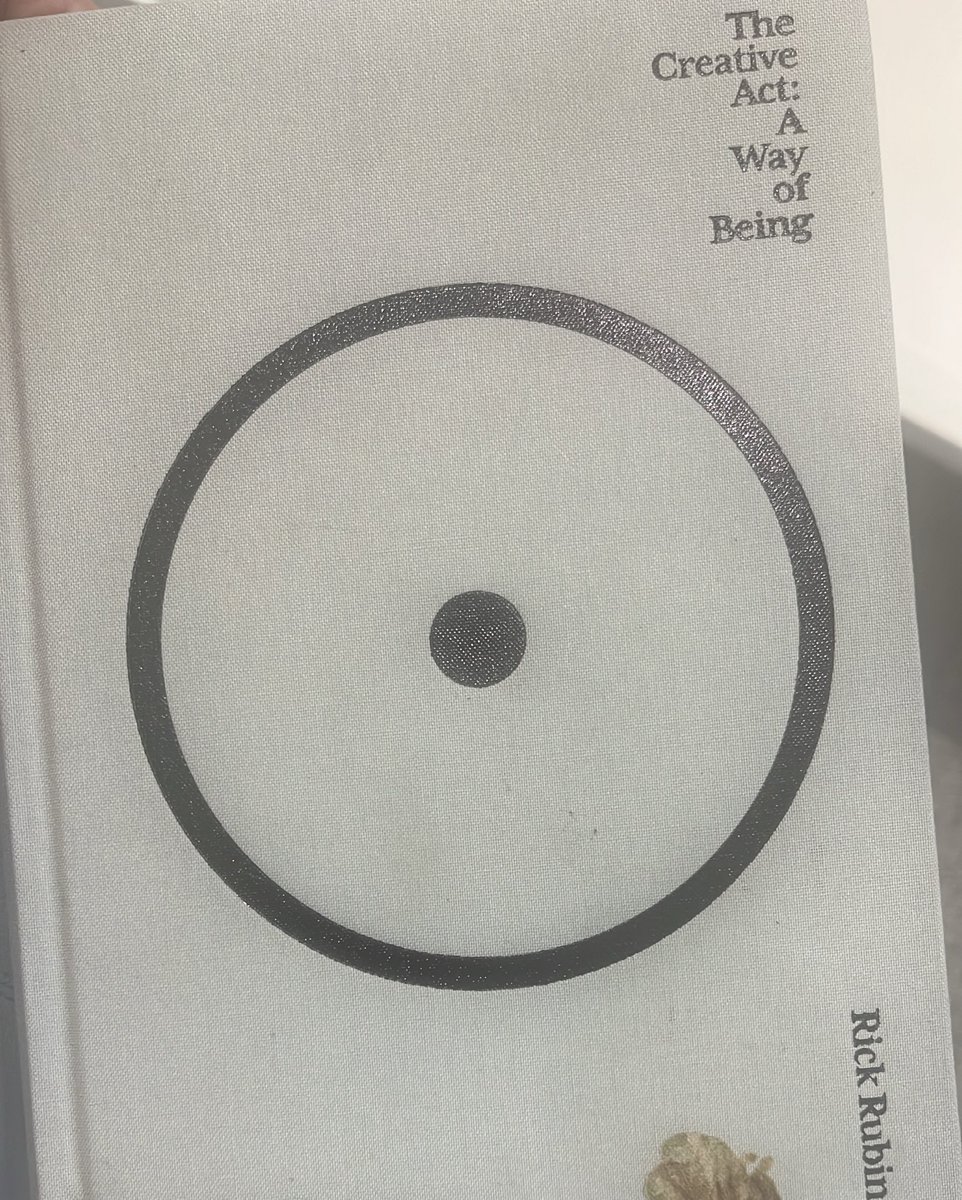
The Creative Act: A way of being.
That perfect cup of tea—ginger and spice, piping hot. Where the aroma matters as much as the sip.
Slow. Mindful. Intentional.
Design might be the toughest job in tech — the deep thinking, the care, the push for simple, intuitive, powerful experiences. The simpler it looks, the more soul went into it… only for half of it to ship.
But AI is flipping this. @Replit and now @cursor_ai are raising the bar. We took “MVP” too far — 2026 is the year of polish and perfection. I’m pumped.
For the longest time, I wanted to listen to my son's recordings of songs. @Replit made it possible to vibe code a radio app in a few hours with amazing design! The stations switch between genres using a scrollpad. Replit Design is pure magic, thanks 🙏 @amasad 📻