Before steamships, global trade followed the winds rather than the shortest route. This brilliant animation by @BartGonnissen uses 250,000+ historical ship positions (based on logs from 1750–1855) to reveal how winds shaped global shipping routes. Source: https://t.co/eU8waXbBvV
Corruption in sports annoys me even more than corruption in politics. In Argentinian football Barracas Central (run by the AFA president's son) leads in VAR decisions favouring the club. For good measure, Barracas Central also didn't have a red card in 2026. Could just be a coincidence... Source: https://t.co/x9LHzypSfP
BREAKING: A robot developed by Caltech and funded by DARPA has successfully built part of a structure in orbit without astronauts, marking what researchers describe as the first autonomous construction of a structure in space.
The experiment, called ASTRA, uses a robotic arm to retrieve individual structural tubes and connecting joints, then assemble them into sections of a larger framework directly in orbit.
Launched aboard a SpaceX Falcon 9 in March, the system has spent approximately six months in space testing the technology.
The robot successfully constructed a new section of a truss structure, demonstrating that spacecraft could eventually assemble large structures from smaller components rather than launching them fully assembled.
The experiment is part of DARPA's NOM4D program, which aims to enable construction of enormous structures in orbit, potentially hundreds of meters or even kilometers across.
Potential applications include:
> Giant space telescopes
> Large satellite communications antennas
> Orbital solar power stations
>Future space infrastructure too large to fit inside conventional rockets
The demonstration did not complete the full planned antenna, but establishes an important proof of concept for autonomous orbital construction.
The technology could eventually allow the size of structures built in space to exceed the physical limits of the rockets used to launch their components.
Link to official report submitted by Caltech: https://t.co/63Mpylbisb
Radioactive bananas 🍌?
Radioisotopes are unstable atoms that decay and emit excess energy.
They have hundreds of uses and can be found in countless everyday products, including these 5️⃣ for starters 👇
https://t.co/ohSv6kG7yL
Scientists have uncovered shock new evidence based on carbon isotopes that suggests the recent rise in atmospheric CO2 has little or nothing to do with fossil fuels, says Chris Morrison. https://t.co/2s7u5oBpWl
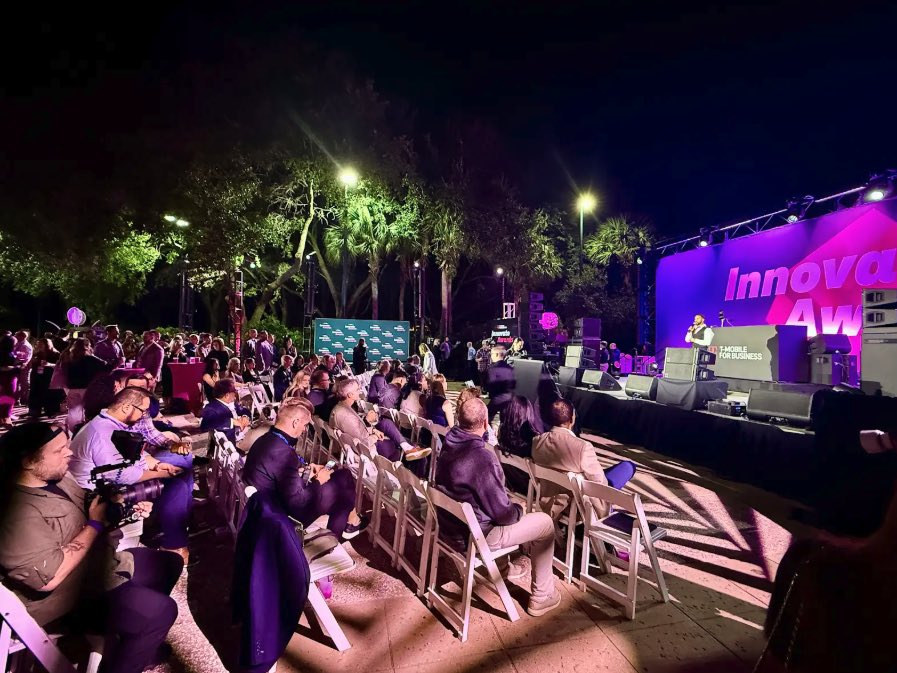
Congrats to Edwards Lifesciences, LVMPD & Brookhaven PD on T-Mobile Innovate Awards recognition at Gartner IT® Symposium/Xpo™ 2026.
Their innovations highlight connected care and public safety.
@TMobileBusiness Partner
🚨 BREAKING: The FCC accepts SpaceX's application to acquire nationwide 800 MHz spectrum
Verizon, AT&T and T-Mobile all told SpaceX "NO" when it asked to use their networks. SpaceX is building its own:
This deal with Grain Management secures 546 paired licenses covering ~100% of the U.S. population, on 800 MHz low band that penetrates straight through walls and already works with almost every smartphone.
Once it closes, SpaceX will hold up to 89 MHz of spectrum in every market it touches.
Elon Musk: "This is the last critical piece of the spectrum puzzle needed for SpaceX to provide complete phone coverage in America."
ITS HAPPENING
Hackers can hide attacks in “legit” hardware and AI speeds up zero-day discovery. So why are we still betting everything on firewalls and faster patching? Listen, then answer: what security myth needs to die next? @bennyczarny@OPSWAT https://t.co/GOerFxaUAE
A digital-first buying journey can work brilliantly for one B2B customer and frustrate another.
McKinsey's 2026 Global B2B Pulse identifies three segments:
1. Adapters (53%): more relationship-oriented.
2. Seekers (29%): comfortable across channels.
3. Innovators (18%): more technology-oriented.
The spending gap matters. In the survey, 61% of Seekers would spend $500,000 or more online, versus 18% of Adapters.
For commercial leaders, the opportunity is choice without chaos: self-service when buyers want it, expert support when they need it, and consistent terms across both.
A single digital journey is rarely a complete commercial strategy.
Source: McKinsey & Company, “The surprising economics of B2B growth: The new survival threshold—and what it takes to thrive”
@RLDI_Lamy@sulefati7@ILoveBooks786@Corix_JC@FrRonconii@Nicochan33@faryus88@ramonvidall@ozsilverfox@jameslhbartlett@dinisguarda@PatrickCFOD@Eli_Krumova@BCAgroup@ricardo_ik_ahau@timo_vi@violetainsights@DioOmega@66Iot
🚨 JAPAN’S BANKS COULD GO DARK FOR 30 DAYS
Nikkei reports that financial institutions may choose to shut down for an entire month as a cyber defense measure.
Two days earlier, 128 banks across western Japan went dark at the same time.
ATMs, Teller counters at 3,430 branches, Internet banking, Transfers to other banks: all went dark.
Just a day before this event, Japan’s Government announced that it is Considering Mandatory Shutdowns in Cyberattack Response. They also urged citizens to stockpile emergency food and cash. The day followed with banking systems going dark.
Interestingly, Japan has been preparing for the digital asset infrastructure using blockchain.
- The country which was once not so crypto friendly suddenly passed their version of Clarity Act before the U.S.
- Crypto has now been declared as financial assets and Japan announced plans to bring the government bonds and stock market on-chain.
- Bitcoin, Ethereum and XRP are now being allowed as corporate treasury assets.
- Over 50 banks partnered with the U.S. crypto firm Ripple to test digital asset infrastructure.
- Ondo and Solana chosen for Japan’s first phase of tokenization.
- Japan is even getting institutional privacy in their digital asset infrastructure through @DNAOnChain’s zero-knowledge proofs in cryptography. The same also provides private identities, private voting ballot system and complete on-chain privacy for the new digital financial system.
Japan’s @yutokanzakireal had warned at the start of 2026 that financial institutions are staging planned cyberattacks on yield-based blockchain products which interestingly is the core criteria for banking system.
The year 2026 has witnessed the highest hacks and biggest drains on projects in the crypto history.
The cyberattacks are the stage to shift to the new digital financial system. The government has been preparing the citizens.
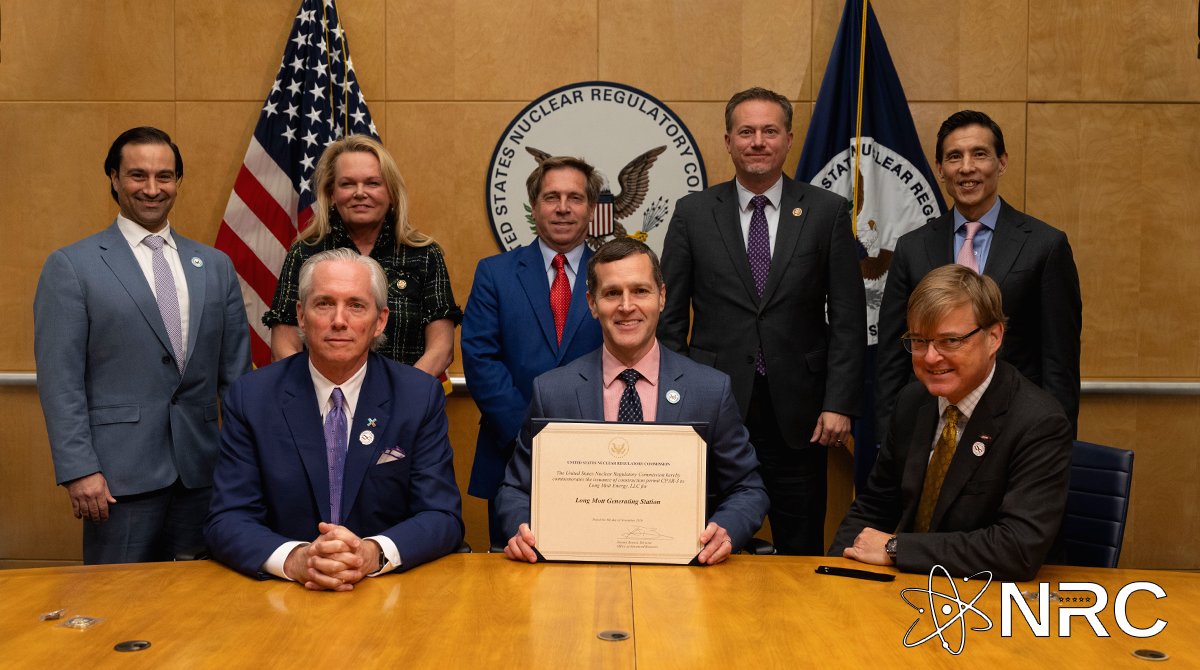
✅Historic milestone! NRC issued the construction permit for Long Mott, the first high-temp gas-cooled reactor permit in ~60 years, authorizing Long Mott Energy to build four @xenergynuclear Xe-100 reactors. Thanks @RepChuck, @RepMichaelCloud & @RepAprilDelaney for joining us.
⚡️ BIG: Euro-pegged stablecoin supply has hit a record €751 million, surpassing its February 2022 peak of €637 million, with Circle's EURC and Société Générale's EURCV accounting for 83% of the market.
The grid is looking precarious this winter. Grid balancing costs keep spiking off the charts. I've seen all manner of creative excuses this morning but this is a crisis tewnty years in the making. It was around 2008, or thereabouts, when I joined a large energy firm to do a highly uninteresting job, only made interesting by way of my co-worker being one of the lead programmers on the energy trading desk who explained to me in great detail how the grid works.
I was already dimly aware of the overall energy strategy. The idea was that we were going to blow up our coal power stations and build windmills instead, on the presumption that "the wind is always blowing somewhere" and that the easter bunny would intervene in the event there was no wind.
But we knew about dunkelflaute even back then. They knew very will the wind is not always blowing somewhere. But this was a manageable problem because there wasn't all that much wind capacity to offset. You could disguise the problem with importing energy through interconnectors. It was a relatively small problem that could be disguised.
But then we did start blowing up our coal power stations, letting our nuclear power age out, and didn't bother to replace our baseload capacity. We instead built windmills. Rather a lot of them. We built them in far away places, requiring long transmission lines for intermittent power that the grid struggles to assimilate.
Making up the shortfall always depended on gas because most large energy plants can't be ramped up and down at a moment's notice. The problems started when shortfalls were measured in gigawatts. The more windmills you added, the greater the instability.
This was known in 2008 and the problem was never acknowledged. Even back then, realists were saying this only had one destination; rolling blackouts. It's been looking hairy since 2022, and the situation has only worsened, exacerbated by a deliberate decision to run down and close our gas storage facilities, making us more reliant on the day-to-day gas market - which is notoriously volatile, especially when wars break out in our vicinity.
Some renewable energy enthusiasts did acknowledge this might be a problem, but they said it would be a small problem, and that by now, there would be millions of electric cars plugged into the grid that grid operators could use to even out shortages of wind. On paper that was a good idea, if only to even out the odd hour of wind loss. The strategy, though did not address the prospect of days and weeks of cold conditions with no wind, or the fact that nobody wants an EV.
As more wind generation was added to the grid, this problem became bigger and bigger, with no real thought as to what was going to keep the lights on in a crisis. We also banned extraction of our own fossil fuel reserves meaning that we are now wholly dependent on gas imports from wherever we can get it.
Now at this point, if you're not politically attuned, you're probably thinking this is a seriously dumb policy that's so dumb that our politicians couldn't possibly have been this retarded, so there must be some other explanation. If only that were true.
The problem is that a number of subsidies and market incentives were put in place so that the energy sector would concentrate on building windmills. There was (and is) big money involved, so there is a very influential wind energy lobby that misdirects the national conversation and influences our MPs. They are easily bamboozled and incredibly gullible.
Consequently, realists lost the argument. The warnings we've seen in recent years from the indefatigable @KathrynPorter26 (et al) are just the latest generation of energy wonks to notice that making your power grid weather dependent is a shit idea.
Anyone raising the alarm is immediately accused of being a "climate denier" despite warnings from them that there are certain facets of the climate that we ought to pay more attention to. Namely that Europe is prone to protracted periods without wind and sunshine. While our Liberian energy minister can be forgiven for not knowing this, her many predecessors cannot.
So we're now in a position where we have gigawatts of windmills installed, doing absolutely bugger all, at times when people are known to need heating and lighting. So now we're scrambling for gas from whatever we can find it, regardless of the cost - and making "resilience" plans for the near future when the grid stops working completely (which they will blame on Russian hackers).
This is made all the more precarious because the European power stations we import from have more demand than usual, not least because of the dry conditions this summer, meaning hydro is less available, and we're feeding cruise missiles into a regional conflict that is currently demolishing European grid infrastructure.
This would be a good time to fire up our redundant coal burning stations, but the last Tory government demolished them. This is a situation that energy analysts are describing as "bad".
Of course, that is a matter of perspective. Should there be a cold spell where the grid trips out for weeks, or we're reduced to energy rationing, many of you will simply die, thereby reducing demands on the grid and other public services. This is a necessary sacrifice toward our green energy future which, after all, is the priority here. We no longer cling to the archaic idea that the grid should serve the needs of the economy. It is we who must change!
Good Morning from Germany, where another Dunkelflaute is sending power prices soaring. Day-ahead electricity has hit €345.64/MWh, the highest since Dec 2024, w/some evening quarter-hours >€600/MWh. As wind & solar output slumps, peak gas-fired generation is the highest since Jan. Expensive gas is filling renewable gap. https://t.co/mkmqs3kkrm