Life is hard but nothing -- I mean nothing -- beats Valencia, Porto and Split.
Jokes aside, for what these charts are worth, I'd not overlook this quadrant
@devanshmehta Yeah. Met the team and stayed far away. Wasn’t sure exactly what the issue was, but they didn’t have the right answers to indicate they even cared about the mechanism in a practical way.
@hosseeb This didn’t happen because there wasn’t enough structural competence in designing the governance before making it a honeypot.
There are many people who understand the solutions, but the funding entities are unwilling to take the steps to lose control.
Short sighted
A major milestone for Interfold:
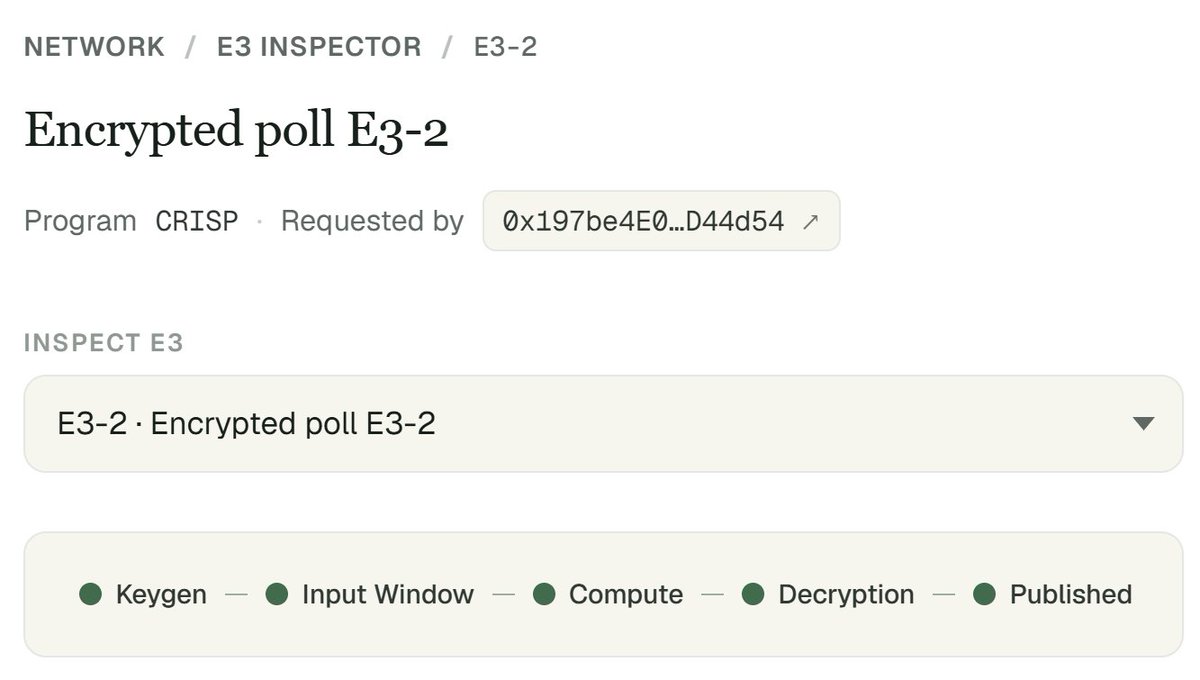
The first live confidential governance process ran end-to-end on @ethereum via a receipt-free secret ballot.
Private ballots. Encrypted tally. Threshold decryption. Verifiable result.
No trusted hardware. No single trusted tallying authority.
@owocki I think people want a solution but the solution is a process that continually optimizes, not a magic fix.
The good news is I think we know what that process should be.
Interfold governance is live.
$FOLD holders can now take part in network decisions through secret ballots: individual choices remain private while collective results are verifiable, no receipts.
The network is putting confidential coordination to work in its own governance.
@allmodelsRwrong He also said that all radiologists would be out of a job in 5 years. That was 10 years ago and there are more openings for radiologists and higher pay now.