ANDROMEDA FINAL ANALYSIS: D-VCd now shows an OVERALL SURVIVAL benefit in newly diagnosed AL amyloidosis.
After 61.4 months median follow-up, adding daratumumab to VCd translated deeper hematologic responses into better organ outcomes and longer survival.
ANDROMEDA | Phase III | n=388
Daratumumab + bortezomib + cyclophosphamide + dexamethasone vs VCd.
Key results
🔹 Hematologic CR: 59.5% vs 19.2%
OR 6.03, P<0.0001
🔹 Major organ deterioration-PFS:
HR 0.44
95% CI 0.31–0.63, P<0.0001
🔹 Overall survival:
HR 0.62
95% CI 0.42–0.90, P=0.0121
🔹 5-year OS:
76.1% vs 64.7%
🔹 Cardiac and renal responses were consistently 2–3× higher with D-VCd.
Why this matters
This is no longer just a response-rate story.
Earlier ANDROMEDA data established D-VCd as the standard. The final analysis now shows that rapid, deep hematologic control translates into meaningful organ preservation and survival benefit.
Achieving hematologic CR was associated with better survival, while cardiac CR was associated with particularly favorable long-term outcomes.
Limitation
Mayo cardiac stage IIIB patients were excluded, so these results should not be directly extrapolated to the highest-risk cardiac population.
Clinical verdict
✅ PRACTICE CONFIRMING
D-VCd is firmly established as the frontline standard of care for eligible patients with newly diagnosed AL amyloidosis.
📄 Blood. 2026;148:1097-1107
@ASH_hematology@oncoalert
#Amyloidosis #Hematology #Daratumumab
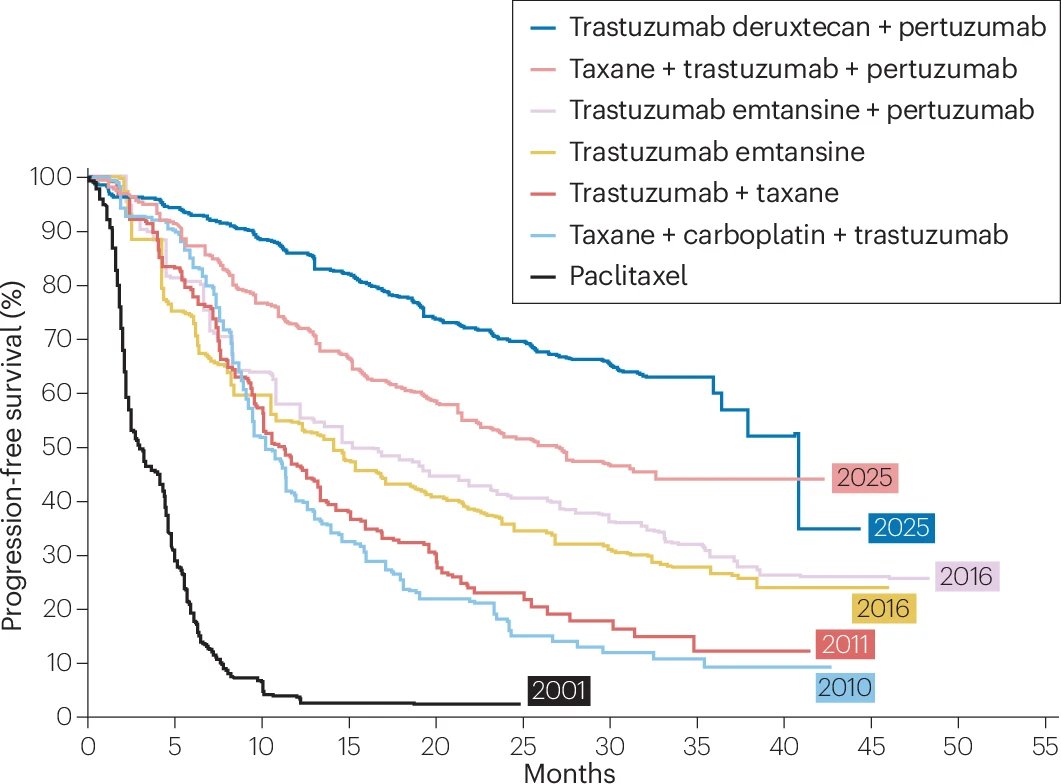
The long return on discovery science in cancer therapeutics
Sometimes the curves tell the whole story—no need to say much more👇
https://t.co/c2sblbXgv7
Daraxonrasib now @US_FDA ✅ based off RASolute302: Daraxonrasib vs. Chemo in 2L metastatic pancreatic cancer:
- ⬆️ OS: 13.2 vs. 6.7mos (HR: 0.4)
- RAS mutation present in >90% pancreatic adenocarcinoma
- One of the biggest advances/news in 2026 for cancer!
#OncTwitter
❓☝️
Something caught my attention in the FDA approval of daraxonrasib.
The label includes patients who received ≥1 prior systemic therapy, consistent with RASolute 302, but also patients who are “not candidates for multi-agent systemic therapy.”
Does this effectively extend the approval into the first-line setting for patients considered unfit for multi-agent chemotherapy?
If so, how is “not a candidate for multi-agent systemic therapy” defined in practice?
It seems the FDA label may go beyond the RASolute 302 population—which may be clinically reasonable, but I’m not sure I’m interpreting it correctly.
Great summary @drenriquegrande
My thoughts: INTerpath-011 may be the most informative of the three. If a personalized neoantigen vaccine adds anything on top of BCG, it tells us the ceiling of BCG has never been about the immune system being insufficiently activated. It has been about the response lacking tumor specificity. That would reframe how we think about intravesical combinations we are currently testing.
@FaltasLab@JoshMeeks@UrogerliMD@PGrivasMDPhD@AmirHorowitz@MaxKates@IBCG_BladderCA
🚨 SAFFRON Phase III is positive
In EGFR-mutated NSCLC with MET-driven resistance after osimertinib, continuing osimertinib + adding savolitinib significantly improved both PFS and OS vs platinum-doublet chemotherapy.
📌 SAFFRON
• N=338
• EGFRm locally advanced/metastatic NSCLC
• MET overexpression/amplification
• Progression after 1L/2L osimertinib
• Osimertinib 80 mg QD + savolitinib 300 mg BID vs platinum-doublet chemotherapy
💡 Why it matters: MET is a major acquired resistance mechanism after EGFR TKIs. This is the first global Phase III trial reporting significant PFS + OS benefit in this setting.
⚠️ No efficacy numbers yet. Full data await presentation.
🩺 Clinical verdict: Potentially practice changing. MET testing after osimertinib progression becomes increasingly important.
@ASCO@oncoalert@AstraZeneca
#LungCancer #NSCLC #EGFR #MET
@DrRupamOncology That looks great – – except I think myeloma is either >=10% BM Plasma cells or >=3 g MCP; then you need slim crab to say active/treatment requiring myoma.
Based on that chart, it looks like you’re saying if someone has a plasmacytoma then they have myeloma
@dr_yakupergun@JCO_ASCO Thank you for sharing. My practice has been dual IO because of higher long term PFS/cure and less short term progressn c/w single IO. In strong pts will you use dual IO or FFX + Atezo?
FINALLY! AstraZeneca reaches deal with Dizal to bring sunvozertinib to the US! Approved for EGFR exon 20 NSCLC over a year ago but only available in China (and at a different dose). This deal comes off phase 3 WU-KONG28 showing superiority over 1L chemo.
https://t.co/qNuZpeSNKn
Reducing or Omitting Dexamethasone With NEPA and Olanzapine for Prevention of Chemotherapy-Induced Nausea and Vomiting in Highly Emetogenic Chemotherapy: A Randomized Non-inferiority Phase III Trial.
Read the full article. https://t.co/1ViN8LNj87
Thanks to @ASCOPost for highlighting our work in this important clinical gray zone. While awaiting prospective data, our findings support prioritizing #CT-ICI over ICI alone in PD-L1–high NSCLC.
Kudos to @DiFedericoMD an amazing scientist and the first author of this study.
🚨 FDA Approval | A new perioperative standard for muscle-invasive #BladderCancer@OncoAlert
🇺🇸 The FDA has approved enfortumab vedotin + pembrolizumab (or pembrolizumab/berahyaluronidase alfa) for all cystectomy-eligible patients, regardless of cisplatin eligibility.
🔗 https://t.co/sagtJx1gc1
Based on the phase 3 KEYNOTE-B15/EV-304 trial:
✅ 47% reduction in the risk of recurrence, progression, or death (EFS HR 0.53)
✅ 35% reduction in the risk of death (OS HR 0.65)
✅ Safety profile consistent with previous EV + pembrolizumab studies.
This marks the first perioperative platinum-free regimen to demonstrate an overall survival benefit in MIBC and represents another major step toward improving cure rates.
#BladderCancer #MIBC #GUOncology #Immunotherapy #ADC #OncoAlert