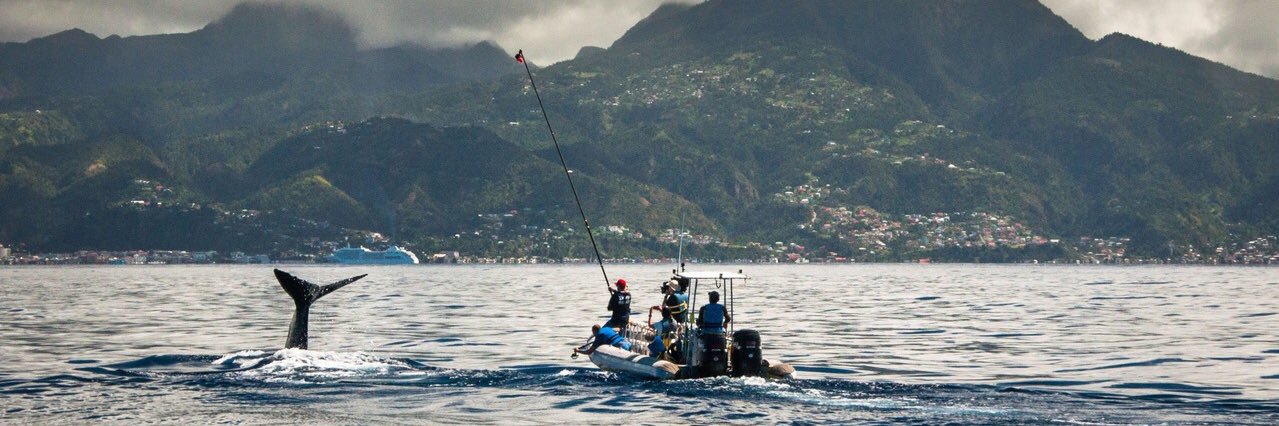
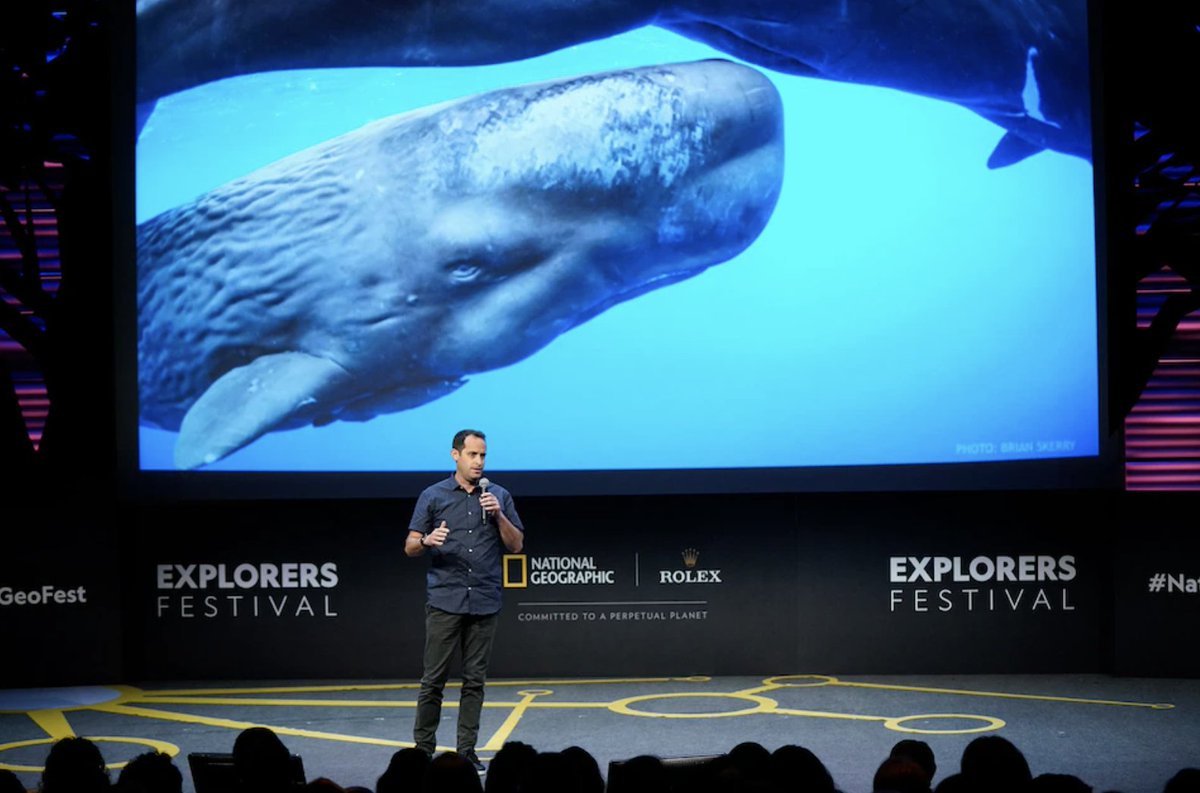
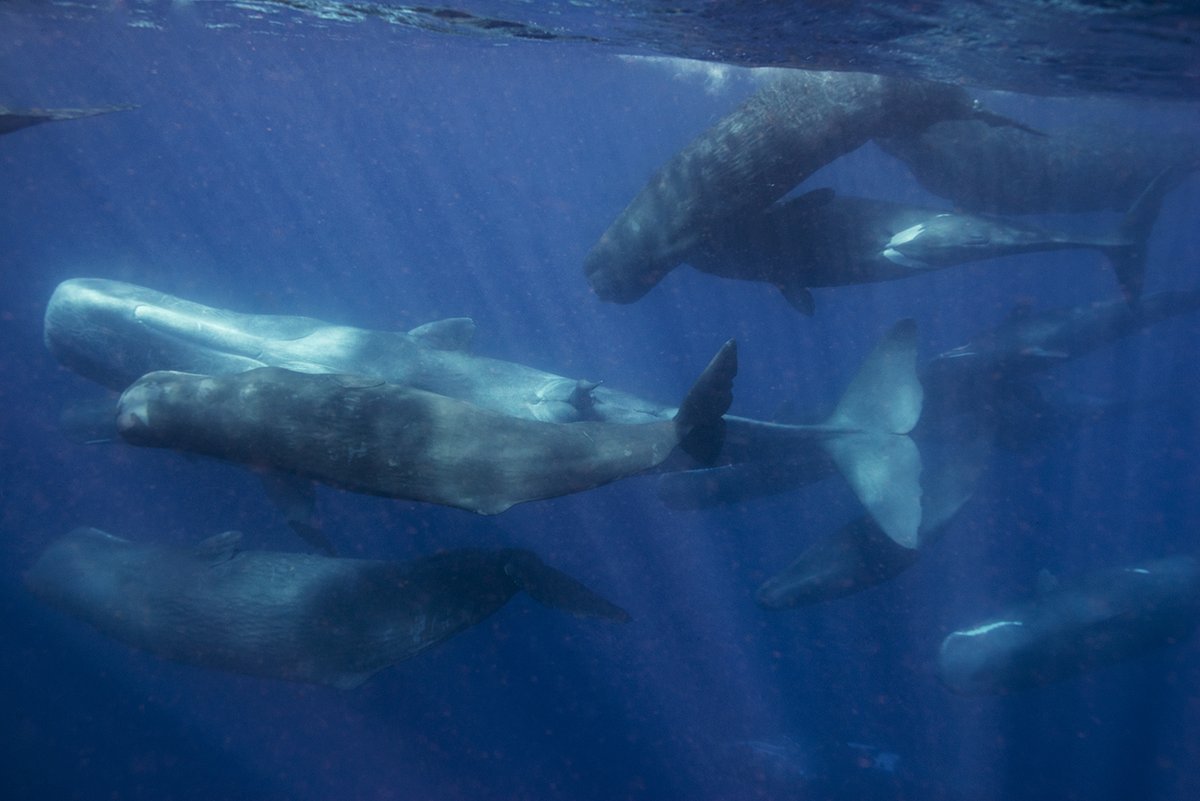
Working with @DOMFisheries and @DominicaStateCo early on to create experiential learning opportunities on the water through our research has grown dramatically into the amazing @ProjectCETI Fellowships in collaboration with @InsideNatGeo!
Meet the first team of Fellows!
✨Please meet Whitney, Omari and Khade, the 2022/2023 CETI Fellows!✨ CETI's Dominica Marine Conservation Fellowship is a community-based 10-month, multi-module training program for the next generation of conservation leaders in Dominica.
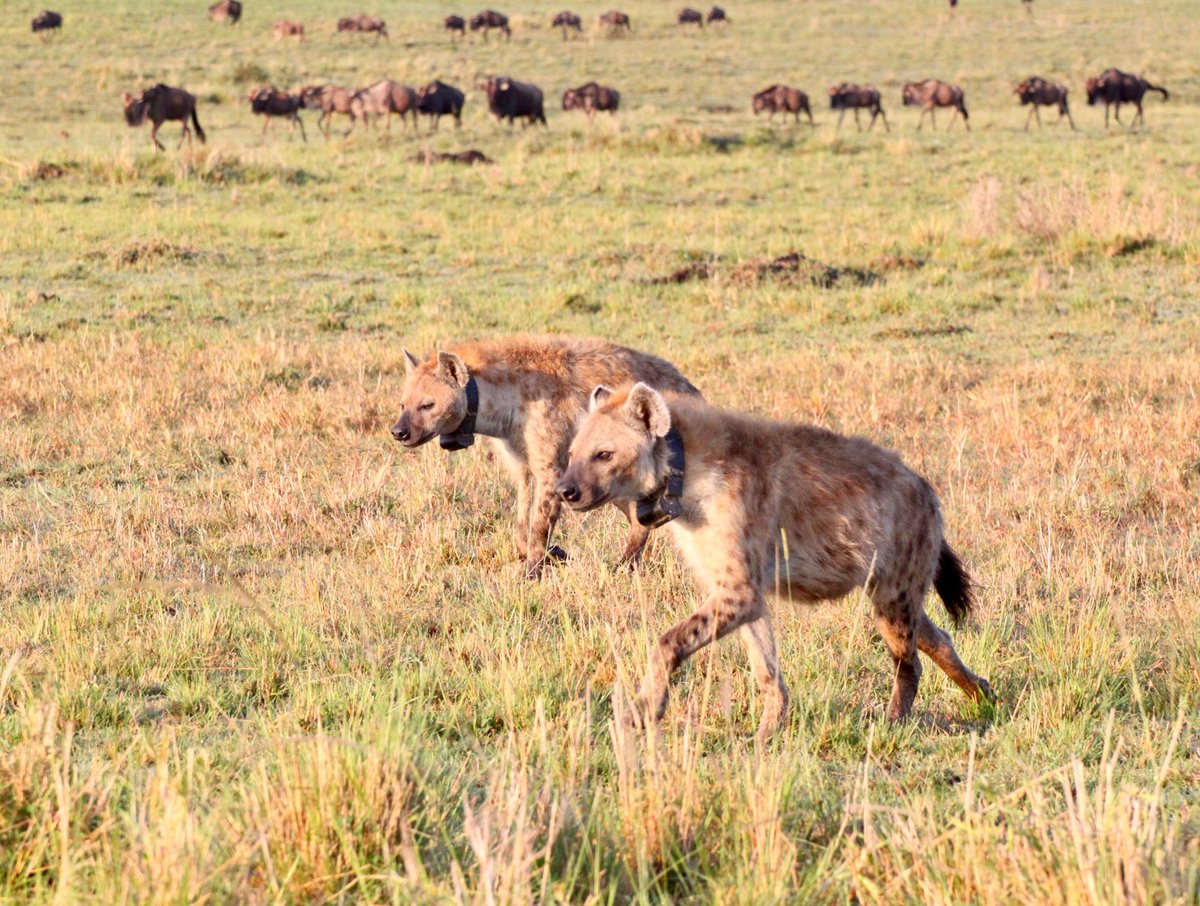
⭐️OPEN PHD POSITION: Communication & collective action in spotted hyenas⭐️
Come work with us to analyze high-res GPS, audio, & IMU data from an entire hyena clan, currently being collected @MaraHyenas!
Apply by 16 Dec 2022: https://t.co/RGqsQhJj1c
Today: @sgero of @DomWhale, @projectceti, and @Carleton_U joins to talk about sperm whales, their language, and their culture. And makes me want to go to Dominica. 4pm on @CKCUFM or stream it now: https://t.co/Zsi6cuP8CJ
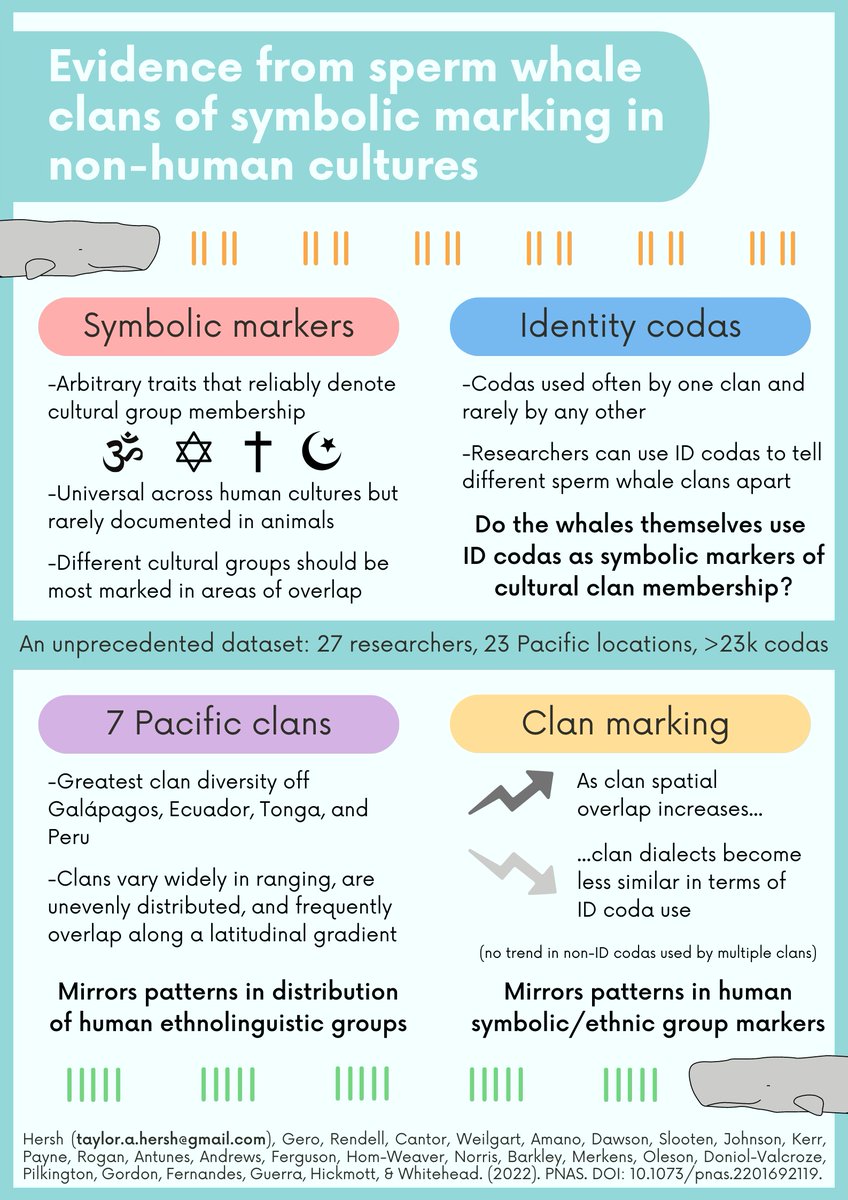
A study finds that certain acoustic communication signals—“identity codas”—function as symbolic markers of cultural identity among Pacific Ocean sperm whale clans. In @PopSci: https://t.co/Ovz5DwgfVR In PNAS: https://t.co/YAoVkOmDwd
Ocean nomads or island specialists? Culturally driven habitat partitioning contrasts in scale between geographically isolated sperm whale populations: https://t.co/8PQu8uqKLS @_fvachon@taylorahersh@_lrendell@sgero#RSOS#ecology
Sperm whale researchers from across the #Pacific team up to understand how cultural clans of whales broadcast their identity!
We’ll done @taylorahersh and team!
1/10) Very happy to announce that our new paper is out in @PNASNews! We show evidence that sperm whale clans in the Pacific Ocean use identity codas as symbolic markers of vocal clan identity. Read the paper at: https://t.co/bwjas8P679
On #WorldOceansDay, Project CETI Dominica teams up with local artist omtni president of kubuliarts to raise awareness about the importance of the ocean and the biodiversity therein.
First PhD chapter published in RS Open Science! with
@taylorahersh@_lrendell@sgero and H.Whitehead!
"Ocean nomads or island specialists? Culturally driven habitat partitioning contrasts in scale between geographically isolated sperm whale populations"
https://t.co/kZ61Rclq64
We made a thing! “The Whale Who Swam Through Time” explores the 200-year life of a bowhead whale, and the changing arctic environment that surrounds here. This latest collab w/ @PyensonLab was truly a dream project, and I can’t wait to share it! Preorder: https://t.co/RU6zeA5vBb
All of the whale families we study are on @Flukebook.
If you are in #Dominica and take pictures of the whales, please contribute by sharing your pictures through Flukebook.
Your pictures could help to better understand the whale families movements and habitat use!
#WorldWhaleDay: Meet Explorer Shane Gero, who hopes to create a new dialogue around the conservation of whale populations that is about more than just numbers https://t.co/tNtDJZKdVp
As part of @ProjectCETI's efforts to understand sperm whale communication, our Exploration Technology Lab is developing a custom Crittercam that will capture advanced low-light video of sperm whale behavior! #WorldWhaleDay
Whales have been great stewards of the ocean environment for more than 30 million years, & our understanding of them has only touched the surface. 🐋 Follow @ProjectCETI & #NatGeoExplorers David Gruber, @sgero, & Robert Wood on their journey to decode whale communication.
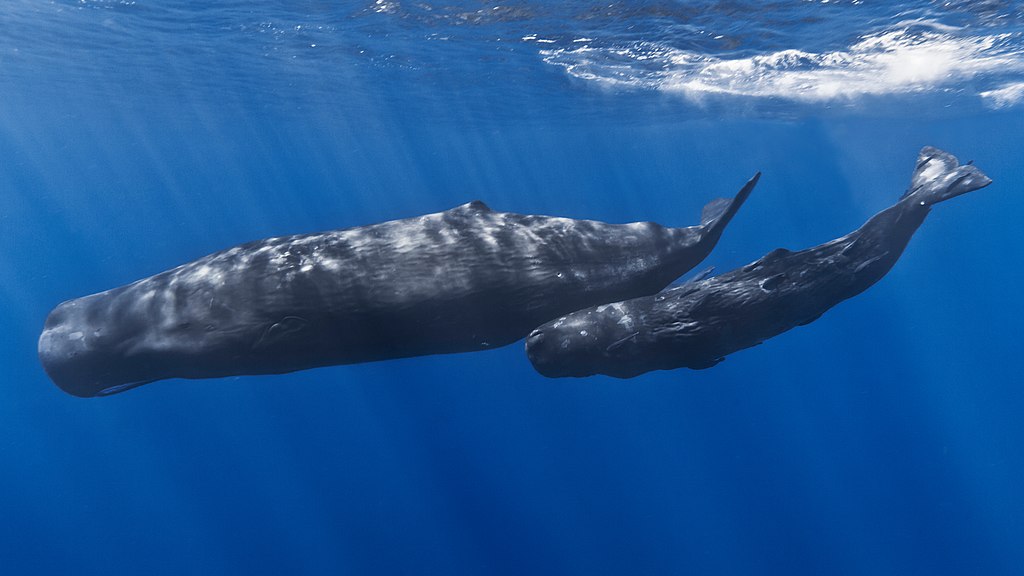
Did you know? @ProjectCETI (Cetacean Translation Initiative) is using advanced machine learning and gentle robotics to interpret the communication of one of the world’s most enigmatic ocean species: the sperm whale! #WorldWhaleDay Photos by Amanda Cotton