Global, regional, and national burden of HIV/AIDS, 1990–2023, with the estimated burden attributable to intimate partner violence and forecasted impacts of funding cuts through 2030: results from the Global Burden of Disease Study 2023 - The Lancet HIV https://t.co/yDDUFqeXBe
An MIT professor offered his class a coin flip: win $125 or lose $100. Most students said no. Then he proved refusing was the smart move, and it explains why you're bad with money.
The bet is a steal on paper. Flip a coin, win $125 or lose $100. Do the math and you come out $12.50 ahead on average. It's what economists call a more than fair bet. Most of the room still turned it down.
They weren't being dumb. They were being human.
Here's the idea underneath it. You don't actually care about dollars, you care about how much each dollar changes your life. And the dollars you already have are worth more to you than the ones you might win. So losing $100 stings harder than winning $125 feels good.
Then he pushed it further. He told the class he'd force them into that winning bet unless they paid to walk away. How much would they pay? The answer, with their standard math, was $43. People will hand over almost half their money to dodge a bet that's tilted in their favor.
That's not weakness. That's a law of how the mind values risk, and it has a name: risk aversion.
And it's the whole reason insurance exists. Being uninsured is just this coin flip in disguise. You quietly pay to never be the person who gets wiped out, even when the math says the odds are on your side.
Once you see it, you notice it everywhere. Every warranty, every premium, every bet you've refused. You weren't being irrational. You were pricing the fear.
Africa hosts a significant share of the world's highly-rated Maturity Level 3 national regulatory authorities. That’s exceptional leadership that's genuinely inspiring! Strong regulation is key to global and regional health security.
There are many points of agreement between @WHO_Europe and the African Medicines Agency:
✅Strong determination to work together @WHO, European Medicines Agency and @AU_AMA_
✅Essential to engage Africa at the beginning of phase 1 medicine and vaccine trials
✅Strong base to share experiences on AI and digital governance
✅Opportunity to learn about harmonizing regulatory frameworks through Africa’s capacity strengthening hub, including for emergencies
Grateful to Dr Delese Mimi Darko, Director General of @AU_AMA¬_ for acknowledging my deep connection to Africa, developed during my formative years there as a medical doctor, and for the valuable discussion.
We’re delighted to announce that the CEPI Board has appointed Professor Ibrahim Abubakar (@ProfIAbubakar) as CEPI’s next Chief Executive Officer.
Professor Abubakar, currently Vice-Provost (Health) and Professor of Infectious Disease Epidemiology at University College London (UCL), will take up the role in April 2027. @DrRHatchett, who has led CEPI since its founding in 2017, will remain as CEO until the end of his full term in April 2027, ensuring a smooth transition.
Welcoming Professor Abubakar to CEPI, Hon Prof Jane Halton, Chair of the CEPI Board, said: “Ibrahim’s appointment reflects an outstanding track record of delivery and achievement from leading the Lancet Nigeria Commission to acting as an advisor to the Nigerian Presidential Taskforce through to his current role at UCL. He has a clear, personal commitment to the values that make CEPI unique: international collaboration and scientific excellence in service of equitable access for everyone, everywhere. The world cannot afford to be caught unprepared by the next pandemic, and under Ibrahim’s leadership I am confident CEPI will be ready.”
Professor Abubakar brings extensive leadership experience across global public health and international organisations. He most recently served as Vice-Provost and Professor of Infectious Disease Epidemiology at UCL, overseeing the University’s health strategy and a portfolio of research, innovation and clinical partnerships.
“Through its focus on innovation and equitable access, CEPI has made huge progress over the last decade”, said Professor Abubakar. “I believe there is an opportunity to build on that progress and make a transformational difference to how the world tackles epidemics and pandemics. I am truly honoured to be given the opportunity to take on this role and am looking forward to leading CEPI through its next chapter.”
Please join us in welcoming Professor Ibrahim Abubakar to CEPInding track record of delivery and achievement from leading the Lancet Nigeria Commission to acting as an advisor to the Nigerian Presidential Taskforce through to his current role at UCL. He has a clear, personal commitment to the values that make CEPI unique: international collaboration and scientific excellence in service of equitable access for everyone, everywhere. The world cannot afford to be caught unprepared by the next pandemic, and under Ibrahim’s leadership I am confident CEPI will be ready.”
Professor Abubakar brings extensive leadership experience across global public health and international organisations. He most recently served as Vice-Provost and Professor of Infectious Disease Epidemiology at UCL, overseeing the University’s health strategy and a portfolio of research, innovation and clinical partnerships.
“Through its focus on innovation and equitable access, CEPI has made huge progress over the last decade”, said Professor Abubakar. “I believe there is an opportunity to build on that progress and make a transformational difference to how the world tackles epidemics and pandemics. I am truly honoured to be given the opportunity to take on this role and am looking forward to leading CEPI through its next chapter.”
Please join us in welcoming Professor Ibrahim Abubakar to CEPI!
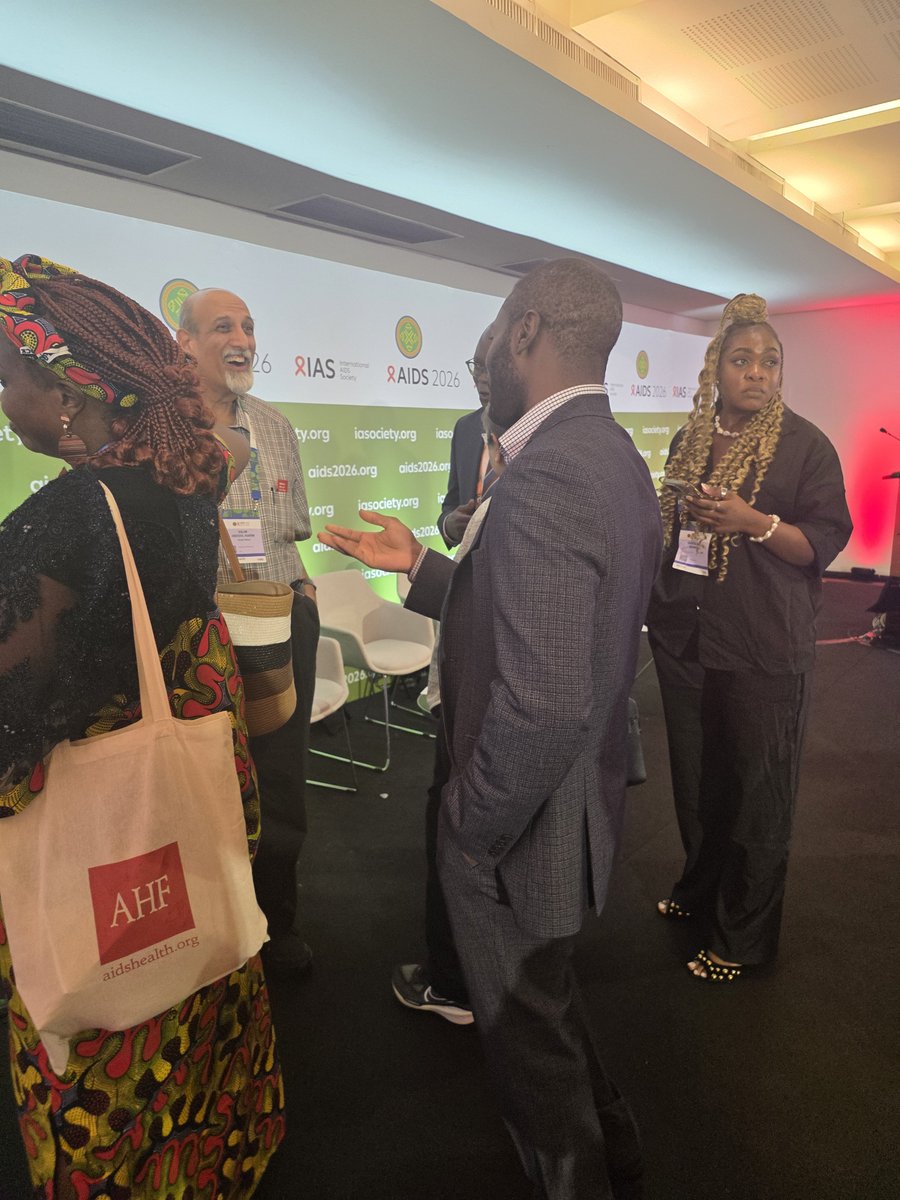
“It is disheartening that a map mislabeling African countries was displayed. African countries must be taken seriously. The African continent continues to bear the greatest burden of the HIV pandemic, and our focus must now return to advancing the HIV response.”
- IAS President-Elect @Kngure, #AIDS2026
https://t.co/pDqH5hbOUa
Excellent week at #IAS2026 in Rio de Janeiro.
Grateful for the opportunity to engage with global colleagues on the next generation of HIV research and emerging treatment strategies. Looking forward to building on these to improve health outcomes across the continent.
to advancing human-computer interaction and data visualisation, his work has profoundly influenced how we create, communicate, and understand complex information.
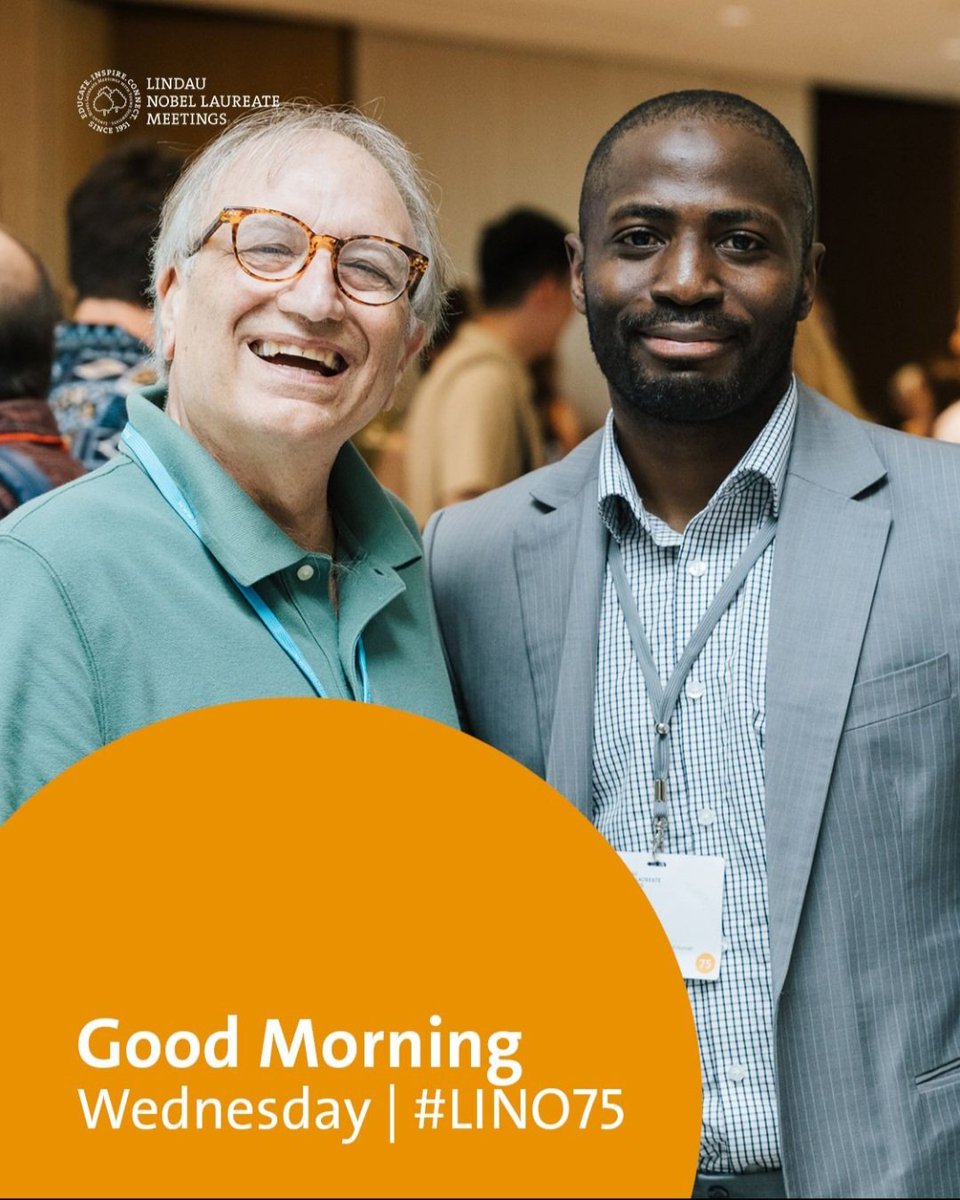
Really wonderful week from Lindau engaging with over 20 Nobel Laureates. One of the highlights for me was chatting with Pat Hanrahan, Turing laureate, about AI, computation, and the future of scientific discovery. From pioneering the computer graphics behind Toy Story and Pixar.
Wonderful week in Hong Kong at #NIDO2026 discussing pandemic preparedness, emerging viruses, and global health. Great to share our work, learn from colleagues, and build collaborations for future outbreak preparedness.
Wonderful and exciting week here in Hong Kong for #NIDO2026 talking about Nidoviruses and pandemic/epidemic preparedness.
Exciting times ahead utilising all resources available to generate critical evidence to inform practice!
@hkjcghi@GuptaR_lab@MedCambridge
Meeting old and new colleagues in humid Hong Kong #nidovirus 2026. 3 talks from our lab today and one more to come from me at the GHI session. however, the team already presented most of the cool data👀. Time to zoom out for a global perspective! @hkjcghi
In response to the current Ebola outbreak in the Democratic Republic of the Congo, researchers at @OxfordVacGroup are working urgently to produce and scale doses of a candidate vaccine targeting the virus.
Find out more ⬇️
https://t.co/wcobrItuZf
Modeling the Bundibugyo Ebola outbreak:
If we assume an R0 of 3 and a generation interval of 12 days, that would put patient 0 back around the beginning of March.
2.5 months ago. We need much better surveillance than this.