14 RULES WHISPERED IN RICH FAMILIES
1. Never look expensive, look unbothered
2. Don’t explain yourself, power never over‑explains
3. Keep assets boring and pleasures private
4. Learn which laws matter and which ones are for poor people only
5. Never fall in love before you understand leverage
6. Your surname opens doors, don’t embarrass it
7. Cash is for emergencies, credit is for opportunities
8. Friends are categorized: useful, neutral, entertainment
9. If something is loud, emotional, or viral, it’s already a bad deal
10. Always know who actually owns the room, it’s rarely the loudest person
11. Reputation is currency, one scandal costs more than ten failures
12. Silence is safer than honesty in most rooms
13. If you can’t control sleep, hunger, lust, or temper, you can’t control money
14. Always have an exit plan for jobs, cities, relationships, even friendships
🚨 Attention Doctors, Dentists & Medical Professionals!
The #IncomeTax Dept just dropped something BIG -Form No 25 under the new IT Rules 2026.
If you earn from your practice, this directly affects YOU. Here's everything you need to know 👇
Hi,@volklub look at the XEV 9e's spare tire. Mahindra is giving a 'bicycle tire' for emergencies on a ₹30L+ SUV! Huge Alloy vs this tiny space saver. Thoughts? 📉🚲 #MahindraXEV9e#CostCutting
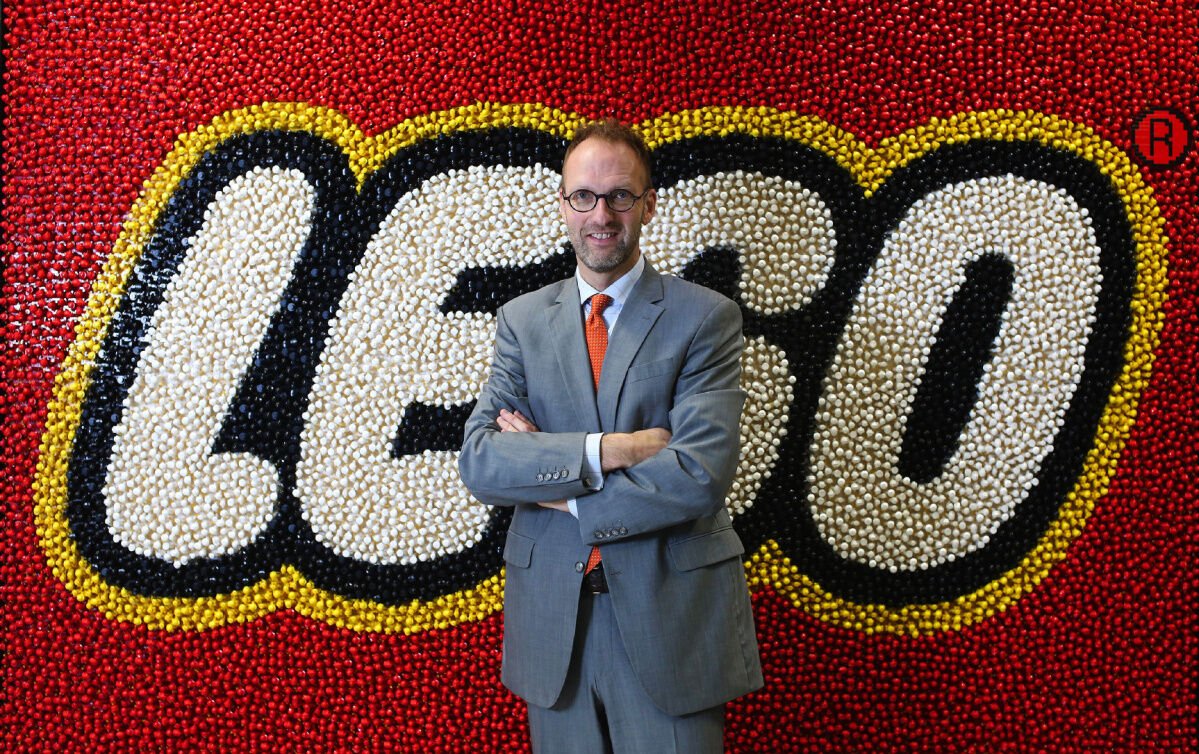
In 2004, LEGO was on the brink of bankruptcy.
A $230 million loss the year before. Global sales had fallen 29% in a year.
The board brought in a 34-year-old to save it.
His first move was not a strategy deck. It was something most CEOs would never do.
I recently had dinner with Dr Devi Shetty, the founder of Narayana Hospitals. For those who don't know him, he's the guy who figured out how to do open heart surgery for a few hundred dollars when the same procedure costs a bomb in the US. Narayana has 18,000 beds across India, and if you ask most middle-class people in Bangalore about it, they'll speak highly of it.
There was one thing I kept thinking about over and over again after meeting him.
Narayana's market cap is around ₹38,000 crore. Now compare that to pretty much any half-decent financial services business in India, and it'll be valued more than that, including Zerodha. A brokerage, worth more than a hospital chain, that has probably saved hundreds of thousands of lives.
I get the arguments. If you're a fund manager/analyst, you can immediately explain it away using margins, capex, asset-light vs asset-heavy, and all that, and I'm not saying the market is wrong.
But it's still a strange world we've built, where the businesses closest to money get valued the highest, and the ones doing the hard and essential things get priced like boring utilities. A hospital carries physical infrastructure, enormous liability, thin margins and the actual weight of keeping people alive. And somehow that's worth less than a platform for buying and selling stocks.
I don't have a clean take on this. All of this just felt odd.
Ps: Nothing here is investment advice. For that, go to @zerodhavarsity
There's a physicist at Stanford named Safi Bahcall who modeled this exact principle and the math is wild.
He calls it "phase transitions in human networks." When you're stationary, your probability of a lucky event is limited to your existing surface area: the people you already know, the places you already go, the ideas you've already been exposed to. Your opportunity window is fixed.
When you move, your collision rate with new nodes in a network increases nonlinearly. Double your movement (new conversations, new cities, new projects) and your probability of a serendipitous encounter doesn't double. It roughly quadruples. Because each new node connects you to their entire network, not just to them.
Richard Wiseman ran a 10-year study at the University of Hertfordshire tracking self-described "lucky" and "unlucky" people. The single biggest differentiator wasn't IQ, education, or family money. Lucky people scored significantly higher on one trait: openness to experience. They talked to strangers more, varied their routines more, and said yes to invitations at nearly twice the rate.
The "unlucky" group followed the same routes, ate at the same restaurants, and talked to the same 5 people. Their networks were closed loops. No new inputs, no new collisions.
Luck isn't random. Luck is surface area. And surface area is a function of movement.
The lobster emoji is doing more work than most people realize. Lobsters grow by shedding their shell when it gets too tight. The growth requires a period of total vulnerability. No protection, no armor, soft body exposed to the ocean.
That's the cost of movement nobody posts about. You have to be uncomfortable first. The new shell only hardens after you've already moved.
STOP USING YOUR iPAD LIKE A GLORIFIED NETFLIX SCREEN.
You are only using 10 percent of what iPadOS can really do.
Copy these 18 hidden settings to turn your tablet into a legitimate laptop replacement:
@Dr_AshokSeth discussing management of Ca in the Indian setting- imaging is gold standard but not all centres have this. Presented an algorithm for ca mx without imaging- studying balloon expansion in 2 orthogonal views key
#IndiaLive
Anesthetic Considerations in Pregnancy with heart disease: Journal of Obstetric Anaesthesia and Critical Care https://t.co/4L9Dw2bYSA
Glad to share our article published
The ultimate life hack is the ability to quickly reset and recover. From a bad interaction. From a bad day. From a missed workout. From a poor decision. You can start over whenever you want. You can't always control what happened, but you can control how long you carry it.
I wish I heard this in 2016.
I could have saved my wife.
Had any one said “Pay 1000 cr, I can save her” I would have paid.
Gone is Gone.
Now if it is true, I only feel sad for that 1000s of Oncology hospitals who invested heavily on Cyclotrons, PETCT, PETMR, LINEAC, Gamma Knife, Proton Therapy and Robotic surgeries.
Monopolies of
#GEHealthcare #SimensHealthineers too will come to an end.
Hmmm.
Introducing the percutaneous aorto-coronary bypass graft. The VECTOR procedure revascularizes the left main coronary artery using retrograde and antegrade steps: a retrograde wire exits the left main (distal graft), an electrosurgical wire exits the aortic root (proximal graft), a guidewire rail is created, and a stent graft is delivered from the aorta to the left main. What could possibly go wrong?
https://t.co/iNUNbHdGiT
Heartbreaking video revealing the reality of Canada’s emergency healthcare response. Indian-origin man Prashant Sreekumar dies after being made to wait 8 hours in an Edmonton hospital waiting room while lying on the floor pleading with chest pain.