I’ve been waiting to hit up the Maple Leaf Lounge in Toronto for a couple months. Fair to say I built it up way too much in my head.
But a self serve full bar isn’t too bad!
Anthropic needs to solve the computer/power problem or they will be the Friendster of the AI era.
I just ran a semi-complicated stock screening prompt on all four major AIs: Grok, Gemini, ChatGPT and Claude.
The first three returned comparable results. Claude refused to do the work.
Not the way to win guys…
“He just sat down for the final round of the PGA Championship. Have his girl tell him it’s a beautiful day outside and ask what they’re going to do today”
Come again? This FBI and DOJ with our DHS partners drafted and executed every search warrant today. But go ahead and take credit for our work while we smoke out the fraud plaguing Minnesota under your governorship.
Today’s raids by state and federal law enforcement happened because our state agencies caught irregular behavior and reported it. That’s how the system is supposed to work, and our agencies will keep at it as long as there are fraudsters around to put behind bars.
🦔An internal Amazon document obtained by Business Insider reveals that AI is making the company's existing tool duplication problem significantly worse. Teams are spinning up AI-powered applications so quickly that overlapping systems are proliferating faster than they can be consolidated. When AI ingests internal data and converts it to new formats, those outputs are stored separately from the original source, meaning if the original data is deleted or access is restricted, derived versions persist.
In one documented case, a system called Spec Studio continued displaying software details that had been made private in Amazon's internal code repository. Amazon's proposed solution to the AI sprawl problem is more AI.
My Take
This document is the organizational context underneath the AWS outage story from December, where an AI tool deleted an entire production environment while fixing a minor bug and took 13 hours to recover. That kind of failure is what happens when you've layered AI tools on top of AI tools inside a company where teams are independently spinning up systems faster than anyone can track them, where derived data persists after the source is restricted, and where the culture of autonomous two-pizza teams means nobody has full visibility into what's actually running.
Mandating AI adoption without the governance infrastructure to manage it produces exactly what Amazon's document describes. The speed at which AI lowers the barrier to building new tools is being treated as a feature while the document makes clear it compounds in both directions, more duplication being created faster and less of it being cleaned up. Amazon's answer to the AI sprawl caused by AI is more AI, which is also exactly what they proposed after the December outage. At some point that stops being a strategy.
Hedgie🤗
If you're in GTM, how many times has "our team will be slow to adopt that" come up in a meeting about a new tool? Keep your hands raised if that same conversation came up again in the next three follow-up meetings.
That line has derailed more software rollouts than bad product ever has. And almost every time, it's really about the UI. Too many clicks. Doesn't fit the workflow. Reps won't log in. The tool is fine, getting humans to use it correctly is the actual hard problem.
Salesforce shipped something Friday that I think quietly makes that problem obsolete.
It's called Headless 360. Agents can now do everything inside Salesforce without a human ever opening the browser. No UI required. The data and the logic are fully accessible programmatically, which means the interface your reps have been slow to adopt for years just became optional.
And that's worth sitting with for a second, because it runs deeper than a product update.
Enterprise software for the last 25 years has been built around one core assumption: humans navigate interfaces. Every design decision, every onboarding program, every CRM adoption initiative your RevOps team has ever run was built on that assumption. The whole business of enterprise SaaS, the implementation partners, the admin certifications, the change management playbooks, exists because getting humans to use the interface correctly was the hard problem.
Agents don't have adoption problems. They don't complain about the number of clicks. They don't need three rounds of enablement. They just consume the data and do the work.
Which means the new hard problem is what they're consuming. An agent pulling from a stale deck, an outdated pricing doc, or a CRM field nobody's touched in six months doesn't fail loudly. It just confidently gives you the wrong answer. And unlike a rep who might gut-check something before sending it to a prospect, the agent won't. It trusts whatever it's pointed at.
That changes how you have to think about evaluating software going forward. The criteria used to be ease of use, feature depth, and whether it integrated with your existing stack. I think it's about to become, "how clean is the data model, how good are the APIs, and how well does this serve agents consuming it programmatically rather than humans clicking through it?"
The vendors who built their moat on having the best interface are going to feel this shift. The ones who invested in the data layer underneath are going to pull ahead in ways that aren't obvious yet but will be very obvious in two or three years.
Salesforce doesn't make a bet like this unless they know the game is changing. The question is whether the rest of your stack is ready for the same shift.
David Friedberg: The Moon is the Next Industrial Frontier
“ I think the moon could end up being the next industrial frontier for humanity.
And the reason is, if you can get to the moon, it has an extraordinary abundance of material that we can mine, process, and manufacture into goods.
And ultimately the cost to ship those goods back to the Earth is zero.
And the reason is that on the moon, you can take advantage of the low gravity, it's about 1/6 the gravity, and the complete lack of an atmosphere, meaning that it's frictionless to move material off of the moon and very low energy to move it off of the moon.
In fact, the design for moving material off of the moon is to use what's called a mass driver, which is like a train track, like a rail, like an electric rail.
And you could put a package on that rail and use electricity to accelerate that package to 100 G-Force, shoot it back to the earth, or theoretically shoot it to Mars, and it will go to the exact point on the Earth you want it to go to, reenter the atmosphere, and land with a simple parachute where you want it to go.
So we could run continuous mining, continuous manufacturing processes on the moon at a fraction of the cost of what it would take to do it here on Earth.”
𝐀 𝐁𝐑𝐈𝐓𝐈𝐒𝐇 𝐍𝐄𝐖𝐒 𝐇𝐎𝐒𝐓 𝐉𝐔𝐒𝐓 𝐄𝐗𝐏𝐋𝐀𝐈𝐍𝐄𝐃 𝐓𝐑𝐔𝐌𝐏’𝐒 𝐒𝐓𝐑𝐀𝐓𝐄𝐆𝐘 𝐁𝐄𝐓𝐓𝐄𝐑 𝐓𝐇𝐀𝐍 𝐀𝐍𝐘𝐎𝐍𝐄 𝐈𝐍 𝐀𝐌𝐄𝐑𝐈𝐂𝐀𝐍 𝐌𝐄𝐃𝐈𝐀 — 𝐀𝐍𝐃 𝐇𝐄’𝐒 𝐓𝐄𝐑𝐑𝐈𝐅𝐈𝐄𝐃 𝐎𝐅 𝐖𝐇𝐀𝐓 𝐈𝐓 𝐌𝐄𝐀𝐍𝐒 𝐅𝐎𝐑 𝐄𝐔𝐑𝐎𝐏𝐄
GB News’ Alex Armstrong laid out the geopolitical map that American media refuses to draw: this war isn’t about toppling Iran. It’s about 𝐫𝐞𝐬𝐡𝐚𝐩𝐢𝐧𝐠 𝐭𝐡𝐞 𝐠𝐥𝐨𝐛𝐚𝐥 𝐨𝐫𝐝𝐞𝐫 — and America is winning on every front.
Start with oil. The Strait of Hormuz carries 𝟒𝟓% 𝐨𝐟 𝐂𝐡𝐢𝐧𝐚’𝐬 𝐨𝐢𝐥 𝐬𝐮𝐩𝐩𝐥𝐲. Trump effectively captured Venezuela’s oil supply in January. As Armstrong put it: “𝘓𝘰𝘰𝘬 𝘸𝘩𝘰’𝘴 𝘨𝘰𝘵 𝘵𝘩𝘦 𝘶𝘱𝘱𝘦𝘳 𝘩𝘢𝘯𝘥 𝘢𝘭𝘭 𝘰𝘧 𝘢 𝘴𝘶𝘥𝘥𝘦𝘯. 𝘈𝘮𝘦𝘳𝘪𝘤𝘢 𝘪𝘴 𝘯𝘰𝘸 𝘤𝘰𝘯𝘵𝘳𝘰𝘭𝘭𝘪𝘯𝘨 𝘵𝘩𝘦 𝘷𝘢𝘴𝘵 𝘴𝘸𝘢𝘵𝘩𝘦𝘴 𝘰𝘧 𝘰𝘪𝘭 𝘵𝘩𝘢𝘵 𝘊𝘩𝘪𝘯𝘢 𝘯𝘦𝘦𝘥𝘴.” China is in the middle of a tariff negotiation with Trump — and suddenly its entire energy supply depends on American goodwill.
Then Europe. With Russian energy off the table and domestic energy hollowed out by the “𝘭𝘦𝘧𝘵𝘪𝘴𝘵 𝘰𝘣𝘴𝘦𝘴𝘴𝘪𝘰𝘯 𝘸𝘪𝘵𝘩 𝘯𝘦𝘵 𝘻𝘦𝘳𝘰,” Europe is becoming 𝐰𝐡𝐨𝐥𝐥𝐲 𝐝𝐞𝐩𝐞𝐧𝐝𝐞𝐧𝐭 𝐨𝐧 𝐀𝐦𝐞𝐫𝐢𝐜𝐚𝐧 𝐨𝐢𝐥 𝐚𝐧𝐝 𝐠𝐚𝐬. Armstrong: “𝘛𝘩𝘦𝘺 𝘸𝘪𝘭𝘭 𝘥𝘪𝘤𝘵𝘢𝘵𝘦 𝘵𝘦𝘳𝘮𝘴 𝘢𝘯𝘥 𝘶𝘴𝘦 𝘦𝘯𝘦𝘳𝘨𝘺 𝘢𝘴 𝘭𝘦𝘷𝘦𝘳𝘢𝘨𝘦, 𝘯𝘰𝘵 𝘫𝘶𝘴𝘵 𝘦𝘤𝘰𝘯𝘰𝘮𝘪𝘤𝘢𝘭𝘭𝘺, 𝘣𝘶𝘵 𝘨𝘦𝘰𝘱𝘰𝘭𝘪𝘵𝘪𝘤𝘢𝘭𝘭𝘺 𝘵𝘰𝘰.”
Armstrong connected the dots to what the Pentagon calls 𝐆𝐫𝐞𝐚𝐭𝐞𝐫 𝐍𝐨𝐫𝐭𝐡 𝐀𝐦𝐞𝐫𝐢𝐜𝐚 — Greenland through the Panama Canal, the entire Western Hemisphere secured as a self-sufficient American economic and security zone. “𝘕𝘰 𝘮𝘰𝘳𝘦 𝘨𝘭𝘰𝘣𝘢𝘭 𝘱𝘰𝘭𝘪𝘤𝘪𝘯𝘨, 𝘯𝘰 𝘮𝘰𝘳𝘦 𝘦𝘯𝘥𝘭𝘦𝘴𝘴 𝘧𝘰𝘳𝘦𝘪𝘨𝘯 𝘤𝘰𝘮𝘮𝘪𝘵𝘮𝘦𝘯𝘵𝘴, 𝘫𝘶𝘴𝘵 𝘢 𝘧𝘰𝘳𝘵𝘪𝘧𝘪𝘦𝘥, 𝘳𝘦𝘴𝘰𝘶𝘳𝘤𝘦-𝘳𝘪𝘤𝘩 𝘱𝘰𝘸𝘦𝘳 𝘣𝘢𝘴𝘦 𝘵𝘩𝘢𝘵 𝘰𝘵𝘩𝘦𝘳𝘴 𝘩𝘢𝘷𝘦 𝘯𝘰 𝘤𝘩𝘰𝘪𝘤𝘦 𝘣𝘶𝘵 𝘵𝘰 𝘳𝘦𝘭𝘺 𝘰𝘯. 𝘛𝘩𝘢𝘵 𝘪𝘴 𝘵𝘩𝘦 𝘯𝘦𝘸 𝘈𝘮𝘦𝘳𝘪𝘤𝘢.”
The most striking part was his warning for Britain: “𝘞𝘦 𝘩𝘢𝘷𝘦 𝘯𝘰 𝘦𝘯𝘦𝘳𝘨𝘺 𝘴𝘦𝘤𝘶𝘳𝘪𝘵𝘺. 𝘞𝘦 𝘪𝘮𝘱𝘰𝘳𝘵 𝘢𝘳𝘰𝘶𝘯𝘥 60% 𝘰𝘧 𝘰𝘶𝘳 𝘧𝘰𝘰𝘥. 𝘞𝘦 𝘩𝘢𝘷𝘦 𝘯𝘰 𝘮𝘢𝘫𝘰𝘳 𝘪𝘯𝘥𝘶𝘴𝘵𝘳𝘺. 𝘖𝘶𝘳 𝘮𝘪𝘭𝘪𝘵𝘢𝘳𝘺 𝘪𝘴 𝘥𝘦𝘤𝘪𝘮𝘢𝘵𝘦𝘥.” He described Britain heading toward 𝐚 𝐝𝐚𝐫𝐤 𝐚𝐠𝐞 𝐧𝐨𝐭 𝐬𝐞𝐞𝐧 𝐢𝐧 𝐨𝐯𝐞𝐫 𝟏,𝟎𝟎𝟎 𝐲𝐞𝐚𝐫𝐬 as America withdraws from its traditional role.
When a foreign ally’s own news anchors are publicly acknowledging that Trump’s strategy is working — even as it leaves them behind — that tells you everything about who has the leverage.
𝐓𝐡𝐞 𝐫𝐞𝐬𝐭 𝐨𝐟 𝐭𝐡𝐞 𝐰𝐨𝐫𝐥𝐝 𝐬𝐞𝐞𝐬 𝐰𝐡𝐚𝐭 𝐀𝐦𝐞𝐫𝐢𝐜𝐚𝐧 𝐦𝐞𝐝𝐢𝐚 𝐰𝐨𝐧’𝐭 𝐚𝐝𝐦𝐢𝐭: 𝐓𝐫𝐮𝐦𝐩 𝐢𝐬𝐧’𝐭 𝐬𝐭𝐚𝐫𝐭𝐢𝐧𝐠 𝐜𝐡𝐚𝐨𝐬. 𝐇𝐞’𝐬 𝐛𝐮𝐢𝐥𝐝𝐢𝐧𝐠 𝐚 𝐟𝐨𝐫𝐭𝐫𝐞𝐬𝐬.
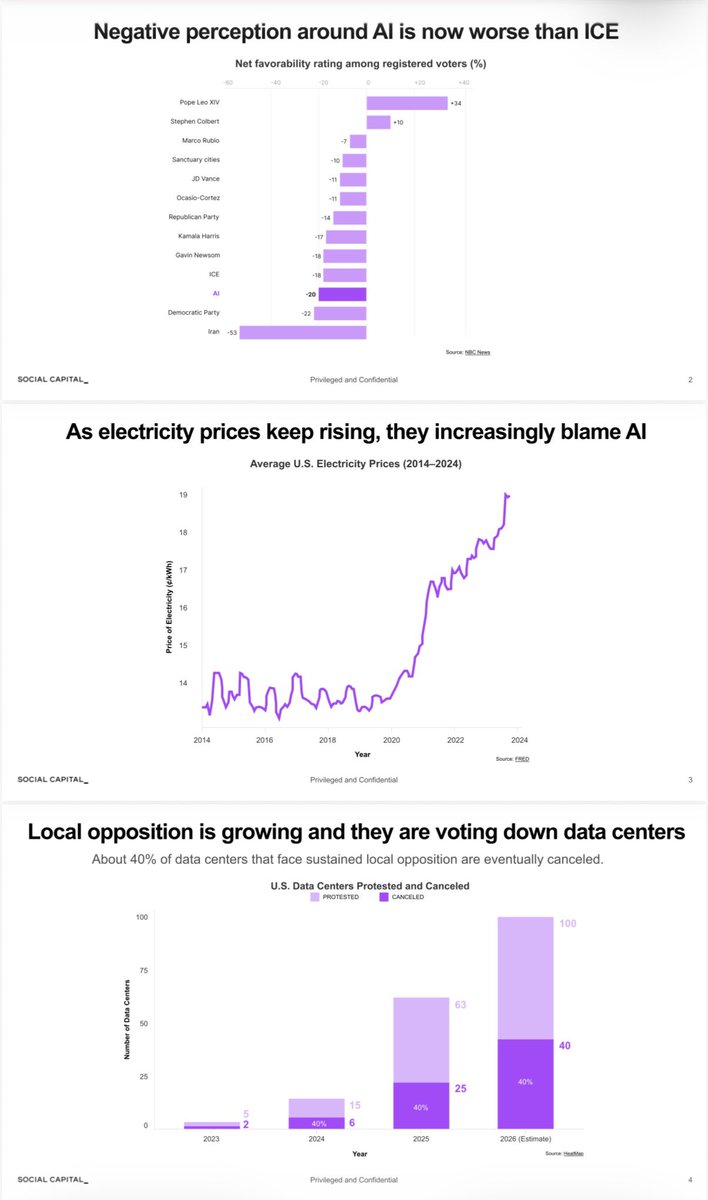
If tech leaders don’t organize and get America on their side, the situation on the ground - as seen in the three charts below - will get worse before it gets better.
That, in turn, will tank the US economy since AI is responsible for much of our incremental GDP.
Someone needs to step up.
LSU OL Jordan Seaton speaks on why he left Coach Prime and the Buffalos..
“To me Colorado was all fun and games, practices weren’t legit. It was all about Prime and which rapper he could get to visit and perform. I loved Lil Wayne but he had no business being there”
I don’t think people truly understand what’s about to happen with 𝕏 Money.
This is Elon going back to his roots - back to https://t.co/xPHLRiKvNk - and building what he always wanted in the first place: one place that runs your entire financial life.
When he rebranded Twitter to 𝕏 in 2023, he said straight up that we’re adding the ability to conduct your entire financial world. He even said you may not even need a traditional bank account.
Most people brushed that off. And now it’s becoming real.
𝕏 Money has already been live in closed beta internally within the company. A limited external beta is expected soon, and they’ve already secured money transmitter licenses in over 40 states plus DC. 𝕏 Payments is registered with FinCEN. Visa is officially partnered. You’ll be able to fund your wallet instantly, send peer-to-peer payments, move money to your bank, and eventually use a debit card.
And I think this is just the beginning.
This will probably start as a simple wallet where you can send money as easily as sending a DM. With this technology, you can pay creators, pay subscriptions, pay whatever bills, shop inside the app, get paid inside the app, and much more.
Then, there will be high-yield savings, you can invest, you can get loans, have money market accounts, maybe even treasury access, cool smart cashtags that let you see live stock prices in your timeline and execute trades seamlessly, crypto integration, potentially full asset management… the list goes on and on… Elon literally said this is meant to be the central source of ALL monetary transactions.
Bro… think about that for a sec.
Your 𝕏 profile becomes your financial identity.
Everyone you follow is already there. Everyone you interact with is already there. That social graph becomes your distribution engine. Like, you won’t need a separate banking app, no need for a separate investing app, no need for a separate payment app… this all lives where you already spend your time. Right here on 𝕏.
Look at WeChat in China, which Elon always alluded to. Payments, messaging, shopping, investing - all integrated in one app. It handles $ trillions in volume and became deeply embedded in everyone’s daily life. Now 𝕏 is building the Western version of that, but with a more global reach, and xAI’s AI layered on top of all this.
Before you call me crazy, you have to understand how big this opportunity is.
Digital payments globally are measured in the tens of $ trillions of dollars annually. Even just capturing a small slice of that across hundreds of millions, and eventually a billion, users can change everything. 𝕏 already has the audience. That lowers customer acquisition costs significantly. Add fintech revenue on top of ads, plus float, plus lending, plus investing tools, and we’re talking about a completely different valuation profile.
Now, $44B for this company looks like the bargain of the decade… this was one of the main reasons I invested in 𝕏.
And if they execute the way they’ve executed at Tesla and SpaceX, this could truly fundamentally redefine how people handle $ .
Most people today still see 𝕏 as just a social media app. I see it as the foundation of a financial system layered on top of a global network. Ultimately becoming the “everything” app.
And this I believe is a once-in-a-generation opportunity.
Elon is calling this a game-changer.
I believe him.
🔥🚨 BREAKING: CNN just had to broadcast a furious Iranian-American EVISCERATING the Democrat party LIVE for bashing Trump amid the Iran strikes!
Iranian-American Moj Mahdara: "It is imperative the Democrat Party WAKE UP and get past their dislike of President Trump...”
“This will be like ending the Soviet Union, the Berlin Wall.”
“This is a transformational moment for HUMANKIND!"
Tonight, we reached an agreement with the Department of War to deploy our models in their classified network.
In all of our interactions, the DoW displayed a deep respect for safety and a desire to partner to achieve the best possible outcome.
AI safety and wide distribution of benefits are the core of our mission. Two of our most important safety principles are prohibitions on domestic mass surveillance and human responsibility for the use of force, including for autonomous weapon systems. The DoW agrees with these principles, reflects them in law and policy, and we put them into our agreement.
We also will build technical safeguards to ensure our models behave as they should, which the DoW also wanted. We will deploy FDEs to help with our models and to ensure their safety, we will deploy on cloud networks only.
We are asking the DoW to offer these same terms to all AI companies, which in our opinion we think everyone should be willing to accept. We have expressed our strong desire to see things de-escalate away from legal and governmental actions and towards reasonable agreements.
We remain committed to serve all of humanity as best we can. The world is a complicated, messy, and sometimes dangerous place.