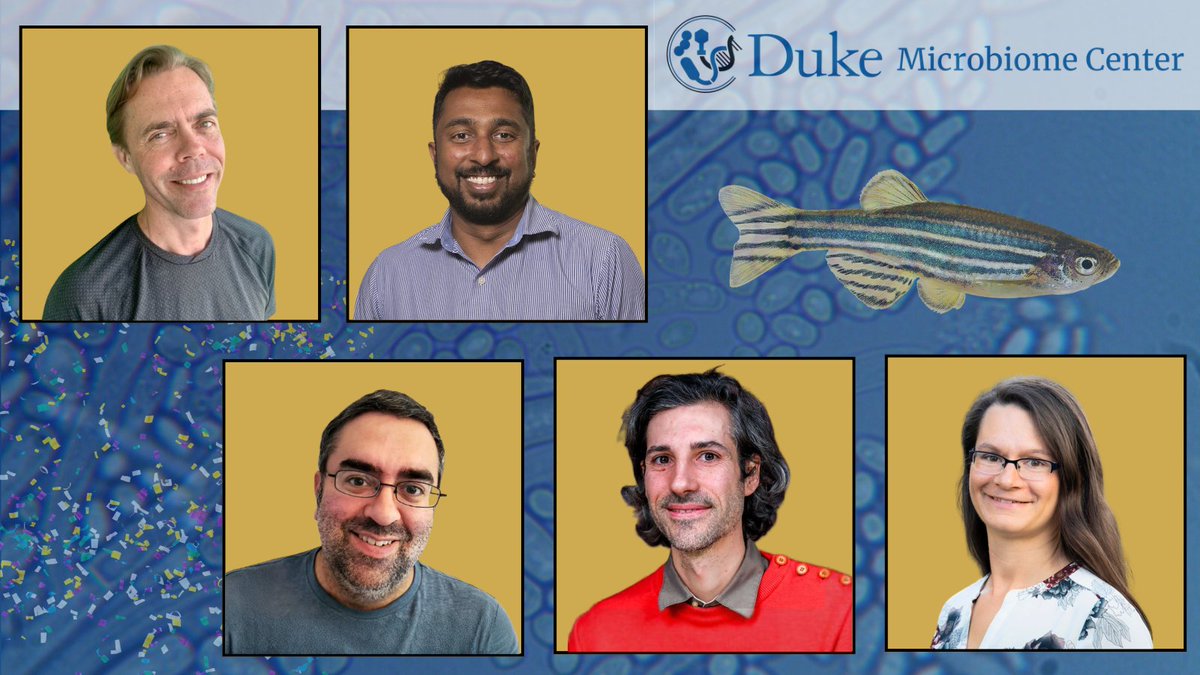
We're proud to announce that multiple DMC members have been awarded seed funding to develop emerging interdisciplinary collaborations. Congrats to @RawlsLab, Nishad Jayasundara, @Jason_W_Arnold, Nathan Bossa, and Claudia Gunsch. Read more: https://t.co/R1JZjY336P
Absorptive cells called lysosome-rich enterocytes (LREs) play a critical but little-known role in neonatal digestion. Through a new @NIH grant, @DukeMedSchool's @RawlsLab and @BagnaLab will investigate the formation and function of LREs and how various stimuli can impact them.
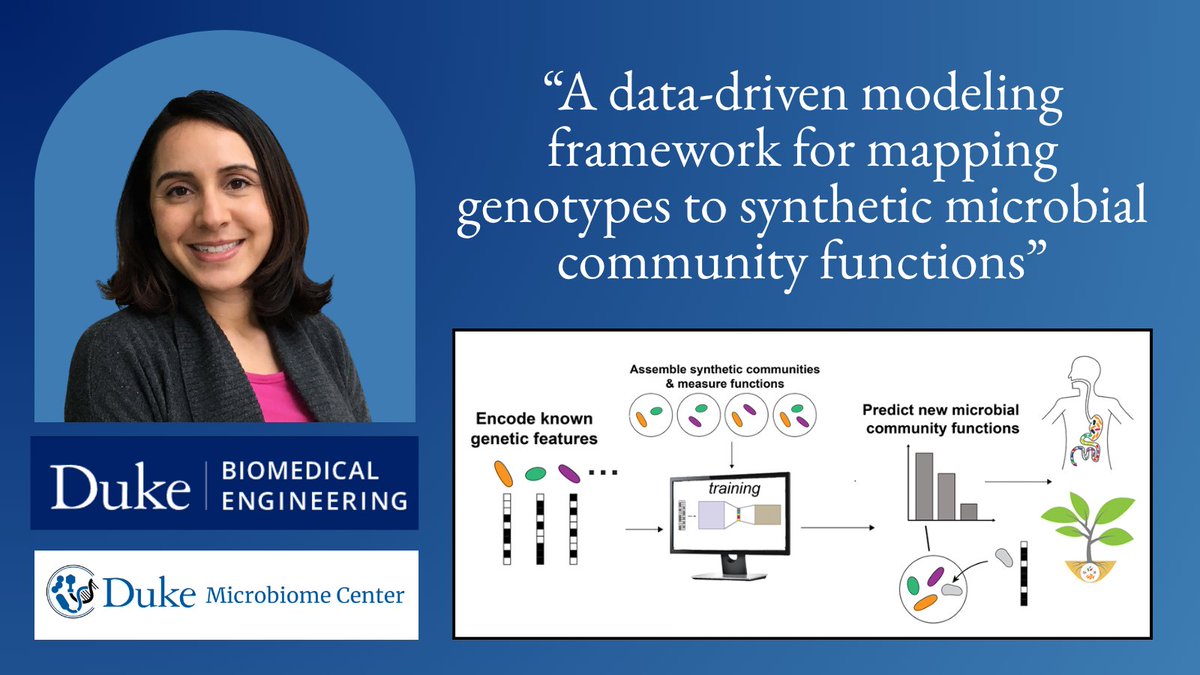
Species abundance has long been the default variable in predicting the functions of microbial communities, but new research from @DukeUBME and published in @CellPressNews could offer a more reusable model that represents species by their genetic features. https://t.co/jpVfCWXlhp
Modifying the intestinal microbiome could treat and even prevent growth faltering in extremely premature infants, according to new research spearheaded by Noelle Younge and published in @jclinicalinvest.
New research led by @Duke_Childrens' Noelle Younge, MD, MHS, finds evidence that the gut microbiome plays a direct role in growth faltering among extremely preterm infants, opening the door to potential new therapies for vulnerable babies in the NICU.
https://t.co/A59TmjuTrZ
Could a sugar molecule produced by a gut bacterium offer a viable alternative to GLP-1s? A new paper in @cellhostmicrobe sheds light on a previously unknown link between the gut microbiome and metabolism.
Neeraj Surana, MD, PhD, and colleagues identified a previously unknown connection between the gut microbiome and metabolism.
Their findings suggest a naturally occurring gut bacterium may help regulate energy expenditure and visceral fat.
https://t.co/2poderSMIb
Numerous fields study biofilm environments, which can make it difficult to analyze disparate datasets. But, a new paper in @ASMicrobiology from @DukeU Professor @aandrewdjones shows how engineering tools can be applied to microbiology for meta-analysis. https://t.co/wXo9D7gUM6
Researchers at @DukeGHI have landed a five-year R01 grant from the @NIH to study Plasmodium falciparum (the single-cell parasite responsible for the most fatal cases of malaria) and how sickle-trait hemoglobin adapt. The ultimate goal? To develop future interventions.
Beauty is skin-deep, but what about aging? A new perspective in @aaas from DMC Director Julia Oh and @jacksonlab's @Jalili_Sasan explores the role of the skin microbiome in healthy aging. https://t.co/ZqxlEXEFVc
We already know that climate change impacts evolution, but a new study in @RSocPublishing by @DukeU researchers shows how intra- and interspecies interactions, not just abiotic factors, can influence genetic diversity as a response. https://t.co/MJHZ1MizYK
After more than a decade, John Rawls is stepping down as DMC director. Julia Oh, who served as co-director, has assumed the role. Please join us in thanking John and congratulating Julia! For more on the transition, check out this post from @DukeMedSchool https://t.co/TywstCj4kh
A new paper in @MicrobioSoc explores the co-evolution of viruses and hosts. Co-authored by @DukeTrinity's Brian McAdoo, Anne Yoder, and former PhD student @biologelise, the study found unique viruses among Madagascar primates and rodents. https://t.co/visPvjwswy
Phages could help create environmentally friendly anti-biofouling coatings in marine applications. And with a new grant from @USNavyResearch, @jesethdv, assistant professor of civil and environmental engineering, will investigate that exciting possibility.
Ever been trapped in the tedium of analyzing genomic variants across large datasets? WeavePop, a open-source new workflow created by @DukeMGM researchers and available on @github, identifies small variants in eukaryotic haploids #G3journal@GeneticsGSA https://t.co/3zs1fdIcjU
Congrats to @gutbrains in @DukeNeuro and @Duke_GI_ for receiving an @NIH grant for "A gut sense for dietary lysine." This research will explore how the sensory cells of the small intestine detect and potentially prioritize the amino acid lysine.
A new paper in @jclinicalinvest, co-authored by @valdi001, shows how pathobiont colonization combined with host susceptibility and specialized immune responses can inflame regions of the colon in Crohn's. These findings could inform geo-targeted therapies https://t.co/kQEeXj4BWZ
Historically, the biological effects of microbiome-derived metabolites have been difficult to characterize, but a recent @iScience_CP paper (featuring research from @DukeUBME) presents a new, cutting-edge approach that leverages machine learning. https://t.co/MMh2lHvl5X
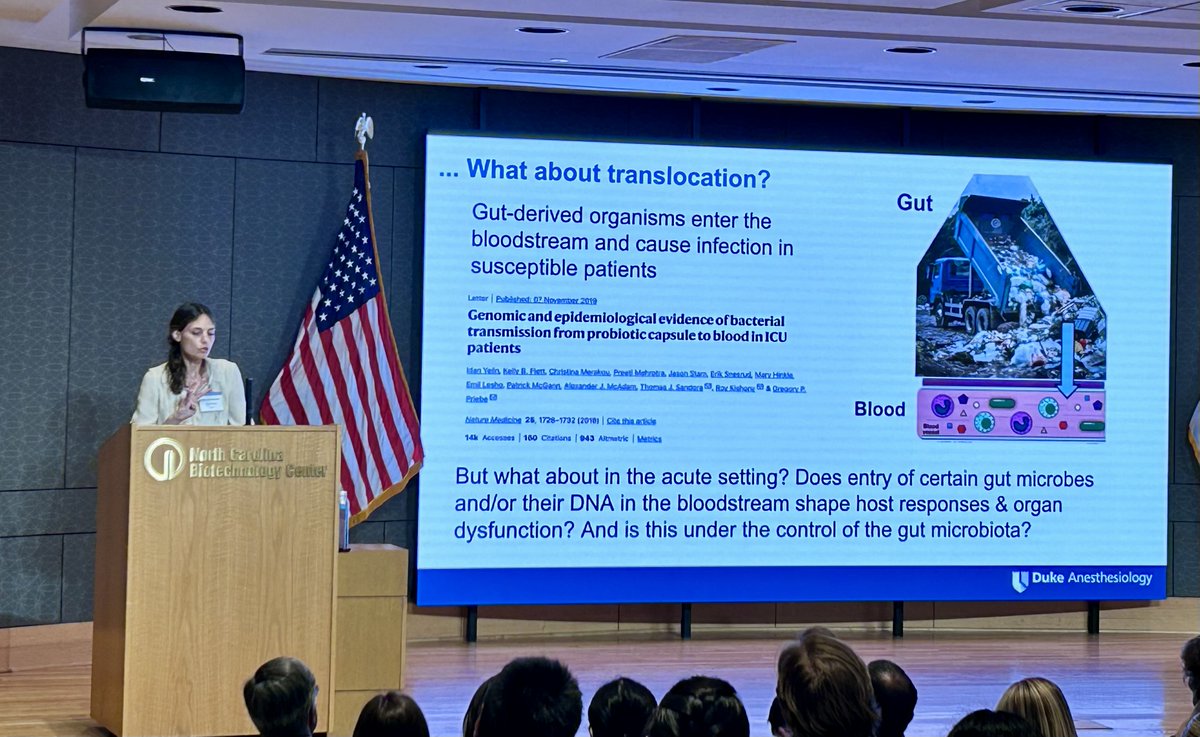
We're onto Translational Microbiome Research: One standout presentation is from Dr. Mara Serbanescu with @Duke_Anesthesia, who is investigating how the prevalence of gut-derived microbes in the bloodstream can correlate with ICU stay duration #NCMicrobiomeSymposium
Today is the #NCMicrobiomeSymposium, hosted by @ncbiotech! The event kicked off with multiple talks on Microbiome Methodological Advances, including DMC member Dr. Shuo Han whose lab is identifying new gut bacteria that impact lifespan. https://t.co/6Q8OYwjplf
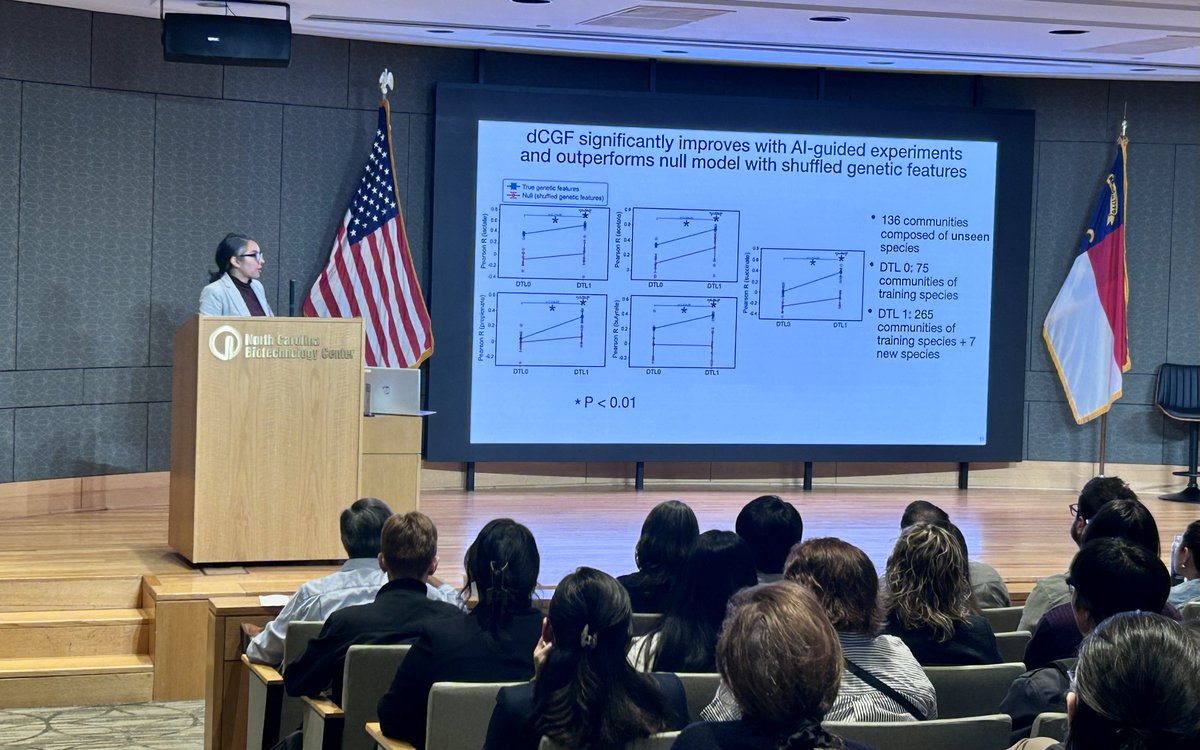
Microbial communities play a crucial role in shaping environments, but how can we predict their behavior? Dr. Ophelia Venturelli in @DukeUBME is investigating the potential of machine learning in this context https://t.co/RXXuUxe8uJ #NCMicrobiomeSymposium