@British_Enjoyer I think it might have something to do with army death payments to the families of those who die in Ukraine since they are mostly contract soldiers.
Reform UK will reverse Reeves’ disastrous rise in the rate of Employers’ National Insurance.
But we’ll do this for British workers only.
We’ll fund this by introducing the Employer Migrant Labour Levy.
Businesses will have to pay an annual fee for each migrant worker. It’ll hit unskilled migrant workers much, much harder than high skilled ones.
Along with our migration and welfare reforms, this will see millions of migrants we don’t need leave.
And get millions of Brits off welfare and into work.
@BabyJj7np @OrthodoxPole81 You are right, I didn't notice the link to the website and thought the picture was the whole thing. Disappointing, I enjoyed his book on confession,
‘Recognising Him as good, reason agrees that human sins can be forgiven. Recognising Him as just, it believes that sins can be forgiven only by satisfying justice.
God is not only infinitely good, but also infinitely just. His goodness is just and His Justice is good. He demands satisfaction for sin, as love for good.
Out of His boundless love for good, He does not tolerate sin, turns away from it, leaves it to its consequences, or, what is the same, strikes it with punishment.
To leave sin unpunished would mean, in God, showing favour to sin. Therefore, as infinitely good, as infinitely loving good, He infinitely disfavours sin and is just toward sin. So they [deniers of the atonement] are grossly mistaken when they think that it is unworthy of the heavenly Father to demand satisfaction for sin.’
–St. Philaret (Gumilevsky), Orthodox Dogmatic Theology, Vol. II, §209
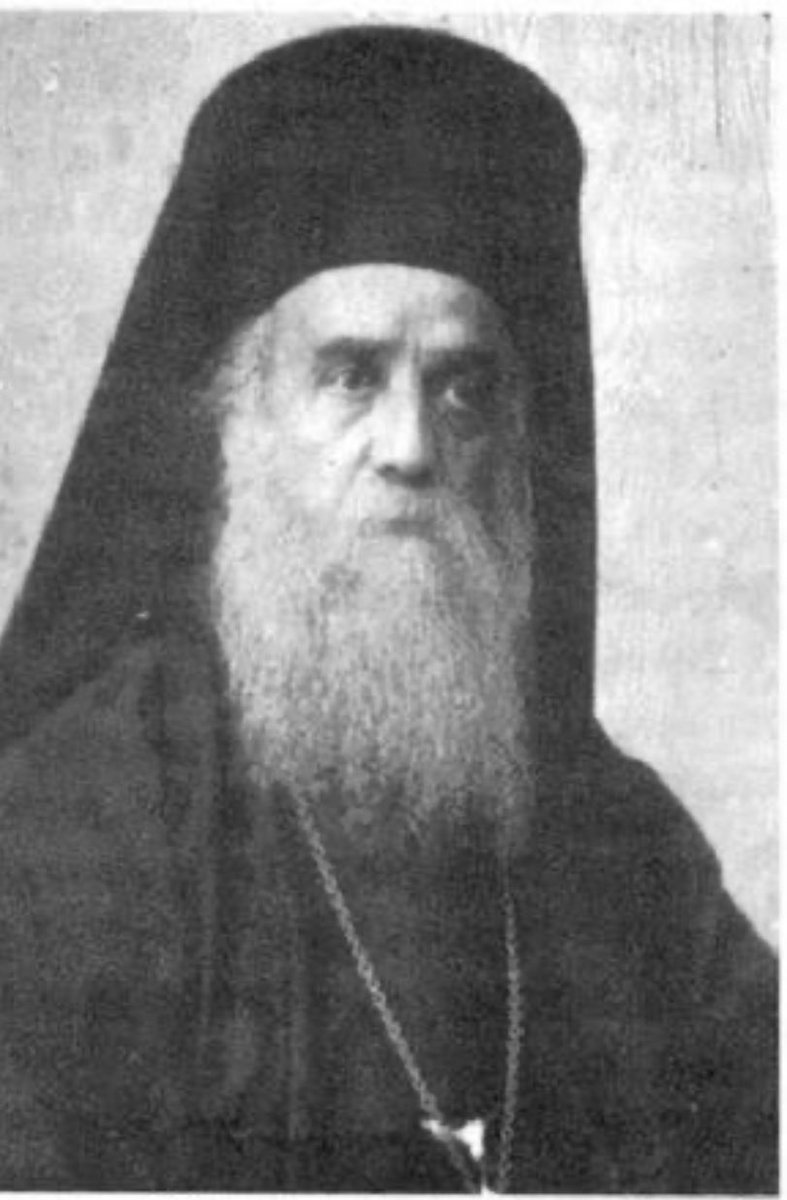
This may be the quote to end all quotes on this topic a hidden gem from Saint Nectarios of aegina my own patron may his prayers be over us confessing PSA in clear and explicit terms that every punishment due to man was punished in the Son for propitiation ie appeasement of divine justice
As the Great High-Priest, Our Lord Jesus Christ offered Himself as a spotless sacrifice unto God the Father, a propitiatory sacrifice, becoming both sacrificer and sacrificed; He both propitiated and offered sacrifice to the divine righteousness which was offended by the sin of men through the transgression of the divine law, taking upon Himself every punishment as a sinless advocate of the human race before God the Father, every punishment which sinful man deserves, and pouring out His own precious salvific blood upon the Cross and ratifying the New Covenant which is made with the Father, through which everyone who believes in Him is saved, confessing His propitiatory death on the Cross.This sacrifice is the purifying spring of humanity, which cleanses and washes away all the filth of sin from the human race, and sanctifies those who believe in Him and are baptised in the name of the Holy Trinity, Which ratifies the New Testament.
Saint Nectarios theological studies First study on the Church of Our Lord and Saviour Jesus Christ Chapter 2
@elkkiea My priest explained it like this "in Adam, all humanity is one body, so his fall is truly ours, not as personal acts, but as a shared condition of guilt and death. In Christ, that same shared humanity is raised and healed, so His righteousness becomes ours as well
Rejection of St. Augustine as a feature of Orthodoxy is a concession that we are not only not the faith of the first millennium, but are not the universal Church.
‘Have we sins?—A very great multitude. Who, then, covers us from the arrows of the Justice and wrath of God?—These sufferings of the Lord. To whom do we turn with prayer for mercy?—To the crucified Lord. For the sake of what is absolution in sins granted to us?—For the sake of the death upon the Cross.
Consequently, all our sins were here, upon this Cross; all increased its heaviness, wounded the Lord. Who, then, after this shall hold himself guiltless in His sufferings and death?
We ourselves confess this, albeit without clear thought and exact feeling, every time that we sing: “Who was crucified also for us....and suffered and was buried”; every time that we hear: “He was wounded for our sins and tormented for our iniquities”(Isa. 53:5). For ours—or perhaps for those of others? No, for ours; precisely for those which each of us now recognises in himself. And this is precisely what we must add to the pains of our heart concerning the suffering Lord: the pain that by our sins we increased the heaviness of His sufferings. Here, before the face of the Lord, each of us must with contrition confess: in these wounds, O Lord, there is also my part.
Fear not the heaviness of the guilt. In this self-condemnation lies also the source of justification. By appropriating to oneself culpability in the sufferings of the Lord, one appropriates also their justifying power.
Therefore, in that very minute in which we shall utter in the heart: we too are guilty, O Lord, in these Thy sufferings, forgiveness and absolution shall be uttered to us in heaven. Only let us not forget to add to this yet one needful word, namely: guilty—we shall be no more. We shall no longer offend Thee, O Lord, with our sins; wound Thee with unrighteous deeds; crucify Thee a second time—afterwards, in the future—by iniquities.’
–St. Theophan the Recluse, Serm. on Good Friday, before the Shroud (1856)
“But Christ came, setting human nature free and changing the common curse into a shared blessing. He took upon Himself our guilty nature from the most pure Virgin and united it, new and unmixed with the old seed, to His divine person.“ - St. Gregory Palamas
“Slander is when you reveal to others the sins and faults of your neighbour. For example, if you report that so-and-so told a lie, or got angry or fornicated or did something else bad. By doing so, you’re already committing slander.”
Abba Dorotheos, On Not Judging Our Neighbour
"Therefore, it is the Father that gave the Son and, if we may say so, he himself is said to have slain Emmanuel. And so in the book of Psalms the person of Christ is presented… saying, 'They have persecuted the one you yourself have struck down'''
St Cyril of Alexandria
@HaydenYate9132@YariLogos I believe that God transcends the dialectic of the one and the many.
When we talk about "the one and the many" we mean things like "how are there many men but one human nature". And in such cases God is the creator of both the one (human nature) and the many (men).
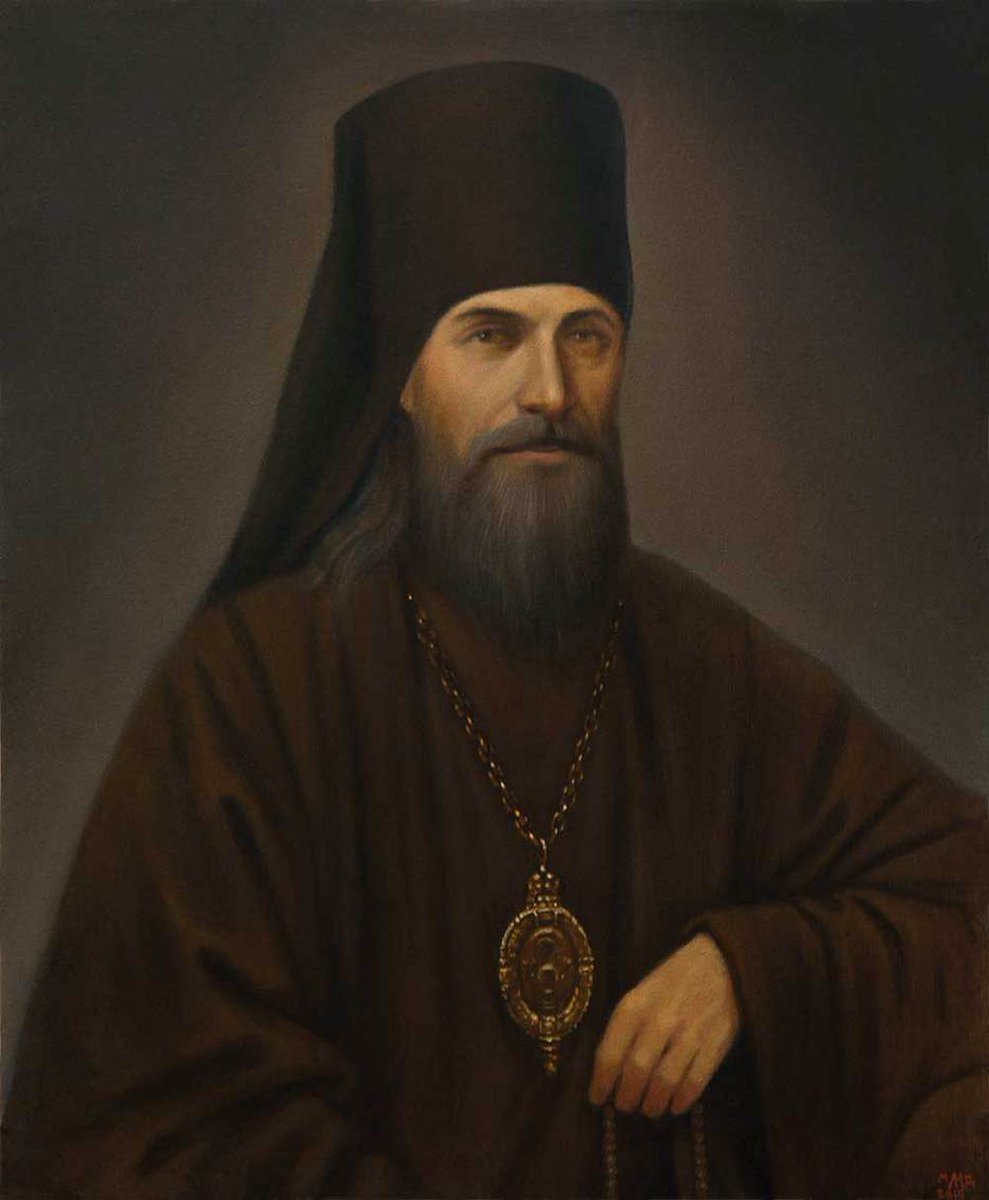
‘The insightful and wonderful elder of the Gethsemane Skete, Fr. Isidore, told me about the following incident. Three monks, including Fr. Isidore himself, came from the Trinity-Sergius Lavra as candidates for the rank of hierodeacon to the Metropolitan of Moscow, Philaret, so that he could choose the most worthy among them. Philaret sat them down and asked one of them, “How are we saved?”
“By your prayers, Your Eminence!” replied the monk. “You are a fool and nothing more,” replied Philaret.
Then he asked the same question to the second candidate. “Humility,” replied the monk. “That is more correct! I will send you to the kitchen, and we will see how you humble yourself there.”
Finally, Metropolitan Philaret asked Father Isidore the same question: “How are we saved?” Isidore replied: “By the precious blood of our Lord Jesus Christ.” “Correct,�� said the saint, and chose Fr. Isidore as a hierodeacon.’
–St. Seraphim (Sobolev), Fiery Flame: The Life and Legacy of Archbishop Seraphim (Moscow: Sretensky Monastery, 2015), pg. 220.
Saying that God does not forgive except in a manner consistent with Divine Justice—that is, with His moral law, upon which the universe is founded, and with His own inherent righteousness—is no more a constraint upon God than saying that “God does not commit evil.” For God cannot, even in principle, act contrary to His own divine attributes. Justice is no less intrinsic to Him than Goodness and Mercy, as the saints and the dogmatic tradition unanimously affirm.
‘To whom was the price of blood paid for Redemption? Christ the Lord paid it to the eternal Justice of God, which could not free us from guilt and punishment for sin until satisfaction had been rendered to it.’
–St. Theophan the Recluse, Commentary on Ephesians 1:7
Furthermore, Justice & Mercy are not opposed in God. Justice demands the punishment of & avengement of sin. Mercy provides free forgiveness in Christ.
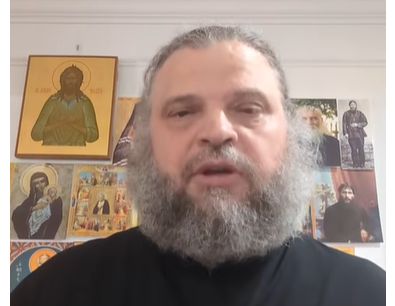
Fyodor Shumskikh, a conservative priest of the Russian Orthodox Church who has been suspended from ministry, addressed Patriarch Kirill with a three-hour video message. He claims that he was formally punished for leaving his parish, but in reality, for refusing to support the war against Ukraine.
Shumskikh's main thesis is simple and stern: a priest cannot bless people to kill. He says that after the war began, he left Russia with his wife and six children because he did not want to "stain his conscience" by blessing a war he himself calls criminal.
Shumskikh also criticizes the head of the Ukrainian Orthodox Church, Metropolitan Onufriy. According to him, Onufriy never directly told Patriarch Kirill that blessing the war meant blessing the murder of Ukrainian children. For Shumskikh, this is also a form of ecclesiastical hypocrisy: Moscow blesses the war, while the Kyiv Metropolitanate, in his opinion, hesitates to call a spade a spade.
‘We all have Original sin. This is a fact of our nature.
What does it involve? What are the aspects of this thing? One is inherited guilt.
We all inherit the condemnation of Adam. We all fall under God’s Wrath as a result of this. But it is a little bit more subtle than you think, because some people have issues with this teaching. If we understand it properly, then it makes more sense to us.
We are not personally guilty of this sin. Adam’s sin is his own. But he was the head of Mankind, and in him all Mankind resided potentially. Therefore, human nature, created by God and manifest by the creation of Adam, is tainted, and we inherit that.
So we have inherited the tainted, guilty nature of Adam. I am going to be very, very clear with that. We are not personally guilty of the sin of Adam, but we have this guilty nature. Mankind as a whole is under condemnation. Mankind as a whole is under the curse. Mankind as a whole is under the Wrath of God as a result of this.’
–Fr. Theodore (Stanway), On Ancient Solutions for Modern Problems







![blessedmikko's tweet photo. ‘Recognising Him as good, reason agrees that human sins can be forgiven. Recognising Him as just, it believes that sins can be forgiven only by satisfying justice.
God is not only infinitely good, but also infinitely just. His goodness is just and His Justice is good. He demands satisfaction for sin, as love for good.
Out of His boundless love for good, He does not tolerate sin, turns away from it, leaves it to its consequences, or, what is the same, strikes it with punishment.
To leave sin unpunished would mean, in God, showing favour to sin. Therefore, as infinitely good, as infinitely loving good, He infinitely disfavours sin and is just toward sin. So they [deniers of the atonement] are grossly mistaken when they think that it is unworthy of the heavenly Father to demand satisfaction for sin.’
–St. Philaret (Gumilevsky), Orthodox Dogmatic Theology, Vol. II, §209](https://pbs.twimg.com/media/HKJt12gWAAAc7yr.jpg)