The upcoming price cap rise may be driven by global gas prices - but it didn't need to push electricity so high. And it certainly brings into sharp focus the imperative to fix this broken system.
Zonal pricing was not about consumers getting different (but almost all lower) prices in different regions (that's a policy choice)
It was about the fact that electricity is fundamentally locational - esp with renewables.
The grotesque sight of British consumers paying £19m on Tuesday to generate gas power and send it to French consumers at the cost of wind power. The *eyewatering* balancing costs of £50, £60m a day are driven by the fact you can't run a granular system with a sledgehammer.
If you don't like renewables - I'm sorry, but we do now have a *lot* of them and need to manage accordingly.
If you do like renewables - good, they're cheap and clean but without system reform we are being rinsed.
Talking about zonal in elec is like talking about Brexit, but we urgently need to address the chaos that will cost Britain £3bn in balancing costs (set to rise) - £9bn a year in wasted wind and replacement gas by 2029.
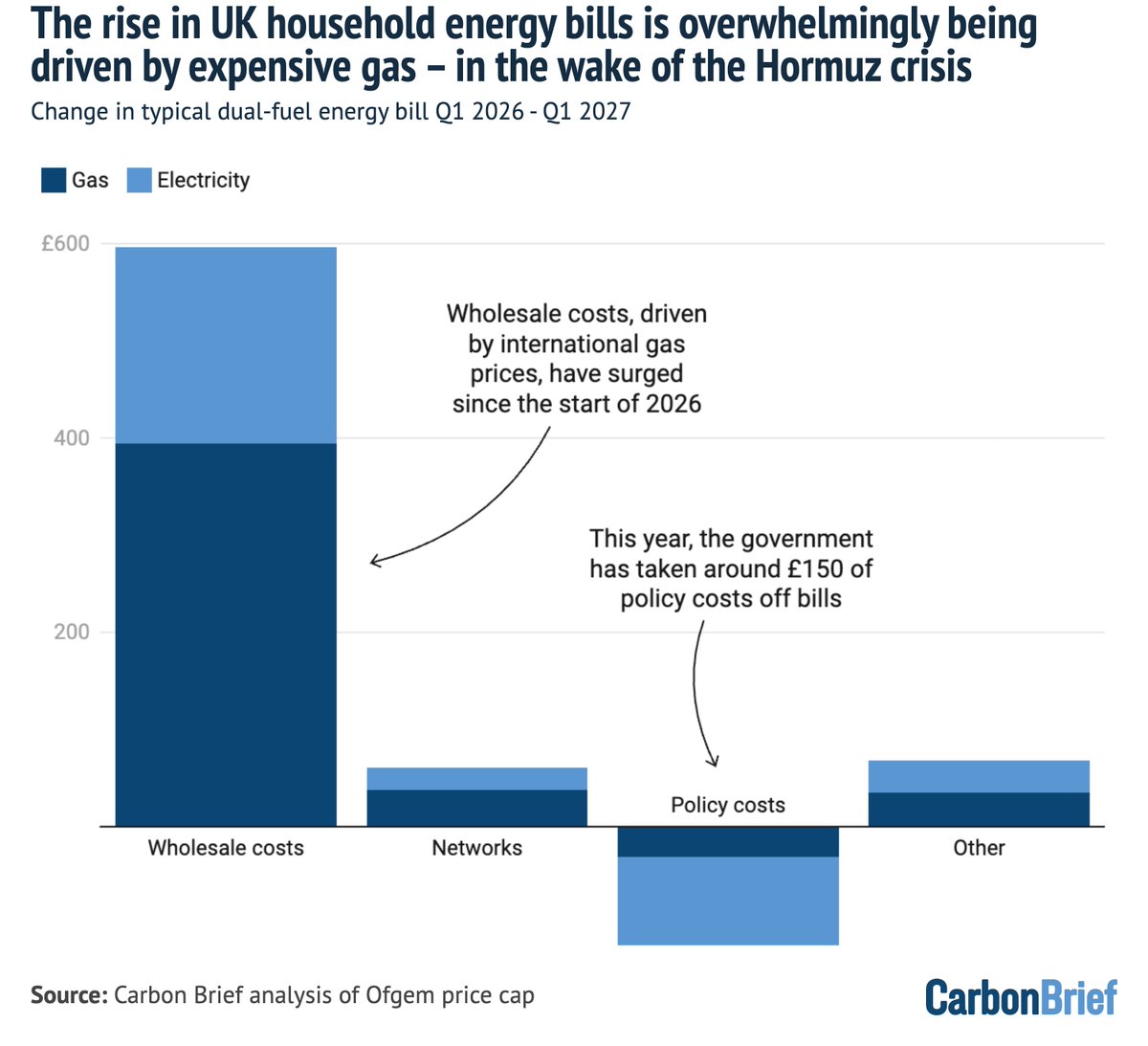
CHART: Rise in UK household energy bills overwhelmingly due to expensive gas
I've seen a few complicated attempts to explain the massive rise in bills coming in January.
The reality is far simpler:
https://t.co/YDy5fQBK64
Today's price cap rise should be a wake-up call for Britain's energy system. Our bills are still tied to gas.
On the @itvMLshow last night, @g__j explained what that costs. Yesterday we paid £14 million to gas generators to replace Scottish wind energy. That money should be coming off people's bills.
Break the link between gas and electricity prices. When it's windy, give that power away cheap - or even free - instead of paying to waste it. Then the UK's clean energy transition will finally show up on every bill.
#MartinLewis @MartinSLewis
An electric car can cost just £1.75 for 100 miles.
But, how much does it actually cost to charge an electric car at different prices?
If you’re thinking about making the switch to electric, one of the biggest questions you’ll probably have is how much it costs to charge.
The answer? It depends on where and when you charge.
🏠 Charging at home (if you’re looking, pop me a DM)
If you have a driveway (and gulleys in the future) you would pay roughly 7p per kWh depending on your energy provider, tariff and deal.
Assuming your electric car averages 4 miles per kWh, here’s what that looks like:
⚡ 100 miles = £1.75
⚡ 200 miles = £3.50
⚡ 300 miles = £5.25
🔌 Public charging
Public charging prices can range from around 20p to around 90p per kWh, with most sitting between 60-82p, depending on the charging network, time of day, charging speed and whether you have a subscription or not.
There are also on-street chargers that are roughly 40-60p.
Using the same electric car, here’s what 100 miles could cost:
🟢 20p/kWh = £5.00
🟢 30p/kWh = £7.50
🟡 40p/kWh = £10.00
🟡 50p/kWh = £12.50
🟠 60p/kWh = £15.00
🔴 75p/kWh = £18.75
🔴 90p/kWh = £22.50
That’s a HUGE difference depending on where you plug in.
Then there’s workplace charging, which is usually very cheap, with most offering charging for 20-30p, with a lot offering it for free as a perk.
⛽ How does that compare with petrol?
Let’s take a petrol car averaging 40mpg and petrol costing £1.70 per litre.
Driving 100 miles would cost approximately £19.32.
That means:
⚡ Charging at home for 7p/kWh is approximately 91% cheaper than petrol.
⚡ Charging publicly at 40p/kWh is approximately 48% cheaper.
⚡ Even charging at 75p/kWh works out slightly cheaper than petrol in this example.
⚡️Anything over that is slightly more expensive than fuel.
Of course, not everyone has access to home charging, and if you’re regularly paying the highest public charging prices, the savings can disappear.
But here’s something worth remembering…
You don’t have to pay 80p or 90p per kWh just because you drive an electric car.
Shopping around, charging at cheaper times and taking advantage of subscriptions can make an enormous difference.
If you’re considering switching to electric, would charging costs encourage you to make the move, or are you still worried about the price of public charging?
Solar is now China's 2nd largest source of electricity.
Coal used to be the primary driver of growth, but now solar dominates.
Total generation has continued to skyrocket while coal has flatlined (down ~2% from the peak).
Britain built a lot of cheap wind generation in Scotland before building the transmission lines to carry it south. Yes, a genuine policy/sequencing failure that's costing us real money.
The fix is to build the grid infrastructure, which is already underway and which every serious analysis says will cost less than the ongoing constraint payments.
The per-household impact is about £32/year and falling once upgrades have happened. Wind remains dramatically cheaper than new gas. The "farce" the decade of underinvestment in the connectivity infrastructure. But "Families Hit With £32/Year Bill Because Governments Didn't Build Power Lines Fast Enough" doesn't sell many papers, does it?
In 1985, Carl Sagan sat before the US Senate and described the weather of 2026. Not as a prediction. As physics.
Bookmark & watch today, no matter what.
There is no excuse for climate change denial now. There is enough information available to be clued up. Climate change denial requires wilful ignorance.
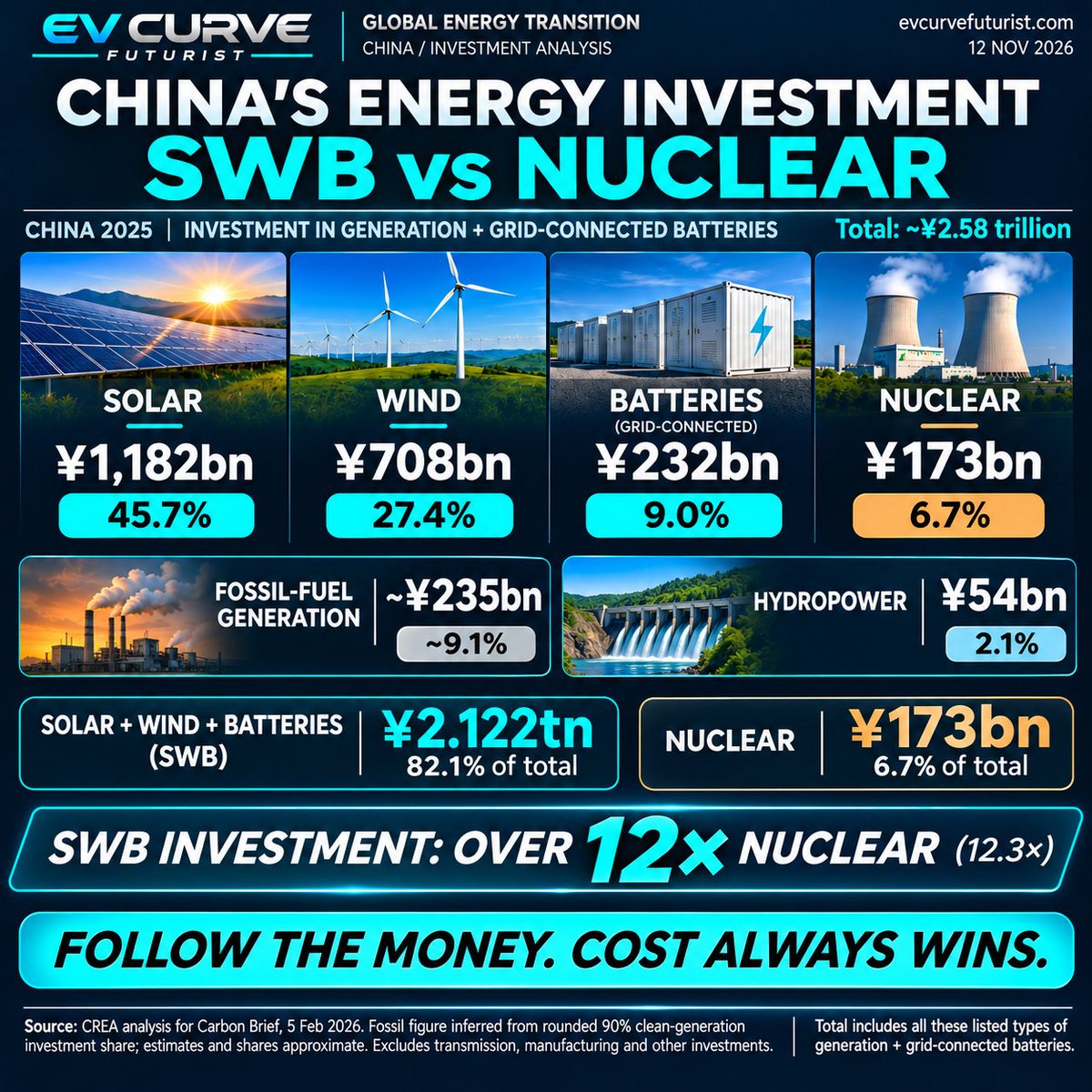
The question nobody in the nuclear cult can answer:
China leads the world in building nuclear reactors at scale. Cheaper & faster than anyone else!
Yet in 2025, it invested over 12× more in solar, wind & batteries than nuclear.
Why?
Follow the money. Cost always wins. #SWB 🚀