I think they are conflating strength of evidence with magnitude of effect.
Not unlike the way hot dogs are a "level 1 carcinogen", not because they are as dangerous to eat as cigarettes are to smoke, but because there is a large amount of evidence repeatedly demonstrating their extremely tiny impact on cancer risk.
He has unbelievable confidence, swagger, charisma. I didn't love him as Roland in Gunslinger because Roland is supposed to be Steve McQueen/Clint Eastwood, but he was still phenomenal in the role (though the movie was bad, Despite McConaughey also being good in it).
my only issue with him for bond is that he's old enough that he'd be 60 by the time a second movie came out with him as Bond.
Unless the angle is "Old veteran Bond," which is fine, he's way to old for a Craig-esque reboot
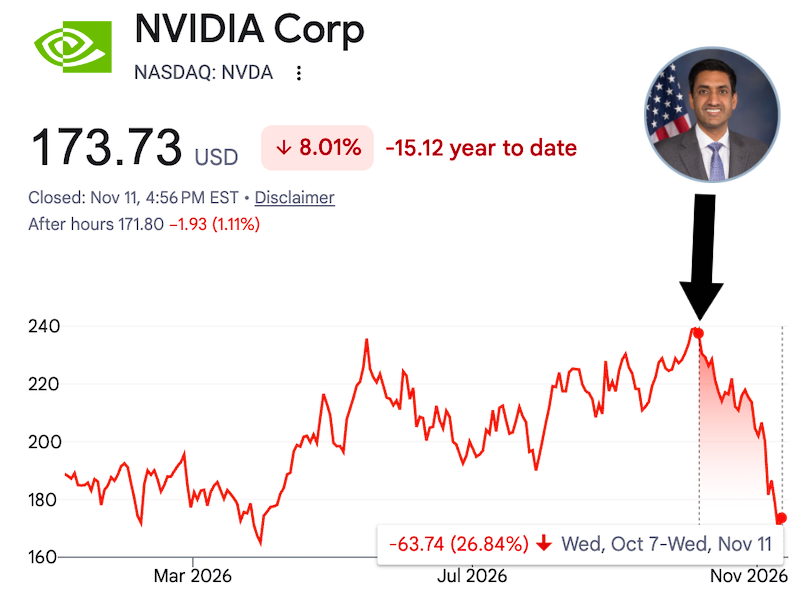
hey @RoKhanna I enjoyed having you on @Bankless a few years ago
I'm wondering if you can share what made you sell $NVDA here?
What information did you see that changed your mind?
Jordan Peterson became famous for telling people to clean their room and put their house in order before trying to change the world.
Why does such simple advice hit so hard?
Because it's the only change you can actually make.
You can't fix the world tonight. You can fix the thing three feet in front of you.
And every time you do, you become someone who can handle a little more.
Everyone wants to save the world.
Few want to do the dishes, call their mother, and be patient with a toddler at 6am.
The second one is how the first one actually happens.
To understand most things Musk says, you have to understand that engineers are born, not made. You have to understand that he has always been an engineer and pretty much nothing else. And you have to understand that 99% of an engineer's job isn't to create a thing... it's to teach ourselves how to create a thing.
So when he says cooling in space is "easy", that doesn't mean what normies mean by "easy", which is "doesn't take a lot of resources, time, or expense".
He means what engineers mean by "easy", which is "contains no unsolved problems".
You take in X amount of energy, you know it's all gonna end up as heat, you know that to radiate X amount of heat you need Y amount of radiator. It's all just math.
If you build a satellite that takes in 2X energy, you need 2Y radiator.
There's no unsolved problem, here. There's nothing to figure out. You know the answer. You just have to design the layout.
If you're been beating your head against "how land booster" and "how make engine not boom" and "how make rocket lighter" for years, this is like drawing stick figures by comparison.
So if guy comes along and says "vacuum is a near-perfect insulator", which is both technically true and completely irrelevant, of course Musk is gonna call guy a retard.
Because guy has just revealed that he doesn't understand the basic nature of the problem, or of the design conversation.
The only significance that "vacuum is a near-perfect insulator" has is that it means you can't do cooling in space the same way you would on Earth.
Well, duh.
We've known that since we first understood what space is.
And we've successfully dealt with that challenge since the very first times we put things in space.
Fusion containment is hard. Rocket engines are hard. New AI capabilities are hard. Cheap and reliable manufacturing at scale is hard. Estimating costs and schedules is hard.
Waste heat is not hard.
Chris *is* giving advice to restrict food. He's just telling people to restrict the quality and frequency, rather than the portion size.
This is a restrictive diet. Anyone who thinks they can lose weight while restricting nothing is in fantasy land.
I think the main thrust is that hunger doesn't have to attend weight loss in all people.
Eating nothing but hard boiled eggs and unseasoned boiled potatoes, for example, will induce a caloric deficit in most people even though you can eat those two foods *as much as you want,* because they simply squash appetite and have zero entertainment value.
@BiggestComeback@sechumworld You are restricting both when you eat, and what you eat, which has the effect of reducing how much you eat.
I think this is the correct strategy for weight management.
Chris's point is that he never had to actively "restrict" his intake of calories.
But by constraining the foods he eats to high satiety, low reward, nutrient dense foods, he is definitely restricting something: the type, variety, and frequency of his eating.
It's just that this approach doesn't require one to deal with the hunger that would usually attend simply eating the smaller portions of standard american food.