Join our team ⬇️
🐠 Research Assistant
🐠 Laboratory Technician - Blue Carbon
🐠 Ecological Modeller in Connectivity Science
🐠 Fish Ecology Technician
🐠 Geospatial Analyst
🐠 Infrastructure Program Manager
Applications close this month. Apply ➡️ https://t.co/Q6QFdOlHx1
🐟 Meet the tailspot wrasse! This new tropical fish species was discovered during a research expedition to the islands of the Revillagigedo Archipelago by a team of scientists, including Scripps Marine Vertebrate Collection Manager Ben @Frable. 🐠
https://t.co/QALf1RD3Ns
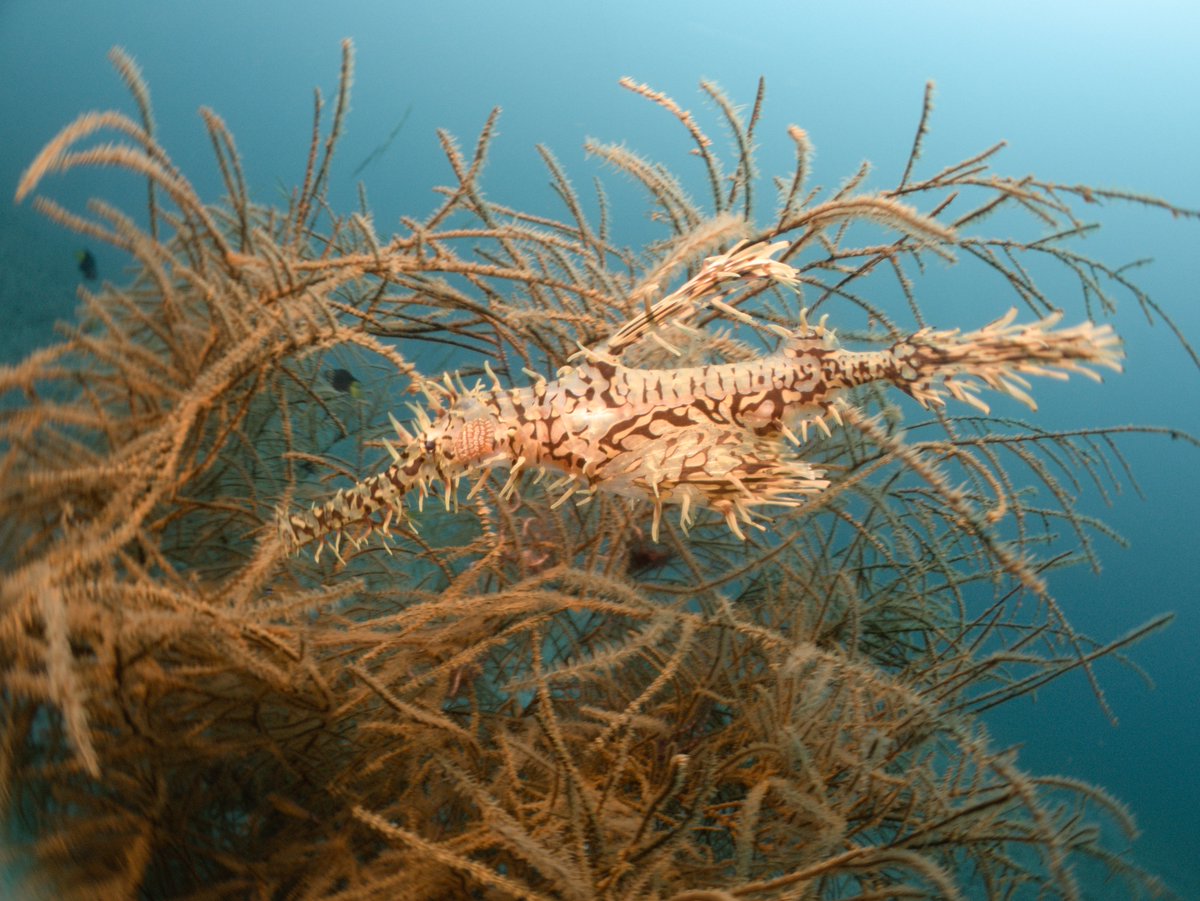
Ornate ghost pipefish, in front of a black coral, whis is only black when dead and dried. Dauin, Philippines, Masaplod sur dive site. I love this dive site.
#muckDiving
How important is #evolution 🧬in helping or hindering species responses to #globalchange 🌏? Potentially a lot, but we don't know yet. New review and guidelines on using temporal #genomics to understand global change, led by @rene_delight!
https://t.co/y7ppRDisx4
@evolvingseas
Plotosus lineatus, striped eel catfish. Plotosus? Plotos them too! #schooling#fish#TeamFish#scuba#ocean
These fish are pretty #venomous, more about that here:
https://t.co/GWl89zLHjM
CALL FOR PROPOSALS: CBD Bio-Bridge Initiative seeks projects that:
🐋tackle #biodiversity-related issues
🌳originate from developing countries or countries w/ economy in transition
🐘include 2+ countries
🦜address 1 of 4 focal areas to promote technical & #scientific cooperation
Hey #TempGen2021Tweets! Planning to do enzymatic reduced representation using museum specimens? You might need up to 24% more historical DNA 🐟🧬to get sequence results comparable to contemporary samples. Follow this thread to find out more 1/7
This is likely due to altered enzymatic activity during library preparation. Consequently, up to 24% more DNA 🧬 per museum specimen needs to be sequenced to achieve comparable sequence results to contemporary fish 🐠. Stay tuned for more @PhilippinesPIRE results 7/7
Hey #TempGen2021Tweets! Planning to do enzymatic reduced representation using museum specimens? You might need up to 24% more historical DNA 🐟🧬to get sequence results comparable to contemporary samples. Follow this thread to find out more 1/7
Sequencing of degraded museum specimens preserved in EtOH for >100 years is possible, but can result in more sequence substitution errors, unintended loci and decreased depth of coverage compared to contemporary samples. 6/7