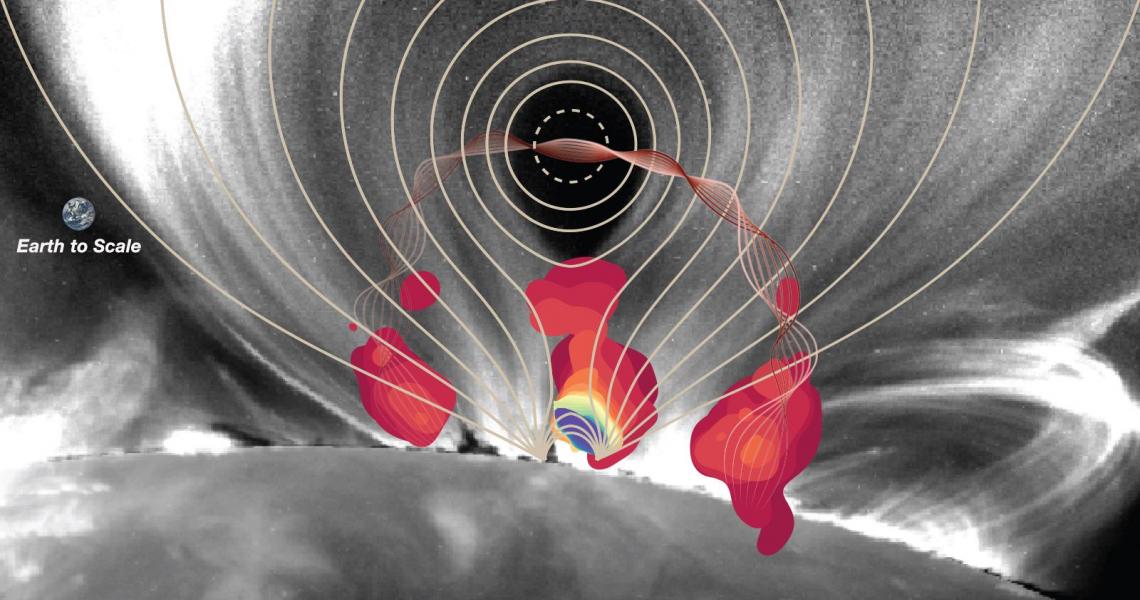
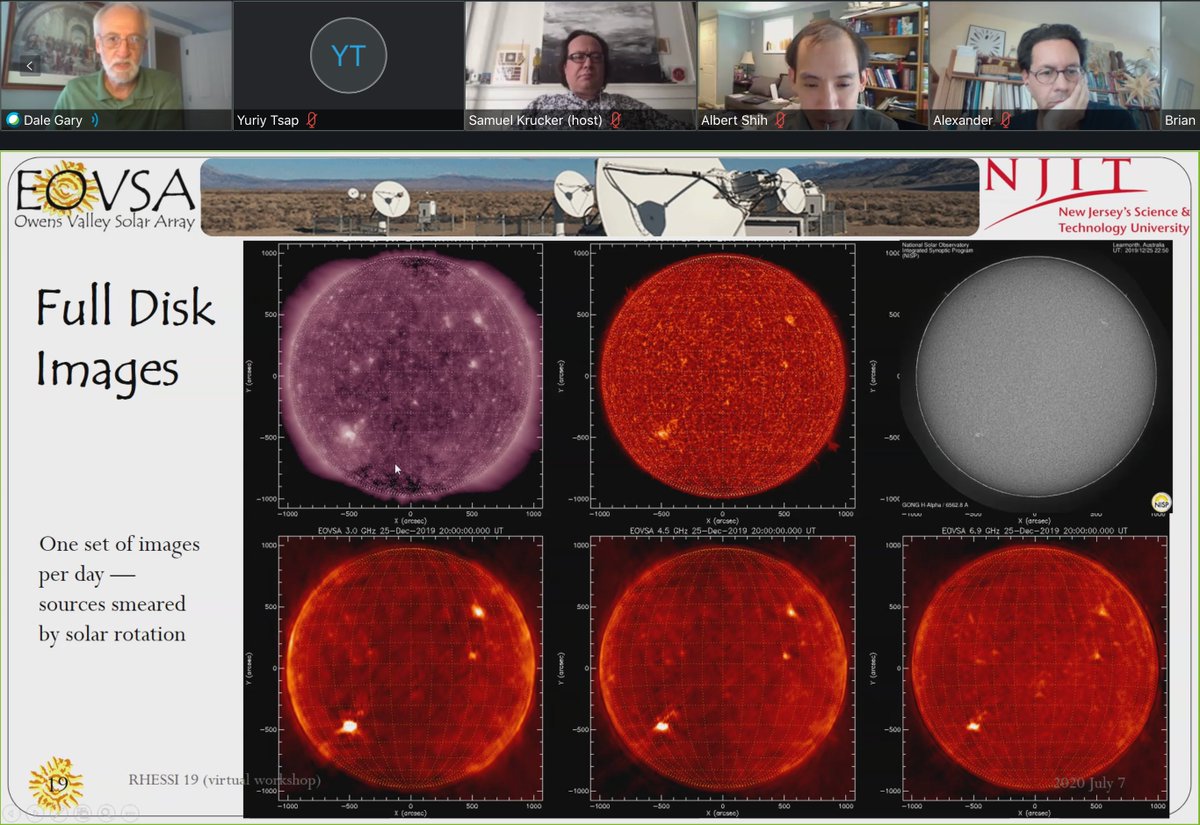
New Nature paper by Fleishman et al unravels the efficient acceleration region for high-energy electrons in a large solar flare, using microwave imaging spectroscopy data taken by yours truly @NJIT @CSLANJIT #NSF_funded https://t.co/jR35xy0AHm
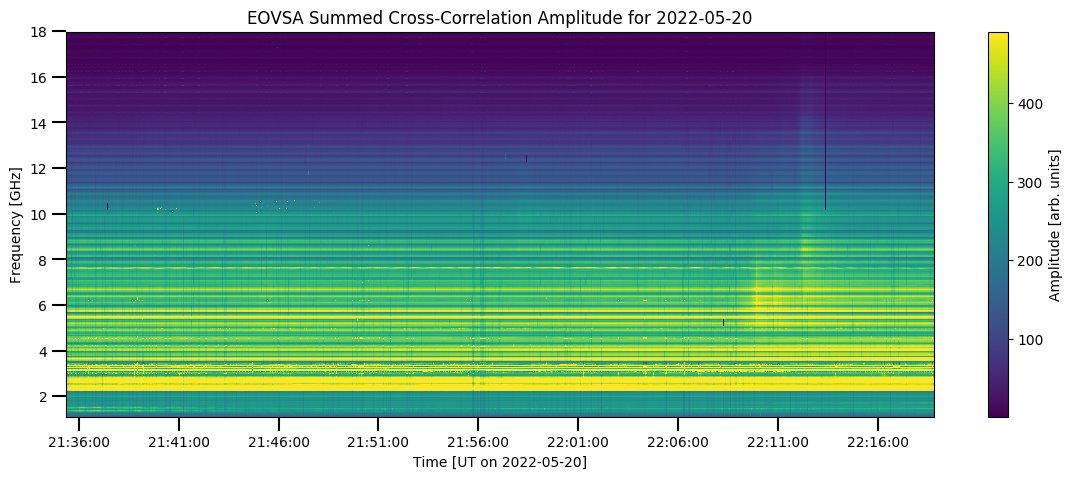
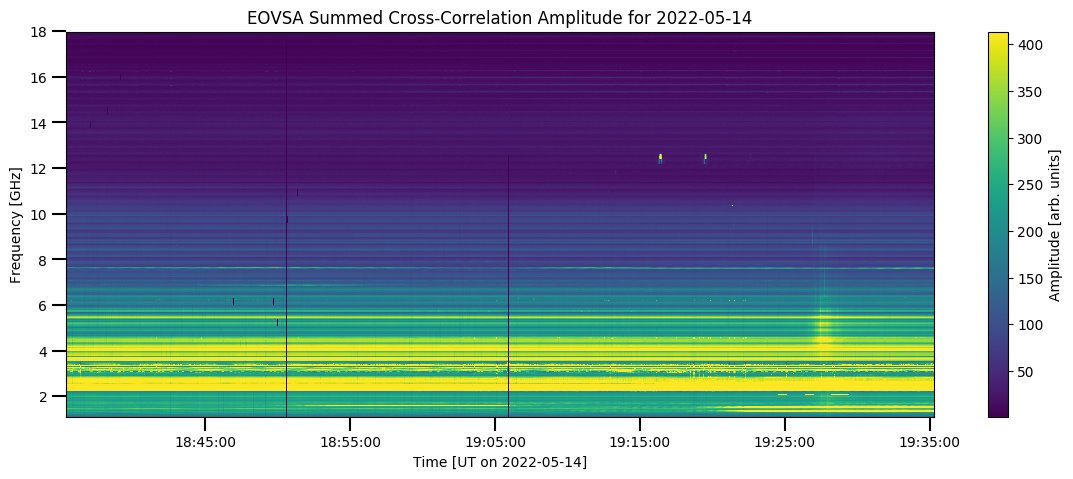
☝️👇Now, VOILA! -- Here is the broadband microwave emission rolling off a hot EOVSA press. 👍🌞👊
Compare the yellow marks on the EOVSA spectrogram with what you see on solar images, & GOES x-ray flux, & D-RAP & other data sources & tools you're using.
@BinChenNJIT@EOVSANJIT
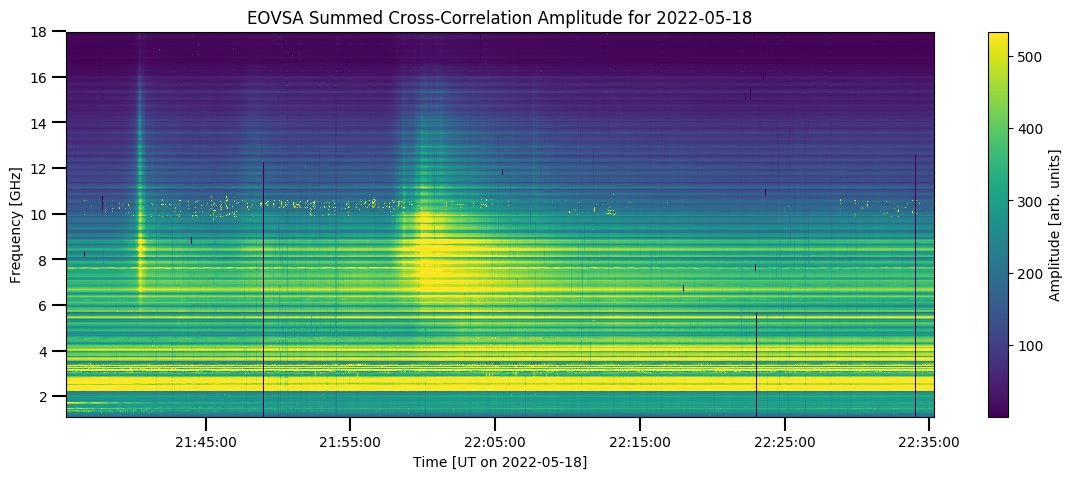
EOVSA loved a little solar rollercoaster ride we just took between 20:35 - 22:35 UT. Speedbumps! Here is EOVSA's microwave response to series of GOES x-ray bumps that just happened, producing an M1.13-class x-ray peak @ 22:02 UT over Hawaiian Islands.
@BinChenNJIT@EOVSANJIT
@EOVSANJIT#AirportFire caused a mandatory evacuation of the observatory as well as East Big Pine. The site is without power so we won’t know much until people can check this morning.
New paper alert! In this study led by our grad student, Yuqian Wei, we use microwave imaging spectroscopy from @NJIT's EOVSA (@EOVSANJIT) to measure the coronal magnetic field along an active filament, which erupted after the 2017 Sept 6 X9.3 mega-flare. https://t.co/Tfyd1LXroK
New paper alert! A solar flare driven by thermal conduction observed in mid-infrared, led by Fernando López. Happy with this analysis of IR and E-OVSA data. Soon in @AandA_journal@arXiv_BR@_arXiv_astro_ph
https://t.co/QNbOFvIn62
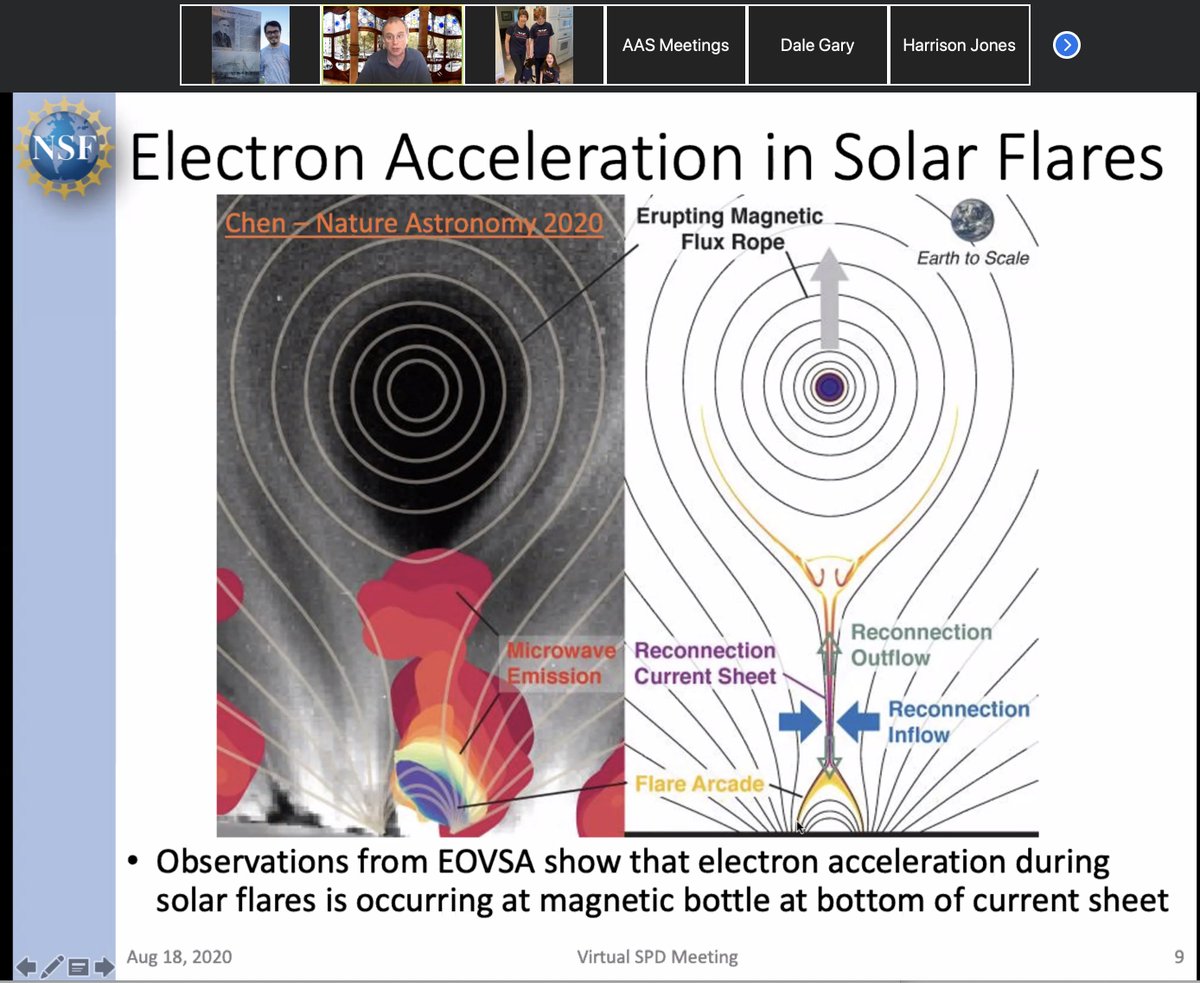
Our results are highlighted by Mike Wiltberger of NSF's Geospace Section in his agency talk at the (virtual) AAS/Solar Physics Division meeting. Published recently in @NatureAstronomy: https://t.co/8SVXH0cXP1 NSF Research News: https://t.co/UW4i4K7Vi6 #spd51#NSFFunded
.@NJIT & @NASA data gave scientists a new look at the central engine of a solar flare. Combined with @CenterforAstro simulations, the data revealed more about the magnetic fields & energetic particles at the heart of such solar explosions. More from NJIT: https://t.co/vUsjsK473z
Pleased to share another of our latest works on this beautiful solar flare (see our earlier paper https://t.co/MlRswhPeXI on the accompanying eruption). Here we focus on its "central engine". @NJIT story: https://t.co/USzXTzYF9M. @CenterForAstro story: https://t.co/vUUffDVovw
#EOVSA observed in microwaves the same flare reported today by the Solar Orbiter X-ray Spectrometer/Telescope (STIX) team. The microwaves show the presence of high energy electrons. Compare the time profiles! #SolarOrbiter#TheSunUpClose@stix_so
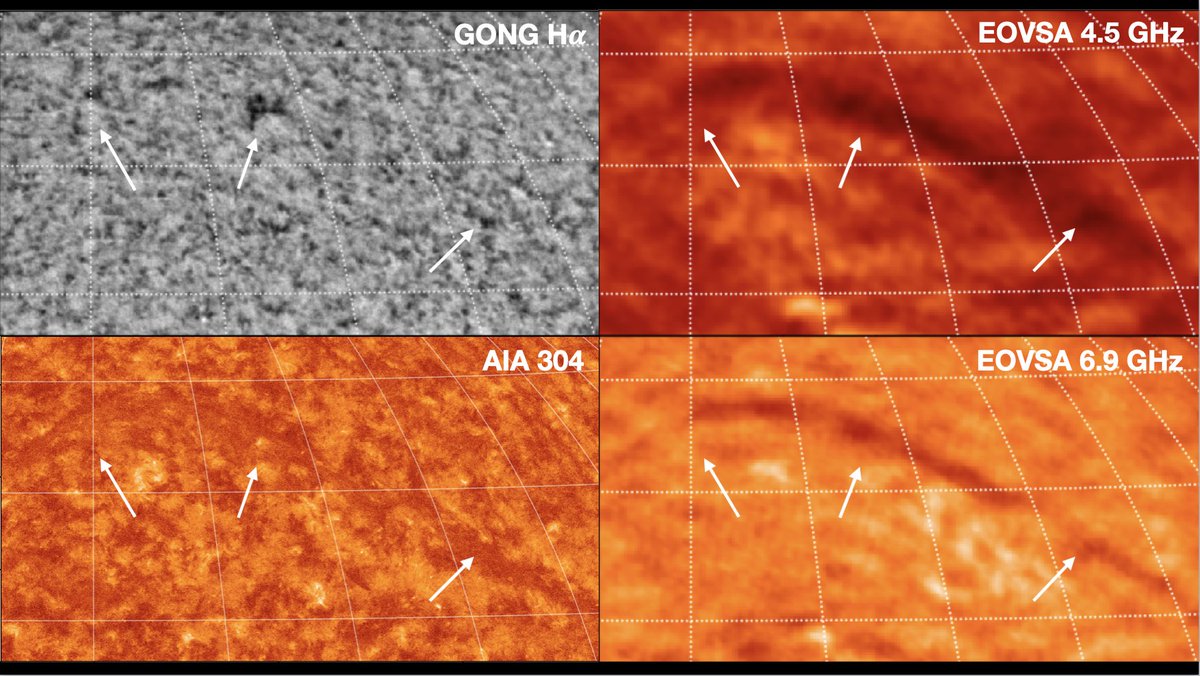
#EOVSA can be used to image quiet-Sun features. Images taken on 2020 June 23 show a filament channel, which exhibits in microwave wavelengths as a dark feature due to free-free absorption. Traces of the same filament channel can be seen in H𝛼 and extreme ultraviolet images.


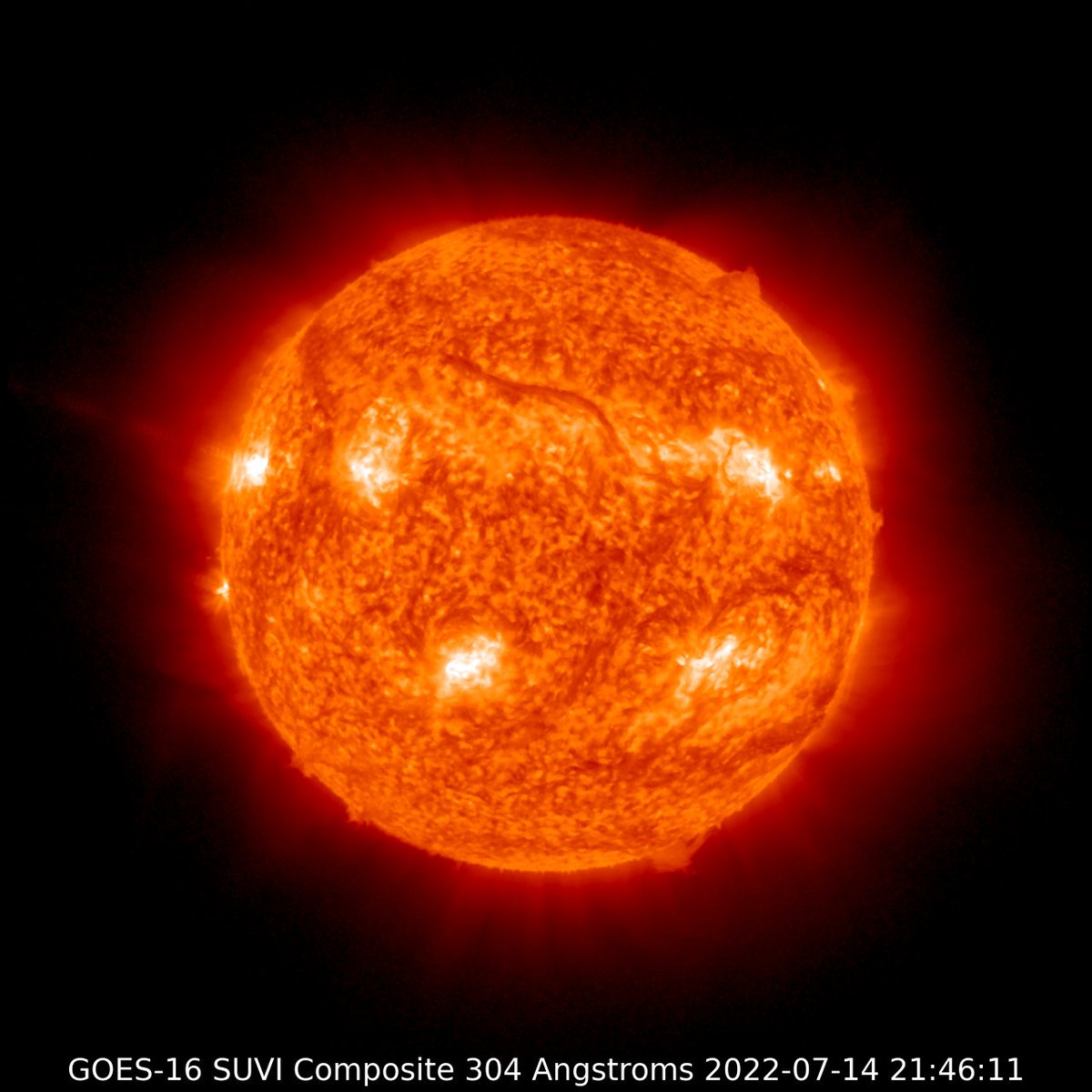


![EOVSANJIT's tweet photo. [Milestone] OVROLWA solar obs produces over 100 million images of the Sun! Realtime pipeline generating 144 fine-channel images every 20 seconds to track solar bursts, flares, and CMEs.
#SolarPhysics #SpaceWeather #OVROLWA #RadioAstronomy #Heliophysics #OpenData #NJIT https://t.co/wXi6wWdZzH](https://pbs.twimg.com/media/G_hJHacWwAAg9Ho.png)