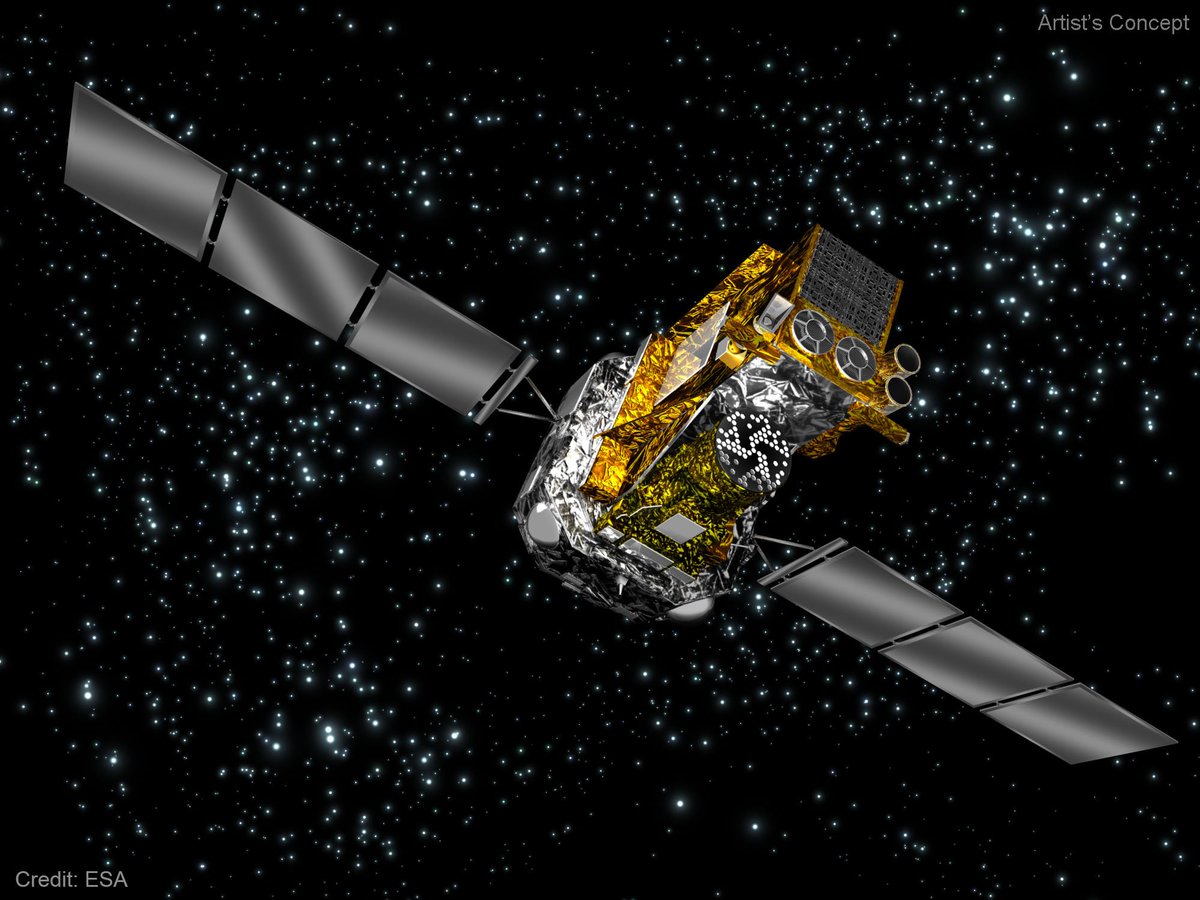
INTEGRAL is detecting some of the most energetic radiation that comes from space. It is an ESA mission in cooperation with Russia and the United States
Happy 22nd birthday, INTEGRAL!
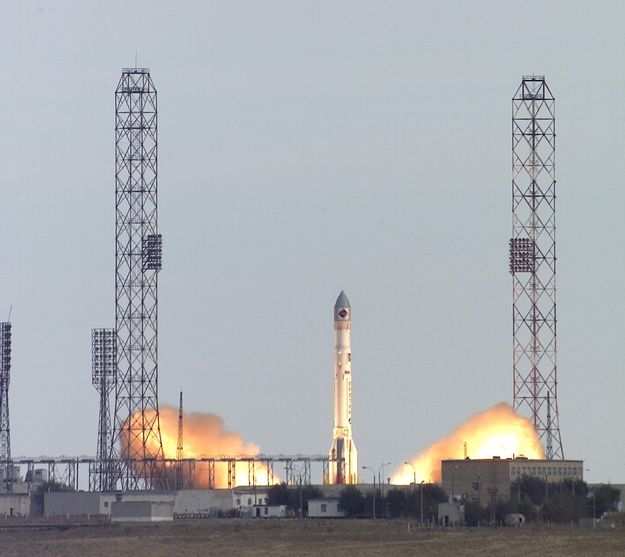
On 17 October 2002 INTEGRAL was launched into space. That means ESA's most sensitive gamma-ray observatory to date is 22 years old and still operating today! Happy Launch Anniversary Day!
We will celebrate this event next week with the INTEGRAL Workshop 2024:
https://t.co/Ob4Tvv03tO
INTEGRAL ramping down in 2025
The ESA Science Programme Committee (SPC) has approved some limited operations of instruments during the first two months of the post-operations phase that starts on 1 January 2025. Science data taken during this period will be immediately public. The TOO-alert tool remains open for highly important TOOs with priority for gravitational wave event follow-ups until 28 February 2025. Science observations will ultimately end on 1 March 2025.
INTEGRAL Workshop 21-25 October 2024 at ESA/ESAC, Madrid, Spain:
22 Years of INTEGRAL: catching results and discoveries
Registration and Abstract submission open under:
https://t.co/Ob4TvuZvEg
Integral has been crucial in our understanding of astrophysical phenomena over a wide energy and temporal range. This conference is the occasion to discuss novelties in high-energy astrophysics, new instrumental facilities, and innovative data-analysis methods. Anticipated lively interactions among participants will be harnessed to refine the plan for maximizing data exploitation now and in the decades to come.
Picture of the Month for May: A Magnetar Giant Flare in the nearby Starburst Galaxy M82:
https://t.co/IzRtNknu1Z
The figure shows the image obtained with the IBIS instrument in the 30-200 keV energy range, with the burst clearly visible at the position of M82. The positions of other galaxies are also indicated.
. @ESA_Integral is the first space observatory to simultaneously observe objects in gamma rays, X-rays, and visible light.
⭐️💥 Its main targets are violent explosions known as gamma-ray bursts, powerful phenomena such as supernova explosions, and regions in the Universe thought to contain black holes.
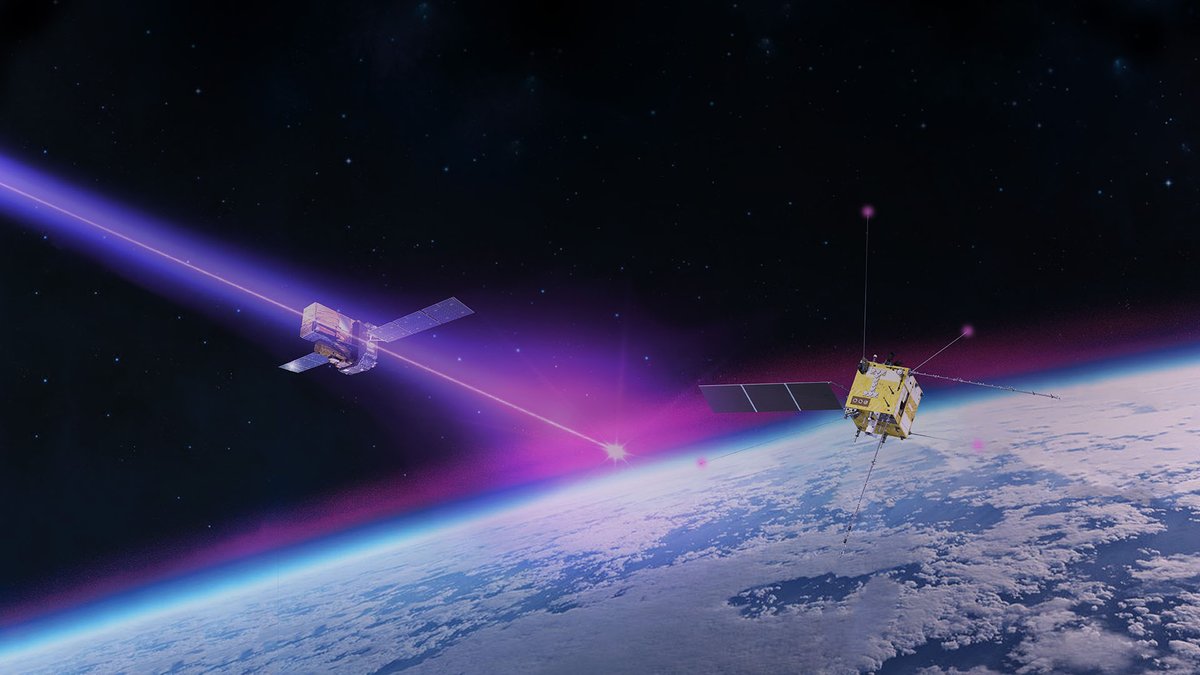
Picture of the Month for December: A strong gamma-ray burst detected by INTEGRAL has had a caused a pertubation in Earth's ionosphere. Read more here: https://t.co/X3EQX1I5N2
Our fleet of astronomy missions observing the Universe across the electromagnetic spectrum has been enabling astronomers to tackle the big questions about our cosmos.
Explore them with this interactive graphic 👉 https://t.co/XkLtByfrTD
#DivingIntoTheUniverse#ExploreFarther
Last days to apply for the ESA Student Internship Programme! 📅
https://t.co/zjd217um4W
Positions are available in engineering, science, IT, natural/social sciences, business, economics and administration services and you have until 𝟑𝟎 𝐍𝐨𝐯𝐞𝐦𝐛𝐞𝐫 𝟐𝟎𝟐𝟑 to send your application! 💻
Launch your career in space, apply now👇
#ESArecruits #internships
Un'esplosione di raggi gamma estremamente luminosa e di lunga durata ha colpito la Terra alle 15:21 ora italiana del 9 ottobre 2022. L’esplosione, rilevata anche dal telescopio spaziale @ESA_Integral , ha causato un disturbo significativo nella ionosfera del nostro pianeta.
Detection of short GRB (or a giant magnetar flare) by @ESA_Integral and @NASAFermi. The localisation is perfectly consistent with the very close M82 galaxy!
https://t.co/2c7GTpeXwa
💥 Il 9 ottobre 2022, 15:21 ora italiana, molti satelliti – tra cui @ESA_INTEGRAL – registrano il più forte lampo gamma mai osservato. Contemporaneamente, #Cses01 misura una perturbazione senza precedenti della ionosfera ⤵️ @ASI_spazio@INFN_@NatureComms
https://t.co/8WIHR5MQsV
🌟 Who'd think that an exploding star 2 billion light-years away could affect Earth 🌏?
💥 The blast from the strongest gamma-ray burst ever, detected by @ESA_Integral, hit Earth's ionosphere & sent scientists to investigate with CSES 👉 https://t.co/Xo7F7WAvJ2
#ExploreFarther
A blast from the past 🤩
An enormous burst of gamma rays struck Earth on 14:21 BST / 15:21 CEST on 9 October 2022.
The blast was picked up by our Integral telescope and caused a significant disturbance in our planet’s ionosphere.
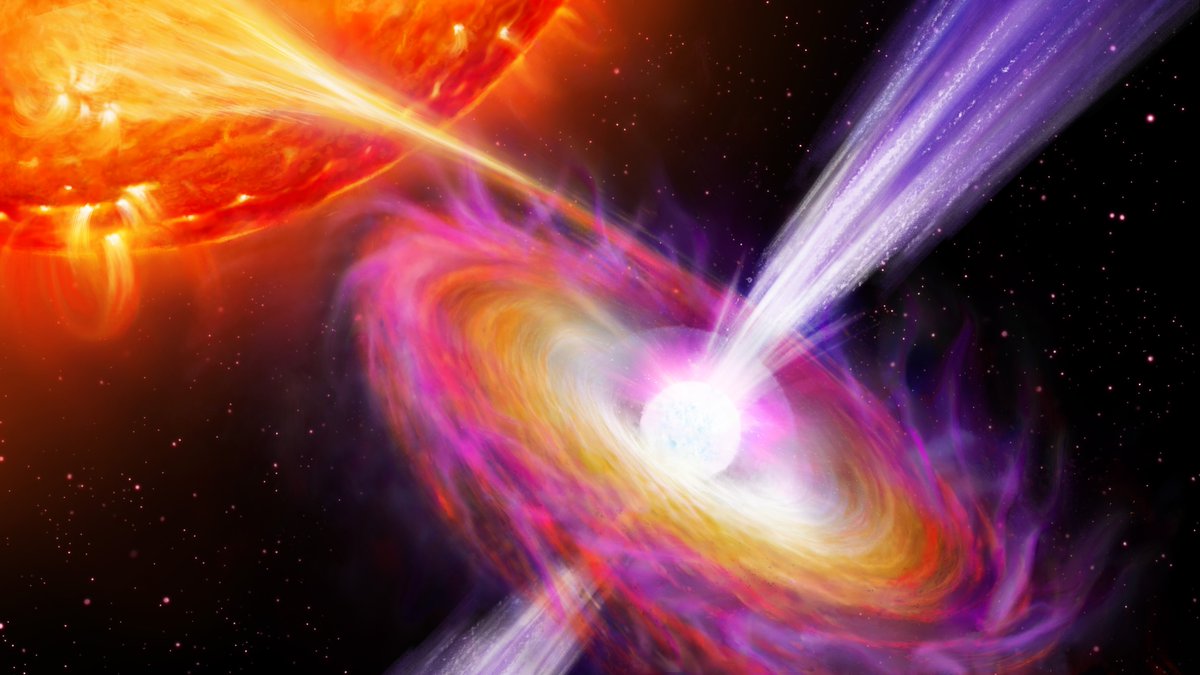
INTEGRAL picture of the month: INTEGRAL detects a soft gamma-ray emission from the new bright candidate black-hole binary Swift J1727.8-1613.
https://t.co/fWl8C6IfKg
17 ottobre 2002, il potentissimo osservatorio per raggi gamma @ESA_Integral , viene lanciato. Frutto di una collaborazione internazionale, tuttora operativo, offre agli astronomi di tutto il mondo immagini ai confini dell’Universo. https://t.co/RXuvLl1erI
@ESA_History@esascience #Integral
#OTD in 2002, @esa's INTErnational Gamma-Ray Astrophysics Laboratory (INTEGRAL) launched to study the cosmos using the highest-energy form of light. INTEGRAL has contributed to many discoveries, sometimes in tandem with @NASA observatories. Meet INTEGRAL: https://t.co/YT36QRY8Z7