Ancient Egyptian artisans portrayed the ratio we know as pi to an accuracy of 22/7, at least a thousand years before Archimedes & the Greeks (to whom the insight is commonly credited.)
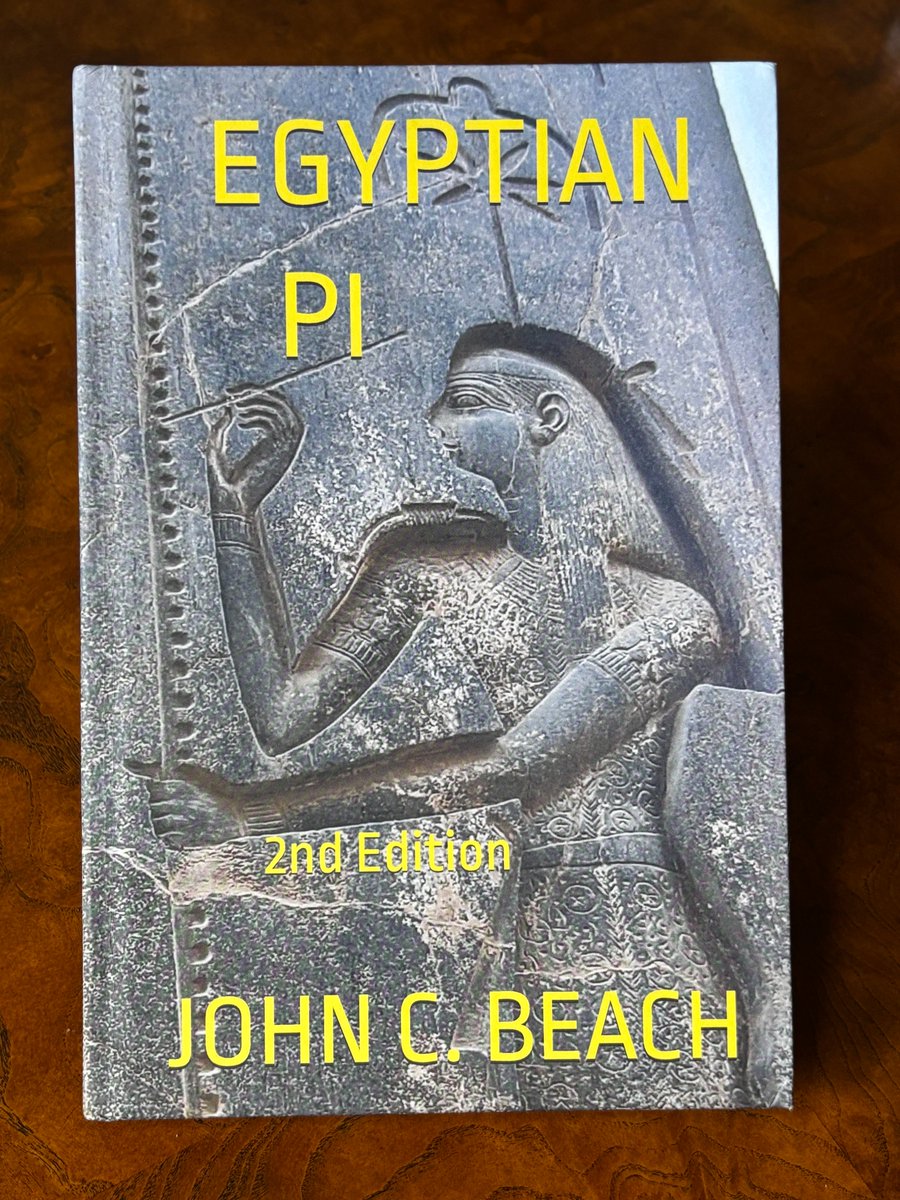
Explore this and related math topics in my book
Egyptian Pi
https://t.co/7gRUk38R2N
In my book, Egyptian Pi, I discussed a simple math ratio to calculate a sphere's volume from a cube's volume, if the sphere fits snugly in the cube. I inferred the ratio from ancient Egyptian art (circa 1295 BC) that predates Archimedes by over 1,000 years.
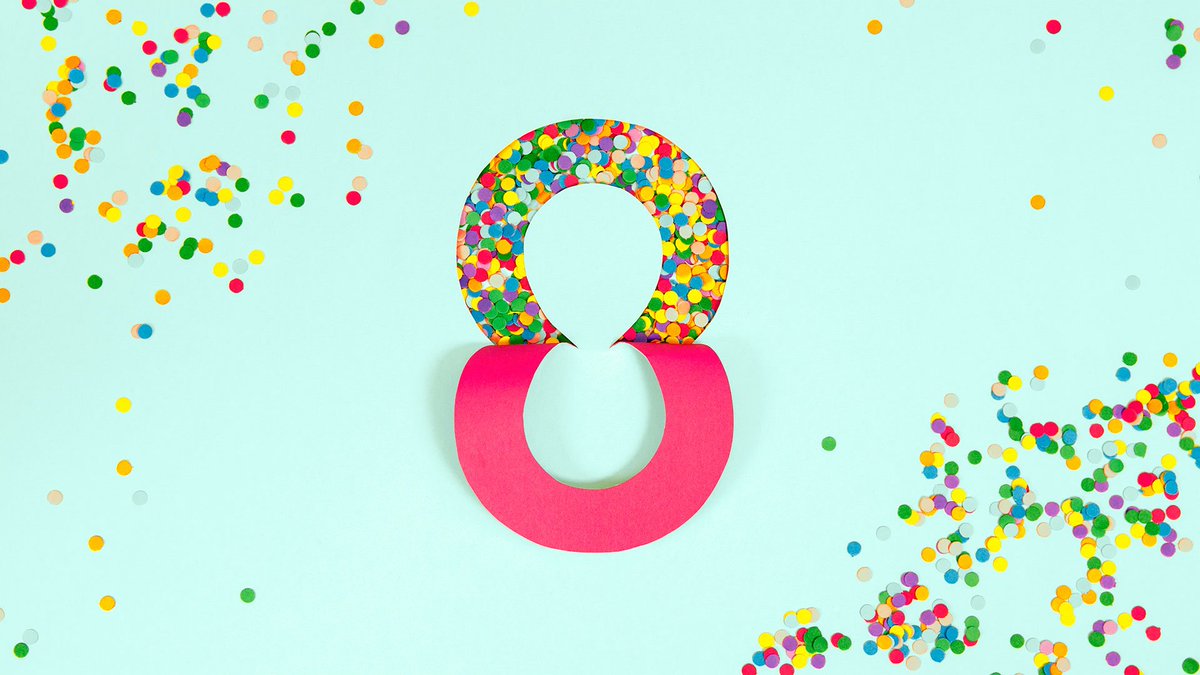
This evening, I thought of a way to represent this ratio pictorially, and @Grok helped me imagine it.
1,000 years from now, it's possible no one will be able to read my explanation:
"To quickly approximate the volume of a sphere, all you need to do is
- Cube the diameter
- Multiply by 11/21"
But from now to the end of time, my picture should still be sufficient to demonstrate the concept for as long as intelligent beings can calculate volume in any number system.
@EgyptianPi
Happy Pi Approximation Day!
On the 22nd day of the 7th month (July),
celebrate 22 / 7,
the ancient, easy approximation for pi.
22/7 = 3.142857142857…
If you are up for a challenge, perhaps you are lucky enough to solve the following formula:
From the set of real numbers excluding zero, can you find the number Y for which the formula computes the pi approximation?
Smiley faces will be awarded for your explanation of how you determined the right number to plug in for Y to get pi.
Happy Pi Approximation Day!
If you love Pi Approximation Day, then what would you think of Pi Approximation Month?
In an age when every calendar month gets claimed for a theme, I hereby designate
November as
Pi Approximation Month.
Why November?
Because the number 11 is where the real π-approximation work gets done.
In mm/dd format, here are the mathematical days of November:
• 11/7 × d
gives the length of the line that traces half a circle (the semicircumference)
• 11/14 × d²
approximates the area of a circle
• 11/21 × d³
approximates the volume of a sphere
“But wait,” you say. “Where’s π in these simple fractions?”
It’s right there—hidden in plain sight. My book Egyptian Pi shows you exactly where.
@EgyptianPi
Based on feedback, I've created an alternate version of the Egyptian Pi video--this is for anyone who found the woman in the original distracting (or who simply preferred a different style).
That said, I still believe the first video is more in line with how the ancients elevated math as vital to the survival of the kingdom and their civilization. A goddess was closely associated with knowledge, measurement, mathematics, geometry, accounting, architecture, science, astronomy, history and surveying.
But if the original didn't click for you, then this new version was made just for you.
@Rainmaker1973 If you like the calculations that the ancient Egyptians showed in a papyrus, take a look at math they show in their ancient stone art.
Egyptian Pi, by John C. Beach.
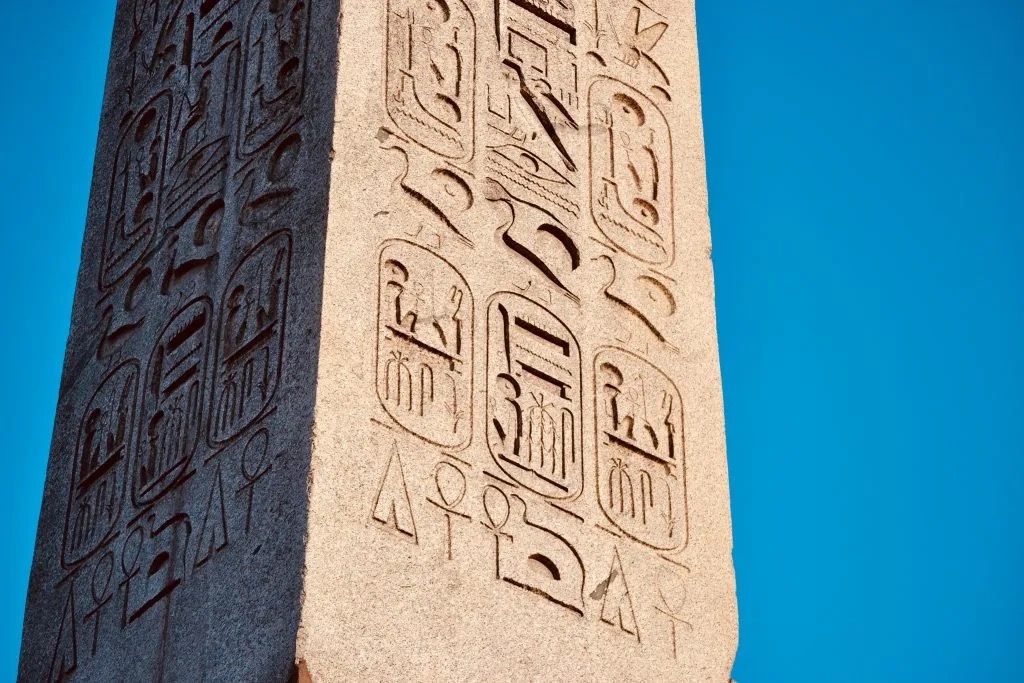
An obelisk has been standing in the centre of Paris for nearly 200 years.
Millions of people have walked past it. Egyptologists have studied it since the 1820s.
In 2021 a professor noticed something on his daily walk that nobody had seen in over three millennia.
Jean-Guillaume Olette-Pelletier of the Sorbonne noticed the hieroglyphs seemed to gesture toward something. He returned with binoculars, then notebooks.
When scaffolding appeared ahead of the Paris Olympics he climbed it, becoming the first person to study the upper inscriptions up close since it arrived in France in 1836.
🔹Seven messages encoded across all four faces
🔹Meaning shifts depending on viewing angle
🔹Some only visible from boats on the Nile
🔹Undetected for nearly two centuries in Paris
🔹A rare encoding technique few can read
The technique is called crypto-hieroglyphics.
One inscription spells out the pharaoh's full throne name from one angle and proclaims his eternal life from another.
Messages designed to be read by nobles arriving by boat, invisible to everyone else standing in the same spot.
Ramesses II was notorious for appropriating older monuments and inscribing his name on them. How much of what we read on these structures reflects who built them and how much reflects who claimed them later is a question that has never been fully closed.
If seven encoded messages were hiding in plain sight on one of the most studied monuments on earth for two centuries, what else are we missing?
I have just received this picture from @m_fields_ showing scoop marks aka waterglass factory at Puma Punku.
It’s an old photo. Anyone having a high resolution photo of this stone? It’s more important than you think!
Thanks 🙏
Last week I was on a “secret mission” in Egypt. I’d rather not get into that just yet—but honestly, I don’t even need to, because along the way I stumbled into so many fascinating oddities that just sharing those could keep me going for a year.
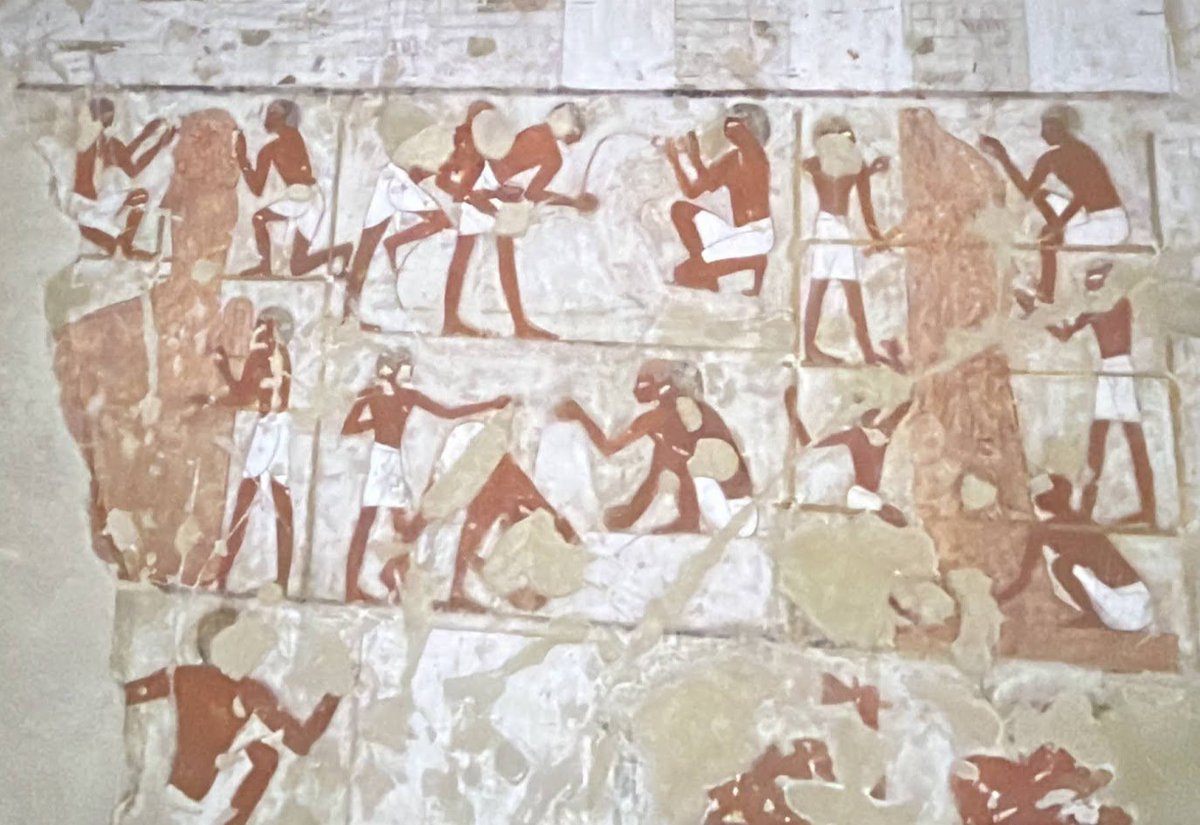
Take this, for example: about two years ago, @EgyptianPi drew my attention to the wall painting in the Tomb of Rekhmire, back when I was searching for that particular device that might have been used to etch granite surfaces in Aswan with molten natron.
The fresco itself is enormous—altogether around 100 square meters. This Rekhmire guy must have been something like a minister of industry, because the wall painting that documents his work includes everything from agriculture to jewelry-making to construction. On the right side of each multi-square-meter scene stands our hero, Rekhmire, depicted three times larger than the workers, overseeing whatever process is going on.
I’ve dealt with this painting before, because there’s a whole scene in the tomb illustration that’s officially labeled as metal casting—but it makes no sense at all. The metal is being melted on the floor, and even if it does melt (which isn’t impossible), you’d then have to scrape the molten copper up off the ground, which sounds like complete nonsense to me.
Anyway, I won’t dive deeper into that now—I devote an entire chapter to this “metal casting” in my book Natron Theory, so if you’re curious, you can check it out there.
What I want to show you now is another part of the painting.
Yes, I made it back to this tomb again—simply because the “secret location” I was heading to is accessible via Luxor, and, well, you’ve got the Valley of the Kings there, along with this other burial area where the tombs of nobles are located.
Now, among the many industries depicted, there’s something else I only noticed on this visit: statue-making. Or what.
The scene I’m talking about is located below and to the right of the construction scene, and although it’s in pretty rough shape, you can still make out that these little figures are working on statues.
Are they really making them?
Because if you look at the tools they’re using, you’ll notice something odd: not a single figure is holding a hammer or chisel. Instead, they’ve got what looks like some kind of sponge or dishcloth.
At this point, things start to get really interesting. It’s not like chisels are missing from the entire fresco—as if they hadn’t been invented yet or something. No, the chisels are missing only here… but why?
Could statue-washing have been some kind of major industrial activity in Rekhmire’s time? Obviously not.
Maybe it’s a religious ritual? BINGO! cries the indoctrinated archaeologist.
But there’s nothing like that anywhere else on this massive wall painting. It’s all about Rekhmire’s life, duties, and work. There’s entertainment too—music, dancing, the well-earned rest after labor—but I didn’t see any abstract ritualistic stuff anywhere.
Sure, you could say they’re polishing the statues. But then where’s the carving phase?
It’s strange enough on its own that statues seem to be made with dishcloths.
I’m not going to draw any grand conclusions here now. This piece of information is just one part of a puzzle that will come together someday. Just not yet.
Happy Pi Day!
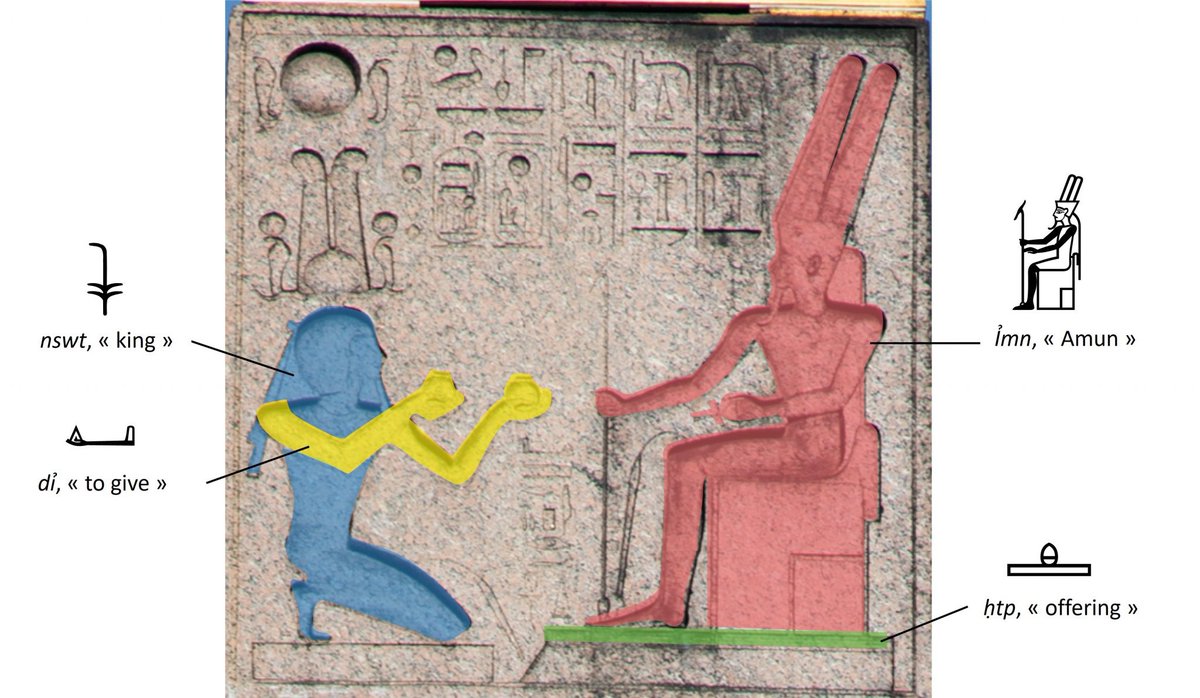
Over three thousand years ago, an artist chiseled a useful ratio into stone so that it would not be forgotten. 11/7.
It was forgotten...until I rediscovered it in 2020. While studying Egyptian art from 1295 BC, I noticed how the artist called attention to that 11/7 in a geometric design.
It suggests that the ancient Egyptians knew how to calculate the volume of a sphere using 11/7.
In my book, Egyptian Pi, I derived circle/sphere formulas using 11/7 ratios.
But wait, you might think, what about π? These calculations don't even use π? Am I saying we need a new celebration on November 7?
Another math day would be fun, but in my book, I show how the 11/7 ratio relates to 22/7 pi.
What about accuracy?
For volume, the approximation is off by just 0.04% from today's formula. Take the iconic Las Vegas Sphere (157.2 m diameter): that 0.04% error? The ancient calculation would have generated a volume of 2,034,844 cubic meters, which is 819 cubic meters more than our accurate modern calculation. Working backwards from that overshoot, the modern calculation would need a larger diameter of 157.2211 meters to get that volume. A difference of 2.2 cm in diameter.
If you were sitting at the edge of The Sphere, the approximation would have given you another 1 cm of elbow room. Less than half an inch of difference!
The ancient Egyptians knew math!
#PiDay #AncientEgypt #MathHistory #LasVegasSphere @EgyptianPi #EgyptianPi
Archaeologists have made a groundbreaking discovery in the necropolis of Saqqara, 20 miles south of Cairo: they unveiled an ancient Egyptian tomb carved into rock over 4,000 years ago with remarkable treasures in it
This is a Second Dynasty child burial
14/ In fact Sety carved scenes & inscriptions in the entire outer hypostyle Hall of his Abydos temple before his death, but Ramesses II later recarved them for himself. Traces of Sety's original inscriptions are visible. The architraves including the "helicopter" are most visible
@BrianRoemmele If you like Plimpton 322, you may also like the math in ancient Egyptian reliefs.
e.g. volume
https://t.co/wdQqUsJF7g
When I worked more on that, I discovered a fascinating pattern, which I discuss in my book Egyptian Pi, 2nd Edition
@NatronTheory Sorry to hear of the medical bills. I hope you are feeling better!
Close your eyes and think of a moment in life when you were at your very best, and remember how it feels--a surge after great accomplishment, or a glowing belief in your abilites to overcome obstacles.
Be that.
8 Pi
Egyptian Pi
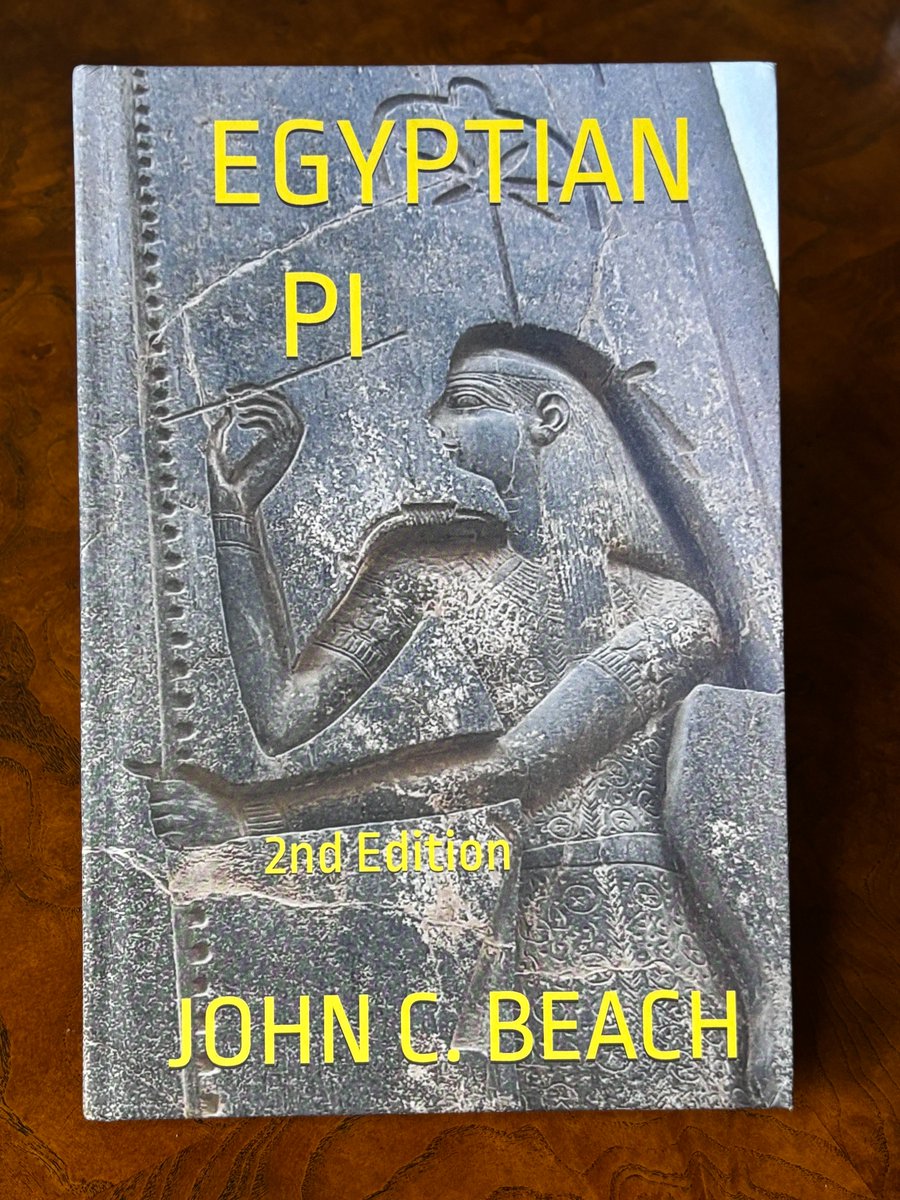
Eight years since I published my book and created the EgyptianPi account on Twitter, now X.
Check out the new second edition, with eye-catching cover and more examples of math in ancient art.
#MyXAnniversary
The ancients divided up loaves of bread (which also could represent any other countable resource) into rations for a team of workers.
Per the Rhind Mathematical Papyrus, it is dated to around 1550 BC, which may complicate the post to which you refer that talks about how the Hyksos brought math to Egypt.
The Great Pyramid is dated to c. 2600 BC, and the Egyptians of that time understood math well enough to accomplish such an extraordinary feat.
The start of Egypt’s 15th Dynasty (Hyksos) is dated to 1650 BC.
That means about 1,000 years is conveniently being overlooked for the purposes of telling a story about Hyksos and math.
If I were to write a book about the ratio we call pi, I would begin with Pharaoh DN (c. 2970 BC). I would call the book Egyptian Pi. I see that the people of Earth did publish such a book in 2017 AD, though there is some disagreement about exactly which tribe wrote the book.