@Moha001_Onyango@NathanNgumi You might call it something else but it boils down to the same. Faye hasnt been that drastic about France military presence.
Here is the complete architecture of how you keep a poor country poor while convincing its educated class that this is their own fault:
Step one: During colonialism, extract capital, destroy domestic industry, structure the economy around export of raw materials.
Step two: Grant formal independence while maintaining the economic structure, the debt obligations, the currency arrangements, and the trade relationships established under colonialism.
Step three: When the economy underperforms, as it must, being structurally designed for extraction, not development, offer loans conditional on policies that deepen the existing structure.
Step four: Train the country's economists in Western universities where the theories taught do not acknowledge steps one through three as economically relevant.
Step five: Staff international institutions and domestic finance ministries with these economists.
Step six: When the policies fail, attribute failure to cultural factors, corruption, and weak institutions.
Step seven: Publish a report with recommendations.
Step eight: Return to step three.
The machine runs on its own now.
The colonial administrator retired.
The indebted finance minister presenting his structural adjustment plan to the IMF board doesn't think of himself as administering colonialism.
He has a PhD from LSE.
He genuinely believes the model.
This is not a conspiracy.
It is an education system.
Orcas eat great white sharks. They hunt seals, dolphins, and baby whales. They have never killed a single human in the open ocean. Not once, in all of recorded history.
An orca's brain weighs up to 15 pounds. Yours weighs about 3. They have roughly double the brain cells we do in the regions that handle complex thought. A neuroscientist at Emory named Lori Marino put an orca brain in an MRI and found these animals can tell different species apart underwater. They do it by sending out clicks that bounce off everything around them and come back as a kind of 3D sound map (this is called echolocation). From 500 feet away, an orca knows you're a human and not a seal. It skips you on purpose.
The answer is culture. Orcas around the world are divided into at least 10 separate populations, each with its own food rules, its own language, and its own way of hunting. All of it learned from their mothers. One population eats only fish. Another eats only marine mammals like seals and sea lions. These two populations can live in the exact same water and never swap a single meal. A baby orca learns what food is from its mother, and that list stays the same for life.
In the Pacific Northwest, one population called the Southern Residents eats almost nothing but Chinook salmon. Scientists have documented them killing harbor porpoises 78 times over six decades, carrying the dead porpoises in their mouths, and never once eating them. Even when the group was starving. A 2023 study in Marine Mammal Science looked at all 78 cases and concluded it was play. These orcas would rather go hungry than eat something their culture says isn't food.
Researchers studying whale behavior in 2001 found that orca cultural traditions "appear to have no parallel outside humans." Each family group has its own dialect, its own version of the language. Calves spend about two years just learning how to make all the sounds their family uses. Mothers will slow down a hunt on purpose so their young can watch.
In 2005, a 12-year-old kid was swimming in Helm Bay, Alaska when an orca came at him full speed. At the very last second, the orca seemed to realize it was charging a human. It bent its entire body in half and turned back to open water. In captivity, it goes differently. SeaWorld's Tilikum killed three people during his life in a concrete tank. Research from 2016, published in the journal Animals, traced it to psychological collapse from being locked away from the family bonds orcas need to stay stable.
I think calling this a "mystery" undersells the science. Orcas decide what to eat based on culture, not instinct. No orca mother has ever taught her calf to hunt humans, so no orca hunts humans. Only about 75 of those salmon-eating Southern Residents are still alive. Their pregnancy failure rate is 69% because we've destroyed their salmon runs. They won't break their food culture to survive. Whether we care enough to protect theirs is the part that actually matters.
Calling all #SME owners! Our flagship coaching program, StartUp to ScaleUp (S2S), launches soon, May 5th.
Whether you’re a #startup, scaling up, or have already achieved growth and are seeking fresh ideas, these one-hour sessions deliver tailored expert advice.
#Africa#msmes
Join us for the twelfth #DigiSkill Online Dialogue focused on 'Remote Communication and Team Collaboration' . We will talk about how to build strong remote communication skills.
🗓️ When: April 14, 13:00 CET
📍 Where: Zoom
👤 Speaker: Ludmila C.
Register: https://t.co/ZxpkI6hhLr
Ready to strengthen your leadership in digital projects?
Join “Leadership & Teamwork in Digital Projects” by KilSah Consulting + DigiSkill partners, led by Anna Rodríguez Casadevall.
5 weekly sessions | Starts April 16 | Certificate included
Register: https://t.co/L4BzGf0Npi
On the 250th anniversary of Adam Smith's The Wealth of Nations, Michael Spence revisits why specialization, trade, and scale are inseparable from prosperity, in F&D magazine. https://t.co/YH5EbwpAJS
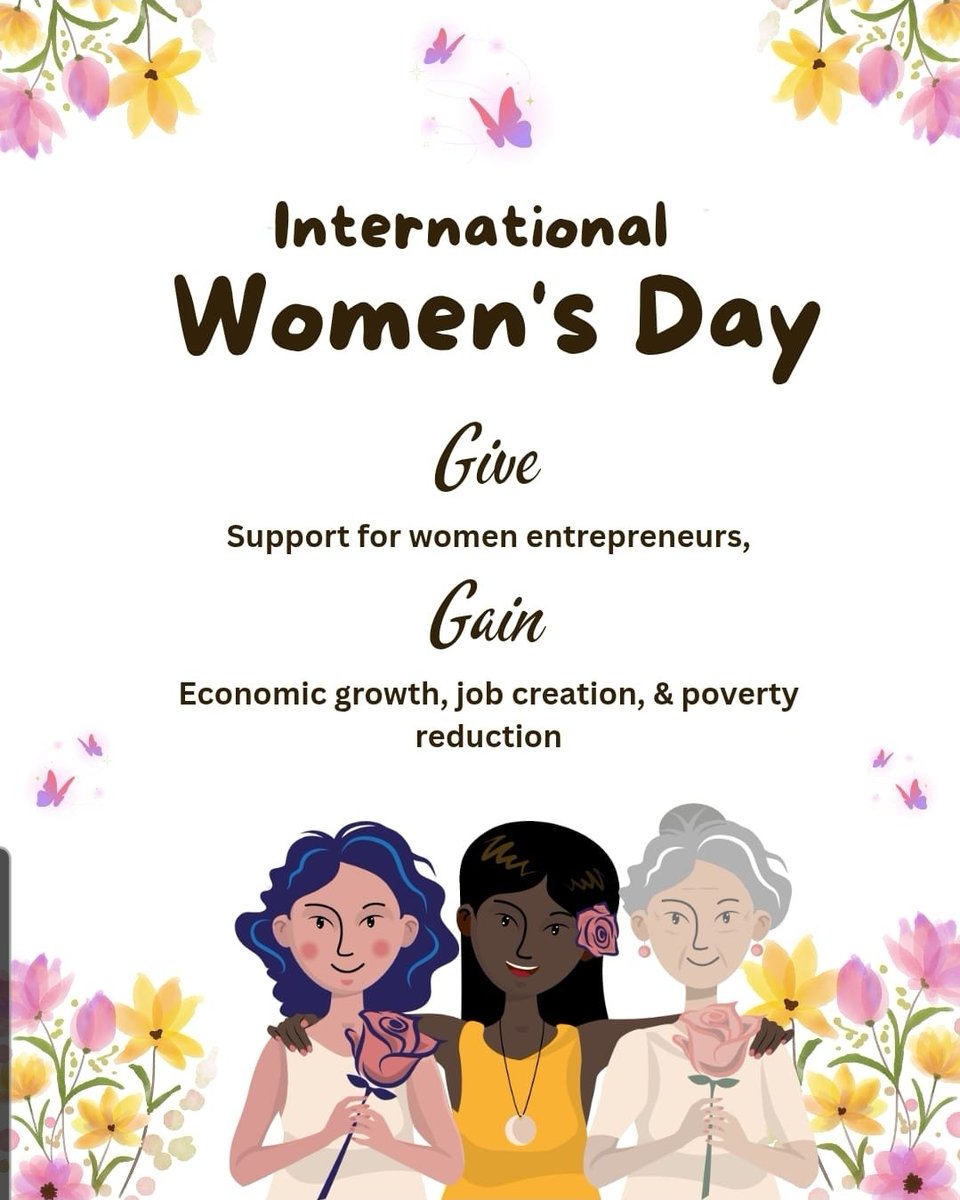
The WEIDE Fund, launched in 2024 by the @wto and ITC, announced USD 1.76 million in its first round of grants to support 219 women-led businesses in the Dominican Republic, Mongolia and Nigeria.
🗞️ Read the details: https://t.co/3s5e7bXrTW
8+ billion people sharing one home with one shared future 🌍.
Protecting our planet is protecting our future.
Today and every day our goal is one: to build a more equal, prosperous and sustainable world for everyone, leaving no one behind.
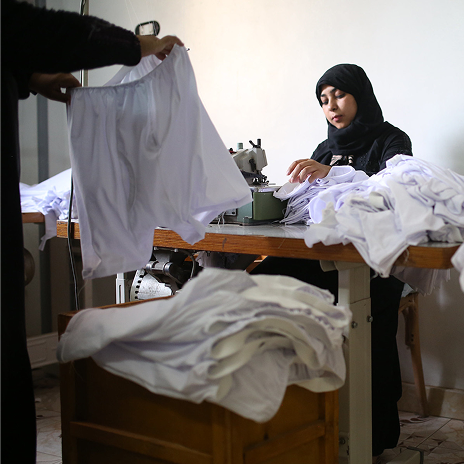
Manufacturing powers jobs and growth:
✅ 820,000–1.2M jobs created
✅ 60+ projects supported by @IFC_org
✅ More economic activity per dollar than any other sector
Learn more about how the sector is delivering impact: https://t.co/zUXEfQq9nr