On Monday I gave a talk to the Natural History Society of Northumbria about "Taking Part in the UK Pollinator Monitoring Scheme" @PoMScheme#Fitcount
https://t.co/9HZAKq6tTb
Roadside verges are potentially some of our easiest wins for pollinators and there is LazyLawn boasting about destroying huge areas of it! @MyWakefield How does fit into your Carbon Neutral and Climate pledges please?
@StevenFalk1 @BeckhamColette @nipajones @RichardComont @JonCurson @_James1Phillips@NaturalEngland@JeffOllerton I'm not sure it's massively helpful in understanding why they've picked these bee species, although it does seem to cover a greater area than expected from their distributions.
@StevenFalk1 @BeckhamColette @nipajones @RichardComont @JonCurson @_James1Phillips@NaturalEngland@JeffOllerton If you look on Magic Maps there are a couple of potential options. Stewardship targeting>Biodiversity>Species>Farm & wildlife package area or Land based schemes>Higher level Stewardship target areas.
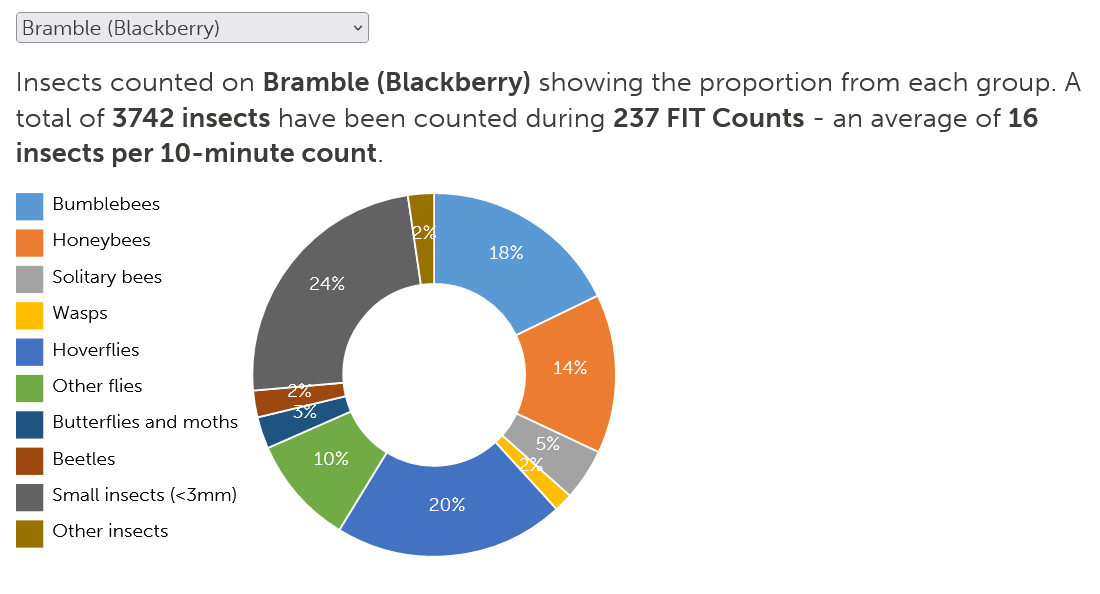
NEW on our website: to celebrate #BeesNeeds we've launched some interactive charts that show how bees and other #pollinators make use of different flowers, based on the results of all the FIT Counts that have been sent in - try them out at https://t.co/HoUvSCg68v
@zippicamiknick Our neighbours won't speak to us, because we don't mow our lawn. We do need to make it a bit more meadowy though as it's just dandelions, daisies & black medic at the moment. On the plus side we didn't get invited to their non social distancing VE day Street party.
@BeesBackyard@StevenFalk1 The Greek Melecta I am familiar with (about 6 species) look more like smarter versions of your Xeromelecta, black with white spots. While Thyreus look like they are out on a date or in their Sunday best :-)