We’re releasing Ortet’s first health evaluation results: 34 open-weight models, 50 tasks, and 15 public benchmarks served and evaluated on Orion, our NVIDIA Blackwell GPU cluster.
A few findings:
- General rankings are not enough for health.
- Open models are competitive on basic medical knowledge and are more willing research collaborators.
- Both open and closed models struggle on the patient-prediction tasks we tested.
- More reasoning usually helps, but the highest setting doesn’t always produce the best observed score.
- Health rankings can be estimated with a small subset of questions.
This is the first step towards our goal—to build continuously improving intelligence across the clinical, biological, and operational aspects of health.
Read the blogpost: https://t.co/azMcc1encC
More on the findings below 🧵
@OrtetAI is hiring AI researchers and engineers https://t.co/JV3S3sC4FH
let's meet and chat at #COLM2026. please dm me or @elmanmansimov on the conference app!
Very excited that Ortet is finally out.
I have spent most of my career thinking how far we can push AI. Health is where getting this right could matter the most.
Very lucky to be building this with people I have known and worked with for years. We are hiring!
We’re excited to announce Ortet, a frontier AI lab for health.
A fundamental gap in care today is that the industry and its scientific tools focus on discovering what works at the population level, while it is individual patients we must focus on to deliver the best care. Individualized care requires a broad view of the patient, the care they receive, and the system around them. Yet the information needed for such a view remains fragmented.
At Ortet, our goal is to create continuously improving intelligence for every patient: the Ortet Health Model, bringing together biological, clinical, and operational dimensions to better predict what happens next and which actions are most likely to lead to better outcomes. To deliver it, we are creating frontier AI from the ground up—across compute, data infrastructure, and models—and building and operating at every layer of AI.
We are scientists and engineers behind foundational AI advances, including the attention mechanism, GRU, and neural text-to-image generation. Across the team, our work spans frontier AI research, health, life sciences, and large-scale data and compute infrastructure—from building AI for lab-in-the-loop molecular design and co-founding Prescient Design to establishing Genentech’s frontier research team and building the largest GPU cluster in life sciences.
We imagine a future where everyone has access to affordable, precise, and better care.
If you want to help us build that future, join us: https://t.co/SiamRIJXfC
@halecar2@opensea never imagined that the outputs from alignDRAW would become a flagship collectible 🙏
thanks to you and @fellowshiptrust for helping make this work visible to the digital art community and to @opensea for adding it to the flagship collection!
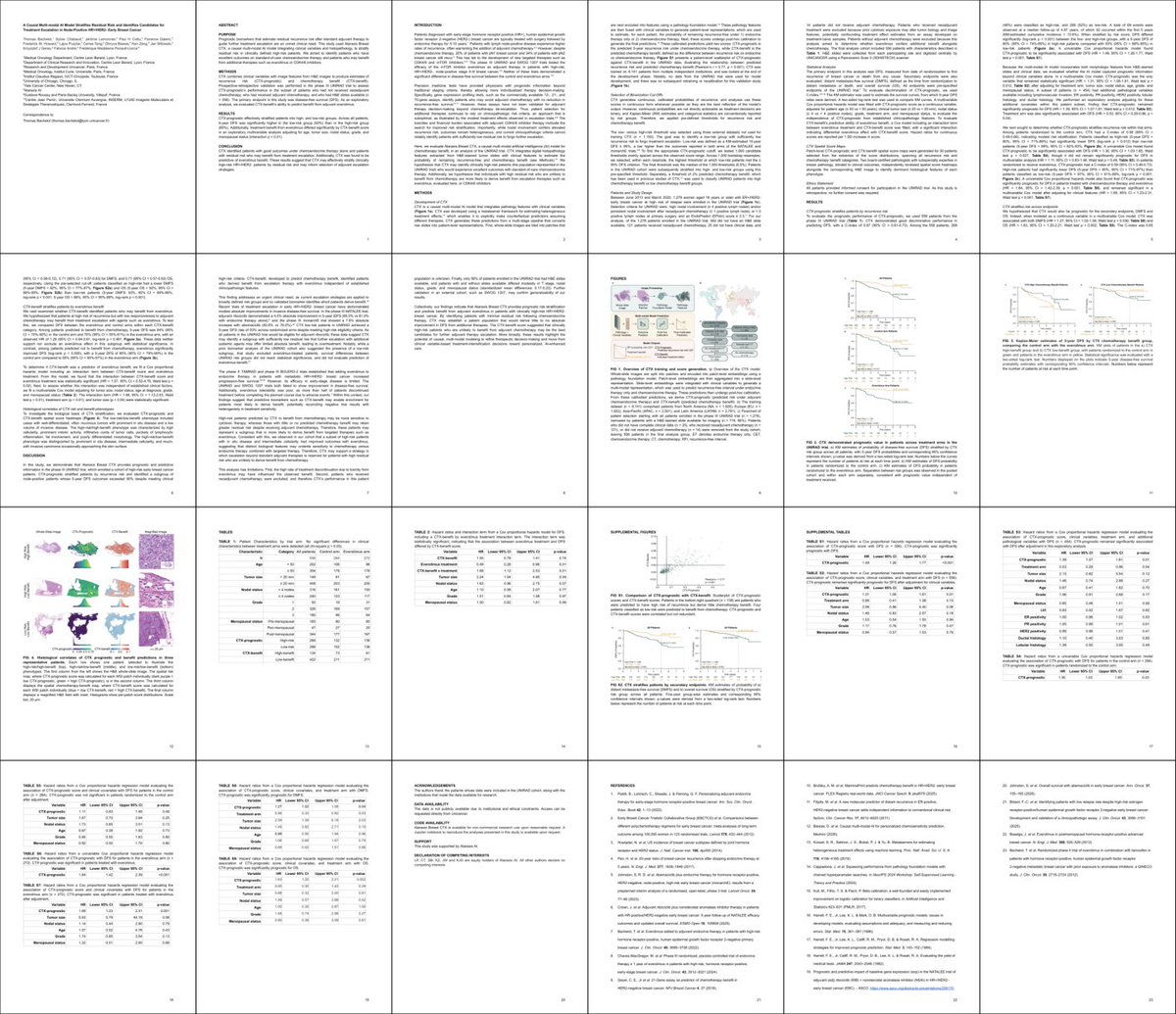
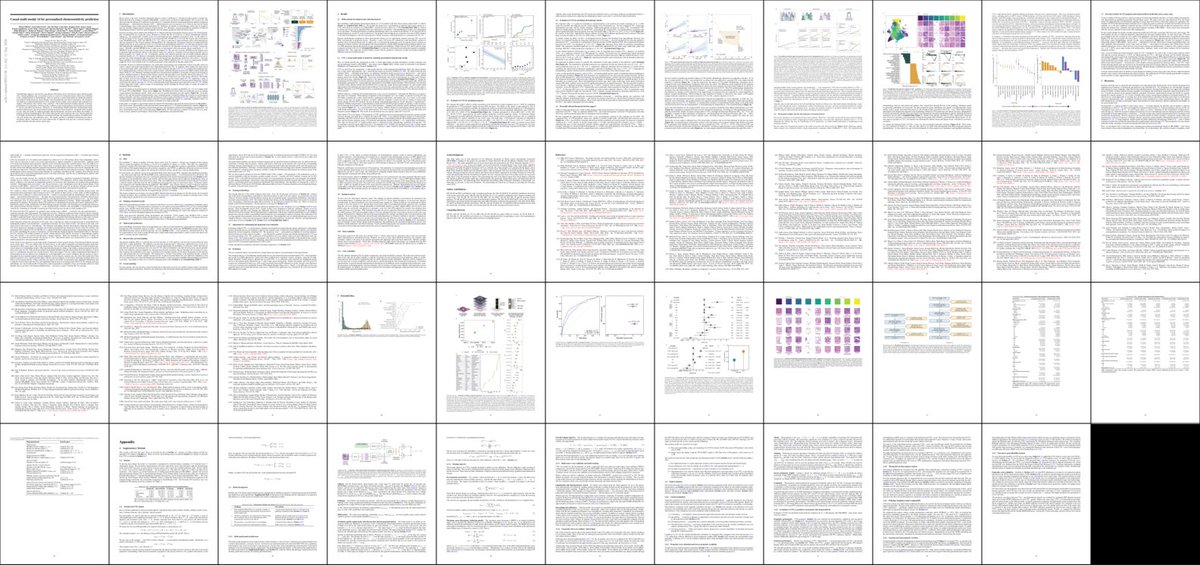
How aggressive a cancer is and how large is the benefit from chemotherapy are different estimands. Genomic assays were built decades ago for the first and repurposed for the second.
Today, we released 3 preprints on estimating the benefit of escalated treatment directly.
@kliu128 Would love to see what 90th percentile token user accomplish in terms of some kind of quantifiable outcome compared to median token user. Was it needle moving ?
1/10 As a father I keep every drawing my son makes.
Wobbly faces. Hands with too many fingers.
Innocence in learning. Beauty in imperfection.
Machines had a childhood too. I spent 3 years finding its drawings.
Today early AI art has a museum:
https://t.co/MbTLLgXQsV
@ar0cket1 We made note writing between iterations explicit in our AutoHelix harness for this type of verified loop tasks https://t.co/fQgQRr7eSY so both negative and positive experiences get saved explicitly in the notes