@rashidsbia and @HaytemTroug
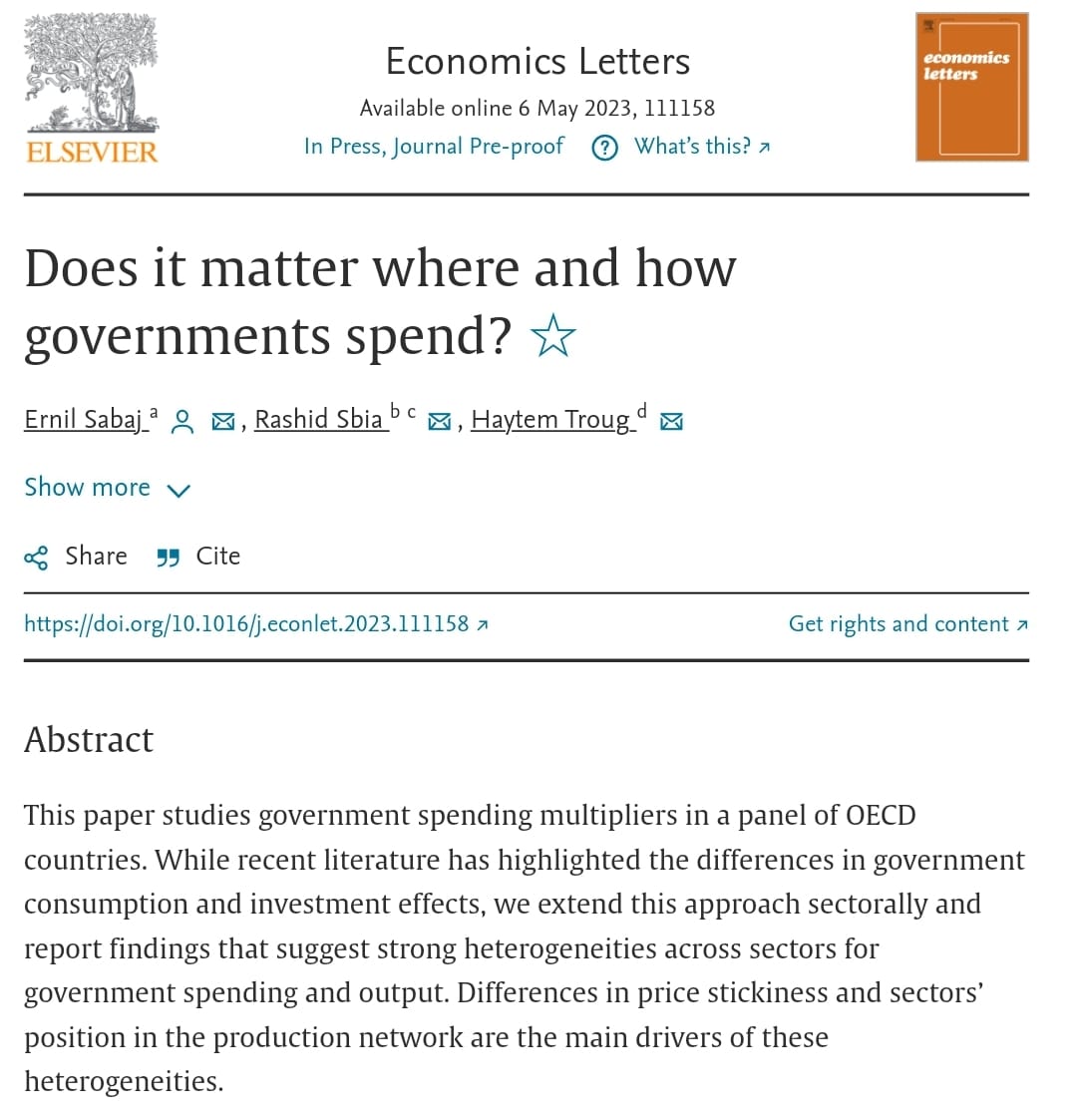
Does it matter where and how governments spend?
at Economics Letters.
https://t.co/oXDfZQdfKt
• Government consumption multipliers are higher than government investment multipliers.
• These results differ in terms of variation sectorally.
Here is the Oxford Football Forecasting!
I've simulated the 2026 World Cup 1,100,000 times!
I used 150 years of data, 50,000 matches, thousands of player records and run on machine learning + Bayesian models.
Spent 50 million @claudeai tokens for design :)
https://t.co/HPXjb0aZgN
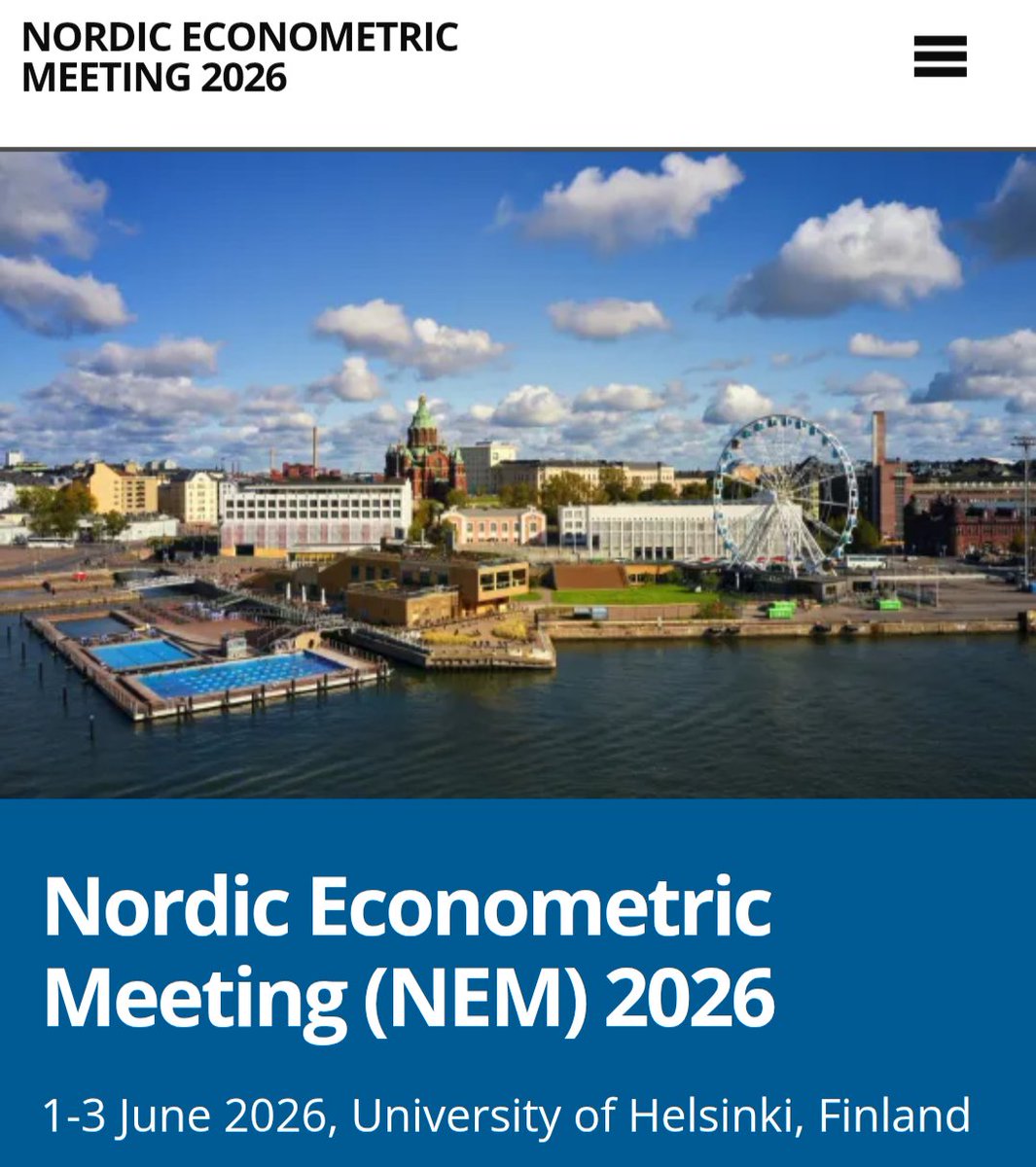
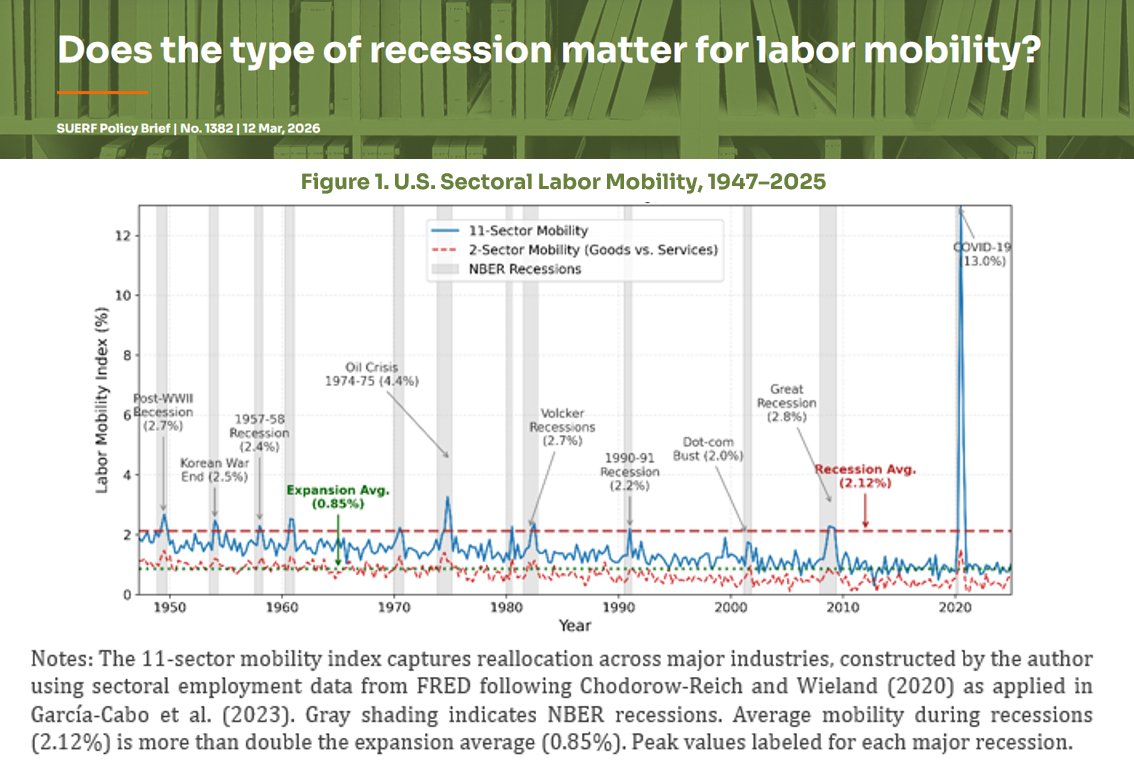
Just presented at the Nordic Econometric Meeting 2026 in 🇫🇮 my Paper: "State-dependent labor mobility responses to macroeconomic shocks" — Local Projections session.
Great keynotes by Raffaella Giacomini & Lutz Kilian. (Thanks to Kilian for very helpful comments on the paper!)
For researchers interested in U.S. banking and finance, we are sharing a new data resource!
It contains information on bank balance sheets, bank runs, and bank failures from the 19th century to the present:
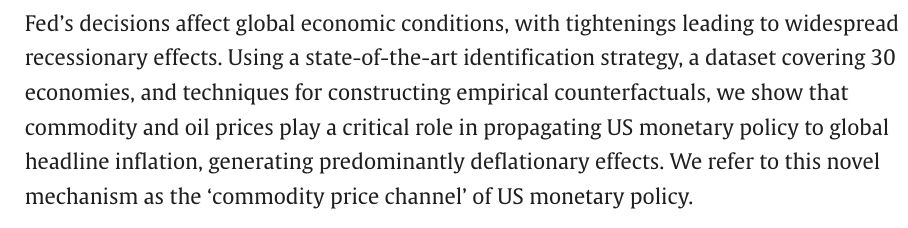
New at JIE: "The global transmission of U.S. monetary policy" by Riccardo Degasperi (@@RicDegasperi), Seokki Simon Hong (@SimonHon49), Giovanni Ricco (@ricco_giovanni)
https://t.co/64rdJ1Scoy
🚨 Public Good Alert 🚨
Two years of development. Zero funding. 𝟲,𝟲𝟵𝟯 𝗼𝗳𝗳𝗶𝗰𝗶𝗮𝗹 𝘀𝘁𝗮𝘁𝗲𝗺𝗲𝗻𝘁𝘀 𝗳𝗿𝗼𝗺 𝟱𝟭 𝗰𝗲𝗻𝘁𝗿𝗮𝗹 𝗯𝗮𝗻𝗸𝘀. #TextData
Today, we are opening the doors to it all for free 🚀
Visit our website: https://t.co/ToBke8Dxww
🧵1/12 #NLP
Excited to share a new working paper:
The Macroeconomic Effects of Tariffs: Insights from 180 Years of U.S. Trade Policy
joint with my fantastic student @tamardenbesten and fabulous co-authors at the SF Fed: Régis Barnichon & Aayush Singh
Thread below👇
Anthropic CEO Dario Amodei: “50% of all tech jobs, entry-level lawyers, consultants, and finance professionals will be completely wiped out within 1–5 years.”
We are not in the business of writing poetry. We are trying to resolve unanswered questions, accumulate knowledge, explain mysteries our understanding of the universe— then what, exactly, is the problem? The substance is what matters, not the tool used to polish the prose.
I'm constantly surprised by the paranoia of a certain segment of the academic community when it comes to AI and LLMs being used to write text. I understand the fear of evil AI overlords turning earth into the Matrix and us into batteries — that's a separate conversation. But the hyperventilation about AI being used to communicate scientific ideas is puzzling to me.
We are not in the business of writing poetry. We are trying to resolve unanswered questions, accumulate knowledge, explain mysteries that remain unexplained, cure cancer. If a researcher finds that an LLM helps them communicate their results more efficiently — results that deepen our understanding of the universe in any field — then what, exactly, is the problem? The substance is what matters, not the tool used to polish the prose. I am still narcissistic enough to prefer my own text to what an LLM produces. But I have no philosophical objection to using one, and I don't see why anyone else should either.
One serious concern is pedagogy. Writing is a thinking tool. Struggling to put an idea into words forces you to sharpen the idea itself. If students outsource that process entirely, they may not learn the cognitive discipline we are trying to teach. But this is hardly a new problem, nor hard to solve. We have known the solution for thousands of years: An exam. Paper and pen in a controlled environment. Oral examination. Socratic dialogue. What is surely a losing battle is policing students with unreliable commercial "detection tools," creating an atmosphere of suspicion and paranoia, and pretending we can preserve a pre-AI world. It's lazy. There is no going back. AI will only get better, and our students' success later in life may largely depend on their ability to use it. The question is not whether they will use it, but if we adapt our teaching to ensure genuine learning — both in the traditional sense and in mastering this new power.
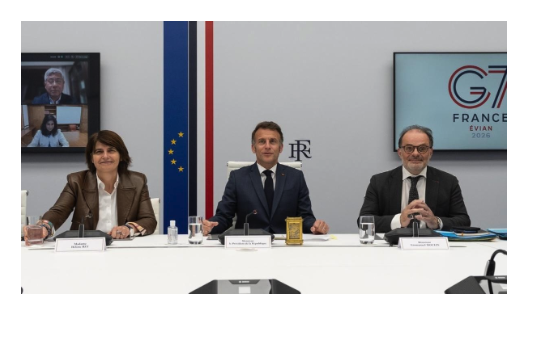
How to address global imbalances? What are its proximate causes and what are not? What about sectoral imbalances? Solutions? Our report on global imbalances handed in yesterday to President @EmmanuelMacron for the G7, written with @helene_rey, Axel Weber and Chon-En Bai. The report can be found here: https://t.co/bSEZA7DA0R
Announcement: https://t.co/XCegCaCgQ2
Research involves two steps: 1) doing things, and 2) figuring out what to do. (Usually in the reverse order.) AI will certainly be quite helpful for the 'doing' part. But that leaves the -- arguably harder -- 'figuring out what to do' part.
A while ago, I wrote a note to explain the connection between the dominant currency and the current account/trade deficits. There's been a debate these days on this point between @GitaGopinath with some opinions by @dandolfa and @farmerrf. Sharing:
https://t.co/4SxGfe8MGC
A lot of colleagues writing about AI and research. It’s all about: What happens to journal submissions! Will papers in their current form disappear! What’s will be the value of a top-5!
I find these questions incredibly boring. 🧵1/3
.@AnthropicAI has released a 3 page memo explaining how economists add value to this rising firm. I have incorporated what I learned from this memo into my paper; "Will AI Improve Undergraduate Economics Education?"
https://t.co/g7ogsvOKK7
I don’t get the concern: You tell Claude to write about some unspecified estimation on some unspecified dataset and it does that. So what? It’s interesting if there is an interesting idea that lets us understand the world — then great, let AI write more papers and our learning curve steepens. I see no indication of that in this example. Did the paper teach us anything? The author says he did not read it? Must be more specific to be interesting. We can run 1 million regressions and automate them. But will AI produce regressions that answer meaningful questions? If we could automate knowledge creation, cure disease, tame recessions, prevent the climate crisis, send people to Mars — GREAT! This strikes me as asking Claude a question and the answer is like in The Hitchhiker’s Guide to the Galaxy: 42!
A personal assessment of the evolution of macroeconomic research over the last 40 years (informed by the opinions of many of the main researchers in the field). https://t.co/hWRVp8MYh0
Conclusion: Strong convergence, mostly for the better. Not everything is perfect but, then, nothing ever is.
I even venture (and I can already see the scathing comments; please refrain if you are in insulting mode) that macroeconomics has become a mature science.