🎉 10 years ago today, we released our first image for running an #Ethereum node on a Raspberry Pi 3.
10 years later, the principles remain the same.
We're living proof that decentralization doesn't need expensive hardware, just a $200 ARM board.
Here's to 10 more years. 🥂
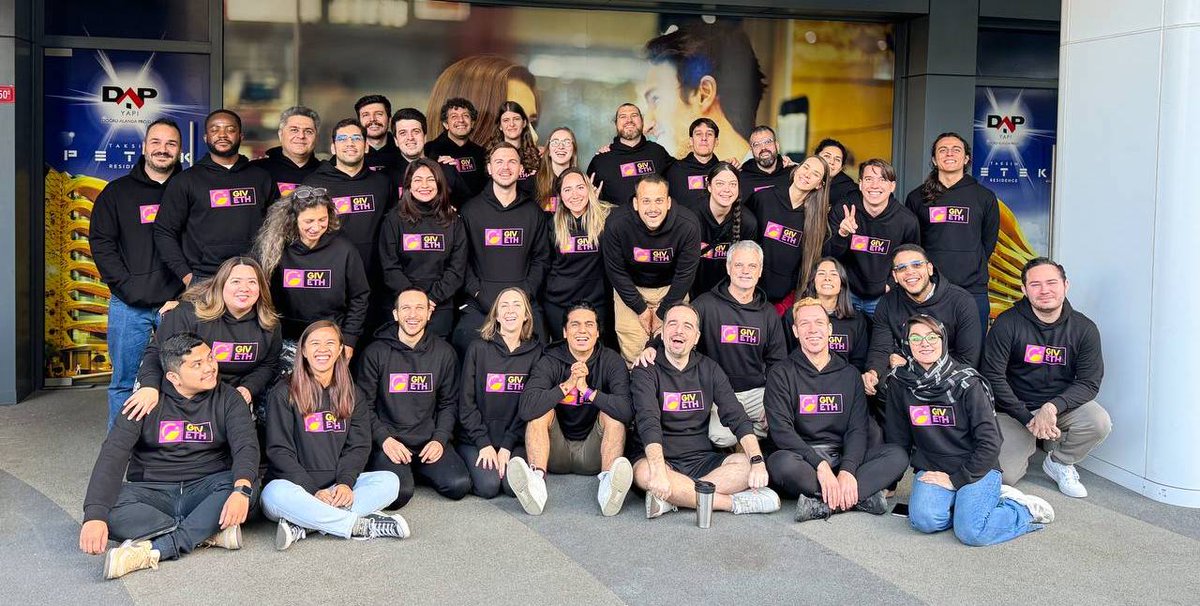
Giveth - 10 years - WOW.
Truly an incredible milestone. We've done so much and had so much fun along the way!
I'm so proud of our work. We've raised millions of dollars for nonprofits, and impacted countless lives around the globe, including countries that are normally out of reach for traditional financial rails.
For the last 10 years Giveth has been on a mission to build something better than governments, and the mission has taken us around the world and back, with dozens of start-ups and countless of collaborators.
It's been a long hard battle, we've almost shut down in every bear market & yet somehow the generosity of the community has kept us alive.
There was one point in 2019 where Giveth was just me & Amin, and then 4 years later, we grew into ~75 people working on 7 or 8 different projects all exploring how to make public goods profitable.
Throughout this decade we've completely redesigned the Giveth platform 6 times!
We were working on bonding curves in 2018, we ran the first Ethereum scaling conference, we pushed for open source block explorers & we even ran Burning Man camps.
But our journey is not complete... no where near it.
I am still convinced that we will one day find a model that can make nonprofits profitable. Nonprofits create value, and Giveth's primary goal has always been to produce a novel economic system that can appreciate the value that nonprofits produce.
It's not easy, and we don't know where this road will take us, but the journey continues.
Right now we are focused on making crypto safe to use for normal people. We rebuilt the Giveth platform to have a much safer experience (thanks to Turnkey) and our work with TheDAO Security Fund will hopefully extend a safer crypto experience to the entire Ethereum community.
Because no matter what cool model we find for appreciating the value that nonprofits produce... It won't work if normal people can use blockchain tech safely.
I couldn't be more proud of the work we've done over the last 10 years & of all the people I've worked with.
It's been quite the journey, one decade down, many more to go.
𝗜𝗻𝘁𝗿𝗼𝗱𝘂𝗰𝗶𝗻𝗴 𝗡𝗲𝘁𝗵𝗲𝗿𝗺𝗶𝗻𝗱 𝗟𝗶𝗴𝗵𝘁 𝗖𝗹𝗶𝗲𝗻𝘁
Trustless RPC for every wallet.
Verify Ethereum yourself, without running a full node.
𝗛𝗼𝘄 𝗶𝘁 𝘄𝗼𝗿𝗸𝘀
→ One trust anchor: a recent finalized beacon block root
→ Consensus: sync committee updates over libp2p, with signatures and Merkle branches verified
→ Execution: state on demand through SNAP, every range proven against the state root
→ Performance boosted through partial state caching for selected and frequently queried accounts.
𝗕𝘂𝗶𝗹𝘁 𝗼𝗻 𝗯𝗮𝘁𝘁𝗹𝗲-𝘁𝗲𝘀𝘁𝗲𝗱 𝗡𝗲𝘁𝗵𝗲𝗿𝗺𝗶𝗻𝗱 𝗰𝗼𝗺𝗽𝗼𝗻𝗲𝗻𝘁𝘀
→ eth_call and eth_estimateGas run locally in the Nethermind EVM, nothing forwarded
→ Developed inside the Nethermind client codebase
→ Glamsterdam-ready
𝗙𝗼𝗿 𝘆𝗼𝘂, 𝗶𝘁’𝘀 𝗷𝘂𝘀𝘁 𝗹𝗼𝗰𝗮𝗹𝗵𝗼𝘀𝘁:𝟴𝟱𝟰𝟱
Point MetaMask, or any wallet, at it.
In active development. Congrats @__flcl and the team.
Follow the progress and share feedback:
https://t.co/X86l1viInj
Due to market conditions and lack of funding we didn't make it to #Ethereum@EFDevcon this year. We’ll be following remotely and cheering everyone.
Have a great time, and keep building 🚀
See you at the next one!
Congratulations to @ethlambda_lean on v1.0.0!
We're proud to see lessons from building ethrex help shape another Ethereum client. With ethlambda supporting the beacon chain, we can work together on improvements across Ethereum's execution and consensus layers.
Charon v1.11.2 has been released! This is a patch release addressing the intermediate CA certificate compromise. Mainnet operators are encouraged strongly to update to this release ASAP.
https://t.co/cGr3MTnPRD
Hoodi operators read below 👇
Over the past few months, the @Nethermind Client team has been focusing on almost everything BUT performance - authoring, supporting and reviewing EIPs for Glamsterdam, championing Hegota headliner - Frame Transactions, researching state bloat, and much more.
That's not changing - we are still being heavily involved in Ethereum roadmap. But AI has unlocked a whole new level of productivity for us, and we're now pushing hard on several fronts:
1. zk guest program - coming soon to @eth_proofs. Very promising, very performant.
2. RPC refresh - Geth compatibility, major performance improvements, and more. Few projects already got a feeling of what we are shipping - and it is looking very good.
3. Client hardening with AI - Node MCP for users and our custom CoreMCP for developers, helping us ship faster and build a much more stable client.
4. Innovative node optimizations and advanced plugins - unlocking capabilities that could be extremely useful for many projects across the ecosystem, including support for new chains.
And that's just the beginning.
As a "side effect," we've also significantly improved the node's performance at the tip of the chain - before even getting into the Glamsterdam hard fork, which should unlock a whole new level of throughput.
Nethermind is the fastest #Ethereum execution client, and the only one pushing beyond 1.5 GGas/s in p50 block throughput at the tip of the chain.
With the next fork, we expect that ceiling to go even higher - based on Sepolia data, potentially around 3x higher.
And we're definitely not done.
We want to change the rules of the game. The AI-powered tools we've built in-house are giving us enormous leverage, and we're confident this advantage will only grow over time.
Performance is good. 🚀
https://t.co/iRCSL2LALA
Quick POC of a post-quantum Ethereum wallet.
- Retains the same address*
- Rotates key every transaction*
- Uses Safe + Bip39 as rotation system
- Works with any HD derived ECDSA wallets
- No new cryptography
https://t.co/HEO2Rf28Zm
Upgrading our @Obol_Collective#Ethereum staking cluster nodes from Noble to Resolute one by one.
No downtime, no rush, no issues.
If you are staking from home, build a DVT cluster.
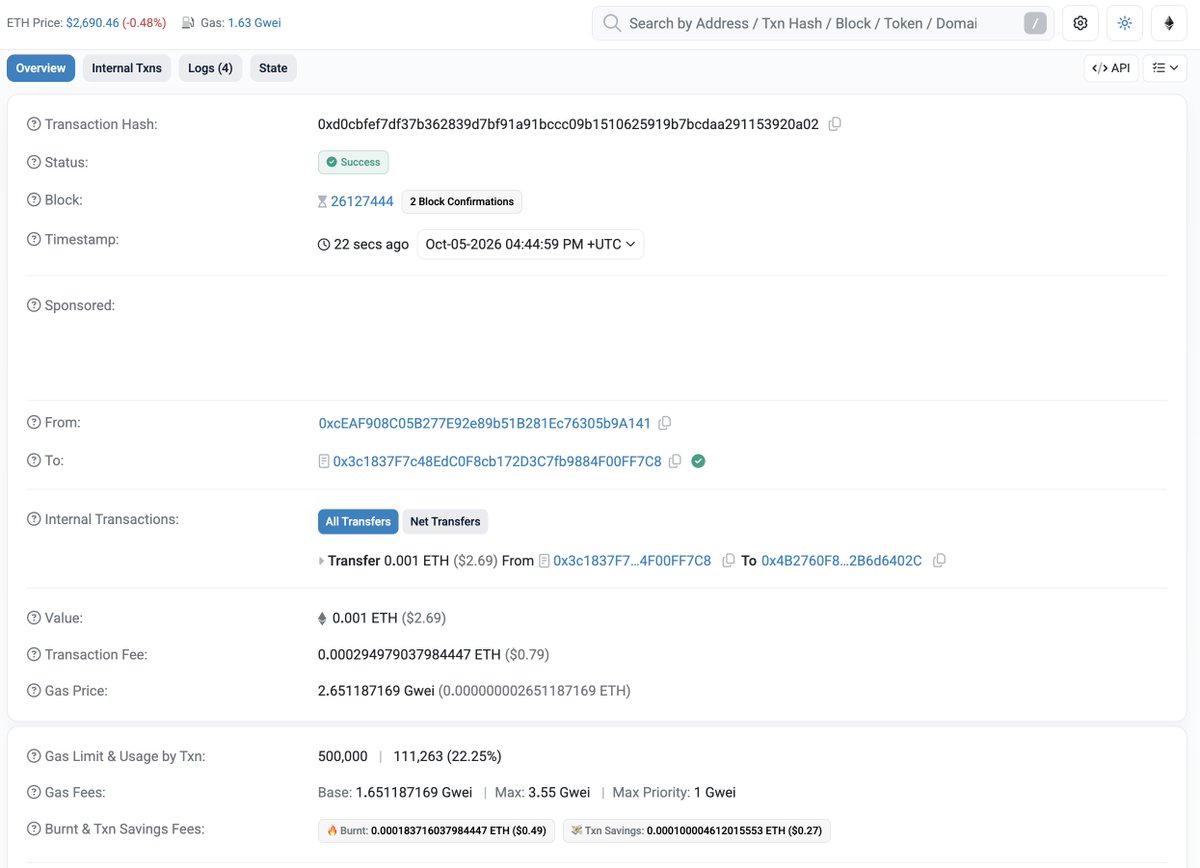
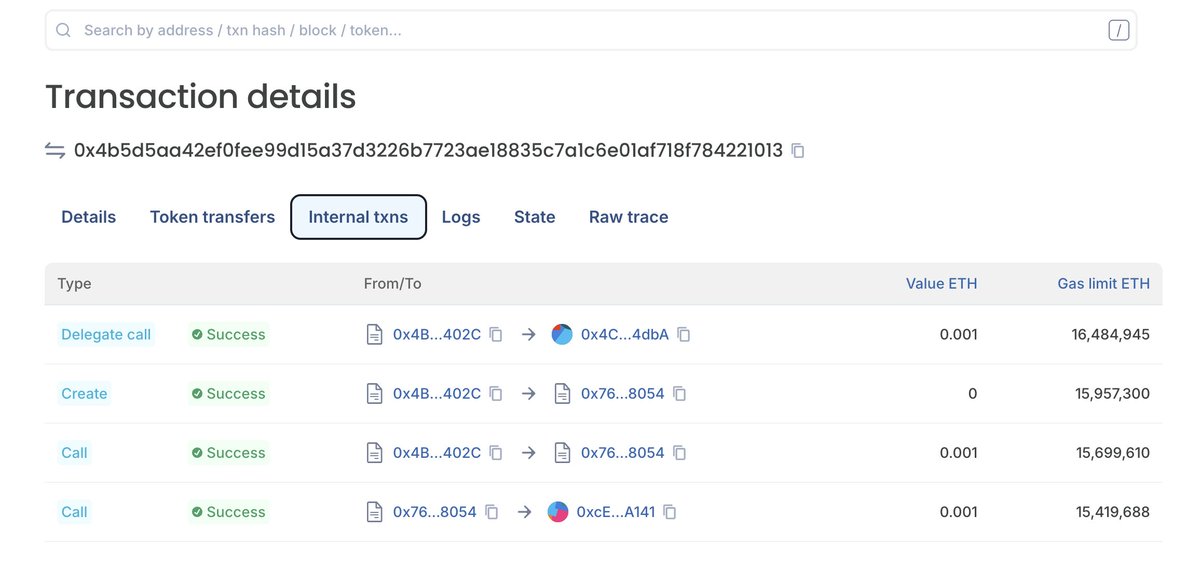
Atomic synchronous composability is no longer a promise. History made on mainnet: the first atomic cross-chain L1->L2 transaction ever 🔥 And this is only the beginning for EEZ ... 🚀 @etheconomiczone
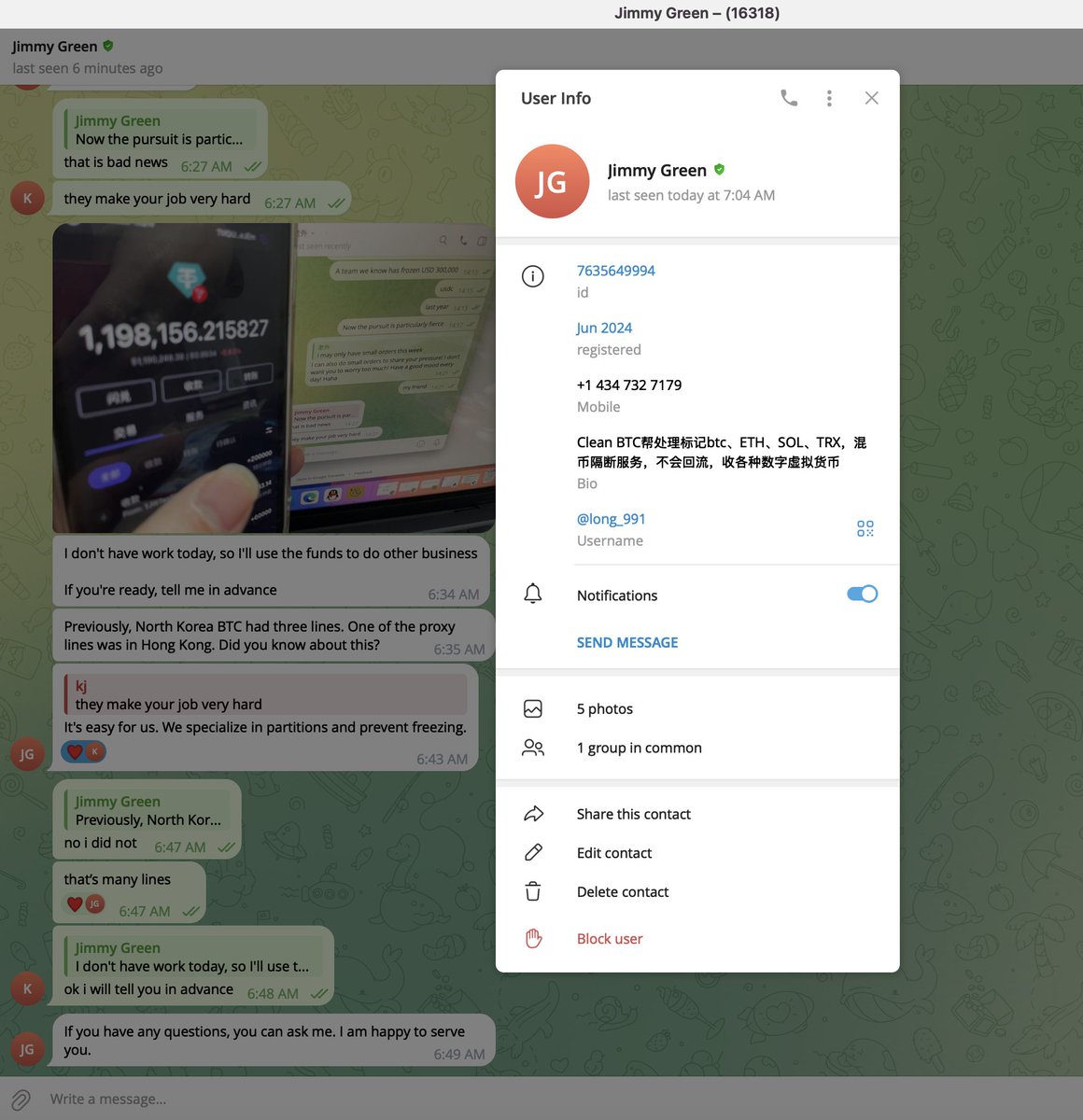
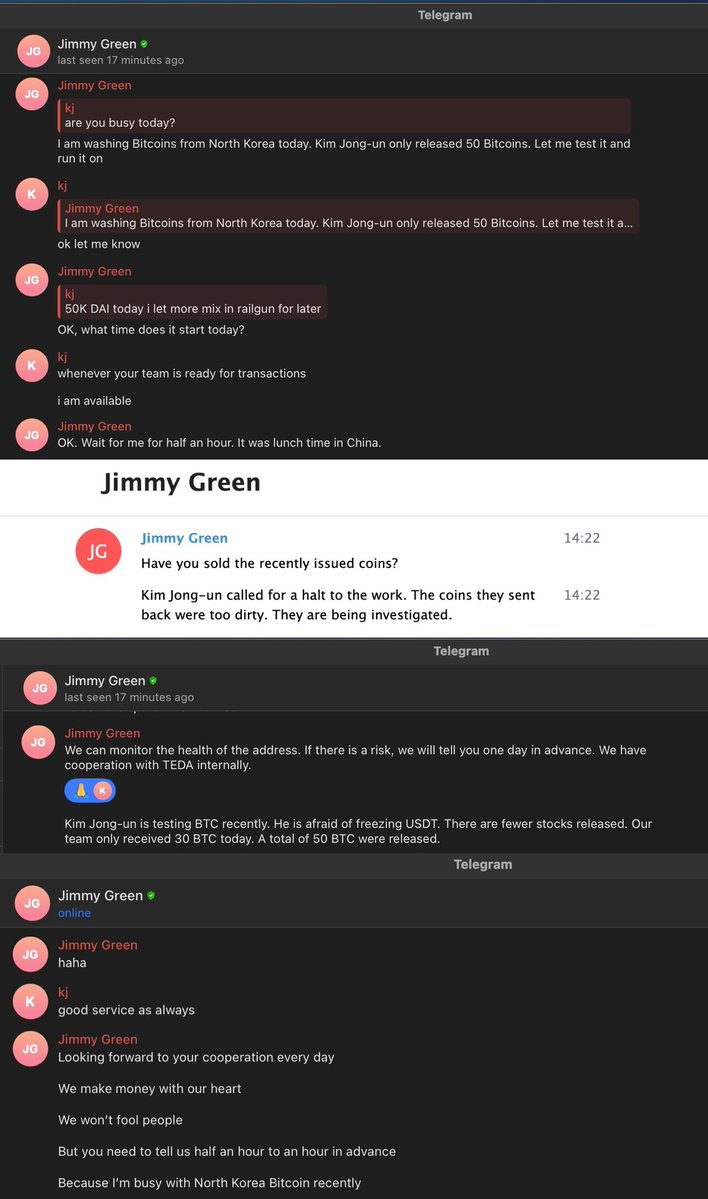
1/ How I infiltrated a Chinese organized crime syndicate that has laundered $1B+ across multiple exploits for Lazarus Group.
Posing as a client, I gathered intel that helped action freezes for the Feb 2025 Bybit exploit and attribute illicit activity onchain.
Thank you for engaging in good faith with a smile on your face through a long onslaught, it’s not easy :)
If I take the moment to tl;dr some of the key places the proposal fell down imo, (that more or less fit your categories)
- protecting ETH’s security and resistance to capture is more dictated by the Nakamoto (and withdrawal cred gini) than the ratio. The strawman to exemplify that is a validator set with a Nakamoto of 20, good gini, and staking ratio of 80% is more secure and capture resistant than one with a 47% ratio and Nakamoto of 3. We need to start measuring these numbers, and building rough consensus on where they should be, to enable agreed upon change. Would love your help here, what’s your minimum tolerable Nakamoto for eth?
- we need to take a zk-L1 seriously, and model the economics of it, and how we reach the social consensus (👆) builder diversity numbers. We don’t get many changes of economics while retaining moneyness (your second objective), so let’s make sure proving and aggregating make economic sense and are not winner takes all.
- I don’t think any curve that goes to zero at a reachable point is wise, it allows for a lowest cost wins game. This proposal in particular meant that weak validators in high ratio environments would be extra screwed in reward nvm economies of scale, it would have been ruinous for the indie stakers. Tails at 0.5% ->1.5% issuance are fine imo.
- we need community alignment on if CROPS > hard money or not. IMO Ethereum is not bitcoin and shouldn’t try to be. Hard money/increasing the burn is in contention with extra marginal scaling, we should pick it. Tbh a 1% dilution on eth makes it a better normal money, versus a store of value asset (hard/ultrasound). You can avoid this dilution by taking a risk and staking your eth.
- let’s fix the tax treatment on solo staking in proactive jurisdictions
- we can make Ethereum staking more decentralised (and likely impede higher staking ratios) with other EIPs such as 7716, or by making a price to exit stake. Would love your support on that one for Hegota as a compromise win. :)
- lastly, a good cost model for staking would help understand what a marginal change to economics would do to the chain health metrics, including whether they’re likely to surpass our social consensus decentralisation thresholds
Many things here, some you already mentioned, some not, but you have my continued support and engagement in trying to get Ethereum into a more healthy secure and decentralised state. Bonne chance. :)
📋Withdrawing EIP-8363 from consideration for Hegotá.
EIP-8363 rapidly became one of the most commented-on EIPs in the history of the Ethereum-Magicians forum, with 200+ comments in a few weeks. As we progressed through the Hegotà CFI (Consideration For Inclusion) process, several parties in the industry as well as core protocol and client contributors voiced that a fork scoping exercise was not the right venue to settle an issuance policy change.
We agree and we'd rather acknowledge this now than carry on towards Hegotà in this context. The topic is too important and raised too many concerns that it deserves its own process. We commit to giving issuance its own process and we thank the entities such as @LidoFinance who offered to help steer such an initiative.
We stand by the motivation of this EIP, in particular: “a very high staking ratio is undesirable for two distinct reasons (...), preserving Ethereum’s security, neutrality and resistance to capture, and protecting ETH’s role as money.” Not everybody immediately relates to both reasons and for others recognizing just one of these reasons is enough to justify a change. Nevertheless, we will all benefit from improving our understanding of the issue and what is at stake. The questions we have faced since we published EIP-8363 can be boiled down to 5 categories:
➡️Security: What does a lower ratio actually secure versus a higher ratio?
➡️Industry impact: What else is built on the yield and what will be the impact ?
➡️Curve specs and alternate tools: Is this curve even the right instrument?
➡️Composition: Who is left staking (the effect on the composition of the validator set) ?
➡️Decentralization: How will solo stakers be impacted by the reduction?
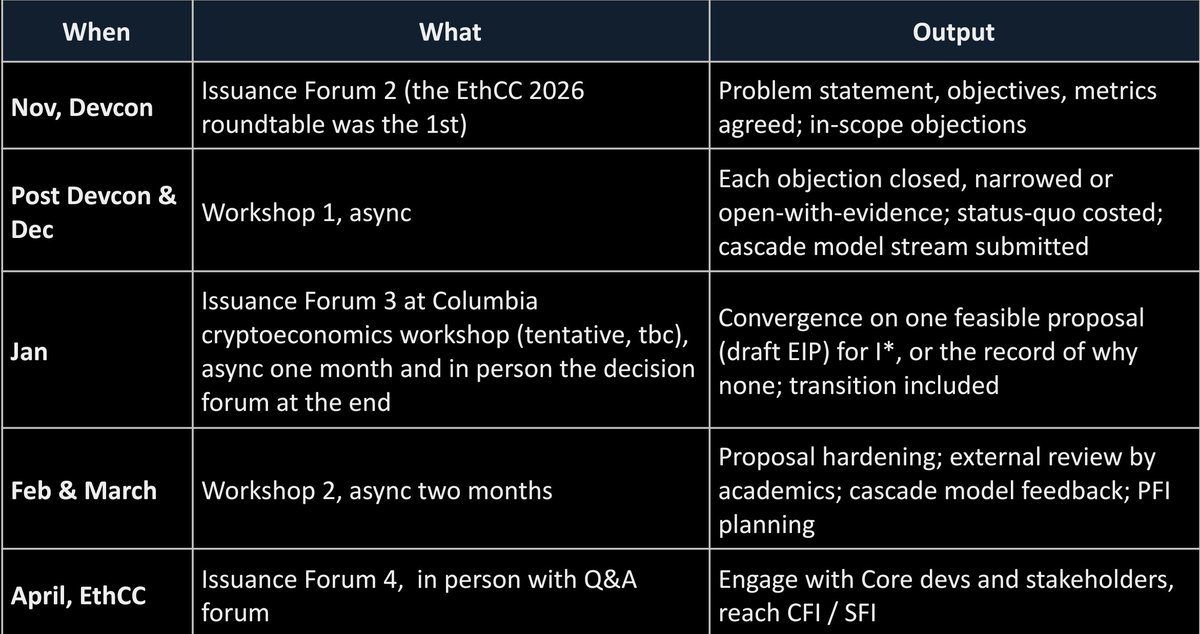
We already argued a lot, conceded some and adjusted a few points in the very long Ethereum-Magicians thread mentioned supra. For a broader consensus to emerge and a better issuance policy for Ethereum to be designed and adopted, we need a dedicated process. We call for all willing hands to help and contribute to this, please do reach out. Here’s our start at what a multi-node process would look like (table attached).
Onward and forward, let’s improve Ethereum.
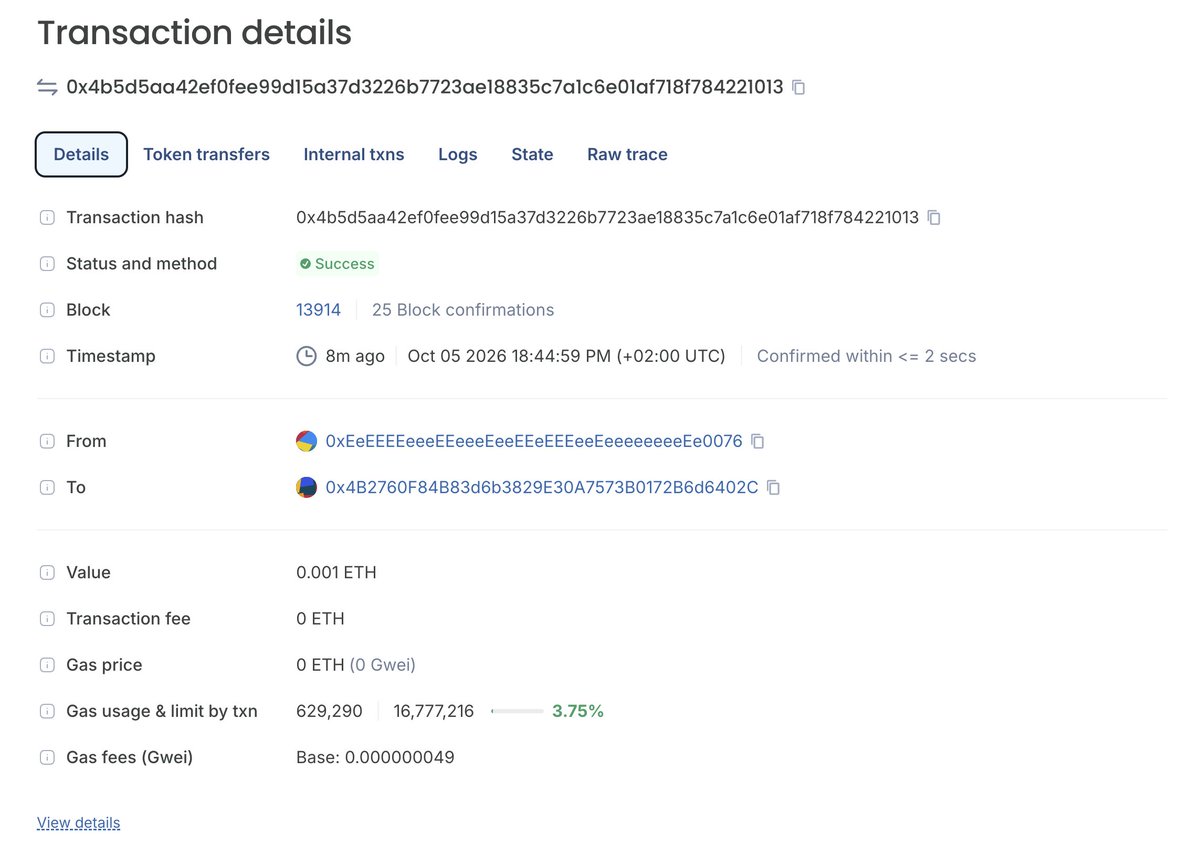
I've been working in Ethereum for nearly 10 years and it still feels great to send a transaction to your own self-hosted node.
Reading and writing from the chain without any intermediary. No other chain comes close to how easy it is with Ethereum.
@chfast@adrien_lacombe We run a 3 node @Obol_Collective cluster and plan to move to a 6 node cluster in a couple weeks.
Documented here:
https://t.co/AVqa2qAAqP