The Claremont Institute is proud to announce the 2026 class of Publius Fellows, our flagship program for rising leaders pursuing careers in politics, scholarship, journalism, and related fields.
They will spend 2 ½ weeks this summer immersed in the political philosophy, statesmanship, and constitutional principles that define the American Way of Life.
Please join us in welcoming, Jasper Boers, Jack Burch, @blaynecs, Jonah Davids, @tenglishDC, Jacob Hiles, Jackson Hines, John Huggins, @TheodoreMadrid1, Mackenzie Moreno, @CalebNunes13, Alexandre Reza, Samuel Silvestro, and Eve Velasquez.
For context, the 60% figure is an older CDC estimate for American adults, and 41.7 million is SNAP's average monthly participation in FY2024.
https://t.co/sNUthZ7M4u
More than half of U.S. calories come from ultra-processed food. Our proposal puts an A-to-F grade on the front of packaged foods and ties SNAP purchasing power to the grade: higher-grade foods become more affordable, lower-grade foods less subsidized.
60% of Americans have a chronic disease. More than half of U.S. calories come from ultra-processed food. SNAP serves 41.7 MILLION people a month.
Our U.S. FoodGrade proposal puts a simple A-to-F grade on the front of packaged foods, the school-grade system everyone already understands. SNAPSmart then ties SNAP purchasing power to the grade: healthier food goes further, lower-grade food buys less.
Taxpayer food dollars should pull toward better food and improve population health.
From our healthcare team: @AdamMeier20, @McK_Richards, @EveVelasquezMPP
https://t.co/YdaDEfjbQI
Proud to see @EveVelasquezMPP spotlighted as a 2026 @ClaremontInst Publius Fellow! As a research associate at @InstituteCicero, her work focuses on healthcare access, competition, and nutrition policy.
Read her full spotlight here: https://t.co/mn1pSNeFJb
@RobertNoah2017 Exactly, but the problem is people don’t know they can ask! I’ve heard countless people say, “I didn’t know cash was an option.”
https://t.co/TmEKpj5Zmr
@eye95@AAPSonline@mfcannon Wishing you the best with the scan and biopsy. I'm glad your care has been timely. Wait times do vary a bit: new family medicine visits average 23.5 days. That's why we want more clinicians in the system, like pharmacists.
Katy is right that wait times should be shorter (we need competition in healthcare). But we don't have a free market in healthcare. Per @mfcannon’s “Recovery,” 85% of U.S. health spending is compulsory — Canada 75%, the UK 83%. We need more competition, not more government intervention.
When people say "countries with socialized medicine wait months for an appointment" are they forgetting that we also wait months for appointments? the difference is that our appointments bankrupt us.
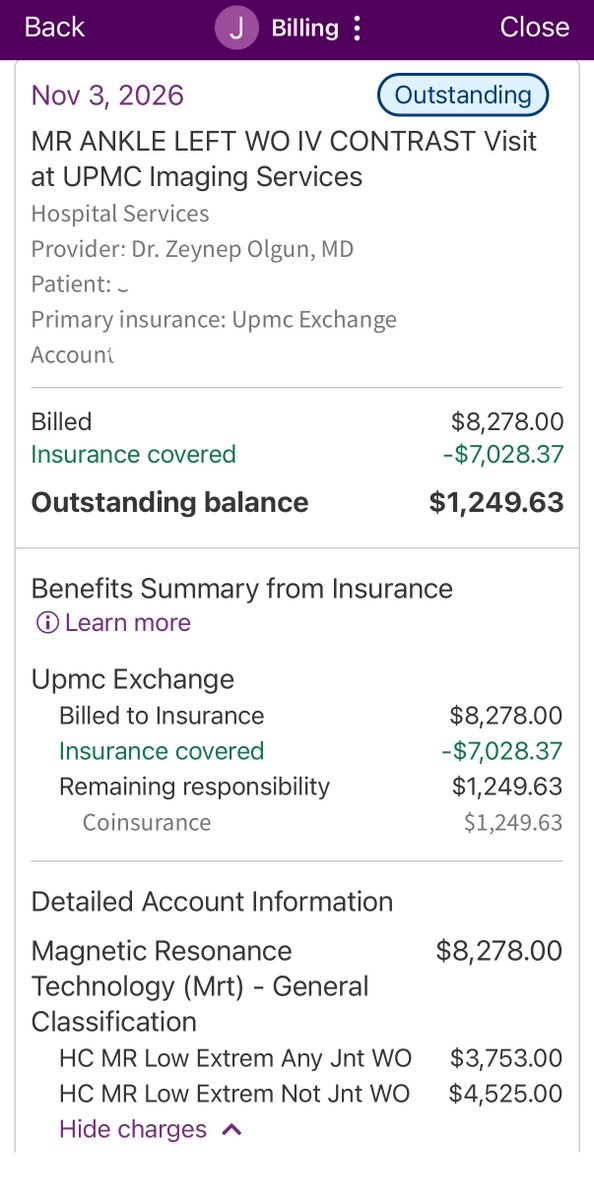
Wasn't insurance supposed to negotiate better prices for the consumer? This family owes $1,250 for an MRI that costs under $900 cash. And in July, another family: $2,200 with insurance, $399 cash. We need more price transparency.
Health care pricing makes zero sense to me.
Case in point: My daughter just had an MRI on her foot and ankle.
The hospital billed $8,278. Insurance covers 85% of it. We owe $1,250.
A full body MRI through Function is under $900 cash. A single body part from an independent imaging center is only $300.
Our share after insurance is 4x the cash price.
At this point, it make sense to cash pay for everything.
Glad that’s been your experience! And access varies widely. A 2025 survey found the average wait for a new family medicine appointment is 23.5 days, and 92% of rural counties are federally designated primary care shortage areas. One way to fix it is letting pharmacists practice to their full education.
@katystoll The problem isn’t a lack of government intervention. We already have laws restricting healthcare supply and protecting existing providers from competition. Then we act surprised when care is expensive and wait times are long.
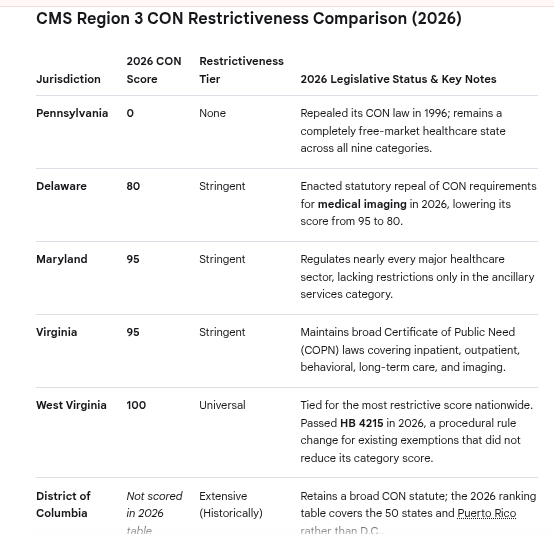
Thank you so much for sharing our work, Deborah! @McK_Richards and I wrote the @InstituteCicero Playbook to make CON reform easier to track state by state. So glad you found it useful!
Great resource for tracking healthcare reform: the 2026 Playbook for Certificate of Need Repeal by @McK_Richards and Eve Velasquez at @institutecicero.
It breaks down 50-state CON restrictiveness—now used by @CMSGov—and shows how states can expand access to care.
Check out the full report: https://t.co/mtxzGgZide @jldobrinsky
People ask if I’ve read all the books I own. No, not at all. A private library is not merely a storage facility for once-read books, but a tool box, a spice rack, a medicine cabinet — an investment in future health and happiness.
@lv_medicine Exactly why we need more transparency! Hospitals should have to show how they’re spending their 340B revenue and whether patients are actually benefiting.
@McK_Richards@DutchRojas Although states can’t rewrite federal 340B law, they can demand transparency. Requiring hospitals to publicly report their 340B revenue, how it’s spent, and how much charity care they provide would be a good place to start.