FSII is an industry body of R&D based plant science industry, engaged in the production of high performance quality seeds for food, feed and fibre in India.
CPM-20 agreed a new governing body for the IPPC ePhyto Solution. 151 countries are registered, and 250,000+ digital certificates are exchanged each month via the ePhyto Hub.
Read : https://t.co/ujXuU4GJ53
@ippcnews#PlantHealth#FutureFriday#FSII#VoiceOfTheSeed#BeejKiBaat
IndiAgri Special 👨🌾
The future of cotton starts with protecting farmers.
Rajendran Ramasami, Director, @FSII_India and Managing Director of @Rasi_seeds, shares his perspective on the challenges facing India’s cotton seed industry and why farmers must remain at the centre of innovation and policy decisions.
With over 50 years of experience and seeds grown across more than 25% of India’s #cotton acreage this year, Rasi Seeds continues to focus on farmer welfare, research and innovation. The company is developing indigenous pink bollworm-tolerant #technology, now in its second year of trials, with encouraging results so far.
Rajendran highlights the need for timely government approvals for trials and genuine research, stronger accountability to curb illegal hybrid seeds sold by fly-by-night operators, and greater support for innovation. Such practices hurt both #farmers and the legitimate #Seed industry.
He also points to the growing challenges of cotton cultivation, particularly labour shortages and the need for mechanisation. Technology can be a game-changer in making cultivation easier, and the industry is keen to contribute through research and farmer-centric solutions.
His message is clear: honest efforts by industry and farmers must not go unrewarded. Timely decisions, a level playing field and support for genuine innovation are essential to protect farmers and secure the future of Indian cotton.
#SeedIndustry #IndianCotton
@AgriGoI@icarindia@icar_cicr@NSAIndia
As India has developed over the past four decades, the share of agriculture in the workforce has declined for both men and women. However, this transition has been far from equal, with men moving out of agriculture considerably faster than women, pointing to persistent gender gaps in access to new employment opportunities beyond the farm.
The result? An increasing feminisation of agriculture, with women now accounting for nearly half of India’s agricultural workforce. Does this necessarily signal progress? Not when nearly 40% of women working in agriculture are unpaid family workers. Their continued concentration in agriculture may, in part, reflect the limited availability of accessible and remunerative employment opportunities outside the sector.
This 𝗪𝗼𝗺𝗲𝗻 𝗙𝗮𝗿𝗺𝗲𝗿𝘀’ 𝗗𝗮𝘆, let’s celebrate women’s indispensable contribution to agriculture while recognising the need for a more gender-equal transition to a more prosperous economy.
#WomenFarmersDay #StructuralTransformation #WomenInAgriculture #GenderEquality #IndianEconomy
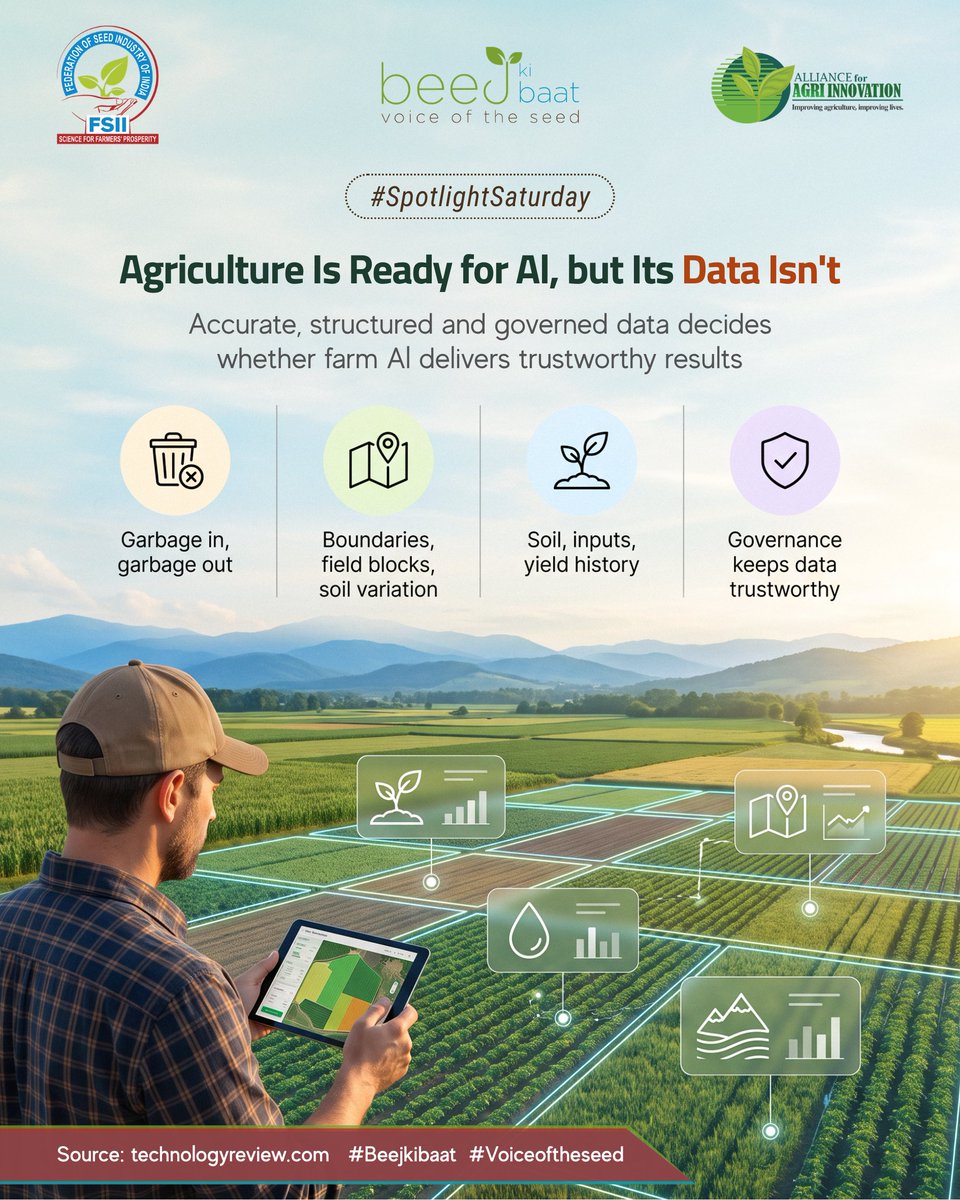
AI in agriculture needs reliable field-level data. Connected soil, input and boundary records ensure accurate recommendations and farm-relevant insights.
Read: https://t.co/ikoalkCVr6
@techreview#FSII#VoiceOfTheSeed#BeejKiBaat#spotlightsaturday
On International Day of Rural Women and Rashtriya Mahila Kisan Diwas, celebrate her knowledge and strengthen her choices in this International Year of the Woman Farmer 2026.
#WomenFarmers#FSII#VoiceOfTheSeed#BeejKiBaat
New study: each 1°C of warming may cut global rice yields by 8.1%, not the 3.8% models projected. Heat above 30°C during grain development drives the loss. India's estimate rises from 2.1% to 6.6%.
Read: https://t.co/oFNuukOzbW
#Spotlightsaturday#FSII#VoiceOfTheSeed#BeejKiBaat