If we're not going to write or read the code anyway, use a technology that scales vertically and horizontally with as few moving parts as possible, like Phoenix and Elixir.
Because when you have no clue what is happening, managing Phoenix+DB will be easier than App+DB+AuthService+Functions+Redis+Whatever
This is a great post if youre thinking about applied AI in the enterprise. The headline of this post is about what companies have huge upside from AI, but the deepest nuggets are about what AI transformation looks like in an organization.
It’s fundamentally about changing the underlying workflow or business process. As we move from chat tools to agents, those agents actually have to be deployed against workflows, which usually span multiple functions in an org. This is a different way of deploying AI than solely rolling it out to end users. It takes much more work upfront, but the results are the things that actually drive significant ROI.
“Software asks the employee to adopt a tool, but infrastructure changes the operating layer underneath the employee. The employee should still know what happened, and the process owner should still be able to pause the workflow, change a rule, approve an exception, or pull a person back in when needed. But the value should not depend on someone remembering to use the AI every day.”
The winners of this will be the platforms that can be deployed for specific workflows and business processes with a deep domain expertise. The playbook will often heavily require FDE support, change management, getting data well organized, be able to have comprehensive evals for the workflows, and much more to get right.
There is a lot of talk about loops in AI coding these days. The idea that you create a perfect acceptance criteria and then let agent achieve it over a few hours or days of trial and error seems inverted. If one is willing to put so much effort on building the perfect acceptance criteria, it might be faster and cheaper to just do it yourself as you already know the path to get there.
An Islamophobe responding to Mamdani tagged grok asking "who was Iman Huasain? Would he be considered under today's Western Values? [Mistakes in the original]"
Grok gave a great answer. One does not need to be Shia to draw inspiration from Hussein, who stood up against a corrupt leader when all others obeyed & even praised and justified Yazid's corrupt rule.
@RobertDVis@messagebird Very cool. I wonder how does the finance team collaborate internally. Do they share like CSVs or PDF reports or possibly create entries in ERP? Very curious.
CEOs are uniquely prone to AI psychosis because they’re sufficiently distant from the last mile of work that still has to happen to generate most value with AI.
So when they play with AI, they see the happy path results, often not considering the next 10 or 20 things that have to happen to get sustainable results from agents.
“Look I made this awesome product prototype”. Yes but you didn’t have to review the code before it went into production and fix a bunch of issues.
“Look I generated a contract”. Yes but you didn’t verify all the terms before it goes out to the counterparty and didn’t have to wire up all the past contracts to work with.
The best thing you can do as a CEO is to use AI a *ton* to figure out the real implications of agents in the enterprise, and come out the other side with an appreciation for both the upside and the real work that goes into them.
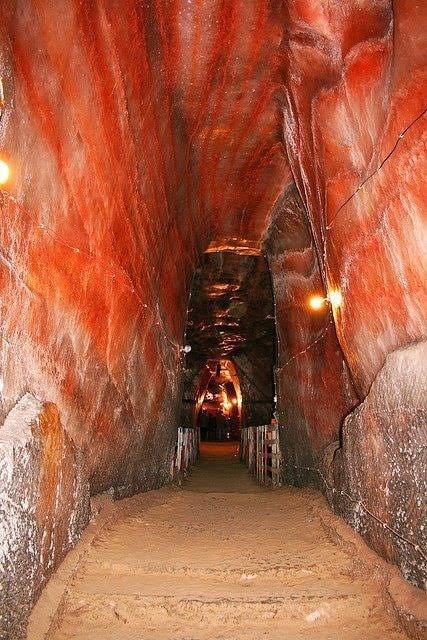
Every grain of Himalayan pink salt sold in the world comes from one place.
Pakistan.
Specifically from a mine in Punjab that was discovered 2,350 years ago when Alexander the Great's horses started licking rocks during a rest stop.
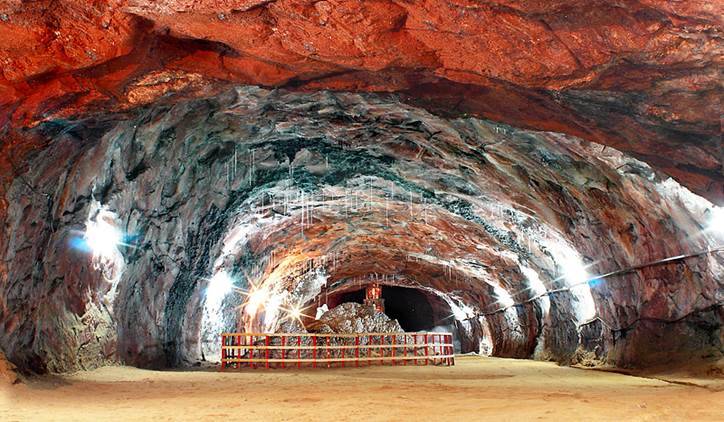
Khewra Salt Mine. The second largest salt mine on earth. Its deposits formed 540 to 800 million years ago when a prehistoric sea evaporated inside what would become the mountains of Pakistan.
Alexander's army was marching through in 326 BC. The horses stopped and licked the ground. The soldiers tasted the rocks. Salt.
The greatest accidental discovery in the history of food.
The Mughals mined it. The Sikhs refined it. The British modernised it in 1872 building tunnels still in use today.
Today it stretches 110 square kilometres. 12 stories. 6 underground. 6.687 billion tons of salt reserves remaining. Producing 350,000 tons every year.
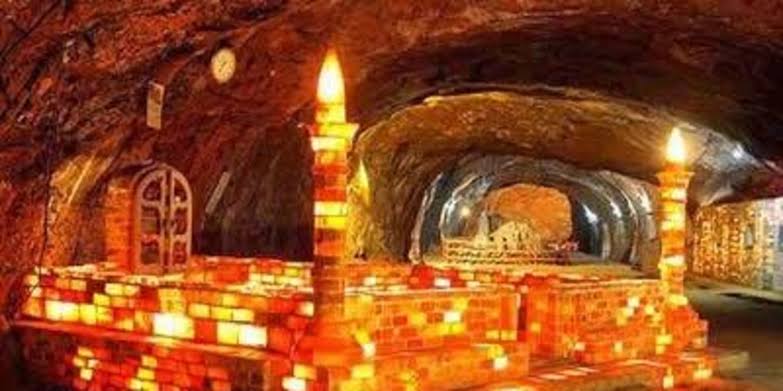
Inside its tunnels craftsmen have carved a mosque from salt bricks that still holds prayers. A replica of the Great Wall of China in pink salt. A glowing crystal Sheesh Mahal chamber. An underground lake that reflects pink light off salt walls.
250,000 visitors every year walk through mountains that have been slowly becoming the world's most famous salt for 800 million years.
All of it in Pakistan.
Discovered by a horse.
Used by the world.
Pakistan. 🇵🇰
As soon as I recognize vibed text I lose interest. The reason is that I have to wonder for every sentence if it is your thought, or an LLM-produced filler. If you give me three incoherent short original sentences, at least I have something to work with. I know these are your thoughts, and so I can try to understand them, maybe ask some follow-up questions. If you turn it into a polished vibed text, the only thing I can do is skip it :/