@Fastagger has partnered with @ZydiiAfrica to help your business avoid getting left in the dust with AI. It's no longer a buzzword. Discover how to leverage AI in your business so you don't go as extinct as the Dodo. Click here https://t.co/2si3CbwD7v to register today!
📢 New report: AI in Africa: Scaling use cases
🤔 How is AI addressing development challenges across Africa?
🌍 Analysing over 90 African use cases, this report provides vital insights to scale your impact.
Be the first to read 👉 https://t.co/LyFr87IIvf #UKaid#CIU
"In Kenya, deep tech startup @fastagger
is developing a software infrastructure that allows ML and AI models to run directly on edge devices, including on lower-end smartphones." @GSMAm4d
https://t.co/uQNDIbygRu
Fastagger has released its MSME support assistant called Auni. It is a Sales and Business intelligence support app for MSMEs using Lipa Na Mpesa on smartphones.
https://t.co/8iOy8f3sm3
Download it now for a free 3-month trial. Reach us at [email protected] for any queries
# CUDA/C++ origins of Deep Learning
Fun fact many people might have heard about the ImageNet / AlexNet moment of 2012, and the deep learning revolution it started.
https://t.co/2xjLWODMOf
What's maybe a bit less known is that the code backing this winning submission to the contest was written from scratch, manually in CUDA/C++ by Alex Krizhevsky. The repo was called cuda-convnet and it was here on Google Code:
https://t.co/ch137VSYZ4
I think Google Code was shut down (?), but I found some forks of it on GitHub now, e.g.:
https://t.co/zYhzdUxoEN
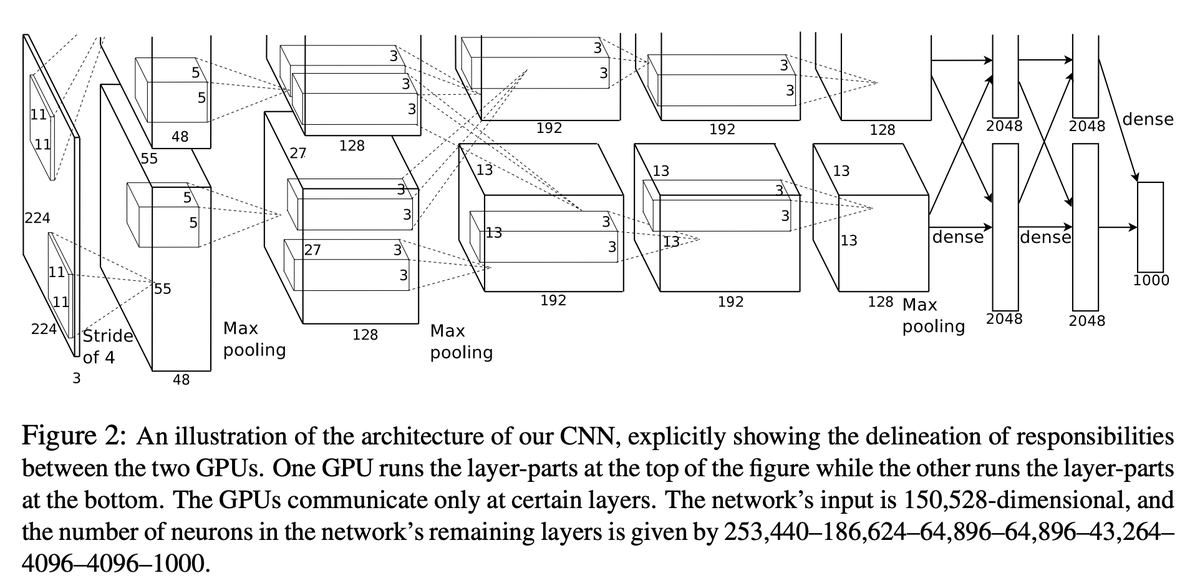
This was among the first high-profile applications of CUDA for Deep Learning, and it is the scale that doing so afforded that allowed this network to get such a strong performance in the ImageNet benchmark. Actually this was a fairly sophisticated multi-GPU application too, and e.g. included model-parallelism, where the two parallel convolution streams were split across two GPUs.
You have to also appreciate that at this time in 2012 (~12 years ago), the majority of deep learning was done in Matlab, on CPU, in toy settings, iterating on all kinds of learning algorithms, architectures and optimization ideas. So it was quite novel and unexpected to see Alex, Ilya and Geoff say: forget all the algorithms work, just take a fairly standard ConvNet, make it very big, train it on a big dataset (ImageNet), and just implement the whole thing in CUDA/C++. And it's in this way that deep learning as a field got a big spark. I recall reading through cuda-convnet around that time like... what is this :S
Now of course, there were already hints of a shift in direction towards scaling, e.g. Matlab had its initial support for GPUs, and much of the work in Andrew Ng's lab at Stanford around this time (where I rotated as a 1st year PhD student) was moving in the direction of GPUs for deep learning at scale, among a number of parallel efforts.
But I just thought it was amusing, while writing all this C/C++ code and CUDA kernels, that it feels a bit like coming back around to that moment, to something that looks a bit like cuda-convnet.
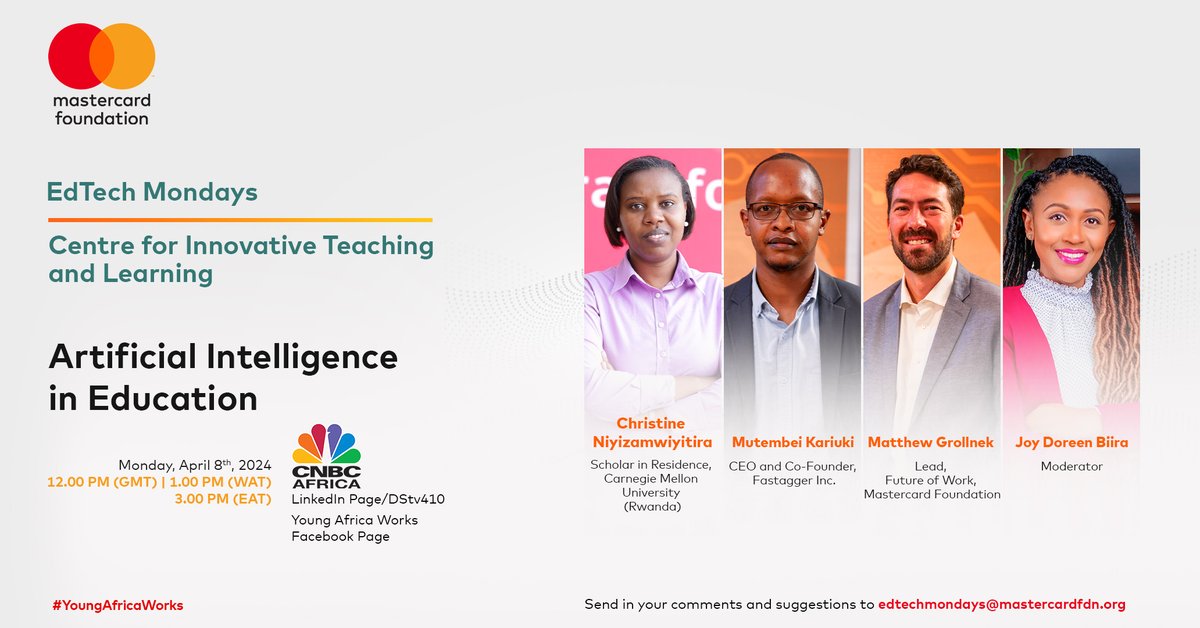
In a rapid world where progress is driven by technology, how is Artificial Intelligence (#AI) informing investments in education? How are we adapting to it in our education systems in Africa? Join us on Monday April 8, 2024 on #EdTechMondays Africa on @cnbcafrica at 12pm GMT, 2pm CAT, 3pm EAT.
1/ 🌟 𝗣𝗲𝗿𝗺𝗶𝘀𝘀𝗶𝗼𝗻𝗹𝗲𝘀𝘀 𝗥𝗲𝗮𝗹 𝗘𝘀𝘁𝗮𝘁𝗲: Today, Villcaso is coming out of stealth! Villcaso is a permissionless real estate protocol – we make it fast and easy for global investors to invest in US real estate. Check out https://t.co/JOt1SgjpFB, and enjoy the 🧵
Artificial intelligence in education is revolutionizing the way students learn by providing personalized and adaptive learning experiences. Tune into another episode of #EdtechMondays on 8 April to unpack "Artificial Intelligence in Education" at 14h00 CAT with @JoyDoreenBiira.
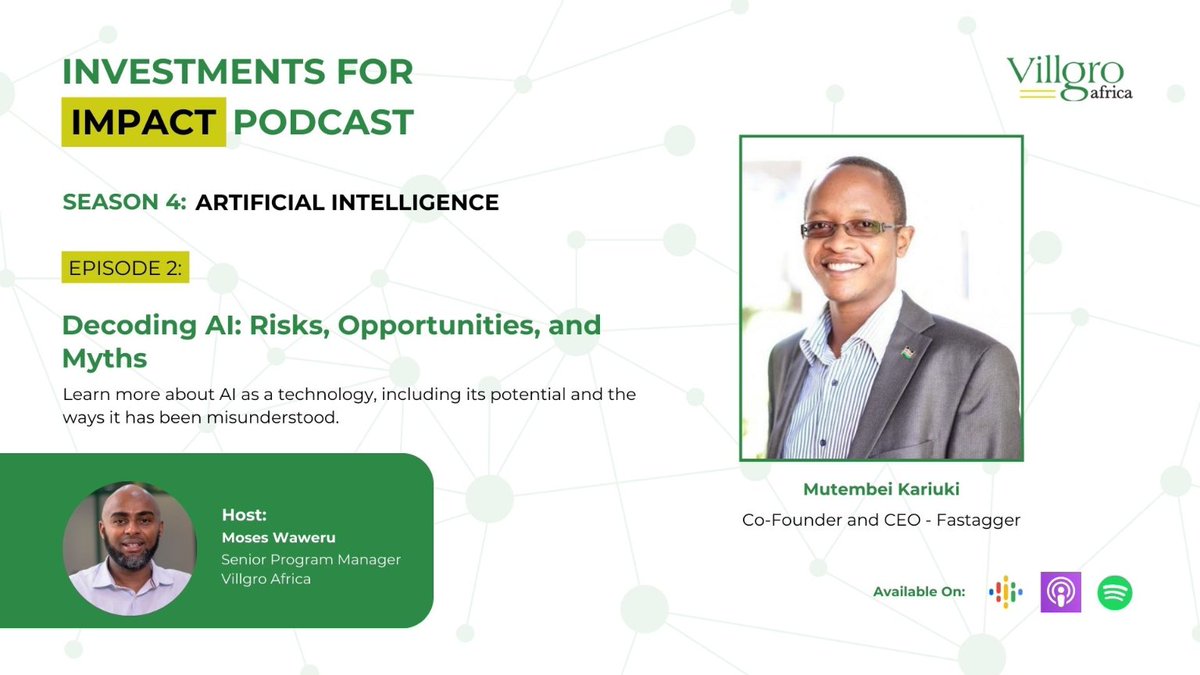
Episode 2 of Investments for Impact is now available!
Thank you to our guest, Mutembei Kariuki of @fastagger, for sharing this helpful, interesting information with us!
Watch or listen here: https://t.co/dKneAfCEVh
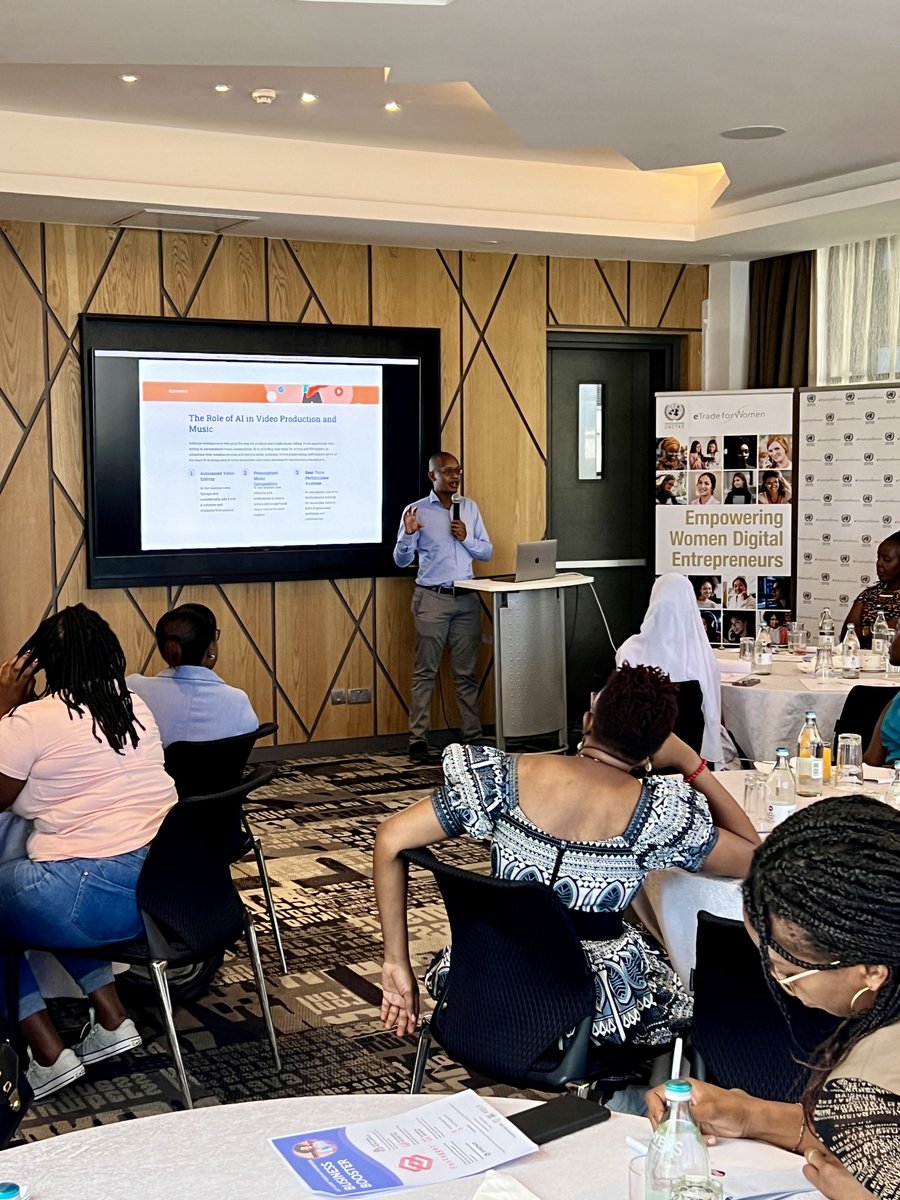
📸Throwback to an inspiring gathering last Friday in #Nairobi, where 26 incredible women entrepreneurs from East Africa came together to elevate each other and their businesses!🤝🏾🚀
#eTradeforWomen
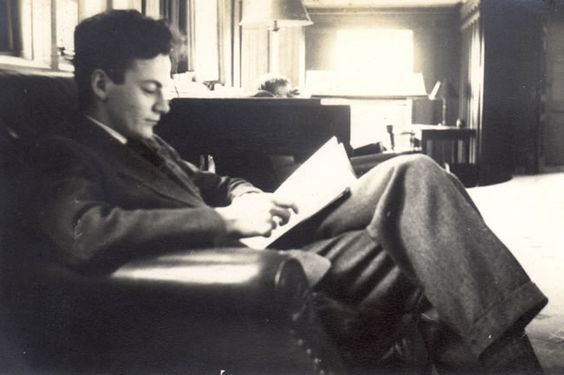
Richard Feynman taught himself advanced mathematics from books without the aid of a teacher. Here's how he mastered calculus by the age of 15:
He started with a series of self-instruction books called Calculus for the Practical Man, which explained the principles of differential and integral calculus in a clear and simple way.
He followed the book closely and took meticulous notes in his own notebook, copying diagrams and formulas carefully. He also compiled a table of contents for his notes, which helped him find the relevant sections later. He found the book fascinating and challenging, and it was the first time he realized that he could understand something that his father could not.
He developed his own mathematical notations and symbols before he entered college, and experimented with topics such as the half-derivative using his own logic.
Feynman’s calculus notes show his insatiable curiosity and his determination to learn by himself. He later became one of the most influential physicists of the 20th century, known for his contributions to quantum mechanics, particle physics, and many other fields.
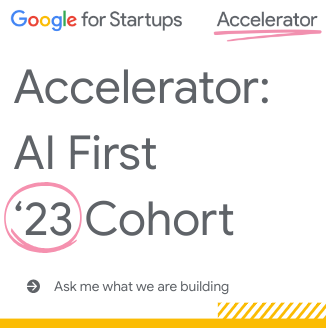
Proud to share that Fastagger has been selected for the @GoogleStartups Accelerator Africa: AI First program. We’ve come a long way, and I can’t wait to see what’s next! #AcceleratedWithGoogle
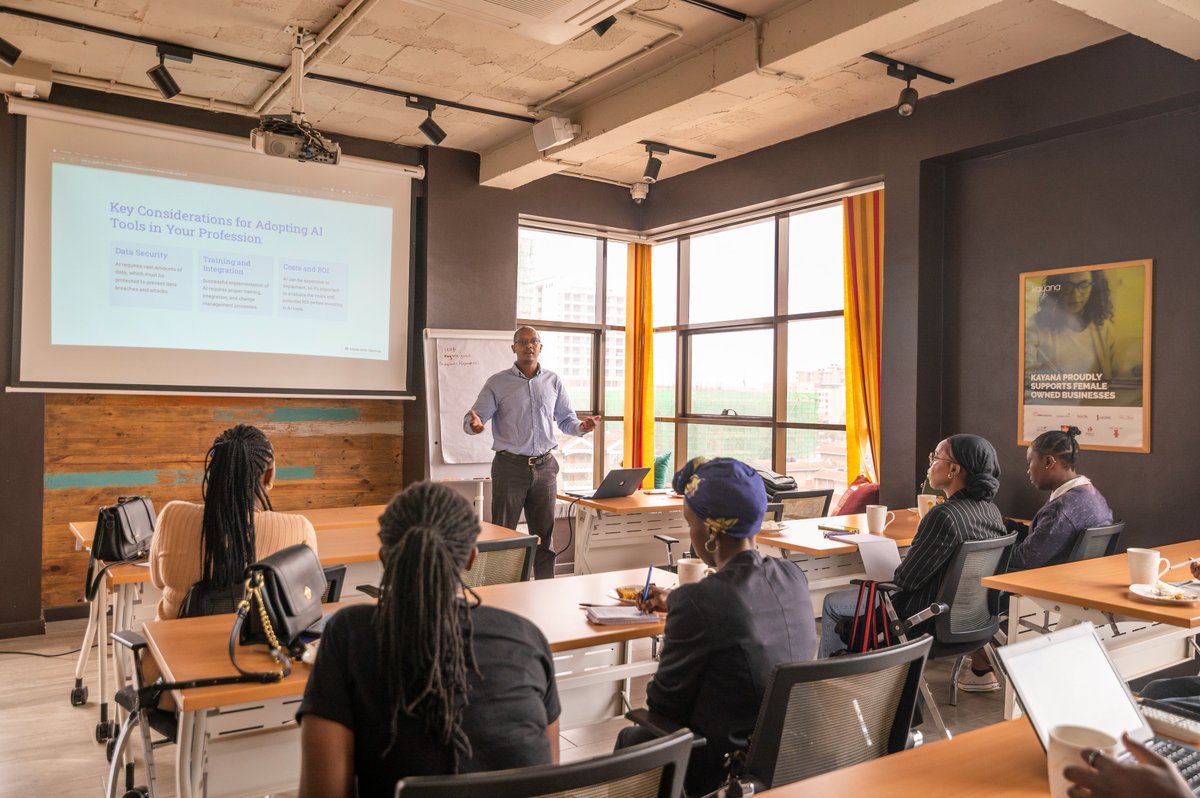
Last week, we had the privilege of hosting our very first Kayana Pro session for Gig Workers.
We invited Mutembei Kariuki from @fastagger, to talk about their AI powered analytics platform that will empower Gig Workers to elevate their trade.