83 years ago today, German soldiers landed in North America. Almost nobody found out for nearly 40 years.
On October 22, 1943, the U-boat U-537 slipped into a remote bay near the northern tip of Labrador.
Its mission wasn't to fight. It was to steal the weather.
Weather in the North Atlantic moves west to east. Whoever knew what was forming over Canada and Greenland could predict conditions over Europe and the convoy routes days in advance. The Allies had stations all over that region. Germany had almost nothing.
So Siemens built Germany a robot. An automatic weather station that could measure temperature, pressure, wind, and humidity, then radio coded reports back on its own every few hours.
U-537 carried one across the Atlantic, along with a meteorologist named Dr. Kurt Sommermeyer. The crossing was brutal. A storm battered the boat and tore away part of its anti-aircraft armament. But they made it.
A landing party rowed ashore with about ten canisters, each weighing over 200 pounds, and hauled them up the rocky ground while armed lookouts watched the horizon. In about a day, they had the station assembled. A tall antenna mast. Battery canisters. Instruments. They named it "Kurt," after the meteorologist.
Then they disguised it.
They painted the canisters with the words "Canadian Meteor Service." There was no such agency. They were betting that anyone who stumbled across it in that wilderness would assume it belonged to the Canadian government and walk away. They even left empty American cigarette packs lying around.
Then U-537 disappeared back into the Atlantic.
The station only worked for a short time, likely just a couple of weeks, before its transmissions stopped.
U-537 never made it home. A year later, it was sunk with all hands by the American submarine USS Flounder in the Java Sea.
And here's the wild part. Labrador wasn't even part of Canada in 1943. It belonged to Newfoundland, a separate British dominion that didn't join Canada until 1949.
For decades, no one knew Kurt existed.
Then in the late 1970s, a retired Siemens engineer researching Germany's wartime weather stations found records of the mission. He contacted a Canadian military historian. In 1981, they reached the site.
Kurt was still there. Canisters scattered across the rocks. The fake "Canadian Meteor Service" markings still on them.
The only armed German landing in North America during WW2, hidden in plain sight for almost 40 years.
Today you can see it at the Canadian War Museum in Ottawa.
🇺🇸Coping in 2026: F-22 is King.
F-22’s GaAs AESA is a full generation behind J-20’s GaN AESA radar.
Missiles? 300km PL-16 vs 200km AIM-260. Shoot first, kill first. J-20 wins every round.
F-22 is king? No it’s not, it’s an outdated museum relic.
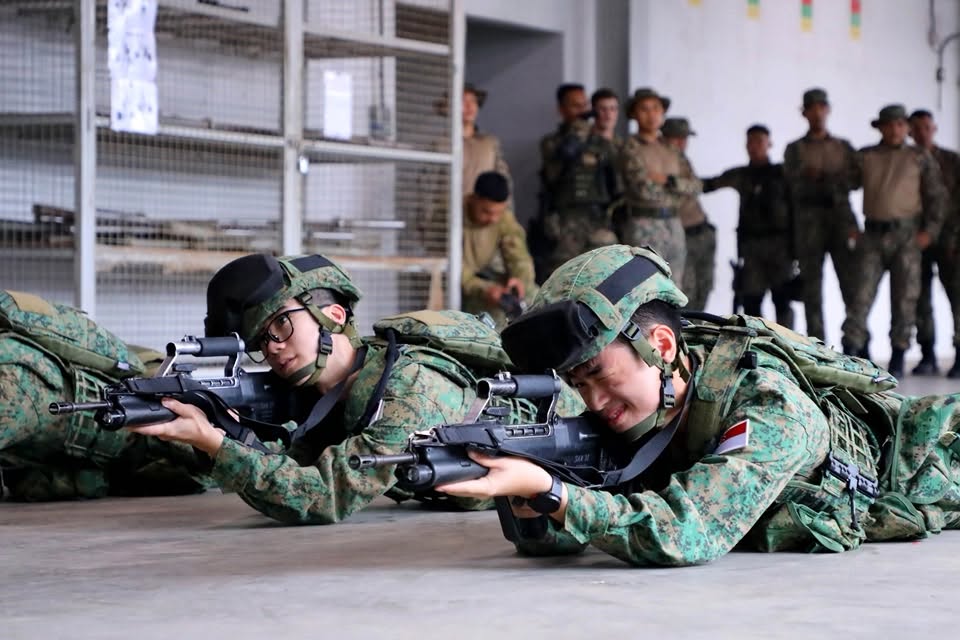
🇦🇺🇲🇾🇳🇿🇸🇬🇬🇧
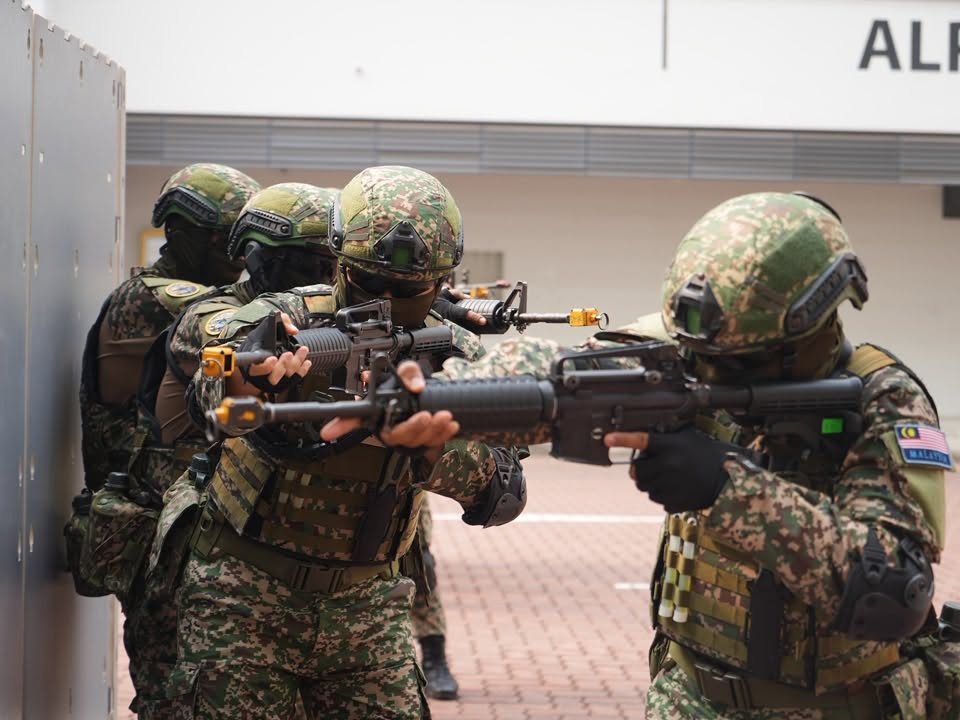
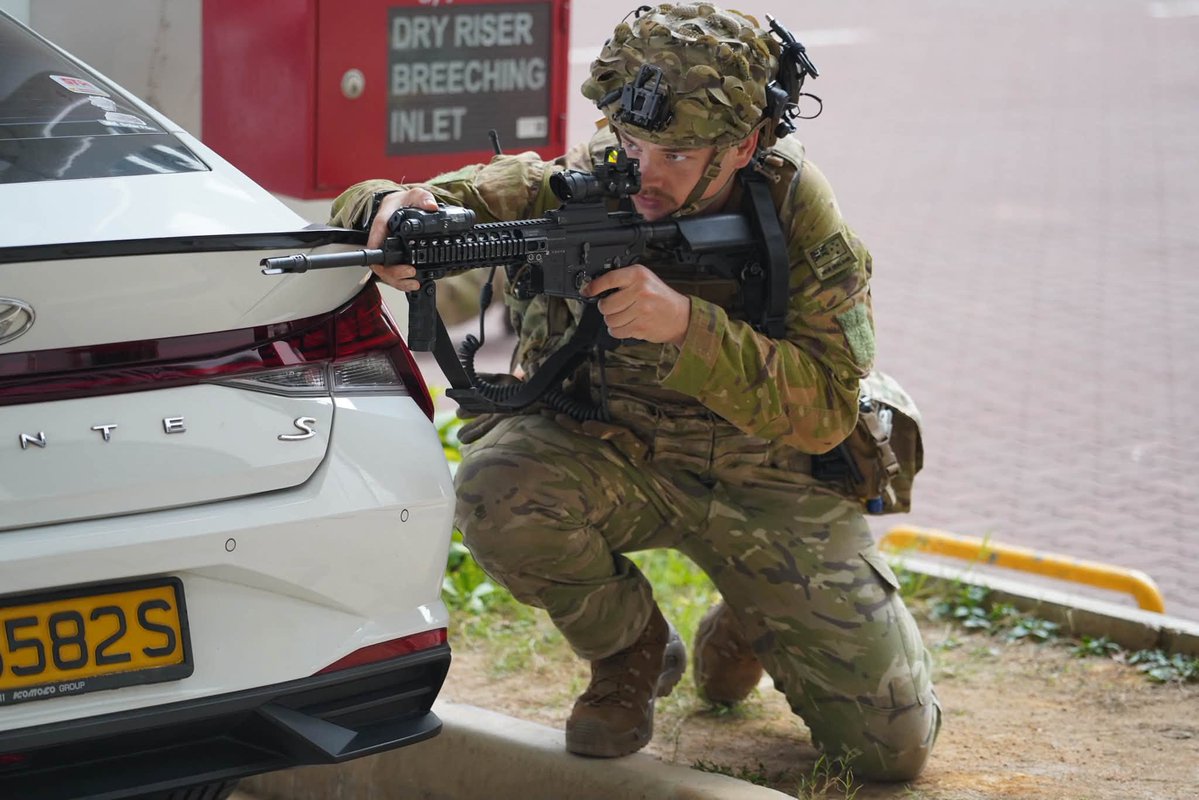
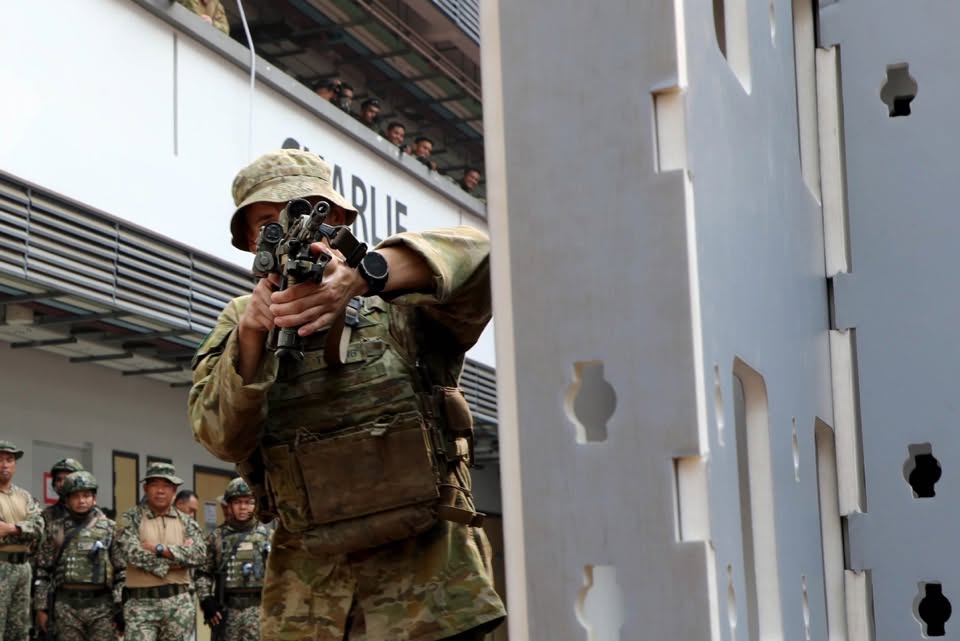
During Exercise #BersamaLima 2026 (XBL26), Land Forces from #FPDA nations conducted an urban operations exchange, which involved sharing tactics, rehearsing urban operations drills, and combat casualty care.
#DefenceDiplomacy
📷 by Five Power Defence Arrangements
America first flew its F-22 Raptor in 1997, nearly thirty years ago.
Compare it with China's J-20 today, and you might conclude that American aviation technology is still generations ahead.
But what if everyone is looking at the wrong weapon?
The J-20 is only the visible blade. The real power lies in China's industrial machine, capable of forging it again and again.
> In 1997, America was already flying the F-22.
> China was still struggling to master advanced fighter engines.
> Its GDP per person was barely $800.
> The J-20 wouldn't make its first flight until 2011.
> Even then, propulsion remained a major challenge.
> Early Chinese jet engines suffered serious hot section reliability problems.
> But Chinese engineers kept building, testing and improving them.
> Every generation taught the next something the previous one couldn't do.
> Slowly, an aviation industry dependent on foreign technology began mastering more of its own.
And then something remarkable happened.
> In 2020, China was producing an estimated 20 J-20s annually.
> By late 2025, that estimate had climbed to 120.
> A sixfold increase in just five years.
> But the real story wasn't confined to the aircraft factory.
To understand why, look at what America accomplished during World War II.
> In 1939, the United States manufactured just 2,141 military aircraft.
> Yet it already possessed one of the world's largest civilian industrial economies.
> Then war forced the country to reorganize its manufacturing capacity.
> Automobile plants began producing aircraft engines.
> Factories expanded, workers retrained and supply chains were transformed.
> Ford built Willow Run to mass produce the four engine B-24 bomber.
> At peak output, one bomber emerged roughly every production hour.
> By 1944, America was manufacturing 96,318 military aircraft annually.
> That's 263 aircraft every single day, 75 years ago.
> Nearly 45 times its output just five years earlier.
America had demonstrated something extraordinary. An industrial economy could become a military weapon in its own right.
Now consider the country manufacturing the J-20.
> In 1990, China accounted for 2.8% of global manufacturing production.
> By 2024, that figure had reached 32%.
> Nearly one-third of the world's manufacturing output.
> Around 125 million people worked in its manufacturing sector in 2023.
> More than seven times America's entire manufacturing workforce in 1944.
> China produces roughly half the world's crude steel.
> Its factories operate more than two million industrial robots.
> Its shipyards command an enormous share of global shipbuilding.
> And across its industrial clusters, suppliers manufacture everything from advanced electronics to the machines that build other machines.
But the greatest achievement isn't simply having enormous factories.
> It's building an interconnected industrial ecosystem.
> Materials, precision machinery, electronics, components and assembly increasingly exist within the same manufacturing economy.
> The J-20 is one product of that accumulated capability.
> And China is still developing its aerospace industry, including new engines and another stealth-fighter family.
> A country that once struggled to build reliable advanced engines is now producing sophisticated combat aircraft in substantial numbers.
Now imagine a hypothetical war, five or ten years from today.
> China faces the United States and its NATO allies in a prolonged conflict.
> Both sides begin converting their industrial economies for war.
> Russia's war in Ukraine has shown what sustained military demand can do to production.
> America demonstrated the staggering potential of industrial mobilisation in World War II.
> But China would enter this conflict with an even larger, more automated manufacturing base than it has today.
Now consider what that could mean for aircraft production.
> Suppose annual military aircraft production reached 3,000, perhaps even 5,000.
> Of those, 1,500 to 2,000 could hypothetically be stealth fighters.
> That's four to five advanced fighters rolling off production lines every day.
> Because prolonged wars aren't decided by which aircraft looks more impressive.
> They're decided by how quickly nations can produce, repair and replace what the battlefield destroys.
America once demonstrated that industrial power could overwhelm the battlefield. Eighty years later, it may have to confront that same lesson from the other side.
The question is no longer simply whether one F-22 can defeat one J-20. It's whether the United States and its allies can withstand the full industrial weight of China if those factories were ever mobilized for war.
🇦🇺🇲🇾🇳🇿🇸🇬🇬🇧
During Exercise #BersamLima 2026 (XBL26), maritime
units from the five #FPDA nations conducted Gunnery
Firing within the FPDA exercise area and Naval Gunfire
Support off the Peninsular Malaysia, and supported by
the UK’s 148 Battery.
#DefenceDiplomacy
📹 by FPDA
The US government approved a potential $24.3 billion sale of 48 F-35A Lightning II fighter jets to Saudi Arabia on 17 September 2026.
The 30-day congressional review period expired on 17 October without a vote to block the proposed sale. However, a resolution seeking to disapprove the deal remains pending in the Senate Foreign Relations Committee.
With the review period concluded, the process can move towards the issuance of the Letter of Offer and Acceptance (LOA) to Saudi Arabia. Following its acceptance and signing, the programme is expected to proceed towards a contract with Lockheed Martin, the aircraft’s principal contractor.
🇷🇺#Russian#Navy The nuclear-powered battlecruiser “Admiral Nakhimov” in the Severomorsk roadstead in September–October 2026. The ship is completing sea trials and preparing to enter service at the end of this year.
Photo by A. Guryev
🇦🇺🇲🇾🇳🇿🇸🇬🇬🇧
Mission Ready ✈️
More than 40 aircraft across the five FPDA nations are participating in this year's Exercise Bersama Lima (XBL26), operating out of Paya Lebar, Tengah and Kuantan Airbases.
#DefenceDiplomacy
📷 by Five Power Defence Arrangements
MyDefence has released Wingman Edge, a 975-gram wearable drone detection system designed for individual soldiers. The device passively scans radio frequencies between 200 MHz and 6 GHz to detect drone control signals, communications links, and Wi-Fi transmissions up to 6 kilometers away, then uses AI to classify and confirm threats against a database of known drone signatures. Alerts reach the wearer via sound, light, vibration, or display. The system is networked with command and control infrastructure, allowing it to adapt to new or unknown signals in real time. The launch comes as drones increasingly threaten individual soldiers on the battlefield, including small commercial drones modified to carry explosives.
Dec 3, 1945, RN test pilot LCdr Eric "Winkle" Brown made history by completing world's first jet-powered landing on HMS Ocean. Brown successfully performed multiple deck landings at approach speeds of 95–100 mph, proving jet ops were viable on straight-deck aircraft carriers.
TLDM – Fleet Status October 2026
List updated to 12/10 for the combatants and patrol vessel category. All of the information gathered is open sourced and subject to error.
Date: 12th October 2026
Via @MalaysiaMonitor
🇹🇭 Thailand's Queen Suthida flies fighter jet solo
Thailand's Royal office's handout video shows Thailand's Queen Suthida flying a Saab JAS 39C Gripen solo on October 8.
VIDEO DS MOHD SHUHAILY YANG TULAR SEMALAM
Min tak rasa pun tindakan Datuk Seri Mohd Shuhaily tu melampau. Itulah ketegasan dalam tugas!!! Cara macam tu lah kita nak, baru lah tiada kesalahan/penyelewengan yang berlaku dalam tugas 👍
Good job Datuk 👍
Heavily damaged submarine USS Connecticut won’t return to service until 2027
The Navy hoped Connecticut would be back by 2025, then this year, and it is now planning for its final retirement with repairs still underway.
https://t.co/wBDZmonEol
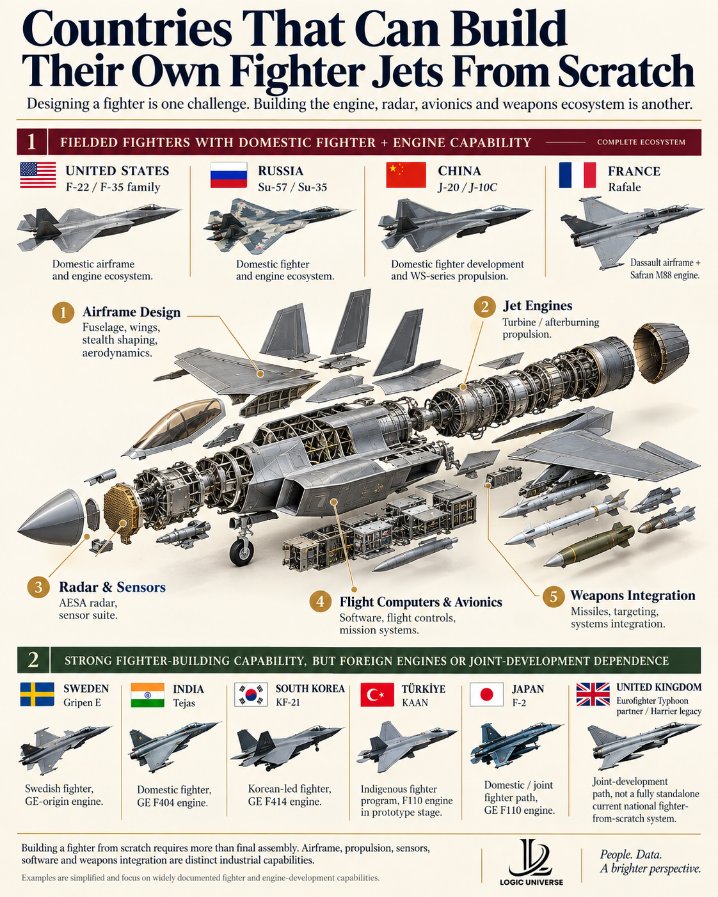
Countries That Can Build Their Own Fighter Jets From Scratch
🇺🇸 United States — F-35, F-22 and F-15
🇷🇺 Russia — Su-57 and Su-35
🇨🇳 China — J-20 and J-10C
🇫🇷 France — Dassault Rafale
🇬🇧 United Kingdom — Harrier and Eurofighter Typhoon
🇸🇪 Sweden — Saab Gripen
🇮🇳 India — HAL Tejas
🇰🇷 South Korea — KF-21 Boramae
🇹🇷 Türkiye — KAAN
🇯🇵 Japan — Mitsubishi F-2
If MINDEF is eyeing to buy Brahmos for the MKMs, I would say its a hard PASS.
Why?
Structural upgrades are needed for the MKMs to be able to deploy the Brahmos.. unless we are going for Brahmos NG, but still, Brahmos NG is still at the development stage..
🇮🇩 Indonesia has started construction of its first locally built Scorpene-class submarine at PT PAL’s Surabaya shipyard.
Built with support from France’s Naval Group, the nearly 72m submarine will feature improved diving depth and longer submerged endurance, with torpedoes and guided missiles.
🇬🇧🇨🇳 Britain's elite special forces have been running spy drones that were quietly phoning home to China.
The Royal Navy's £12m K3 Scout fleet, used by the Royal Marines since March, had cameras with Chinese-made parts secretly beaming data to an IP address in China.
The MoD ripped the internet connectivity out once it caught the breach, but insists no sensitive data actually left the country.
These same drones were being prepped to help secure freedom of navigation in the Strait of Hormuz, with one defense source saying they've lost all confidence in the platform.
All this from gear marketed as British-made, right up until someone checked where the cameras came from.
Source: The Telegraph / Writer: Julie