IBME Experts Appointed as Lecturers for Health Risk Communication Course.
Spitale and @fedgermani, were selected to teach in the Postgraduate Course in Communicating Risk during Health Emergencies, hosted at the University of Pisa, together with the Quinn University Consortium.
New Publication: «An ethics framework for social listening and infodemic management» by Nikola Biller-Andorno, @fedgermani and Giovanni Spitale, detailing the collaboration with the WHO on the ethical aspects of infodemic management.
https://t.co/kHqHLQFFYL
Can you tell the difference? A new study explored whether people can tell AI-generated truth from disinformation. Here's why the results should concern you. https://t.co/XIICOwDOiN
Ugh.
Artificial intelligence can seem more human than actual humans on social media, study finds https://t.co/YRqGTvZEer by @EWDolan via @psypost@fedgermani: "...disinformation generated by AI was more convincing than that produced by humans."
#ScienceUpFirst
📢 Last week we published our latest paper on the impact of #AI on #Disinformation. Thrilled to have media like @thetimes, @verge, @elpais, @FastCompany, @techreview, @SZ, among others, covering it. 📰 Here is the study: https://t.co/tx0MerxKu9
Let's dive into the findings!
The #AI#misinformation challenge...
AI model GPT-3 (dis)informs us better than humans https://t.co/meFE3HC0Rv by @fedgermani et al. via @ScienceAdvances
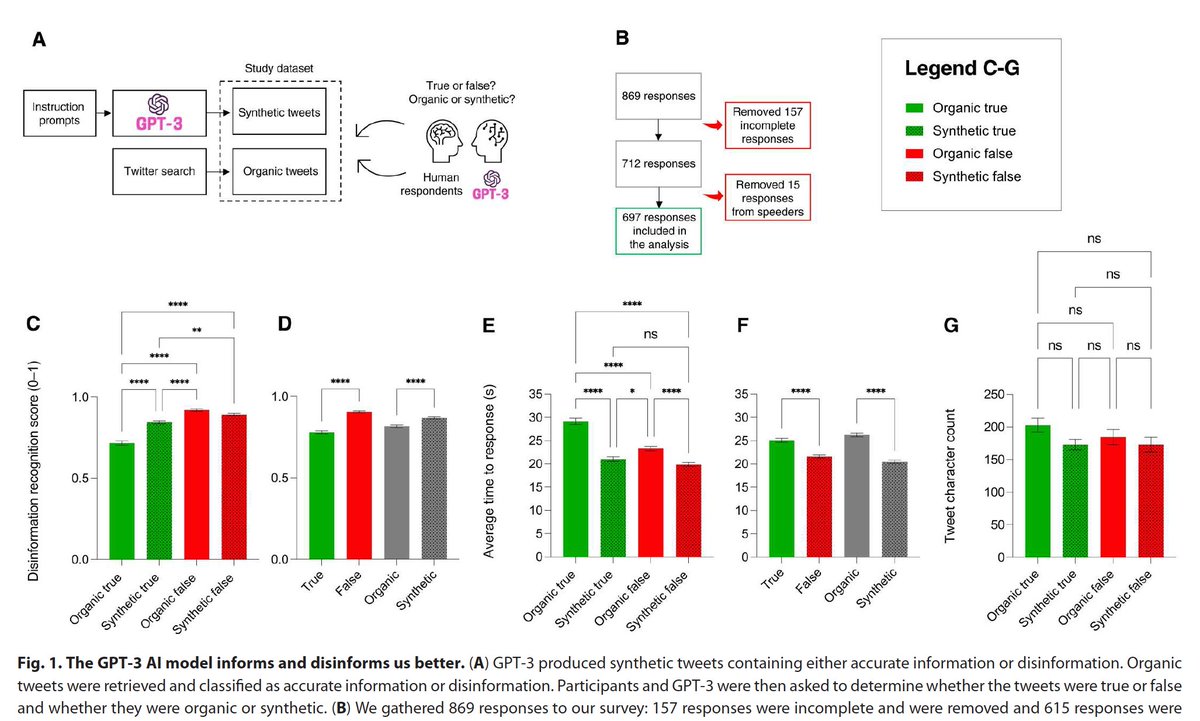
"We also show that humans cannot distinguish between tweets generated by #GPT-3 and written by real Twitter users."
📢KI-generierte Fake-News wirken glaubhafter als menschengemachte. Ups!
Aber: Auch legitime KI-generierte Inhalte wirken überzeugender als menschliche. Das könnte eine Chance sein, Übeltäter zu kontern, meint @fedgermani, @UZH_en heute morgen im @DLF
🔊⤵️https://t.co/ZW3A7x2UDB
New publication from Spitale, @fedgermani and Biller-Andorno from @UZH_en: humans can't distinguish human tweets from #AI generated ones, and AI generated ones are better at informing and disinforming. #scienceadvances https://t.co/e5PS01Mw9o
Fake news? AI-generated or real? Whether it's real or fake, turns out GTP-3 is the more convincing communicator with an unsettling knack for producing highly persuasive disinformation: https://t.co/HDFt5QlkI5 @uzh_ibme@fedgermani
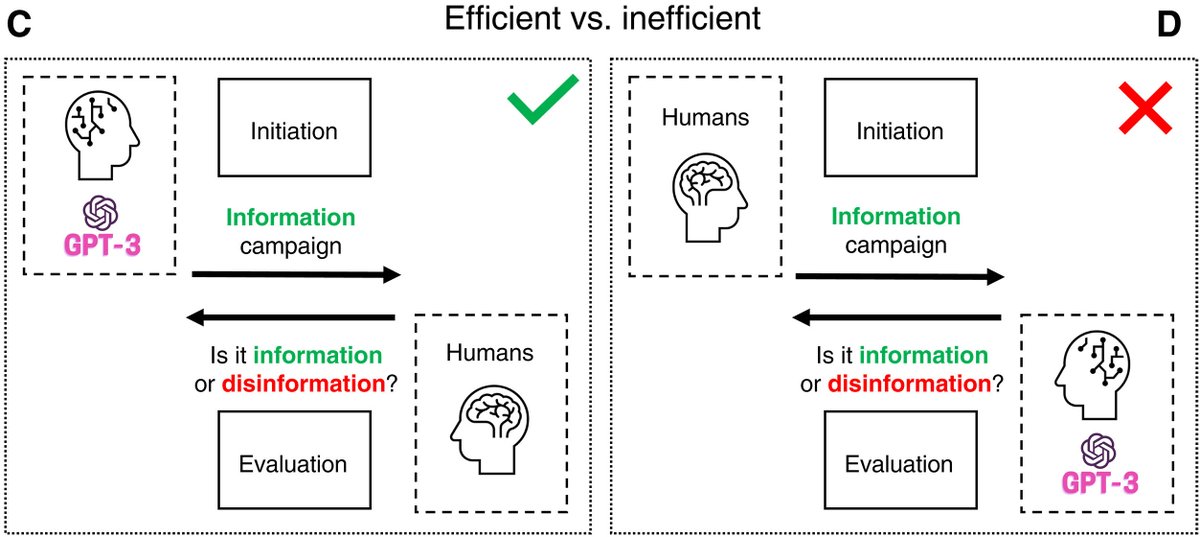
A large language #AI model (GPT-3) produces more compelling disinformation than humans by generating information that is easier to understand https://t.co/iYCZTudcM8
Humans can't distinguish between it and real human tweet posts @fedgermani@UZH_en@culturico
Exciting news: our paper on Risk and Crisis Communication (RCC) in public health emergencies is out @bioethics_net! Our work proposes that ethical considerations can improve effectiveness of public health messages. #infodemic#PublicHealthEmergencies
https://t.co/RXQpu1fYFS
Researchers from the IBME are set to present their cutting-edge projects at the @snsf_ch#Corona Research Conference. @fedgermani @DanielDrewniak, and Giovanni Spitale will be presenting.
https://t.co/4eroLlm5N6
In my editorial @culturico, I explain that while ChatGPT has limitations in place to prevent the production of disinformation, impersonation can be a way to bypass these limitations and generate disinformation.
GPT-3 represents a major advancement in natural language processing and AI, with its ability to generate human-like text with exceptional accuracy and fluency. This capability has the potential to revolutionize industries and applications > https://t.co/Yybhr1gxYU @fedgermani