“No se trata de hablar,
ni tampoco de callar:
se trata de abrir algo
entre la palabra y el silencio.
Quizá cuando transcurra todo,
también la palabra y el silencio,
quede esa zona abierta
cómo esperanza hacia atrás.
….
Ageing is associated with cognitive decline & an increased risk of neurodegenerative diseases.
A new Review explores the neuroprotective mechanisms of endurance exercise & highlights the importance of cardiorespiratory fitness in healthy brain ageing: https://t.co/mSJlqtMQ6O
@PhysInHistory 👉💡 Evolution of the QFT interpretation:
"What is Quantum Field Theory, and What Did We Think It Is?" (Weinberg, (1997)): https://t.co/rZnFWRyqvU
PhD Students – Here are the top AI tools for researchers in 2025
Want to learn how to use these AI tools?
Join @AviStaiman in his AI tools bootcamp.
Registration Link: https://t.co/rv6M6NHzQe
The recording for the first session of bootcamp is available here.
Recording link: https://t.co/tir6R7k2Fj
Date: 24 February 2025
The list of tools to be covered.
𝐋𝐢𝐭𝐞𝐫𝐚𝐭𝐮𝐫𝐞 𝐑𝐞𝐯𝐢𝐞𝐰
1. @perplexity_ai
Assist researchers in quickly finding relevant information.
2. @keenious
Suggest relevant research papers for your literature review.
3. @scholarcy
Generates easy to understand summary of a research paper.
4. @R_Discovery
Send you alerts about newly published papers
𝐃𝐚𝐭𝐚 𝐂𝐨𝐥𝐥𝐞𝐜𝐭𝐢𝐨𝐧 𝐚𝐧𝐝 𝐃𝐚𝐭𝐚 𝐀𝐧𝐚𝐥𝐲𝐬𝐢𝐬
5. @Scinapse_
Helps you discover relevant research articles.
6. @juliusai
Helps you analyze quantitative data.
7. Atlas
Helps you to analyze qualitative data.
8. @SurveyMonkey
Helps you to create and distribute surveys.
𝐖𝐫𝐢𝐭𝐢𝐧𝐠 𝐚𝐧𝐝 𝐏𝐮𝐛𝐥𝐢𝐜𝐚𝐭𝐢𝐨𝐧
9. @whoisjenniai
Writing assistant that helps generate content.
10. @Writefullapp
Provides language feedback and editing suggestions.
11. STORM
Helps you to generate a comprehensive article from scratch.
12. @teampaperpal
Enhance your writing with real-time suggestions.
𝐌𝐢𝐧𝐝 𝐭𝐡𝐞 𝐆𝐫𝐚𝐩𝐡
13. @mindthegraph
Helps you make diagrams and infographics.
14. Runway
Helps you to edit videos of your research content.
15. @gammaapp
Helps you to create presentations slides.
16. Napkin AI
Convert text into a diagram.
Nassim Taleb has written a devastatingly strong critique of IQ, but since he writes at such a technical level, his most powerful insights are being missed.
Let me explain just one of them. 🧵
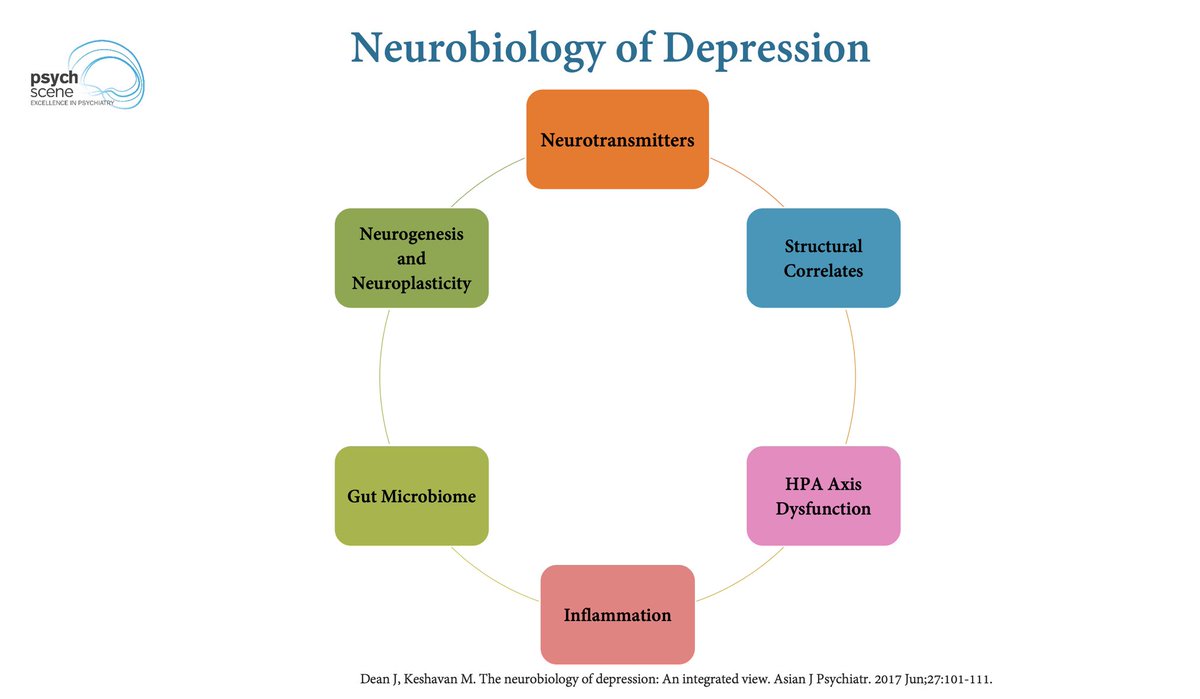
🧵The Neurobiology of Depression
1/8
“A unified theory of depression conceptualises MDD as a matrix of genetic, epigenetic, and environmental factors that interact with personality vulnerabilities that predispose an individual to information processing biases, stress reactivity, and belief formation that precipitate pathophysiological mechanisms across molecular, cellular, circuit, and behavioural levels.”
The Unbearable Incoherence of Heritability: Interview with Eric Turkheimer
“The empirical end to the Galtonian project is more whimper than bang.”
https://t.co/2AvPECrujV
Neuron
Nucleus Accumbens Subnuclei Regulate Motivated Behavior via Direct Inhibition and Disinhibition of VTA Dopamine Subpopulations
https://t.co/oO6C5OKaSY
These findings are from a review in @ELSneuroscience which summarizes the existing literature on mitochondrial dynamics perturbations in psychiatric disorders/neuropsychiatric phenotypes. https://t.co/JMkvhX7JlT 2/13
Sci-Hub: a "pirate" website with access to 84M+ research papers. Free.
Zotero: a reference manager. Free.
NotebookLM: an AI-powered research assistant. Free.
Here's how to integrate Zotero 7 with Sci-Hub and NotebookLM to supercharge your research:
Transitions between cognitive topographies: contributions of network structure, neuromodulation, and disease | https://t.co/wmGwCR9KEE
How does the brain transition between cognitive activation patterns? ⤵️
The conundrum of consciousness is the topic of today's freewheeling conversation, with the insightful pair David Chalmers and Anil Seth. Check it out. https://t.co/A0QIAfhQJn
This was the first of several ongoing studies in this new area for us - limited by its cross-sectional nature (despite Sara's careful matching) as well as its lack of biological measures. Still, we are very (very) excited about where this could lead! https://t.co/nx4FyVGZ8w
𝗖𝗮𝘂𝘀𝗮𝘁𝗶𝗼𝗻 𝗶𝗻 𝗻𝗲𝘂𝗿𝗼𝘀𝗰𝗶𝗲𝗻𝗰𝗲
Have we been thinking too narrowly?
"Beyond mechanism – extending our concepts of causation in neuroscience"
Imo quite an important paper by Mitchell and Potter calling for much broader view of causation.
https://t.co/ZgPR3W3fBU