My work about “Experience-dependent place-cell referencing in hippocampal area CA1” is now online in #NatureNeuro.
A team effort. Check it out.
https://t.co/uyPywpTYhE
New voltage indicators from St-Pierre lab and collaborators:
- FORCE1s: https://t.co/K4Qvkk6Obb
- JEDI3sub and JEDI3hyp (image below): https://t.co/60BhoG1vI3
Blog post about voltage imaging: https://t.co/PYJ40jJjbv
My recent work with Jeff is now on biorxiv. We investigated how prior experience biases new learning through memory traces (via BTSP rule) that supports spatial task generalization in the hippocampus. Fredbacks are welcomed!
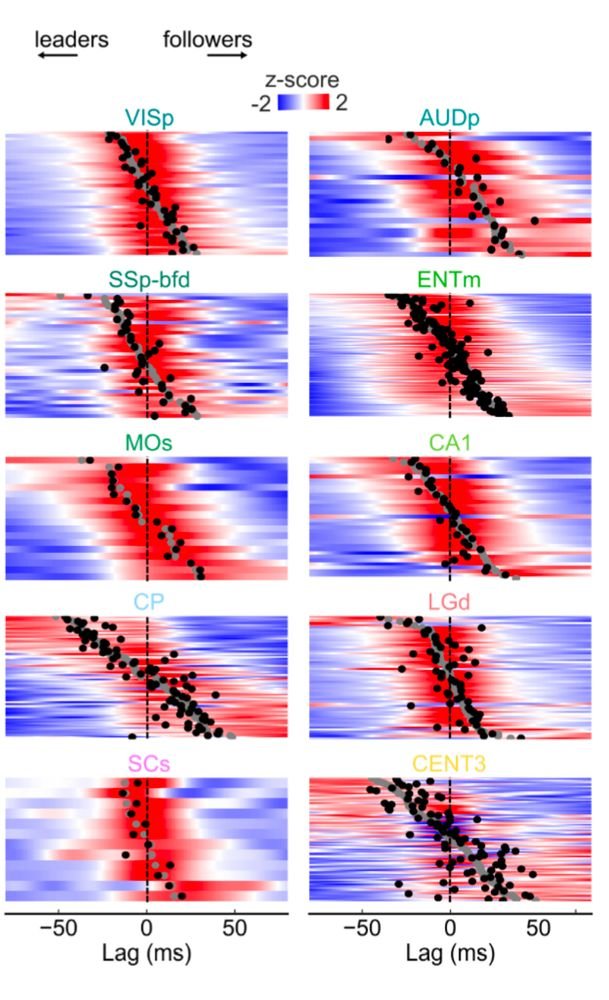
New preprint on activity sequences: in every brain region, stable over weeks.
With Célian Bimbard and Matteo Carandini. Based on data from Célian and the International Brain Lab.
https://t.co/LUynqj1ph7
@AToliasLab this is very cool! How did you generate these flashlights with different compartments of dendrites? You didn’t actually measure them right? Through some simulations? @quorumetrix
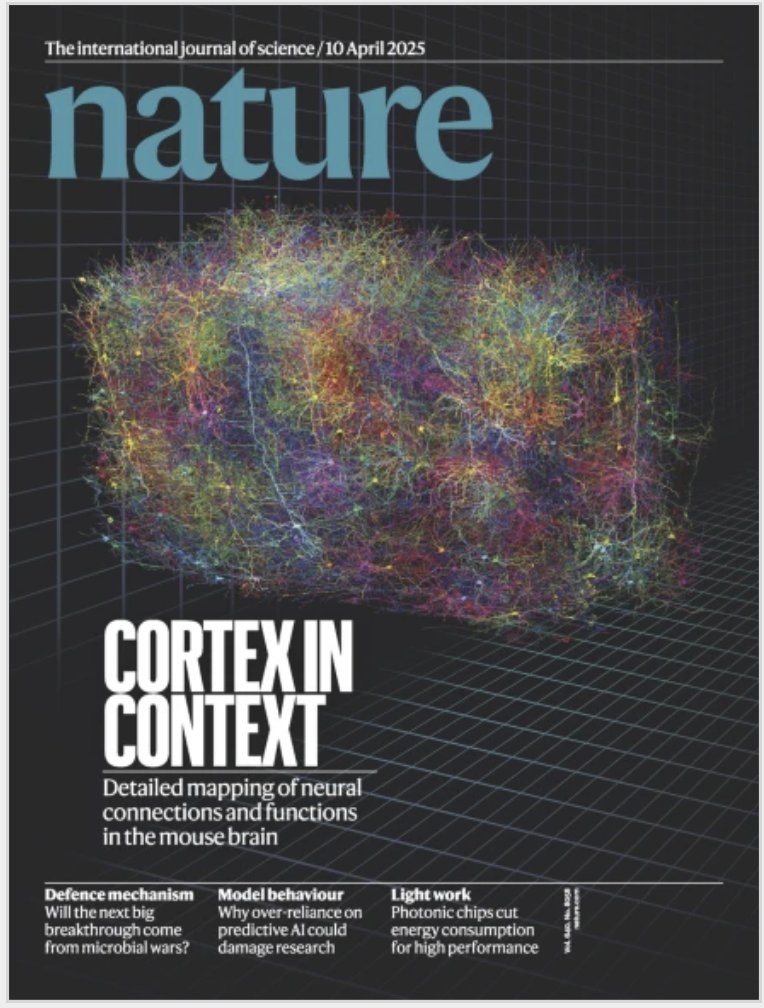
After 7 years, thrilled to finally share our #MICrONS functional connectomics results!
We recorded activity from ~75K neurons in visual cortex in a single mouse, then mapped its wiring using electron microscopy. To systematically characterize neuron function, we built the first foundation model of the mouse visual cortex—trained via deep learning on data pooled from multiple mice and visual cortical areas.
Our foundation model generalized to new neurons, animals, and even unseen stimulus domains. It also accurately predicted entirely new modalities, such as anatomically defined cell types. Importantly, this robust generalization enabled us to create accurate functional digital twins of individual mouse brains.
Using the digital twin of the MICrONS mouse—where we knew the exact neuronal wiring—we discovered that neurons don’t connect randomly, even when anatomically positioned to do so. Instead, given multiple potential partners (axons near dendrites), neurons preferentially choose partners with similar feature selectivity (“what”) rather than receptive field overlap (“where”).
Foundation models offer a powerful approach to systematically decode the neural code of intelligence.
Huge thanks to @IARPAnews for funding this groundbreaking effort through the @BRAINinitiative, and to our amazing team at @Stanford@StanfordMed@bcmhouston, @Allen, @Princeton, @uniGoettingen and others!
#Neuroscience #MICrONS #NeuroAI #Connectomics #FoundationModels #AI
https://t.co/Rb9rypR9zA
My work about “Experience-dependent place-cell referencing in hippocampal area CA1” is now online in #NatureNeuro.
A team effort. Check it out.
https://t.co/uyPywpTYhE
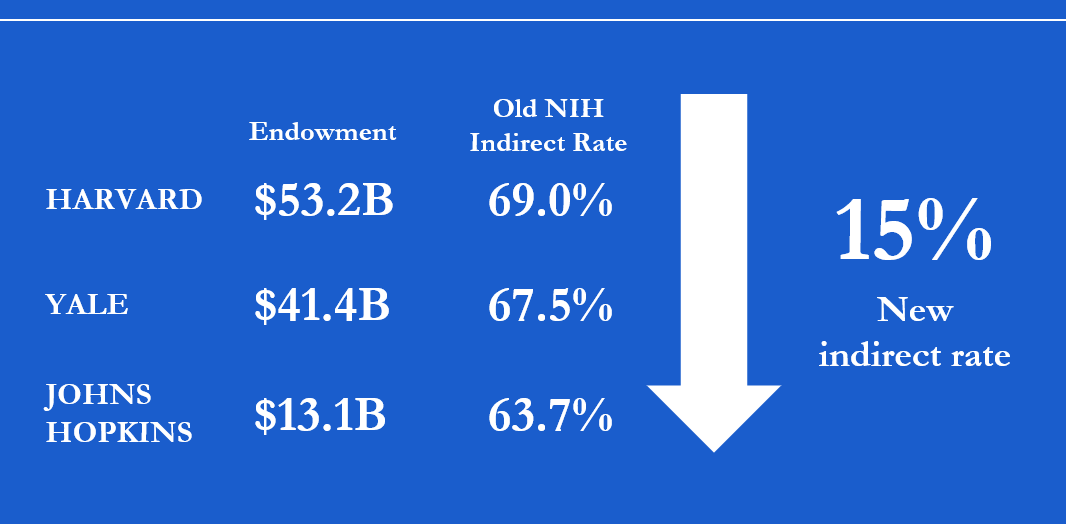
Last year, $9B of the $35B that the National Institutes of Health (NIH) granted for research was used for administrative overhead, what is known as “indirect costs.” Today, NIH lowered the maximum indirect cost rate research institutions can charge the government to 15%, above what many major foundations allow and much lower than the 60%+ that some institutions charge the government today. This change will save more than $4B a year effective immediately.
The original goal of OpenAI was to openly share AI models to prevent any single AGI from dominating. It’s disappointing to see OpenAI becoming more like ‘CloseAI.’ DeepSeek’s R1 model is a groundbreaking step toward AI democracy—truly inspiring!
Attention! Zong lab @KISNeuro is recruiting!! Two Ph.D and postdoc positions in neuroscience 🧠 are available!! Apply if you are strongly interested in applying cutting-edge @TheMini2P 🔬 for frontier systems neuroscience studies!!!!
https://t.co/vlWPnkIc0z
The speaker was unambiguously wrong. Students — hailing from a variety of backgrounds — cheat through naïveté or knowingly. Linking this to an individual’s Chinese identity is racist.