Assistant Professor @ZuckermanBrain @ColumbiaBiochem. Lab uses cryo-EM & biophysics to study the cellular, molecular, and structural basis of neurodegeneration.
https://t.co/FZZJqMtAe3
Thanks to #qed for including our preprint entitled "Amyloid-mediated RNA uptake by sperm for embryonic delivery" in the most compelling preprints of 2025!
https://t.co/Ho4EXqHl6r
Out now in @CellCellPress: ✨SPARCS✨, a
platform for discovering the genes behind complex cellular phenotypes.
SPARCS combines Al-powered image analysis with automated laser microdissection to precisely isolate cells from large mutant libraries.
Paper and highlights👇(1/9)
An unexpected and potentially big finding:
A single mitochondrial protein has an outsized role, acting as a central node, coordinating our circadian clock, temperature, dietary cues, sleep/wake cycle to control brown fat metabolism @ScienceMagazine
https://t.co/jBbmaSjkaQ
Why does something taste sweet, bitter, salty, sour or umami?
It feels automatic. You take a bite, and your brain seems to know instantly.
But behind that split-second sensation is a remarkably precise biological system and 2026 Wolf Prize in Medicine Laureate Charles S. Zuker helped reveal how it works.
His research identified the specialized cells and receptors responsible for the basic tastes, and showed how signals from the tongue are carried into distinct pathways in the brain.
In other words, taste isn’t simply about what touches your tongue. It’s about how the nervous system receives that signal, routes it, and ultimately gives it meaning.
Watch the video to see how Zuker’s discoveries helped turn one of our most familiar senses into one of neuroscience’s best-understood systems.
@hhmi_science@Columbia
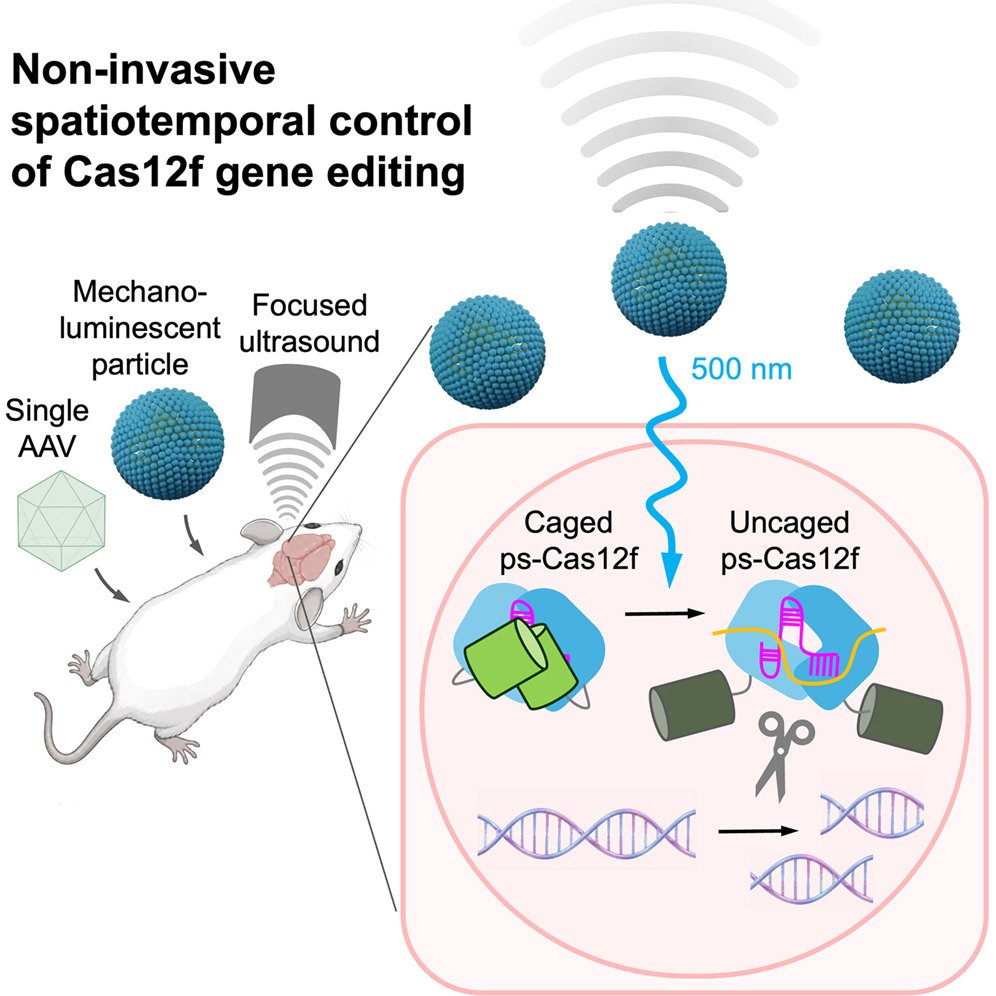
Today our lab is excited to share a new study in Cell: “Non-invasive control of gene editing in vivo by photoswitchable Cas12f and focused ultrasound.”
We engineered a compact CRISPR system that can be activated at specific locations in the body using focused ultrasound (🧵)
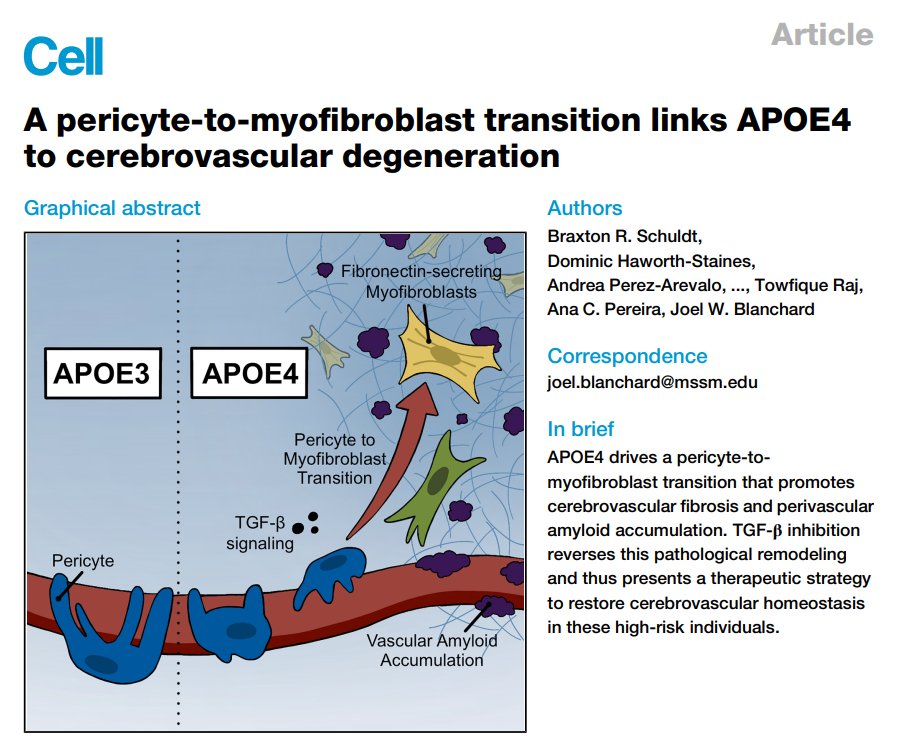
Blood vessels in the brain deteriorate in Alzheimer’s, especially in APOE4 carriers. But what drives this damage?
Our new study, out now in @CellPressNews , uncovers a mechanism linking APOE4 to vascular fibrosis and amyloid accumulation in the brain. 🧠🧬
The work was led by Luca Fusar Bassini, together with my friend and co-senior author Gioele La Manno and a superb team across our labs. Paper: https://t.co/6qQhaEq0gh @Nature@EPFL_en#lipids#ScienceTwitter
Excited to share our new preprint! 🎉
Using base-editor screens, we reveal how individual residues within the intrinsically disordered region of YTHDF2 control protein interactions, condensate recruitment, and m⁶A-dependent mRNA decay.
https://t.co/kJO8sit1J9
🧵👇
What if the stuff attached to tau fibrils affect their pathogenic structure? We found that repositioning polyubiquitin remodels pathological tau filaments, linking PTMs to tau strain biology. Huge credit to Dr. Ryohei Watanabe for leading this work.
https://t.co/0GchJxlvML
Scientists may have identified one of the mysterious molecules that pack into the cores of tau fibrils. A chemical that modifies polyubiquitin changed core structures, suggesting polyubiquitin is part and parcel of the tau fibril. https://t.co/kq0JDIN8Qv
1/ Today @BigHatBio announced that the first patient has been dosed with BHB810 — the first BigHat drug to reach the clinic.
A huge milestone for the company, and a personal one for me.
https://t.co/rlqCLkxBxD
Excited to share the lab’s first publication, co-led by talented postdoc Chuyi Su @ChuyiSu
We leveraged cell type-specific optogenetics in the macaque cerebral cortex to elucidate the role of excitatory and inhibitory neurons in visual form processing.
https://t.co/wrn25hWEWU
The quick progression of a thunderstorm moving across the Hudson River into lower Manhattan and One World Trade Center from NJ, seen from the Empire State Building in New York City, Friday evening #newyorkcity#nyc#newyork#thunderstorm
Fun paper - by looping mRNA into circles they trap ribosomes to go round and round synthesising very very long proteins. They even get E.coli and B.sub to secrete these monsters. https://t.co/VOpJhVTo32