1/n New @PLOSCompBiol paper with Elyse Norton (1st author), @weijima and Mike Landy! We look at how humans keep track of probabilities of events that change suddenly over trials (a change-point detection paradigm): https://t.co/vUpC8a23Nr
Just got refused a Canadian visa I needed to present my poster at #cogsci2019. I believe that not everybody fully realizes how much visa issues hurt diversity in academia. So here goes my thread on the topic.
@IrisVanRooij Kant, Hume, Nagel, Chalmers, Dennett, and obviously Henri Bergson: he's the philosopher who motivated my switch from philosophy to cognitive neurosciences.
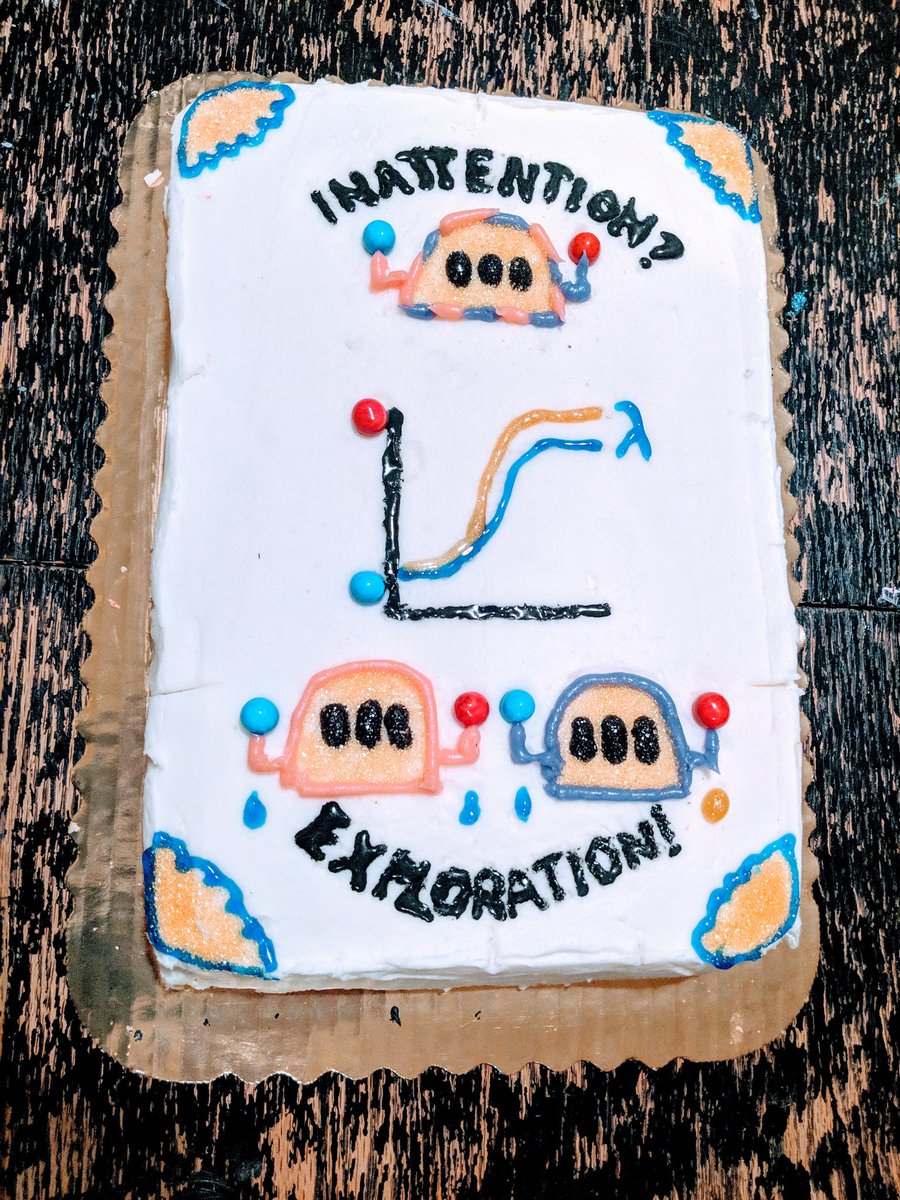
Ever botched an easy decision? Our cake explains why. Turns out lapses aren't inattention, but reflect a strategic exploration/exploitation trade-off. Model also explains puzzling results many have seen following inactivation of frontal/striatal areas. https://t.co/Vd0EILS6GG
Reward prediction errors affect the vigor of saccades. They change the images people saccade to and observe how saccades are affected. https://t.co/s07PD09cqE - by @reziliusReza group.
The words encoding/decoding/neural codes hold back neuroscience. @RomainBrette's treatment of them is beautiful deep and every neuroscientist, in particular the computational ones should read it. #ScienceWorks
For a quick glance at your pandas data frame and each variable: pandas profiling. So much in one command!!
https://t.co/bs6Usd1HA7
#python#DataScience#statistics
how does the brain represent where to look next: https://t.co/qYInJo4qbG - no single place but putatively a combination of areas. One thing is clear, we do not see any representation in FEF.
Beautiful study showing that pre-saccadic remapping requires that a location is attended before remapping of attention can be observed. This should have gone without saying, but it did not, yielding inconsistencies/confusions in recent literature on this. https://t.co/OT0r9uo4Ri
A new study investigates interaction between internal updating and reafferent visual feedback in determining egocentric representations of object locations.
"Causal inference for spatial constancy across whole body motion"
https://t.co/d6CcWnZhak
@FlorianPerdreau @pmedendorp
Interesting library for derivative-free optimization (and benchmarks) in Python, released by FB. For a visualization of some of these methods: https://t.co/joNua69qbO
For the PsychoPy enthusiasts, I’ve released 3.0.0b12 at https://t.co/yKA2sZyi5g and on PyPI
I think we're *nearly* ready for 3.0.0!
It’s been a painful path (for us all) but we really are getting there. The git/sync/permissions issues and many bugs fixed in this release
Neuroscience needs causality. And quasiexperiments are a crucial tool. Learn about them in our new review. https://t.co/XyRcLiaZzI with top-economist @mioana
Augmented reality with PsychoPy: Video camera feeding a laptop running PsychoPy, which updates an Oculus Rift headset in real-time. All in Python. Sweet!
Finally out! Bayesian comparison on steroids for causal inference in multisensory perception (visuo-vestibular heading estimation): https://t.co/IkzrzBjpLb
w/ Kalpana Dokka (co-first), Dora Angelaki & @weijima01