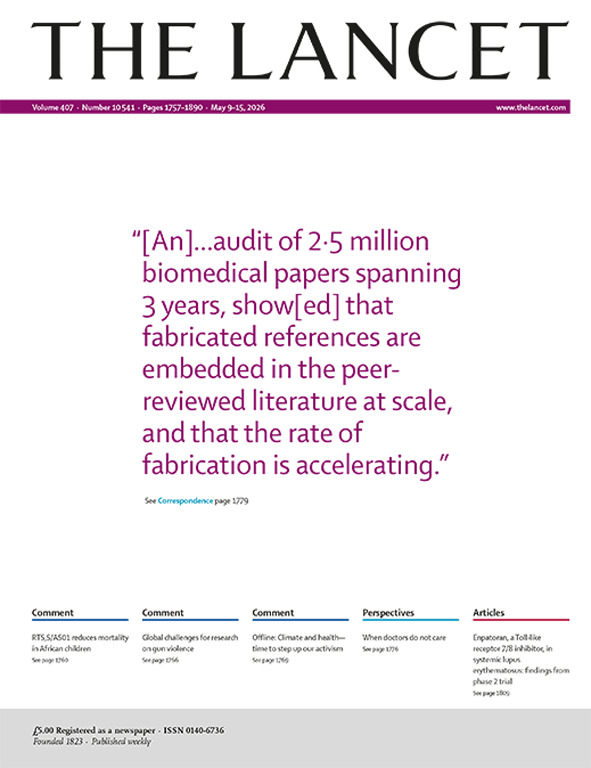
This deserves attention. And it’s not all it needs. At scale, “hallucitations” change and impact bibliometrics and potentially has several impacts in the future of sound research. @vardi@EricTopol
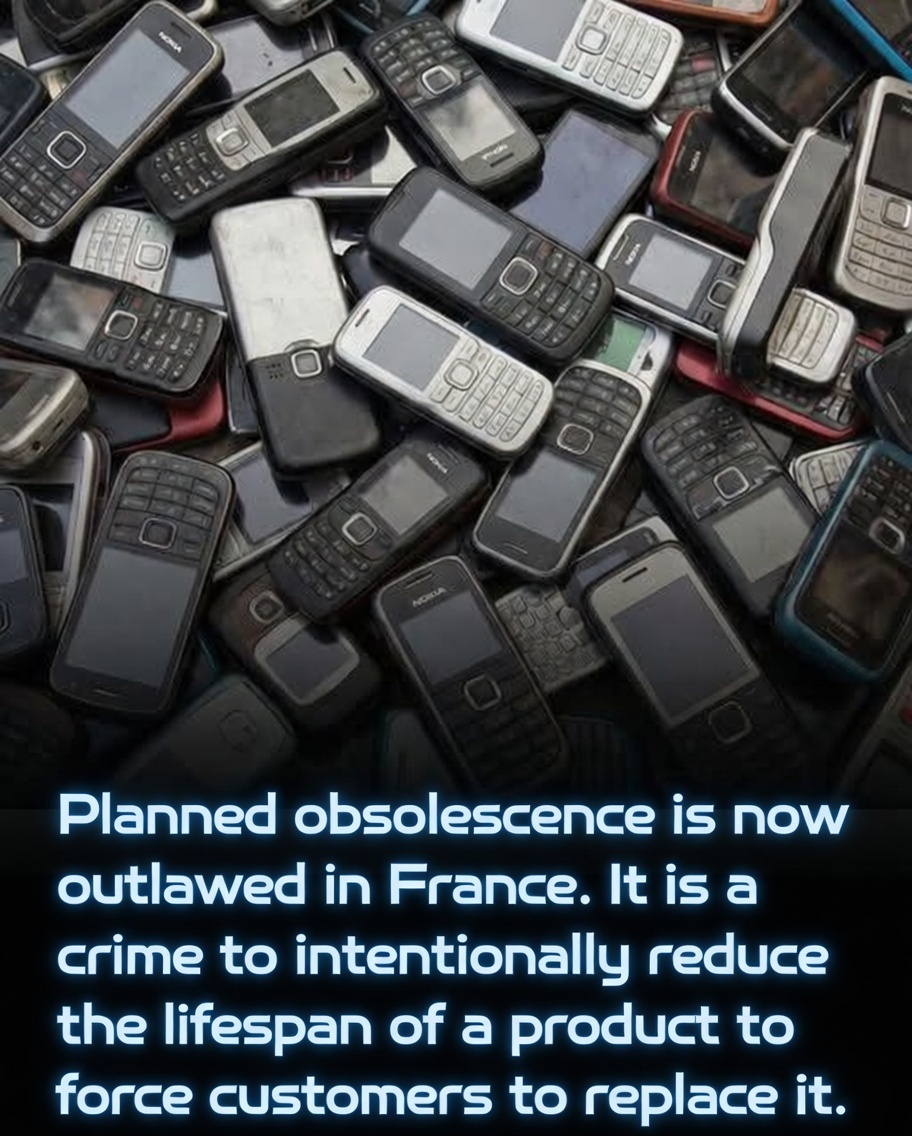
France has made planned obsolescence a criminal offense, becoming one of the first countries in the world to treat deliberate product shortening as a serious crime.
Manufacturers caught intentionally designing electronics, appliances, or other goods to fail prematurely or become unusable—whether through hardware flaws, software updates that slow performance, or other engineered limitations—now face steep penalties: up to 2 years in prison and fines reaching €300,000, or as high as 5% of their average annual turnover in the most serious cases.
This landmark law, building on France’s earlier consumer-protection framework and reinforced by high-profile scandals (such as the 2017–2018 investigations into smartphone “battery-gate” slowdowns), explicitly targets both physical and digital tactics used to push consumers toward frequent replacements.
The legislation is more than just punishment—it’s a cornerstone of France’s broader “right to repair” agenda. By criminalizing practices that drive premature disposal, the government aims to:
- Slash the massive environmental footprint of electronic waste,
- Protect consumers from hidden “forced upgrades,”
- Encourage manufacturers to prioritize durability, repairability, and longer-lasting support.
France’s tough stance sends a clear message to global tech and appliance companies: the era of disposable-by-design products is ending. By leading the charge on sustainability and consumer rights, the country is helping shift the world toward a more circular economy—one where goods are built to last, repaired when needed, and discarded only when truly necessary.
Bluesky is the new science Twitter: new study concludes
For the past decade, Twitter has been a primary home of scientists on social media. In recent years, new leadership at Twitter has made substantive changes that have resulted in increases in the prevalence of pseudoscience, conspiracy theory, and harassment on the platform, causing many scientists to seek alternatives. [including me]
Survey results overwhelmingly confirm that changes to Twitter have made the social media platform no longer professionally useful or pleasant, and that many scientists have abandoned it in favor of Bluesky.
Results show that for every reported professional benefit that scientists once gained from Twitter, scientists can now gain that benefit more effectively on Bluesky than on Twitter.
https://t.co/u9Hm6EzMXm
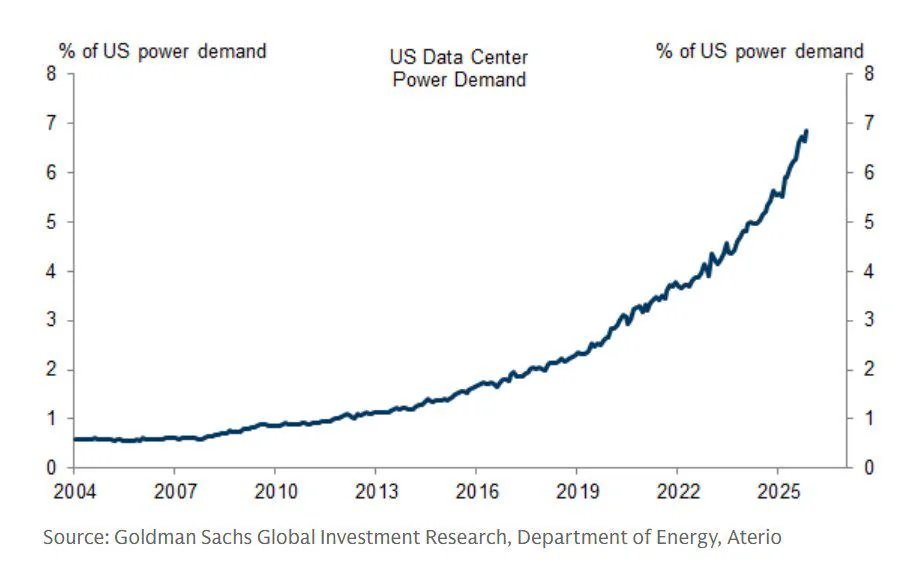
Some crazily creative ways to solve the AI-triggered data centre power crunch have been developed by startups. For @Inc, I explored some of the oddest https://t.co/0jHj95h42Z
SpaceX's Starlink dodged 300,000 collisions in 2025.
That's nearly 40 maneuvers per satellite, and it's rising fast – possibly hitting 1 million maneuvers in 2027.
"If they make a mistake, we’re in really big trouble.”
Story by me in @NewScientist
https://t.co/q305xAulDn
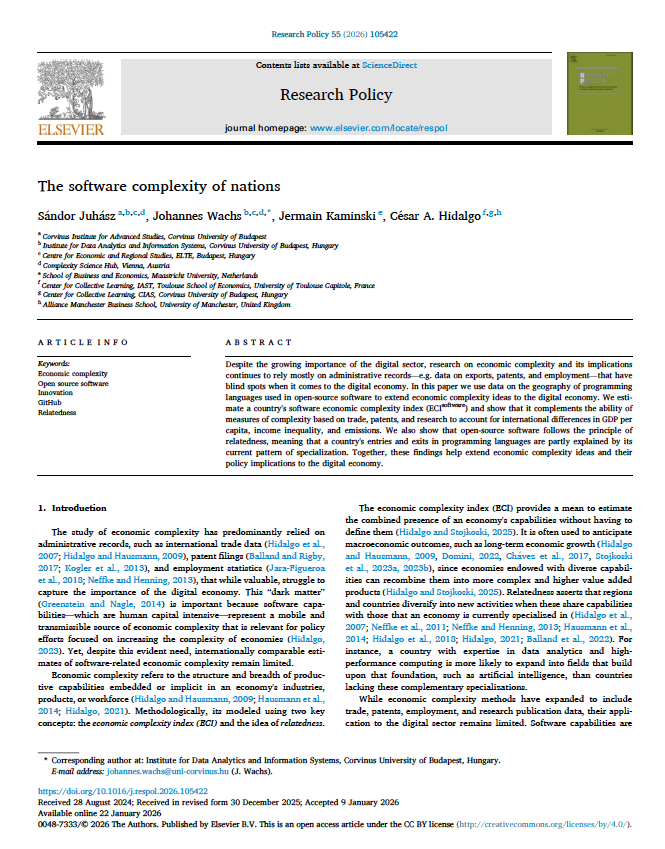
New Paper: The Software Complexity of Nations (Research Policy, 2026)
Most work on economic complexity relies on trade, patents, employment, or publications data. These sources, however, systematically misrepresents software.
Code does not cross borders through customs, service categories are too coarse to capture real digital capabilities, and many important software innovations are not patentable. As a result, a large share of modern productive capabilities remains invisible in multidimensional economic complexity metrics.
In this paper, we use the geography of open-source software to estimate a country’s software economic complexity (ECI software). Using GitHub data, we track where developers contribute code and group programming languages into technology stacks to estimate software specialization matrices from where we derive an Economic Complexity Index for software capabilities.
We find that:
Software captures a real and distinct capability dimension. Countries’ software ECI correlates but is not redundant to complexity measures based on trade, patents, or research. In fact, software complexity comes with a few surprises, like Russia and Indonesia being substantially more sophisticated in Software than in Products (This is also true for India, but I would say that's not surprising).
Software complexity correlates well with macro outcomes. Even after controlling for other complexity dimensions, software ECI is strongly correlated with higher GDP per capita and lower income inequality. It also relates to lower emissions intensity in simpler specifications. Unfortunately, since the time series of software data are rather short, we could not explore whether Software complexity explains future economic growth (but we will be able to do that in the future :-)).
Digital diversification is also path-dependent. This should come to no surprise to anyone familiar with the principle of relatedness, but it is good to know. Countries tend to enter new software stacks that are related to the ones they already have. Software capabilities accumulate much like industrial capabilities.
The broader implication is that software is not just another sector, but a mobile and highly human-capital-intensive source of economic complexity. Software opens new paths for structural transformation, which could be particularly interesting for economies that are geographically isolated.
This was a great collaboration with @johannes_wachs@sandor_juhasz and @jermainkaminski
You can read more at:
https://t.co/D3fg8z9rax
https://t.co/nLwSujWHzw
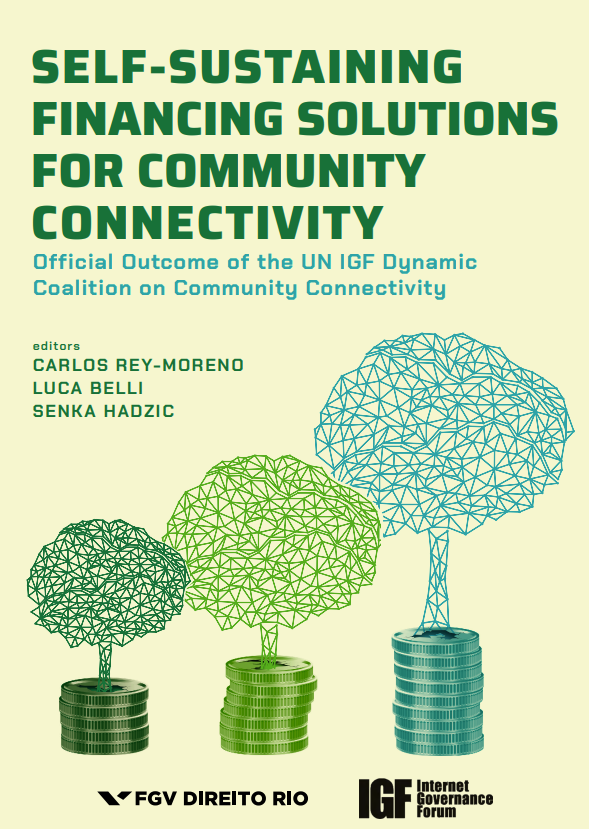
Foditsch said that although Brazil has many small ISPs, only about 22% of people have meaningful connectivity. She noted that these providers — often with limited access to affordable capital — now supply over half of fixed broadband and have driven connectivity in remote areas.
Achei um vídeo que mostra as placas de alinhamento que falei nesse corte. Esse vídeo mostra esse marco de alinhamento num dos cabos que liga a Europa aos EUA: https://t.co/lgWPh3wX5c
Older technologies have aided and perhaps enfeebled writers. “But with A.I. we’re so thoroughly able to outsource our thinking that it makes us more average, too,” @chaykak writes. https://t.co/4SaqXh5MH0
The problem isn’t just a lack of capital—it’s how we direct it. Blended finance has mobilised ~$15B/year, estimated at less than 0.4% of what’s needed. “Mind the Mission, Not the Gap” challenges the logic that more capital alone will deliver development.
Read it our new report, launched at #FfD4 ➡️ https://t.co/mkzmiiKLIp
Read our letter in the @FT with @Carlos_Cuerpo@Haddad_Fernando & @EGodongwana ➡️ https://t.co/burdatIBL2
Just one illustration of the unspeakable tragedy that USAID will be gone on 7/1, referencing US famine relief in 2022:
“it cost the average American household roughly $6 a year in taxes to prevent about half as many deaths as occurred in the Holocaust.”
https://t.co/fhRtoMCPwm
Foditsch: "This is more important than ever, because it's the first time we have a discussion on IGF discussing specifically on financing. So while this has been a need for a long time, I'm glad to see that we are finally starting to add that to the agenda here too."