$ABNB Earnings:
- EPS: $1.37
- Revenue: $3.61 billion
- Net Income: $816 million
- Gross Booking Value: $27.2 billion
"Over the first half of 2026, we’ve delivered some of our strongest results in years. In Q2, that momentum accelerated as we exceeded our outlook across every key metric. Revenue grew 17% year-over-year to $3.6 billion. GBV grew 16% year-over-year to $27.2 billion, driven by continued strong demand as well as a moderate increase in Average Daily Rate (“ADR”). Nights and Seats Booked grew 10% year-over-year, accelerating from Q1 2026. Net income was $816 million and Adjusted EBITDA increased 21% year-overyear to $1.3 billion, representing an expansion in Adjusted EBITDA Margin to 35%.
One of the most encouraging trends in Q2 was that we saw year-over-year growth accelerate not just in our expansion markets, but in many of our largest core markets as well. In fact, net origin nights booked in the U.S., France, the UK, and Australia all accelerated in Q2, reinforcing our confidence that our product innovation is driving demand across our business"
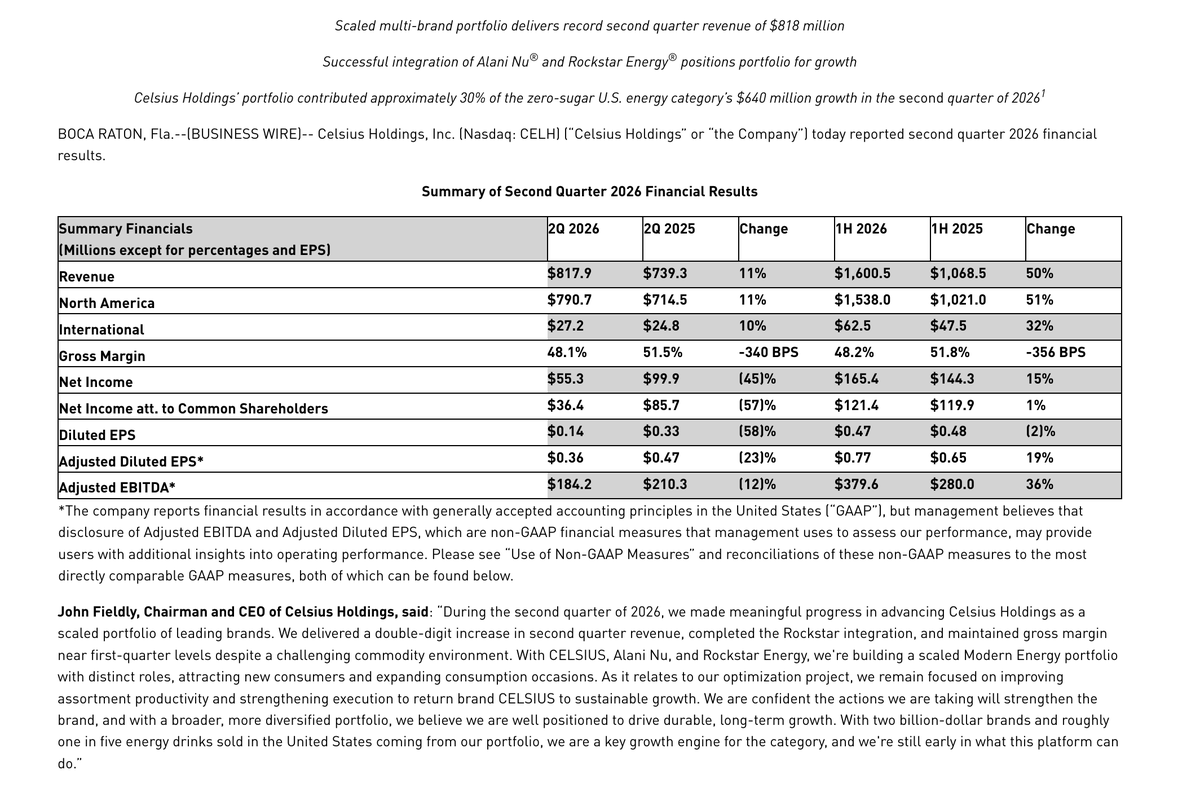
Monster Beverage turned in a strong Q2 of kind not often seen with mature CPG player as its core energy drinks surged nearly 20%, producing co’s first $2.5 bil quarter. US market delivered a solid 10% rise but overseas markets exploded by 29%.
$SPX will exit "Weakest Spot" and enter the historical "Sweet Spot" of 4-year Presidential Election Cycle come October of 2026
Average returns from November (Q4) to April 30th of new calendar year (Year 3) ~+18%
Oct 2022-Apr 2023 = +15.8%
Positivity rate since 1920s = 100%
$SPY $QQQ $DIA $IWM $VIX $VOO $SMH $SPCX $NVDA $BTC
Higher-for-longer is hurting duration. Financials are benefiting from it.
Financials remain one of the strongest sectors in our Market Regime framework, with both short- and mid-term Market Health firmly in Very High Reward territory, while Utilities continue to lag.
That shows the market is still pricing higher for longer. A steeper curve supports net interest income, while Fed uncertainty, elevated term premia and higher long-end yields pressure duration but help banks through wider lending spreads and the reinvestment of maturing fixed-rate assets at higher rates.
Utilities sit on the other side of that trade. Their bond-like characteristics, capital intensity and sensitivity to financing costs make them particularly vulnerable when long-term yields stay elevated.
As long as this regime remains in place, the relative advantage should continue to favor risk assets over rate-sensitive sectors.
Airbnb just hit $100B in annual gross booking value.
"We saw year-over-year growth accelerate not just in our expansion markets, but in many of our largest core markets as well."
$ABNB
Remarkable 🤯
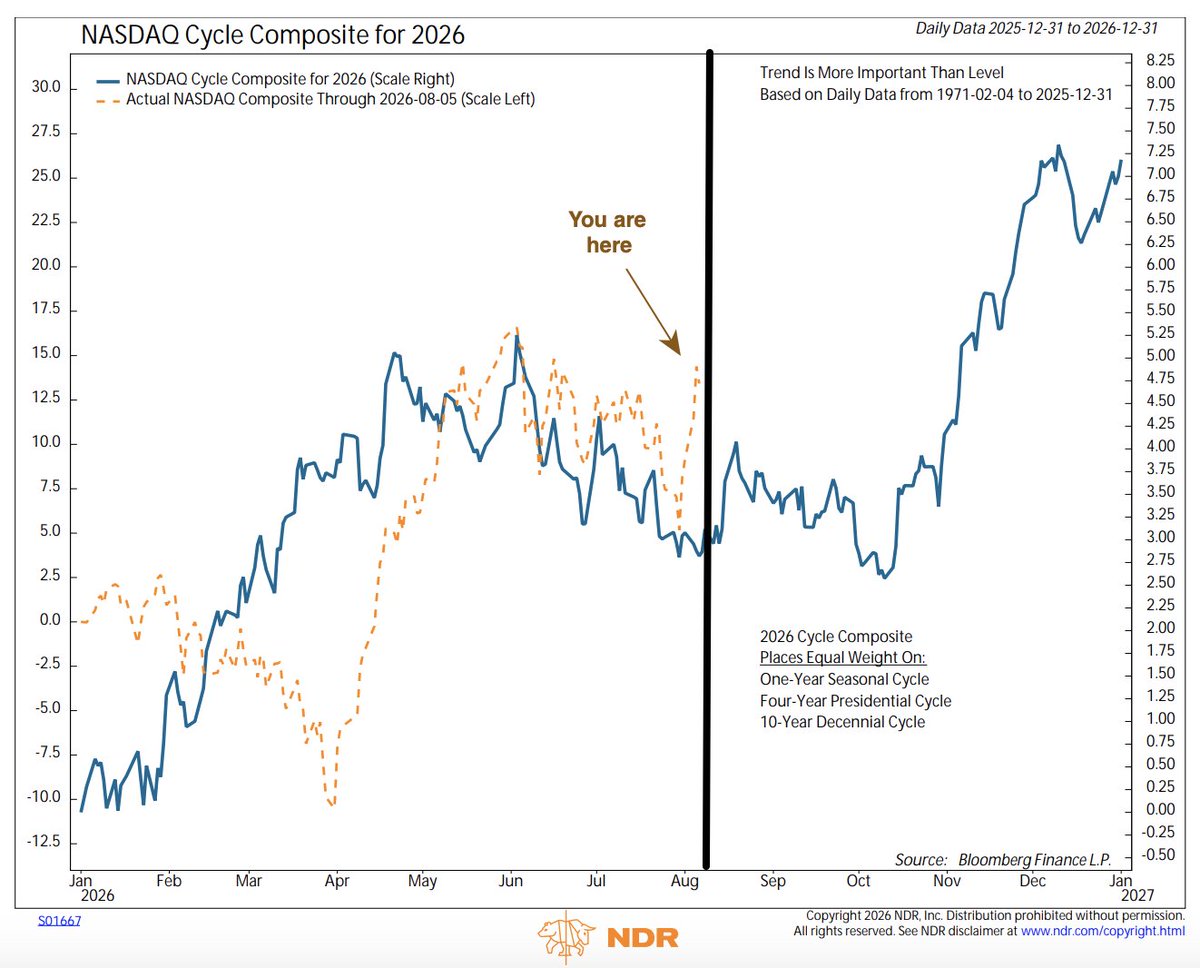
Nasdaq $COMPQ is most adherent index to its Cycle Composite 2026 analogue price path.
Since COMPQ derailed in Q1, it caught up and peaked precisely as Cycle indicated in June. It has continued to track Cycle Composite since, which forebodes another consolidation.
(trend more relevant than level)
$NDX $QQQ $SPX $SPY $DIA $IWM $NVDA $AAPL $VIX
Short-term concerns aside...
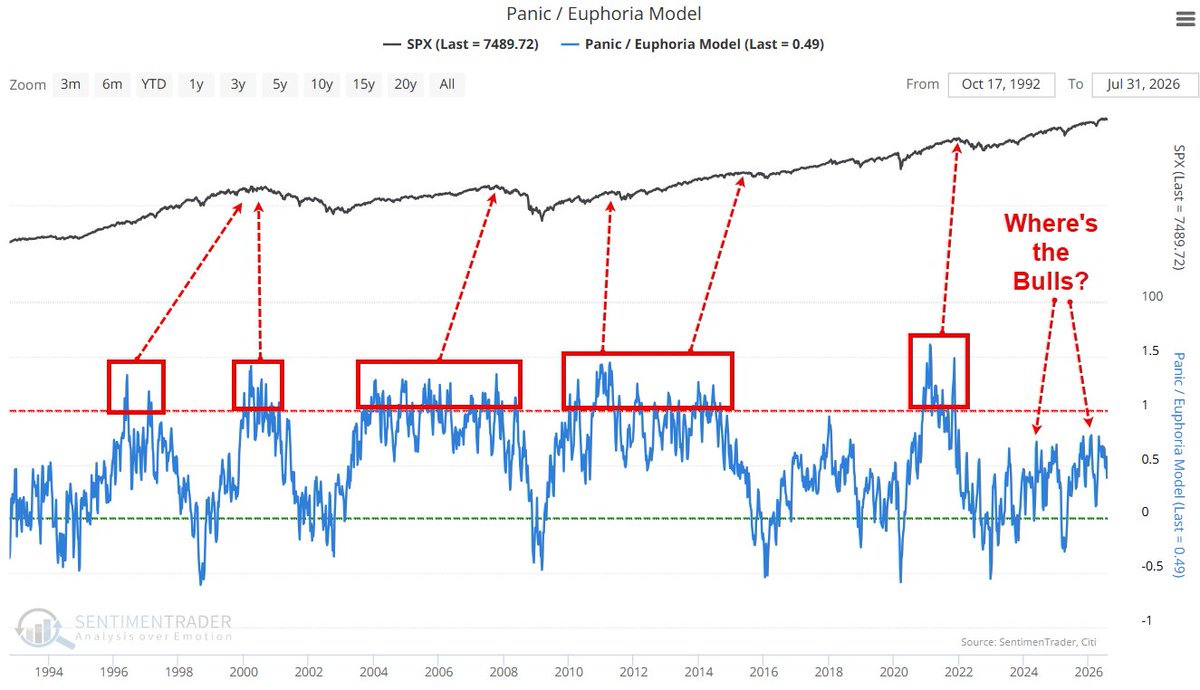
Big picture, bull markets tend to top out after the masses experience Bullish Euphoria.
Since the 2022 bottom, no sign of Euphoria whatsoever.
So, "Where's the Bulls?" @sentimentrader
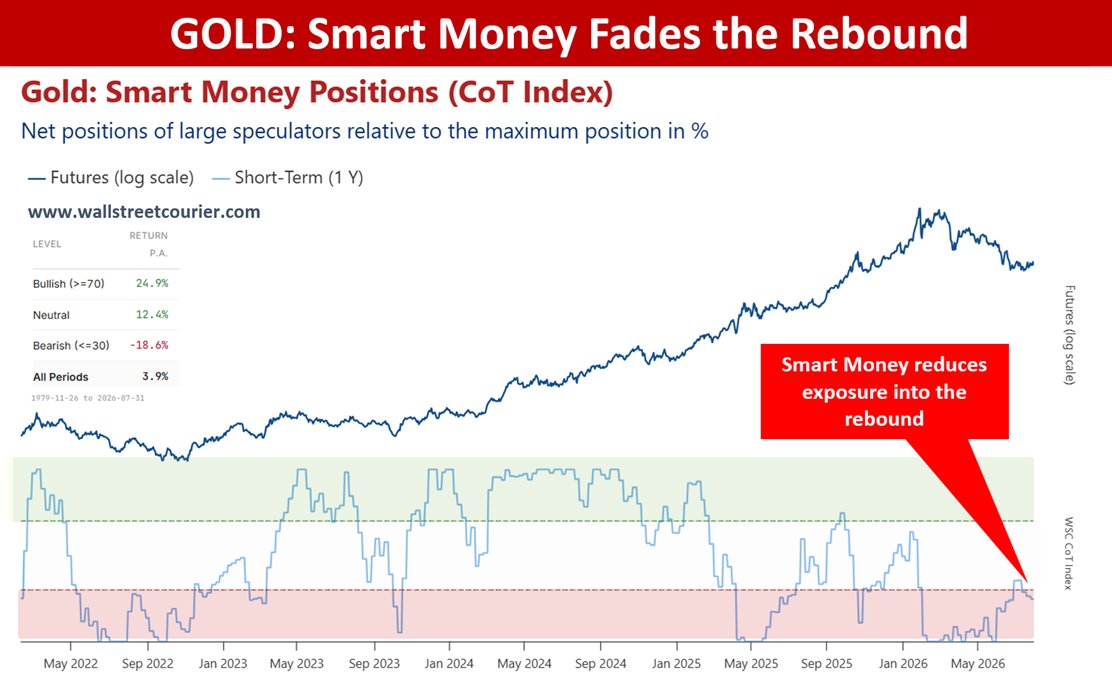
Gold rebounded. Smart Money tells a different story.
Gold has recovered 6% after falling 26% from its late-January high. Yet the move is not being confirmed by positioning. Smart Money has reduced exposure into the rebound, pushing the short-term CoT Index back toward bearish territory.
This suggests that larger market participants are treating the bounce as an opportunity to sell rather than positioning for a sustainable recovery.
Gold prices have stabilized. Positioning has not.
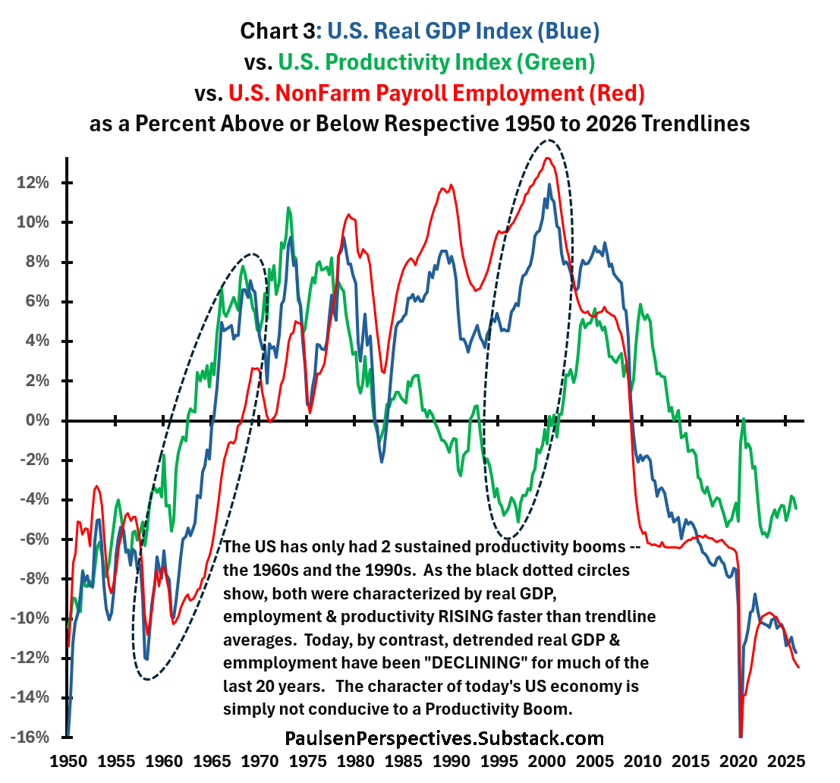
Investors are betting on an AI productivity boom. But "Booms" during the post-war era were when detrended real GDP, employment, & productivity were "all" rising. Today, detrended GDP/jobs is not conducive to a productivity boom. For all the details see https://t.co/cmZvbGqspf
When cyclical macro data improve, commercial banks ease lending standards. Every cycle we see this pattern… the Fed eases & rates decline, propelling a cyclical recovery. That cyclical recovery propels an easing-handoff from central banks to commercial banks while EPS improve.
Sandisk CEO: "We delivered record revenue, gross margin, and earnings per share, each above the high end of our guidance, and repurchased $4.5 billion of company stock"
$SNDK: -3% AH