Work-from-home:
◾️ reduces the child penalty
◾️ increases fertility
In a new working paper using rich Italian administrative data, we show evidence of both effects.
See the next tweet for a short summary. Comments very welcome
Buon I maggio a tutti i lavoratori e a chi vorrebbe lavorare e non può. Soprattutto buona festa ai nati negli anni 1966-75 che da almeno 20 anni sono l'ossatura dell'occupazione in Italia. E no, non abbiamo abbastanza popolazione per sostituirli quando questi andranno in pensione
Quando gli algoritmi privilegiano l'engagement prevalgono l'informazione e le posizioni polarizzate.
Emerge da un lavoro di Germano Gomez e Sobbrio riportato da @lavoceinfo (link primo commento)
L’engagement (il coinvolgimento), insomma, non è gratis: produce un costo reale per la qualità dell’informazione e per il dibattito pubblico.
Il punto di partenza è semplice: gli utenti con posizioni più estreme tendono a interagire più attivamente con i contenuti sui social.
La verifica è fatta sfruttando una modifica del 2028 dell'algoritmo di FB che dichiarava di voler privilegiare i post capaci di generare interazioni significative. Sia gli utenti italiani che quelli Usa dopo tendono più a posizioni estreme.
Il dibattito si concentra spesso sui contenuti: che cosa è vero, che cosa è falso, che cosa andrebbe rimosso. Il lavoro suggerisce che una parte del problema sta a monte, nelle regole di visibilità.
Non conta solo ciò che viene pubblicato; conta anche ciò che l’algoritmo decide di premiare.
@lugaricano comments on the new AI adoption paper comparing US vs EU firms I recently discussed.
https://t.co/nkHYGTAC44
AI adoption presents new org challenges—e.g. firms need to manage bottom up innovation and fear of substitution among workers.
1/3
Supply chains that rely on more specialized inputs are more productive, but less resilient to disruptions.
So how do firms decide how much to specialize? And should policymakers care?
@aferrari0 and I study these questions in our new CEPR working paper.
Are you a PhD student interested in the economics of innovation? The Economics of Ideas, Science, and Innovation Online short course, hosted by @IFP, is back for the third time!
https://t.co/PzjoXfHX7N
New paper alert 🚨!
Low-income countries differ not only in what they produce, but how they produce: fewer large firms, far more self-employment.
What drives these gaps in firm organization? And is this distinct from standard structural transformation?
A 🧵 w/ some results 1/
1/ 🎯 Excited to share that our paper "Manipulation and Selection in Unemployment Insurance" finally found a home at The Economic Journal (@EJ_RES @OUPEconomics)! 🙌
A project started back in 2016 during our PhD days, what a journey!
👉 https://t.co/SfcXGZTvjM
#EconTwitter
The program of the @bancaditalia Gender Economics Workshop is out!
We received over 140 submissions---it was a tough choice to select just 7 papers.
If you wish to attend (on December 12 in Rome), contact [email protected]
🔗https://t.co/lH09OMwFYz
Prof Mark Schankerman and I are hiring two full-time research assistants to work with us at LSE on research projects relating to productivity, innovation, and intellectual property rights.
Apply here: https://t.co/CEvnK7hepS
Deadline 30th September 11:59 UK
Professor Carlos Carrillo-Tudela, head of @UoE_Economics has become a fellow of the @RoyalEconSoc.
The prestigious honour recognises Professor Carrillo-Tudela's outstanding contributions to economics and dedication to shaping future generations.
https://t.co/fTkHrts7Qh
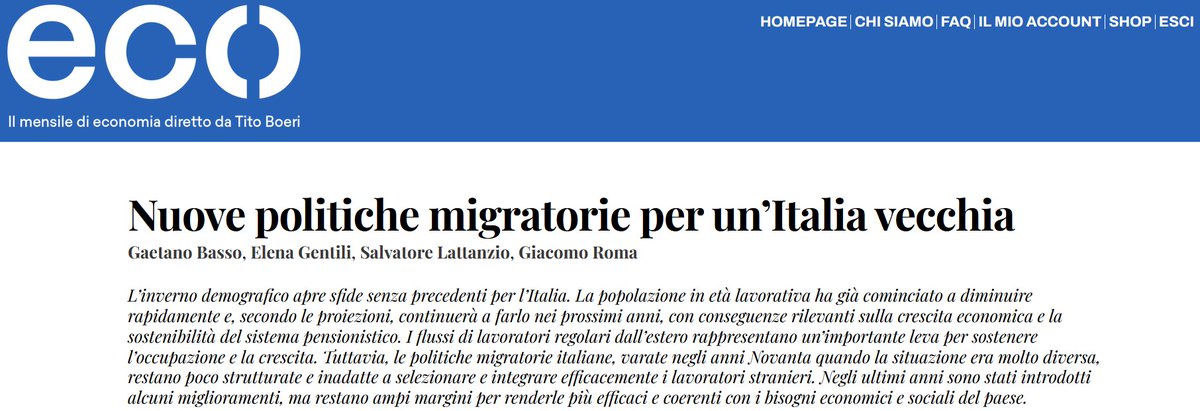
Un riassunto in italiano del nostro lavoro su immigrazione e politiche migratorie in Italia e in Europa è in edicola su #rivistaECO 👇
https://t.co/5XGNrJ9AEb