Morgan Stanley’s message is nuanced. They are not turning bearish on AI. They are arguing that the memory trade is transitioning from its explosive first phase into a more normal phase of the cycle.
The key question investors are debating is whether hyperscalers, particularly the largest AI infrastructure buyers, are beginning to accumulate excess compute capacity. If some AI infrastructure is no longer fully utilized and starts being resold or leased to third parties, pricing power for GPUs and memory could moderate. Morgan Stanley refers to this as “chipflation,” where competition and excess capacity gradually reduce hardware pricing.
Memory remains one of the strongest beneficiaries of AI because HBM and DRAM demand continues to outstrip supply. However, Morgan Stanley notes that several leading indicators are approaching peak momentum. Memory pricing growth is slowing, inventory conditions have normalized considerably, and earnings revisions have already been overwhelmingly positive. Historically, this combination often marks the point where share prices consolidate even though fundamentals remain healthy.
Importantly, they distinguish between a peak in the rate of change and a peak in the cycle. Those are very different. Investors frequently confuse slowing growth with declining growth. Semiconductor stocks often begin correcting once earnings momentum becomes “less good,” even while profits continue reaching record highs.
Another concern is positioning. Memory has become one of the most crowded trades globally, with investors heavily concentrated in names such as Samsung, SK Hynix, and Micron. When positioning becomes this crowded, even minor disappointments during earnings season can trigger sharp pullbacks as investors take profits.
What Morgan Stanley will be watching most closely is not memory companies themselves, but the AI hyperscalers. If companies such as Microsoft, Amazon, Meta, Alphabet, or OpenAI begin signaling slower infrastructure spending, weaker token economics, or more disciplined capital allocation, investors may question how sustainable the current pace of memory demand will remain. The focus is shifting from hardware suppliers toward the spending intentions of the customers.
The long-term thesis, however, remains intact. Morgan Stanley still expects AI-related earnings growth of roughly 35% to 40% in 2027 and continues to view agentic AI as a structural investment theme. Their message is that the AI infrastructure build-out is unlikely to end, but the market may be entering a period where expectations become more realistic and valuation expansion gives way to earnings-driven returns.
In other words, this looks less like the end of the AI memory supercycle and more like the transition from Phase One, characterized by explosive hardware deployment, to Phase Two, where investors become increasingly focused on utilization, monetization, and return on capital.
We broadly share that view. Markets often correct when expectations become overly optimistic, even while fundamentals remain strong. AI infrastructure spending is unlikely to follow a straight line, but the long-term demand for high-performance memory continues to strengthen as model sizes grow and inference workloads expand. We view the current pullback as an opportunity to selectively add exposure to high-quality memory names rather than a reason to abandon the sector. In our view, this is a correction to buy, not the beginning of a structural downturn.
Micron $MU CEO Sanjay Mehrotra just said:
“Humanoid robots carry 10 times the amount of memory as an average L2+ vehicle. We expect a sustained substantial multi-decade memory demand cycle to begin in the latter part of this decade.” (H/T @wallstengine)
President Trump says $NVDA agreed to build chips with $INTC while $SPCX TerraFab will be built with Intel’s technology team.
He called TerraFab “the largest chip factory in the world.”
Baseten CEO @tuhinone tells Altimeter's @apoorv03 that one of Baseten's cloud providers has already indicated their B200 prices ($/GPU hour) are set to double when existing contracts expire and are up for renewal later this year.
"If you go out right now saying you want a thousand GPUs, truly.. people are talking about Q2 of next year. So 12 months out, maybe 15 months out.
We have a cluster.. in one of these clouds.. of B200s.. Our unit price right now is $2.63 an hour.. that's up for renewal in October. They came to us already in May and said $5.10 is the new price.. So double."
Some examples of how we're using AI within @AltimeterCap now...
1/ Investment memo extraction tool
This has been a major pain in ass for analysts' time. Each update takes 20 minutes - assume 40hrs / week x 52 weeks = 2,080 hrs / year. Assume human analyst pay of 200K incl benefits. Cost per task is $32 per update. Volume is 80 port cos x 4 updates per year x 2 (mid-period sporadic updates)
LLM cost per task in comparison cost us 1 cent in token costs. Maybe $30 in token costs and 2 days of development to really nail.
Cost savings is $20K per year and 99.97% reduction in variable execution cost and a living database of our portco data that can be called and interacted with using a chatbot or visualization UI/UX
No data viz tool, reduction in human labor. Just free up analyst time to do more research than populating data entry...
2/ Axiom Council Tool - our version of what Perplexity just shipped
A council of LLMs that rigorously debate topics with access to web search. The results feed into a “Chairman” model who then summarizes the points made.
This cost us roughly $45 to build with @Replit Agent 3… and we started building it this morning. @amasad
I was already doing this as part of my research process - manually pasting into each of the different chat applications, but now we developed a custom workflow for us that we can share with the organization
This is the "low-code" vision of developing apps come to life...
shoutout to emilio the 🐐
@altcap
SPACEX TO ACQUIRE CURSOR IN $60B ALL-STOCK DEAL
$SPCX announced it will acquire Anysphere, the company behind AI coding tool Cursor, in an all-stock transaction valuing Cursor at $60B.
Cursor will become a wholly owned SpaceX subsidiary.
Expected close: Q3 2026, pending regulatory approvals.
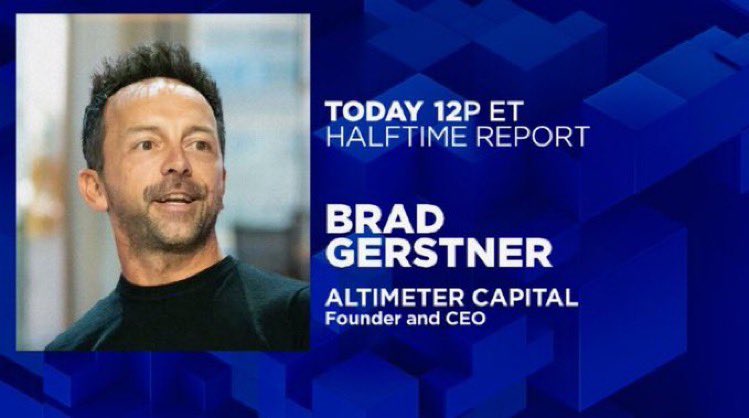
Scott Wapner (@TheJudgeCNBC) asked Brad Gerstner (@altcap) about @elonmusk's wealth crossing $1 trillion on @SpaceX IPO day. Brad connected the moment to why @InvestAmerica24 exists.
"60 to 70% of people today don't compound in the upside of our capital markets. I think you'll see a lot of announcements in the weeks ahead."
Chamath said $SPCX may be building “most important internet infrastructure project since the internet itself.”
Thats why the IPO debate is so complicated since SpaceX may look expensive on traditional metrics but those numbers likely don't capture the full upside over the next decade.
Starlink growth, Starship economics, satellite-to-mobile, government demand, orbital AI compute & convergence of space infrastructure with AI infrastructure are all bigger than what shows up in a clean multiple.
Noam Brown (@polynoamial) posted something profound this week.
Frontier models can solve most problems if you just let them run long enough. Nobody has ever run Mythos for a full year. We may never know how smart any given generation actually is.
@GavinSBaker's takeaway: however bullish he was on compute before that post, he's more bullish now.
@altcap
Co-hosting @CNBC 12-1 PM today for @SpaceX IPO & opening trade! Talking all things Space & AI - Starship, Starlink, models & the race to hyperscale compute. A great day to celebrate innovation, markets, capitalism & America. 🇺🇸🚀🇺🇸 @elonmusk@ScottWapeerCNBC
Class 7: Inference is up. Way up.
@tuhinone @ @baseten joined MS&E 435 breaking down how to serve AI at scale: why open source is the rebellion against frontier labs, why renting GPUs beats owning (for now), and why compute is going heterogeneous.
Full class: https://t.co/6ZEGSYRJcH
Yesterday @AravSrinivas told me power was the most significant bottleneck to AI.
Today I had KR Sridhar, CEO of Bloom Energy on 20VC.
1. We are not in an AI infrastructure bubble. AI is a hockey stick on a hockey stick.
2. We are now manufacturing intelligence, and the only input is electricity.
3. Power has never moved to the edge, and that's the whole game.
4. Turbines are a band-aid on mechanical-age infrastructure.
5. After food, energy sovereignty matters more than anything, including model sovereignty.
6. Don't short the US or Silicon Valley.
7. AI will be the best thing that ever happened to energy.
8. Funding Russia for energy while funding their adversary is illogical, and avoidable.
9. Bring power to the edge and you democratise access, which changes geopolitics itself.