[GIVE mHealth - Patient & Doctor Flows] https://t.co/pldRW7tHtB As shown to the National Institute on Aging in 2022. First time a symptoms calendar with an AI solution for patient remote healthcare was submitted. This is now the best known solution for non-biased AI in healthcare
Congratulations to RESI Boston Innovator’s Pitch Challenge finalist, Generating Innovations and Enterprises (GIVE)! Founder, Reginald Mbawuike, will pitch to a panel of #investors September 21-22. Join RESI to cheer on our IPC finalists: https://t.co/YjOuaMlagL
BIOS is a new agent framework by @BioProtocol it went live in beta and ranks #1 on BixBenchx the leading AI scientist benchmark
BIOS is more than a model, it’s an agentic swarm with human-in-loop control similar to Claude, persistent research memory and soon routing queries to agents across the DeSci ecosystem
With adoption, queries will drive a new form of agentic revenue for $BIO
Paper here: https://t.co/FZoHk9qidr
Happy Data Privacy Day from Doctronic.
Your health is personal. Your health data should be too.
Here's what that means in practice:
✔️ Anonymous by default. Use our AI doctor without an account or identifying details. Anonymous sessions aren't tied to your identity and disconnect when you close your browser.
✔️ Your data stays yours. We don't sell health information. We don't use patient conversations for advertising. We don't train our AI on identifiable patient data.
✔️ HIPAA-compliant member accounts. When you create an account, your health information is protected under HIPAA, encrypted in transit and at rest, with TEFCA-ready infrastructure for secure health data exchange.
✔️ You're in control. Access, download, correct, or delete your information. Manage consent preferences anytime.
Privacy first. Always.
Generative AI models, like Generative Adversarial Networks (GANs) and Variational Autoencoders (VAEs), analyze molecular structures and medical images to suggest potential drugs for effective treatment. For instance, Insilico Medicine has successfully explored the advantages of quantum GANs in generative chemistry, enhancing the efficiency and accuracy of drug design.
https://t.co/tY968XbNpV
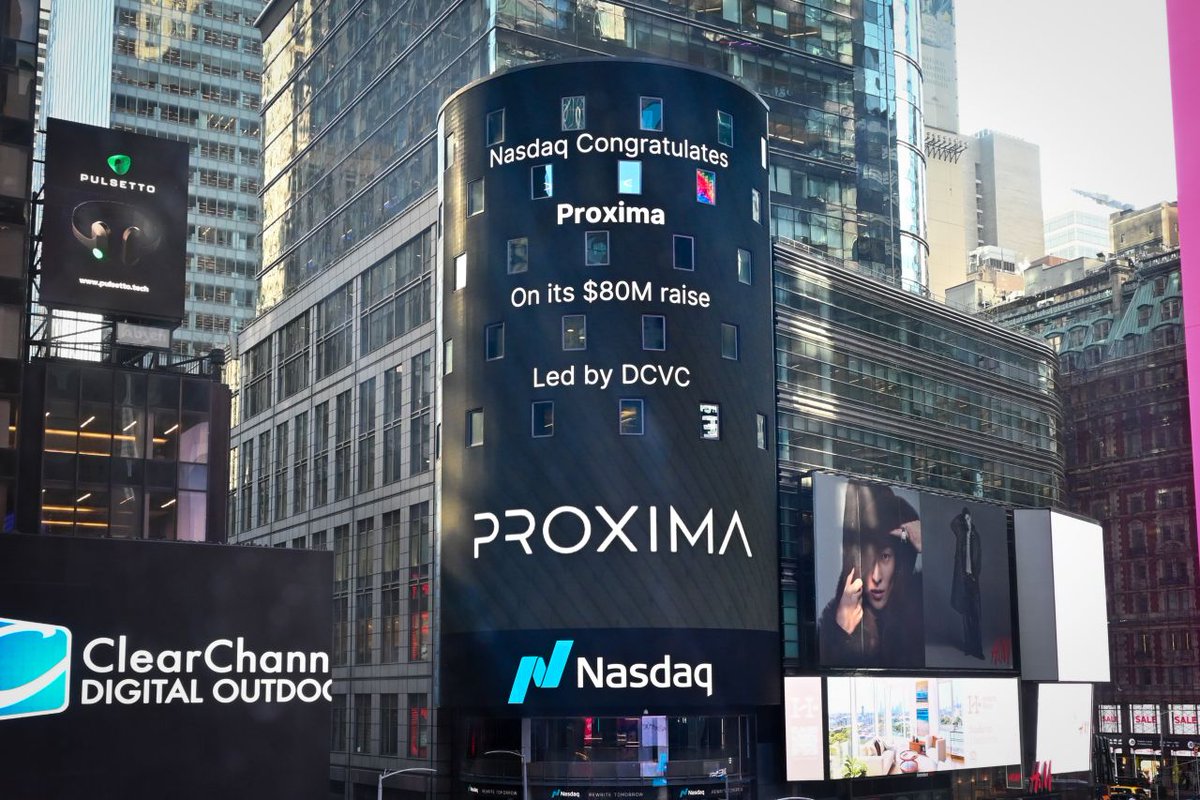
Thrilled to have @DCVC and @nvidia alongside us as we build the platform for proximity-based medicines.
We're just getting started: multiple exciting announcements coming soon.
If you want to work on frontier ML models and an unprecedented biological data generation engine, we'd love to hear from you: [email protected]
We are excited to announce the launch of Paige Predict, a suite of cutting-edge digital pathology applications that analyze hematoxylin and eosin (H&E) whole slide images to help inform testing decisions.
The AI-powered solution is designed to predict the likely presence or absence of clinically actionable and relevant biomarkers directly from a single H&E slide, offering physicians insights even when tissue samples are insufficient for full molecular profiling.
Learn more: https://t.co/hwvWV5PNpo
🧬📱🔬 2026 longevity buzz: AI breakthroughs in compound discovery and cellular rejuvenation. Algomash fits right in—use your phone for instant facial biomarker scans, tailoring anti-aging strategies to your unique biology.
This aligns with Science 4.0: AI like Spectra hypothesizes analogs for vets. $IBNFT governs the IP. Learn more about our project from yesterday's recorded @QuickSwap X space that included health legends like @aubreydegrey and our founder @JamesHolzEsq !
Reply 'RESET' for $IBNFT beta/airdrop.
#TokenizedHealth @spectra_agentic
Since launching our AI for Science program, we’ve been working with scientists to understand how AI is accelerating progress.
We spoke with 3 labs where Claude is reshaping research—and starting to point towards novel scientific insights and discoveries.
https://t.co/WAvghBlbsC
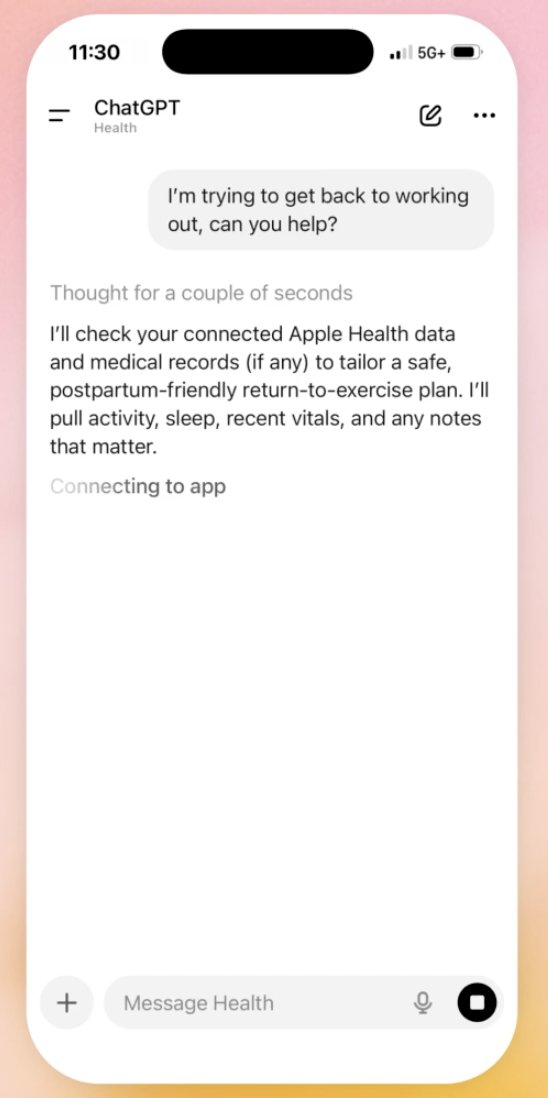
OpenAI just introduced ChatGPT Health. While waiting for access, here are my thoughts as someone working in health AI (based on public info)
0. Highlight
You get a dedicated "Health" space with "enhanced privacy" (not used for LLM training, but no HIPAA mentioned). It seems in this space, you cannot specify models or use deep research. You can still activate ChatGPT Apps, but limited to a few pre-selected ones like Peloton.
Health context comes from external medical records (retrieved through b.well, a health records aggregator, likely using individual patient access), Apple Health, uploaded files, your other non-Health chat, and potentially other Apps (unclear).
It's a huge deal to make this available directly to consumers, but there will be many challenges to get this right:
1. The missing HIPAA in the room
Law is the bare minimum of ethics. It is required to be compliant with HIPAA if you store personal health information (PHI). It's unclear to us as consumers how they handled the data, especially the information the LLM got from the records from b.well. You can ask LLM to "avoid mentioning sensitive topics", they say, but they absolutely should not put this burden on the users.
2. Having an OK memory is not enough for health
It's an Aha moment when you realize GPT remembers your career goals, but it could lead to life & death consequences if GPT hallucinates your medical history, your medication prescriptions, even just for 1% of the time (especially when you do not know which 1%). Yet, based on how memory works in ChatGPT, I do not see it getting solved anytime soon.
3. Too little context, for now
Accessing the health context via a third party is clearly much better than manual uploads, but the quality and coverage of the health records remain a black box. It is just really hard to get complete health records automatically, looking at Microsoft HealthVault, the original Google Health, Apple Health (Records), and the latest Verily Me.
Then, the covered data types from Apple Health are also unknown. Does ChatGPT sync everything? How do they plan to let LLMs understand extremely long time series, such as heart rates for the last ten years? On top of this, how about users wearing Android or other wearables that are not on Apple Health?
4. Then, suddenly, too much (conflicting) context.
I have no doubt they could solve the "not enough context" problem as more data providers/devices start thinking about tapping into the huge user base from ChatGPT. Then the problem flipped into the reverse issue: whose context should I use and trust?
Some simple examples: which device's data should the LLM use when the user asks about their sleep? What should the LLM do when there are conflicts between health records and their lab testing PDFs? It takes proactive intelligence to know when it's a preference issue and when it's something only the user can make a decision on.
Wearables enable continuous HRV monitoring to detect physiological shifts associated with PTSD stress responses. Real-time data supports early pattern recognition in daily life.
Grateful to participants contributing anonymized datasets for validation.
#PTSDTherapy#Longevity
@Rejuve_AI in the Spotlight!
Exciting news! The Rejuve AI Longevity App is mentioned in the @sfstandard article titled “Welcome to joyspan, the hot new trend in longevity” — where the emerging world of longevity tech meets innovative concepts like joyspan and measurable well-being trends shaping 2026.
https://t.co/86K6PPt2J6’s app is gaining recognition as part of the new wave of longevity tools that help people understand and improve their health span with AI-powered personalized insights.
🔗 Check out the article here:
👉 https://t.co/NMaEeofMGA
If you’re curious about how AI, health data, and longevity science are intersecting in exciting new ways — this is a great read!
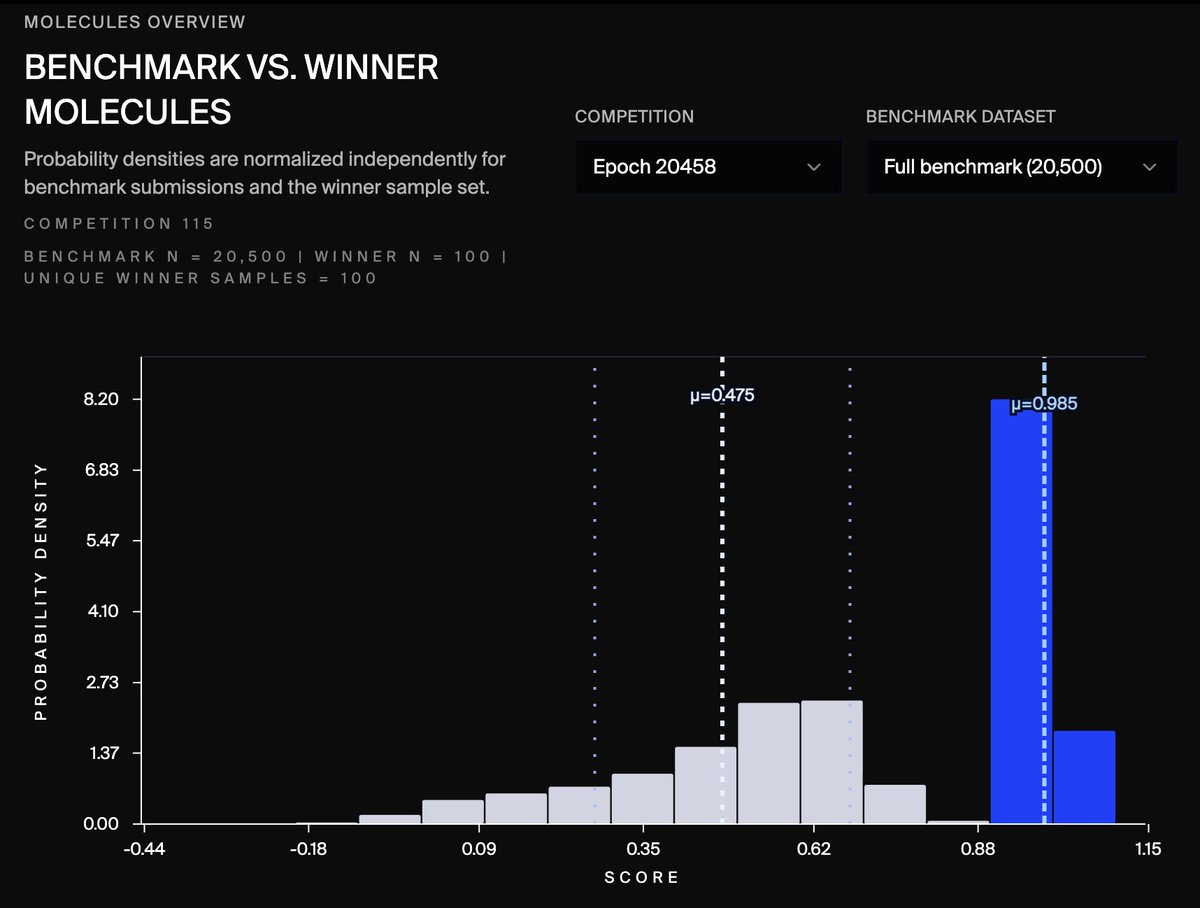
One of the key challenges in ML-driven drug discovery is generalization. As @owl_posting highlights in his recent piece, state-of-the-art systems can perform well on narrow benchmarks but struggle as conditions change. Teams like @leashbio are doing the hard, painstaking work of translating that success more broadly.
NOVA Blueprint is designed to incentivize generalizable search strategies for chemical spaces everyday. Miners that submit code that continue to perform as parameters change stand to win the most.
By randomizing targets and enforcing threshold score improvement to win, we’re not only ensuring fair competition in a permissionless network but also selecting for algorithms that transfers across target families.
Current multi-challenge winner is using:
1. Hybrid exploration of chemical space
Combines random sampling with similarity-based generation, using synthon libraries to explore both novel and chemically grounded regions.
2. Feedback-driven adaptation
Sampling strategies shift in real time based on performance, increasing structural diversity when gains slow.
3. Target + anti-target optimization
Selects for strong target binding while minimizing off-target interactions, improving selectivity and drug-likeness.
4. Explicit diversity (entropy) control
Monitors convergence and injects entropy when exploration collapses too quickly.
5. Learning from past signal
Historical scoring data informs component weighting, reinforcing strategies that consistently work.
6. Dynamic exploration–exploitation balance
Mutation rates and elite selection are tuned continuously to adapt across targets.
7. Structure-aware filtering
Enforces drug-like constraints (e.g. heavy atom count, rotatable bonds) without sacrificing diversity.
Gradually at first.
Then all at once.
#Bittensor #SN68 #DeSci #DeAI #drugdiscovery
🔗 https://t.co/xzZl418MSt