Chair @TigerBrands; Chancellor @MandelaUni; Frmr Special Envoy Gender @AfDB_Group; Frmr Director @UNDP #democratic govern; Frmr Min Public Service South Africa
“gloom and despondency have never defeated adversity. Trying times need courage and resilience. Our strength as a people is not tested during the best of times...we should never become despondent because the weather is bad nor should we turn triumphalist because the sun shines”.
@TMFoundation_ It is with deep sadness that we learn of the passing of Dr. Fezeka Mabona. We extend our heartfelt condolences to President Thabo Mbeki, the Mbeki and Mabona families, and all who were touched by her life of service and dedication.
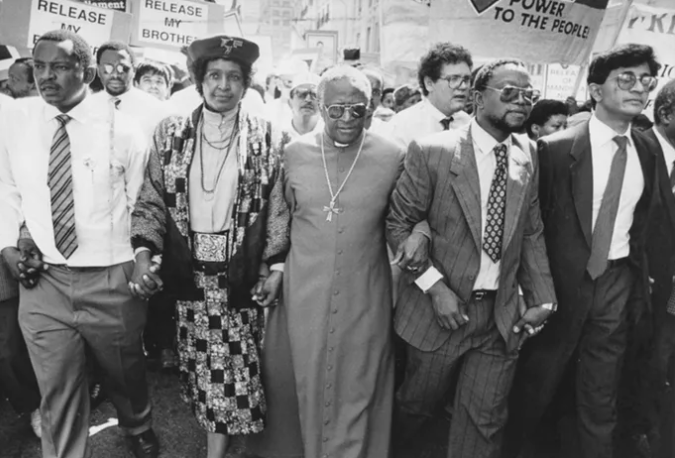
Mosiuoa 'Terror' Lekota, Winnie Madikizela-Mandela, Archbishop Desmond Tutu, Popo Molefe and Mohammed Valli Moosa lead a march in support of the UDF's "Free All Political Prisoners' campaign" in the late 1980s. Source: Independent Media Archives
Everyone has a role to play from farm to table in ensuring the food we consume is safe and nutritious.
This #WorldFoodSafetyDay, let’s act to prevent, detect and manage foodborne risks and build safer, healthier and more resilient food systems that advance sustainable development for all.
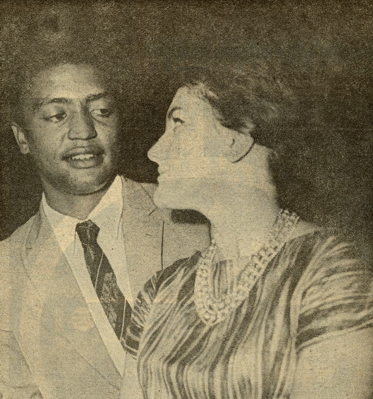
On 24 February 1962, a Coloured journalist Joseph Louw, 23, was sentenced to six months in the Johannesburg Regional Court for conspiring with Pamela Beira, a 19 year-old White woman to breach the Immorality Act. When Louw's attorney asked for suspended sentence for his client, he was told by the magistrate that the case was not a matter of sudden temptation, but rather the development of a close relationship. Pamela Beira failed to appear in court and a warrant of arrest was issued, but the court learned that she had left South Africa. In April 1962 he jumped bail and the couple later reunited in Dar es Salaam, Tanganyika (Tanzania). In 1963 Joe Louw was awarded a scholarship at Columbia University in New York. He majored in economics and then obtained an MA in journalism, specialising in television production and photography. In 1968 he was travelling with Dr. Martin Luther King Jr., working on a documentary for the Public Broadcast Laboratory of NET. When, on 4 April 1968, the civil rights leader was assassinated in Memphis, Tennessee, Louw happened to be there and the dramatic photographs he took at the time were used all over the world. Pamela Beira married the Mozambican poet, revolutionary and politician Marcelino dos Santos. She was actively involved in the anti-apartheid struggle. Source: SAHO/Esat/Drum Social Histories
Containing #Ebola depends on political commitment, sustained financing, and the trust and engagement of communities.
@AfricaCDC and @WHO have launched a Continental Preparedness and Response Plan that is estimated at US$518 million for June-November 2026, with partners including @UNICEF, @Refugees, @WFP, @ifrc and @FINDdx: https://t.co/ktcKpzqSCh
Less showman than strategist, the @AfDBPresident wants to pool risk, ➡️ https://t.co/mo55yRnFrN speed up lending and mobilise Africa’s own savings for infrastructure.
Report by @thaisbrouck in Brazzaville.
Frieda Bokwe Matthews (1905 – 1996) was a South African teacher, author, and intellectual. She made history as one of the first Black women to study at the University College of Fort Hare. Born in Ugie in East Griqualand, she attended the Lovedale mission school, becoming one of the first Black girl to pass the Junior School Certificate in 1921. She subsequently earned a teaching diploma from Fort Hare. She was the daughter of Reverend John Knox Bokwe, a revered Xhosa intellectual, minister, and composer. Her brother was the prominent physician Dr. Roseberry Bokwe. In 1928, she married the influential academic and activist leader Z.K. Matthews. Their son, Joe Matthews, became a well-known politician, and their granddaughter is the prominent South African politician Naledi Pandor. Source: Pitzer, SAHO
You want another explanation on xenophobia in South Africa? @thecontinent_ :
"The conventional explanation
for South Africa’s waves of xenophobic
violence is familiar: a stagnant
economy, high unemployment, and
migrants cast as useful scapegoats.
But that’s not the whole story.
Researchers say violent protests in
South Africa — including xenophobic
ones — are closely tied to factional,
internal battles within the African
National Congress. During Jacob
Zuma’s state capture years, when
factions were accommodated
with preferential access to jobs,
contracts and state resources, violent
demonstrations were relatively rare.
In times of less blatant corruption,
factions often mobilise violent
protests to negotiate for power.
Migrants might be on the banners –
but those behind the protests appear
more interested in harnessing public
ire for their power games than in
changing immigration policy ."
“Although I am responsible for everyone, for all grievances of the community, I like to prioritise, and my priority lies with the empowerment of women..." - Lydia Komape-Ngwenya (1935 - 2023). Photo Credit: George Hallett
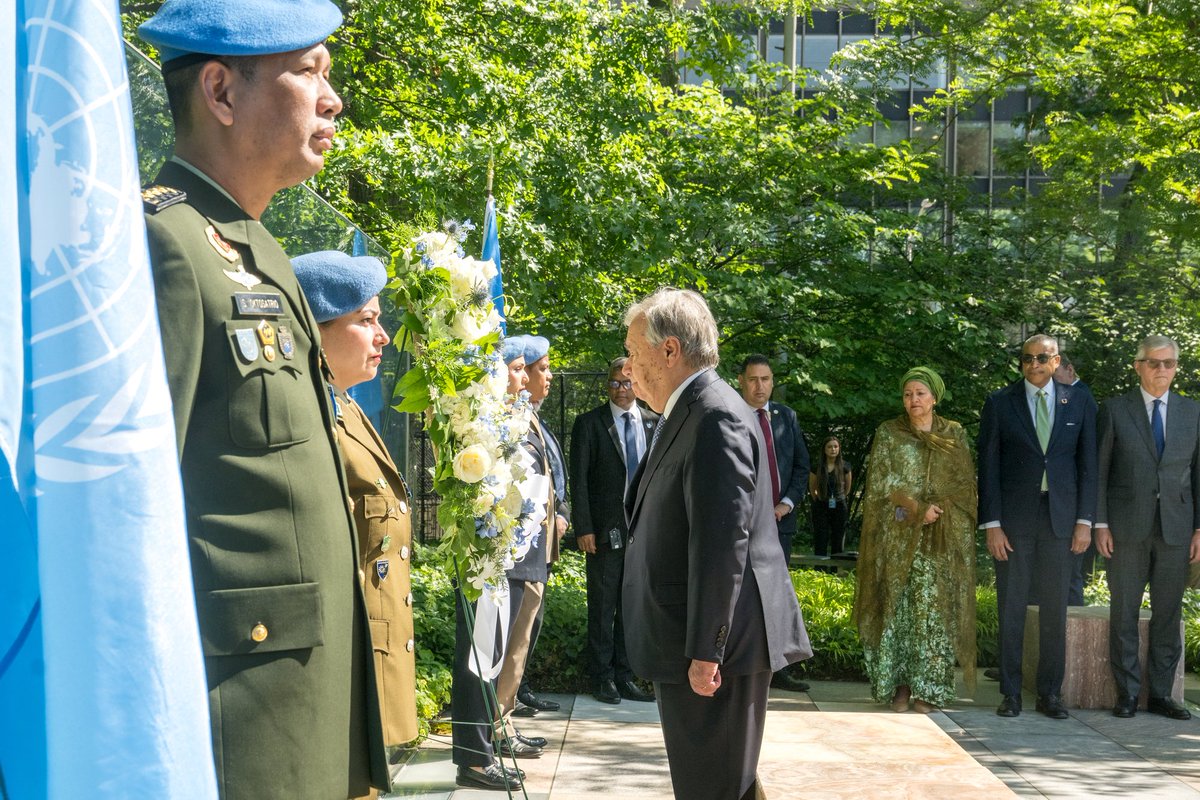
Today, I joined Secretary-General @antonioguterres in paying tribute to the women and men who made the ultimate sacrifice under the @UN flag in pursuit of peace.
Their service and courage will never be forgotten. And our hearts remain with their families.
"Dear friends, let's not kid ourselves. In a situation of injustice and oppression, there can be no neutrality. You have to take sides..." - Archbishop Desmond Tutu at the Stanford University's Memorial Auditorium on January 21, 1986. Footage courtesy of Stanford University Archive.
Tiyo Soga's legacy remains significant because he navigated both African and European worlds while insisting on the humanity, intellect, and agency of African people during a period of intense colonial expansion.
His influence can be traced through later generations of South African thinkers and leaders, including figures associated with the African nationalist tradition, and the vision of an African Renaissance championed by President Thabo Mbeki.
That is why a concert celebrating his life is particularly fitting for the Thabo Mbeki Foundation. Soga's work was not only spiritual and literary; it was also a profound intellectual project aimed at affirming African dignity and demonstrating that Africans could define their own future.
Get your tickets here: https://t.co/o9akXYwkCX
“I will never carry a pass, I will only carry one similar to Mrs (Susan) Strijdom’s. She is a woman and I am too. There is no difference.” - Annie Silinga (1910 - 1984). Photo Credit: Drum Social Histories/BAHA
What does multipolarity mean or bring to Africa?
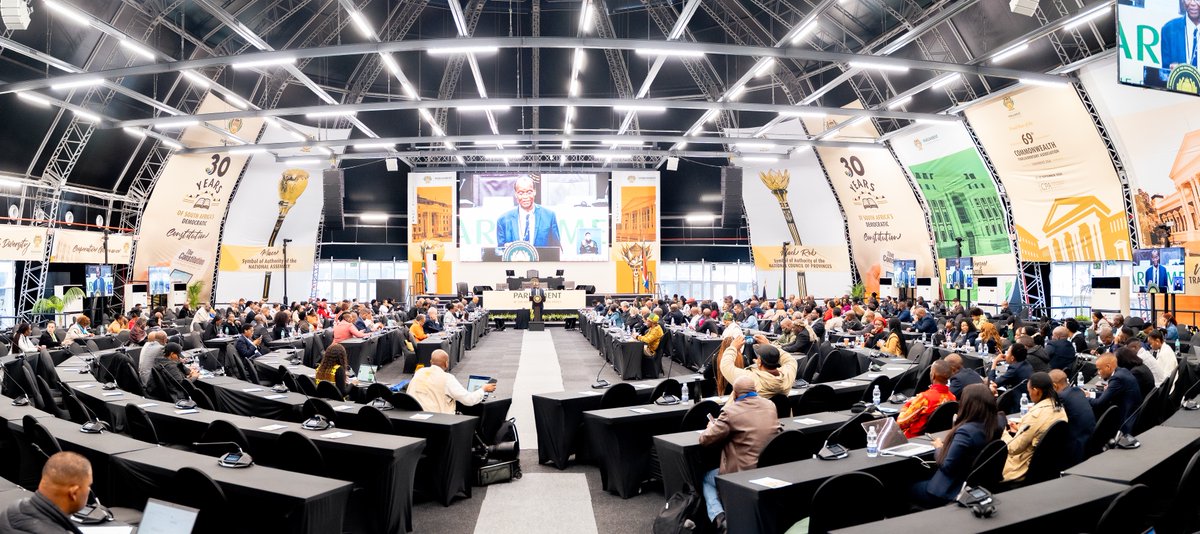
Mr Oscar Mathafa, a Member of Parliament in the National Assembly of the Republic of South Africa, reflected on the emerging multipolar power arrangements and South Africa's constitution.
He spoke during a panel discussion titled "Towards Multipolarity," held as part of the School Colloquium celebrating Africa Day.
#Africa #ForeignPolicy #Unisa #UNISA #PublicAffairs
The Last Serious African Mediation? Reflections on and lessons from the AUHIP Experience and the Meaning of African Political Agency by Abdul Mohammed
https://t.co/aELxHTHoqj
As we reflect on the conversations and engagements that marked #AfricaDay2026, the questions that shaped our discussions remain as urgent as ever.
As NEPAD marks 25 years, how do we draw on its experiences to build stronger, more responsive institutions for the future? How do we ensure that the private sector is not merely an observer, but an active partner in Africa's development, investing in and supporting the programmes and projects that will propel the continent forward?
We reflected on how we can protect our democracies and constitutions, ensuring they serve not only as legal frameworks, but as instruments for social impact, dignity, and shared prosperity for South Africans and Africans across the continent.
A recurring theme throughout the week was the role of young people. How do we ensure that youth participation is meaningful and not symbolic? How do we prepare the next generation to take up the baton of Pan-Africanism and advance the vision of the African Renaissance?
The #AfricaDay2026 events may have come to an end, but the conversations continue. More importantly, the work continues. Join our mailing list to stay connected: https://t.co/zZaaajWbAw
@NEPAD_Agency@ParliamentofRSA@unisa
Tribute to Tiyo Soga
The concert is a collaboration between the Thabo Mbeki Foundation and Classics on Turf, marking the occasion of the former President’s 84th birthday. The name Tiyo Soga resonates most strongly with his contribution to the canon of Christian hymns in isiXhosa, most notably Lizalis’ idinga lakho, the ‘unofficial’ anthem of resistance to colonial oppression. Johannesburg will be treated to the artistry of Mandisi Dyantyis with a choir and full orchestra, tastefully re-interpreting hymns that have been a part of our South African consciousness for well over a century.
https://t.co/o9akXYwSsv
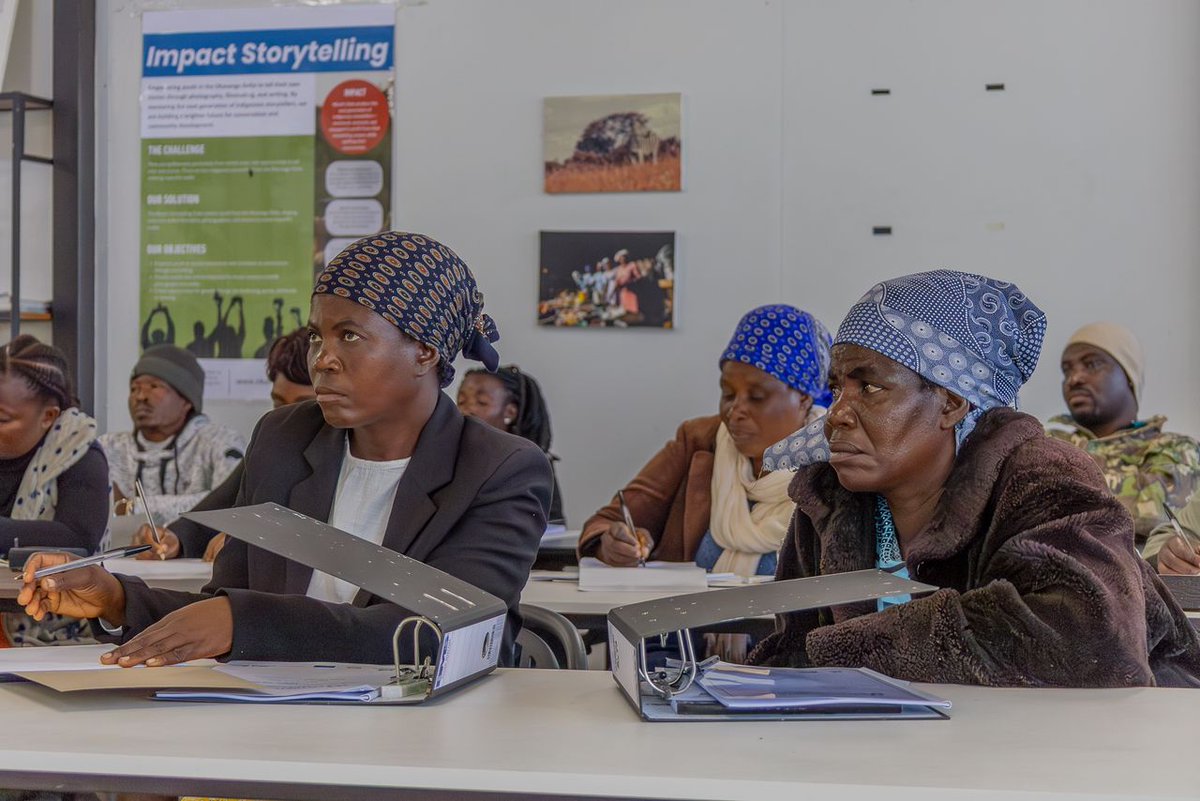
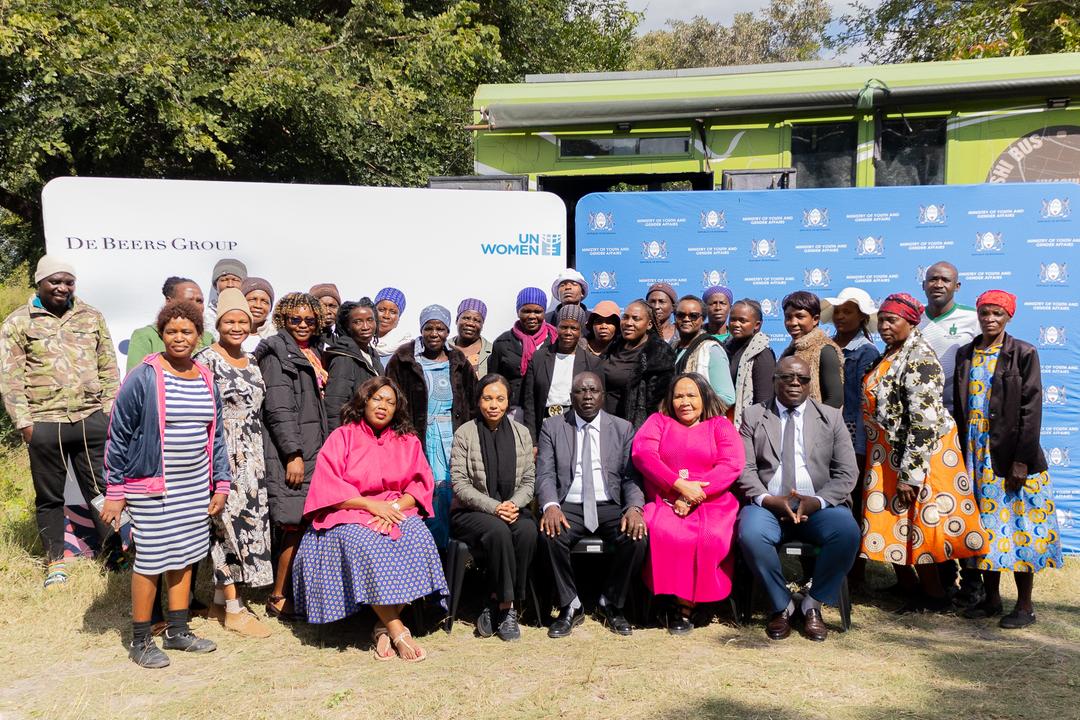
When women lead in the business of agriculture, whole communities benefit. 🌱👩🏽🌾
#EntreprenHER Climate-Smart Agriculture training is happeneing this week in Beetsha, Okavango Region 🇧🇼, in partnership with the Ministry of Youth & Gender Affairs, supported by @debeersgroup.
We need to stop viewing African development through a lens of deficit.
Lukhanyo Neer, COO of the Thabo Mbeki Foundation, perfectly captures why our cultural renaissance matters. Africa has never lacked intellectual or cultural produce. Instead, our wealth was "scattered into other people's buildings, in other people's languages, and under other people's catalogue numbers".
Rebuilding doesn't mean inventing from scratch. "It is reopening the granary, and seeing what we still have".
https://t.co/QooiqZrMVP