10 June 1944. 642 men, women and children were murdered by the German Waffen SS in the village of Oradour-sur-Glane, France. The village was never rebuilt and featured at the opening episode of the classic ITV documentary series World at War.
🙏🇺🇸🙏
Basil Plumley's life feels like something out of another time-because it was. A time when duty wasn't debated much, it was answered.
He stepped into the Army in 1942, a young man heading straight into a world already torn apart by war. Italy came first. Then Normandy. Places where the odds weren't just against you-they were stacked high enough to bury you. And still, he made it through.
Most men would have called that a lifetime of service.
He didn't.
Korea pulled him back into it, this time with airborne units, where the fight followed you from the sky to the ground and never really let go. Different war, same stakes. Same reality-make it through the day, or don't.
And then Vietnam.
la Drang, 1965. The kind of battle that doesn't ease you in, it hits hard and keeps hitting. By then, Plumley was a sergeant major, but rank didn't pull him away from danger. He walked straight into it, same as always. Rifle in hand. Eyes up. The kind of presence that told younger men, "You're not alone in this."
He didn't need speeches. Just being there said enough.
Three wars. Front lines in every one of them.
Thirty two years wearing the uniform.
And somehow... he walked away from all of it alive.
I sit here thinking about that, and I can't help but measure it against the lives we live now. Most of us will never face even a fraction of what he saw in a single year, let alone over decades. It makes you wonder what kind of grit a man has to carry to keep stepping back into that fire, and what kind of quiet strength it takes to come home and just live a normal life afterward.
We talk a lot about heroes, sometimes a little too easily. But men like Plumley... they didn't call themselves that. They just showed up, did what had to be done, and carried the weight without asking for attention.
He passed in 2012 at 92 years old. A long lite, well-earned.
And maybe that's the part that sticks with me the most, he didn't just survive war. He outlived it. Built a life beyond it. Stayed steady through things that would have broken most.
There's something in that worth remembering. 🙏🇺🇸🙏
Photo courtesy of https://t.co/qlXgXDCp1H
The late great ROBERT FORSTER with the fantastic story of how QUENTIN TARANTINO, the Silver Spoon Diner and “Jackie Brown” (1997) saved his career and changed his life forever.
She Wore a Yellow Ribbon
1949
Veteran cavalry commander Captain Nathan Brittles on the verge of retirement takes on a final mission to prevent an Indian uprising. John Wayne believed it was his best acting role.
"Guns of the Magnificent Seven" (1969) is the third film in The Magnificent Seven series.
This is the first film in the series where Yul Brynner no longer plays Chris Adams. Instead, George Kennedy takes over this iconic role.
Much of the film was shot in Almería, Spain—a region associated with classic Western films of the 1960s.
The film was released at a time when the traditional Western genre was declining in Hollywood, making it one of the last works of the classic Western era.
Black Hawk Down remains one of the most intense war films ever made. Ridley Scott throws you into the chaos of Mogadishu and never lets you catch your breath. Nearly 25 years later, it's still an exhausting and unforgettable experience.
[1970 Honorary Oscar acceptance speech]
"I may never look at this without remembering the quiet patience of directors who were so kind to me, who were kind enough to put up with me more than once, some of them even three or four times. I trust they and all the other directors, writers and producers and my leading women have forgiven me for what I didn't know. You know that I've never been a joiner or a member of any particular social set, but I've been privileged to be a part of Hollywood's most glorious era."
-Cary Grant
It was April 30, 2019. The kind of ordinary Tuesday that nobody remembers — until they do.
Inside a classroom at the University of North Carolina at Charlotte, students were finishing end-of-semester presentations. Laptops were open. Notes were scattered across desks. It felt like any other day at the end of a semester.
Then everything changed.
A gunman entered the room and opened fire. In an instant, normal life gave way to panic. Students rushed for exits, ducked behind desks, and searched desperately for safety.
Most people ran from the danger.
Riley Howell ran toward it.
At 21 years old, the ROTC cadet had no weapon, no protective gear, and no time to think through a plan. He saw what was happening and reacted.
He charged the shooter.
The tackle was sudden, direct, and decisive. Howell threw himself into the struggle, forcing the gunman off balance and disrupting the attack at its most critical moment.
He was shot multiple times.
But the shooting stopped.
Later, investigators confirmed what many already suspected. The gunman himself admitted that Howell's actions ended the attack. Police also discovered multiple loaded magazines that had never been used.
The attack could have lasted much longer.
It didn't.
Because Riley Howell acted.
The tragedy still claimed lives. Fellow student Ellis Reed Parlier was also killed, and several others were wounded. Families were forever changed by what happened that day.
But amid the grief, one fact remained impossible to ignore.
Riley Howell's decision saved lives.
The story quickly spread beyond the university. People across the country saw in him something rare — courage without hesitation, action without certainty, sacrifice without expectation of reward.
He was buried with full military honors. He also became the first civilian ever to receive the Charlotte-Mecklenburg Police Department's Medal of Valor.
Yet his legacy was never about medals.
He wasn't on a battlefield. He wasn't wearing a uniform in combat.
He was a student sitting in a classroom.
And when others needed time, Riley Howell gave them his.
There is no formula for that kind of courage.
There is only character.
And on an ordinary Tuesday, Riley Howell showed the world exactly what that looks like.
Uncle Bob aka Robert Hoobler Passed Away Age 65. When Lil Wayne shot himself in the chest at the age of 12,Officer Bob carried Lil Wayne to his cruiser and drove him to the hospital when no ambulance was available & no one else on the scene helped saving his life. RIP BOB
Today we remember Mark “Bing” Chandler.
On 8 June 2010, Bing was killed in action in the Nad ’Ali District of Helmand Province, Afghanistan, aged 33.
A brave soldier, a mate, and a man who made the ultimate sacrifice for his country.
Gone, but never forgotten. 🇬🇧
JOHN FORD had to shop
STAGECOACH (1939)
to numerous Hollywood studios, who turned him down as big budget Westerns had been out of vogue since the silents, and because Ford insisted on using then-B-movie actor JOHN WAYNE in a key role.
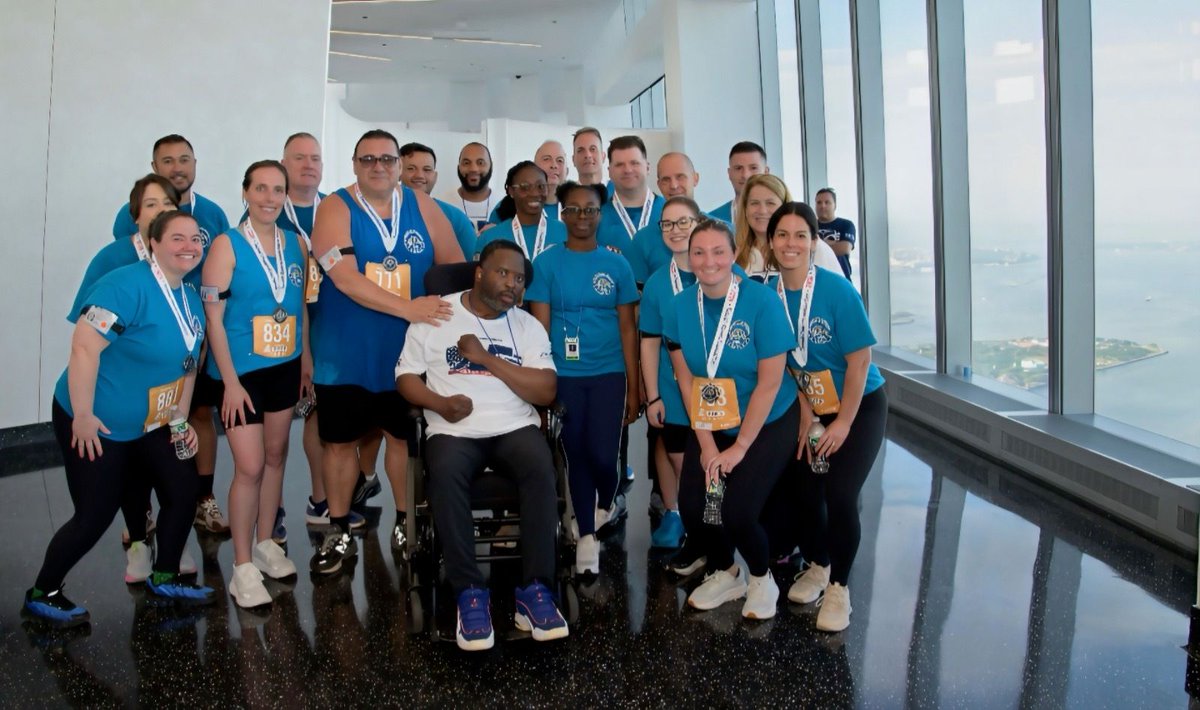
This year’s Tunnel to Towers Tower Climb brought Dalsh’s Dawgs together in honor of Detective Dalsh Veve (@NYPD67Pct).
SBA Recording Secretary William Morrissey joined the team for the 104-story climb at One World Trade Center, standing alongside others who came out to support Detective Veve, his family, and the mission of Tunnel to Towers.
A meaningful day and a powerful show of support for Detective Veve and his family.
#TunnelToTowers #NeverForget







![mikemovies's tweet photo. [1970 Honorary Oscar acceptance speech]
"I may never look at this without remembering the quiet patience of directors who were so kind to me, who were kind enough to put up with me more than once, some of them even three or four times. I trust they and all the other directors, writers and producers and my leading women have forgiven me for what I didn't know. You know that I've never been a joiner or a member of any particular social set, but I've been privileged to be a part of Hollywood's most glorious era."
-Cary Grant](https://pbs.twimg.com/media/HKZQANzW4AErOXM.jpg)