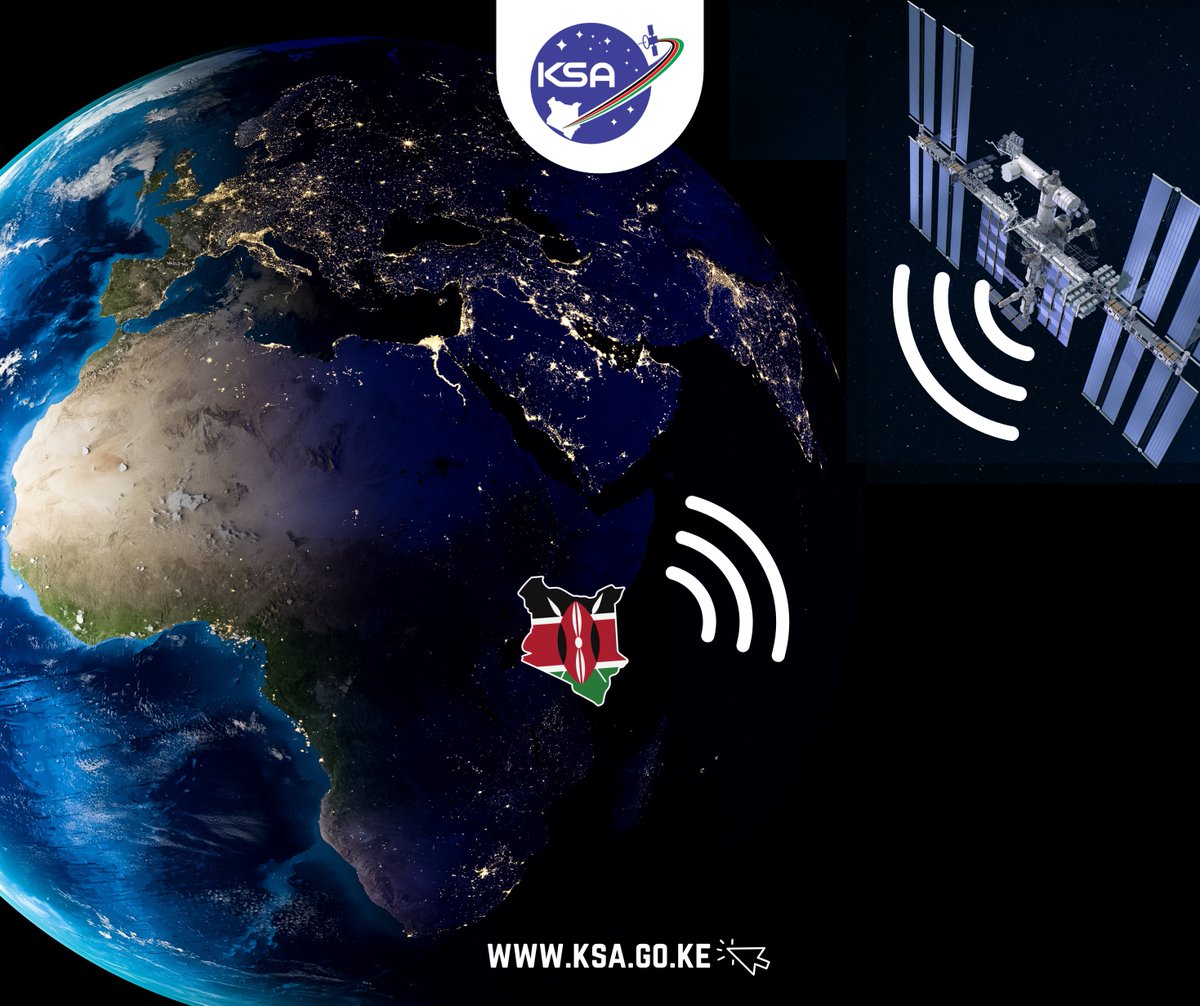
KENYA SELECTED TO HOST ARISS PROGRAM 2026 ! 🇰🇪
We are thrilled to announce that Kenya has been selected to host the next round of the ARISS – Amateur Radio on the International Space Station (ISS) program, a global initiative that will give kenyans a rare opportunity to communicate directly with astronauts aboard the ISS.
Kenya is the only African country selected for this prestigious program in the 2026 round, underscoring the nation’s growing leadership in space science and innovation on the continent.
The hosting window is scheduled between July and December 2026, during which Kenyan students, industry professionals and citizens will engage in live radio contact with astronauts, inspiring curiosity in STEM, industry innovation and space science.
In preparation, we will work closely with an assigned Pan-African Citizen Science e-Laboratory @pacselab mentor and Harold Safary, the Agency Liaison, to ensure a successful and impactful contact session.
This marks a powerful milestone for space education in Kenya bringing everyone closer to space and empowering the next generation of explorers and researchers.
📢 An open call will be announced for those who wish to speak directly with astronauts aboard the ISS.
#SpaceScience #ISS #KenyaInSpace
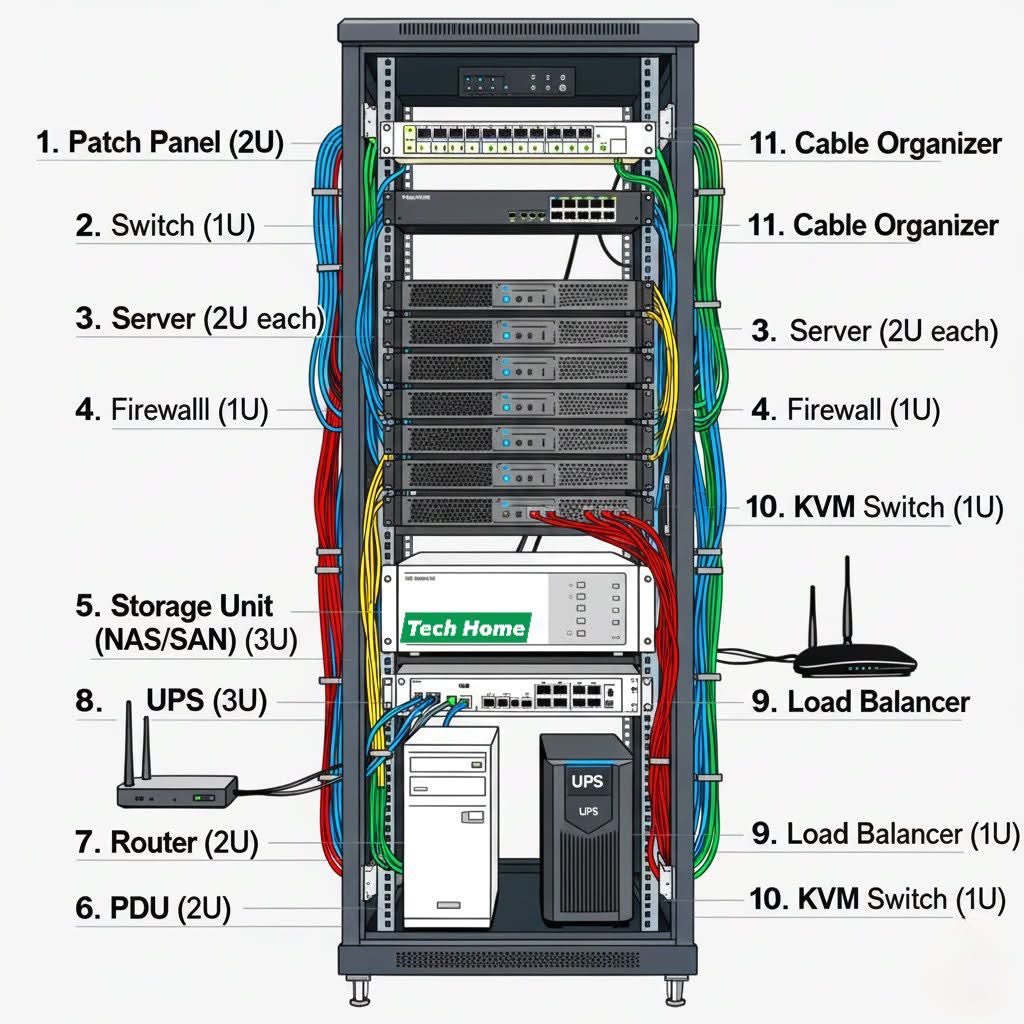
🌐 Understanding IP Address Classes!
🔒 Private IP Addresses:
Class A: 10.0.0.0 to 10.255.255.255
Class B: 172.16.0.0 to 172.31.255.255
Class C: 192.168.0.0 to 192.168.255.255
#IPAddress#Networking#TechBasics#NetworkSecurity
🧪 Wireshark Fundamentals - Beginner Overview
Wireshark is a leading network protocol analyzer used in cybersecurity, networking, and troubleshooting. It captures real-time traffic, letting you inspect network packets and understand communication at the OSI layer level.
DevOps Learning Path for Beginners 👇
For individuals starting out, having proficiency in the following areas is recommended:
1. Version Control:
- Git: Focus on mastering basic commands, branching and merging, collaboration, conflict resolution, version tagging
2. Linux Administration:
- Understand system architecture, command line basics, file management, user administration, permissions, and shell scripting
3. Programming:
- Python and Go are recommended; beginners should focus on mastering the language syntax, data structures, control flow, functions, libraries
4. Databases:
- Learn SQL/NoSQL databases (e.g., MySQL, PostgreSQL, MongoDB) and master data modeling, querying, indexing, transactions, and database management for efficient data storage and retrieval
5. Networking:
- Grasp essential concepts like IP addressing, subnetting, firewalls, routing, TCP/IP protocols, network topologies, Load balancers, VPNs and security to manage and troubleshoot network infrastructure
6. CI/CD:
- Learn automating the build and deployment pipelines, version control integration, testing automation, containerization, and monitoring
7. Containerization:
- Docker/conatinerd: Containerization for portable app packaging
- Kubernetes: Container orchestration for scaling apps
- Helm: Kubernetes package manager for streamlined deployments
8. Cloud Platforms:
- Get Familiar with AWS, Azure, GCP, and their services
9. IaC:
- Terraform: Learn Terraform's HCL for efficient, automated cloud infrastructure provisioning
10. Software Configuration Management:
- Ansible: Focus on writing YAML playbooks, understanding modules and roles, and automating server and configuration management efficiently
11. Monitoring & Logging:
Learn defining metrics, data scraping, alert rule setup, and data visualization for monitoring and troubleshooting
57K+ read my DevOps and Cloud newsletter: https://t.co/wwkI6UOSo4
What do we cover:
DevOps, Cloud, Kubernetes, IaC, GitOps, MLOps
🔁 Consider a repost if this is helpful.
A man's life is built on a system.
The system is built on five Japanese philosophies:
Ikigai – Your reason for waking up.
Kaizen – Microscopic daily improvement.
Hara hachi bu – Disciplined abstinence.
Wabi-sabi – Failure is fuel.
Gambaru – Masculine endurance.
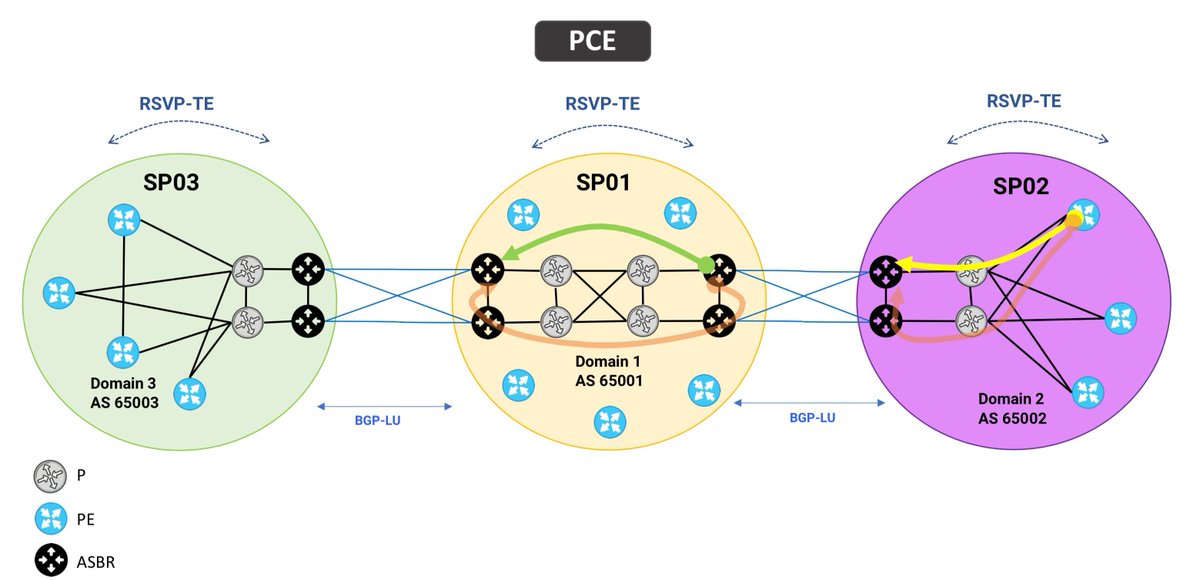
In large-scale service provider networks, optimizing traffic flow is critical to prevent congestion and ensure efficient resource utilization. MPLS Traffic Engineering (MPLS-TE) allows service providers to control and optimize path selection beyond standard IGP-based routing.
Traditional IGPs like OSPF and IS-IS forward traffic based on shortest path metrics, which can lead to inefficient link utilization. MPLS-TE solves this by enabling constraint-based path selection, allowing traffic to be routed over specific links based on bandwidth, delay, or administrative preferences.
RSVP-TE (Resource Reservation Protocol - Traffic Engineering) is used to establish Label Switched Paths (LSPs) with predefined constraints, ensuring optimal performance.
Fast Reroute (FRR) further enhances reliability by precomputing backup paths, reducing failover times to sub-50ms in case of link or node failures.
Auto-bandwidth tuning dynamically adjusts LSPs based on real-time traffic demands, improving network efficiency.
For CCIE SP candidates, mastering MPLS-TE is essential for designing scalable and resilient service provider networks. Orhan Ergun’s CCIE SP Course: https://t.co/mCVuSnnASL provides deep insights into MPLS-TE concepts, hands-on labs, and real-world deployment strategies to help you achieve expert-level proficiency. 🚀 #CCIE #MPLS #TrafficEngineering #Networking
🧠 Master Network Packet Analysis with Wireshark
Unlock the full potential of Wireshark the world’s leading network protocol analyzer and an essential tool for every cybersecurity professional.
📩 Comment “PDF” to get the full guide