This wood page holder is every reader’s dream! Keeps your pages open, fits perfectly in hand. No more hand cramps or flipping pages mid-sentence.
Shop now: https://t.co/gPWy9yyU2w
Consider a simple experiment. Suppose you put four white pebbles into an opaque vase and later add seven black pebbles. Humans learned to represent groups of objects using abstract concepts called natural numbers. So, the four white pebbles can be represented by the number 4, and the seven black pebbles by the number 7.
Humans also discovered that addition can represent the physical act of combining these groups. Therefore, 4 + 7 correctly predicts that there will be 11 pebbles in the vase.
This shows how useful mathematics can be. With natural numbers and addition, we can accurately predict the result of this type of experiment.
However, the same method does not work for every physical situation. For example, if you put four separate drops of water into the vase and then add seven more drops, you will not necessarily have eleven separate drops. The drops can combine to form larger drops.
To make accurate predictions about liquids and gases, humans needed to develop other mathematical and physical concepts, such as mass or weight. They also needed to measure the amount of material rather than simply count individual objects.
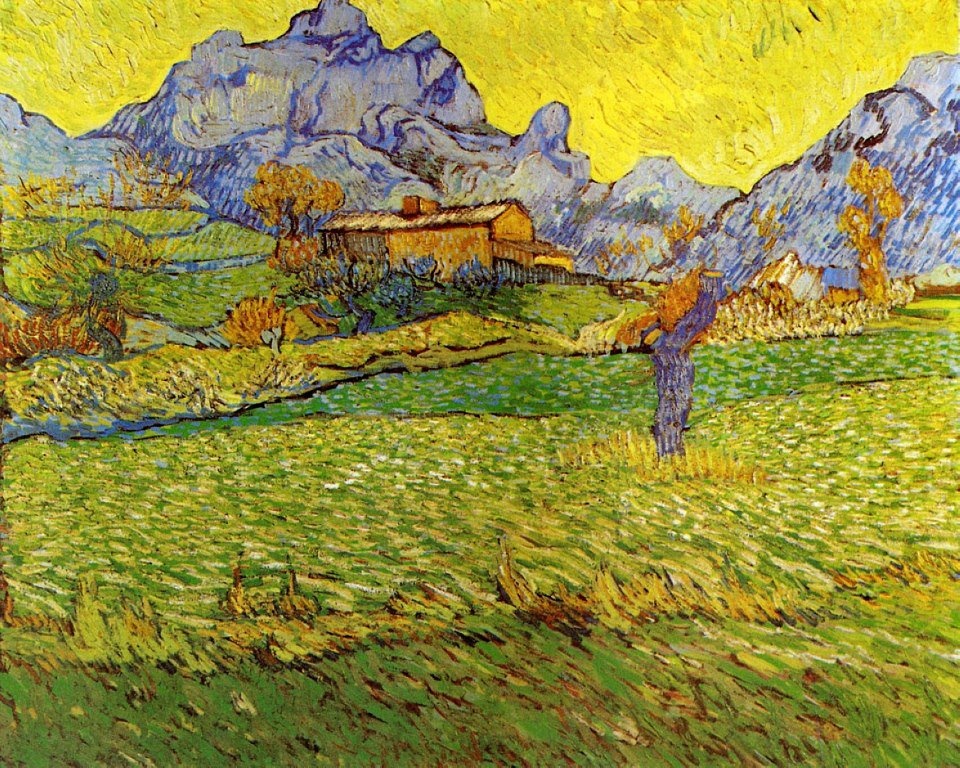
In February 1888, Van Gogh left Paris for Arles.
The southern light, he wrote, was ‘sulphur yellow’ and intensely blue; his colors began to burn, pushing him past Paris’s half-tones. #artbots#vangogh