🍹 #OTD 14 April 2023, ESA's latest interplanetary mission, #ESAJuice, lifted off on Ariane 5 flight #VA260 from @EuropeSpacePort to begin its eight-year journey to Jupiter, where it will study the planet’s three large moons: Ganymede, Callisto and Europa 👇
🔗https://t.co/pNvMirkPzS
DYK? #ESAJuice makes it among the 50 greatest innovations of 2023 by @PopSci
The mission was listed as Grand Award Winner, in the Aerospace category 👉 https://t.co/odVIFUf0x6
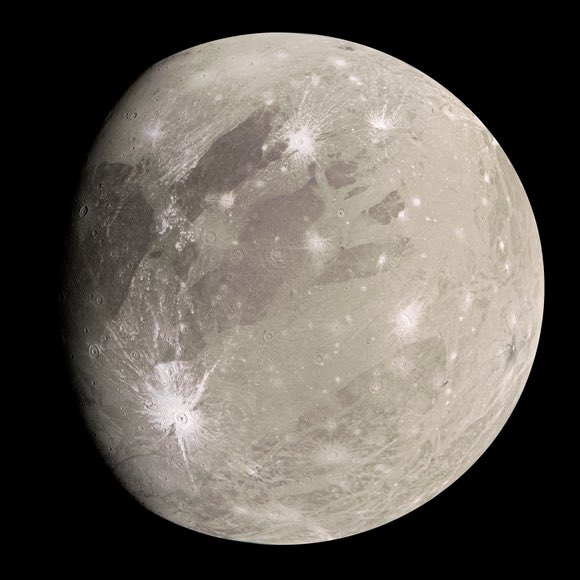
Ganymede is the largest moon of Jupiter discovered by Galileo and easy to watch with an small telescope.
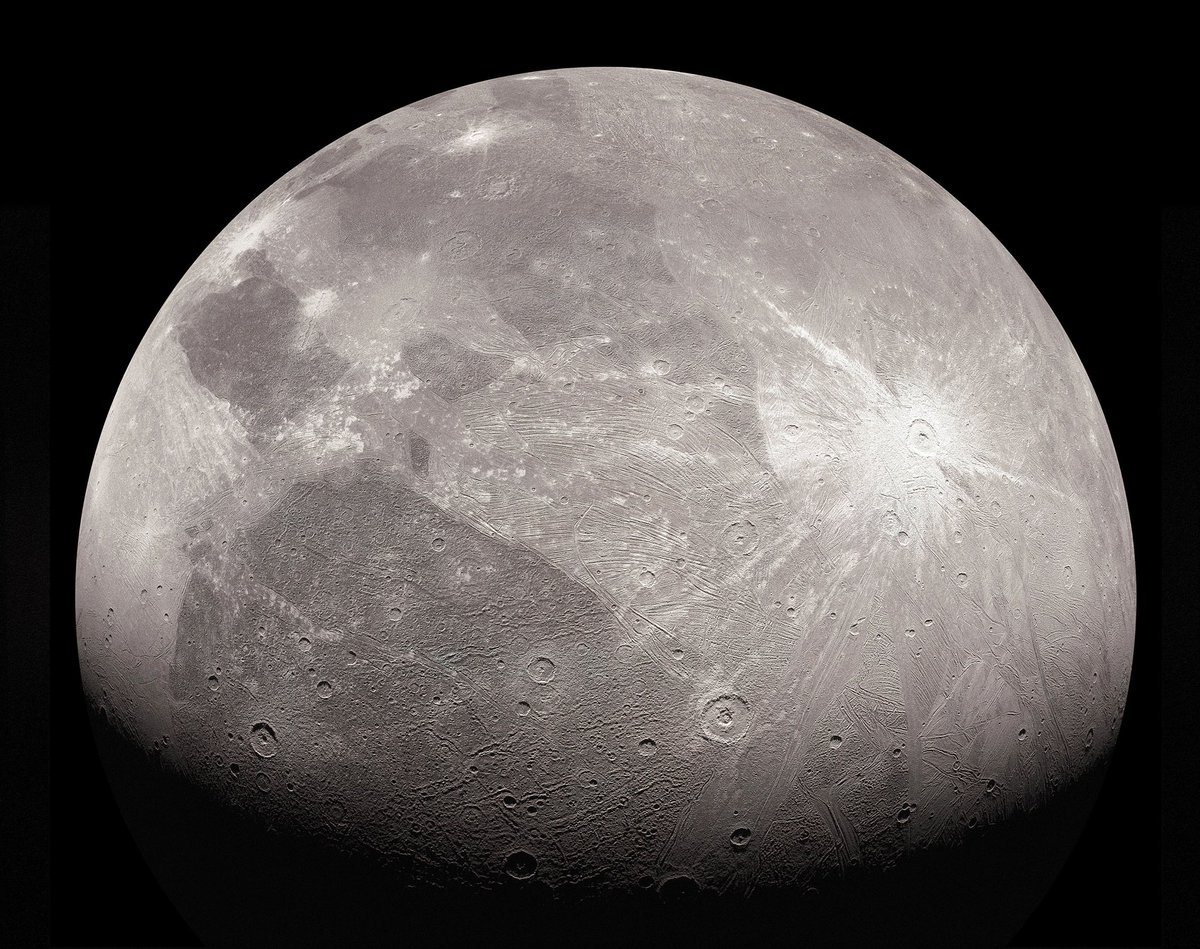
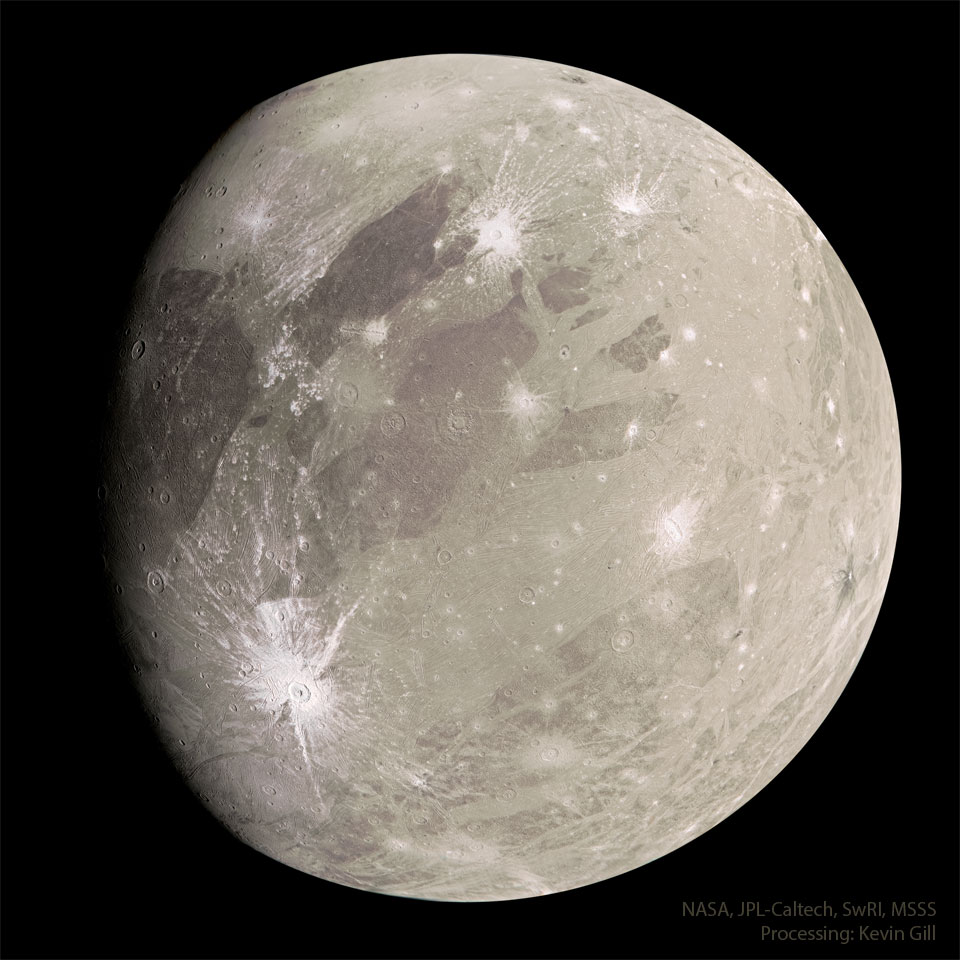
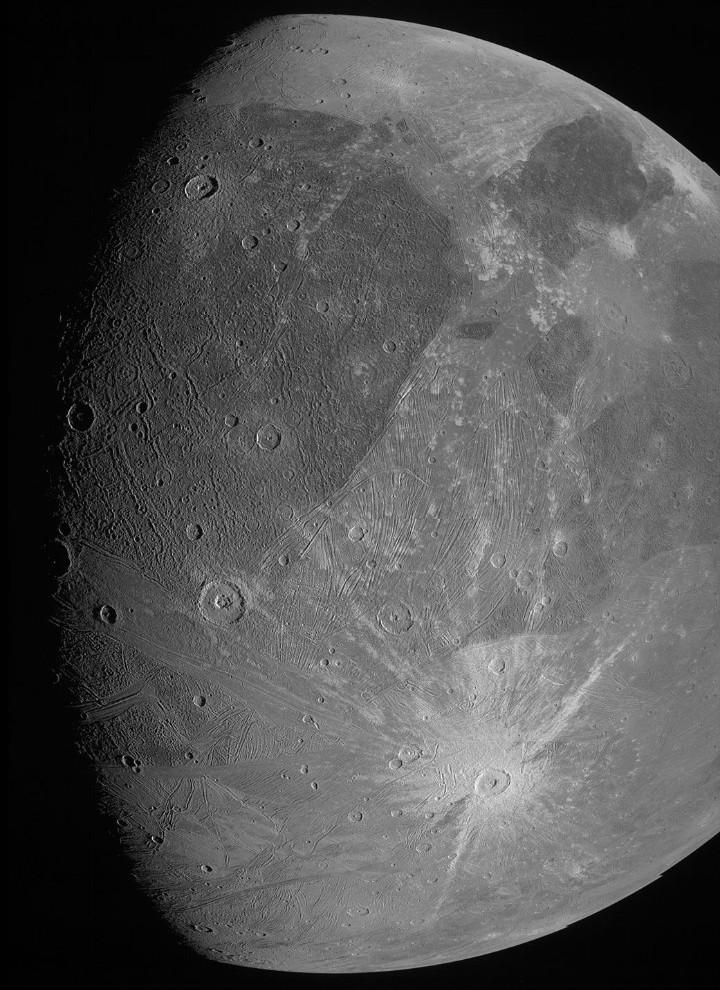
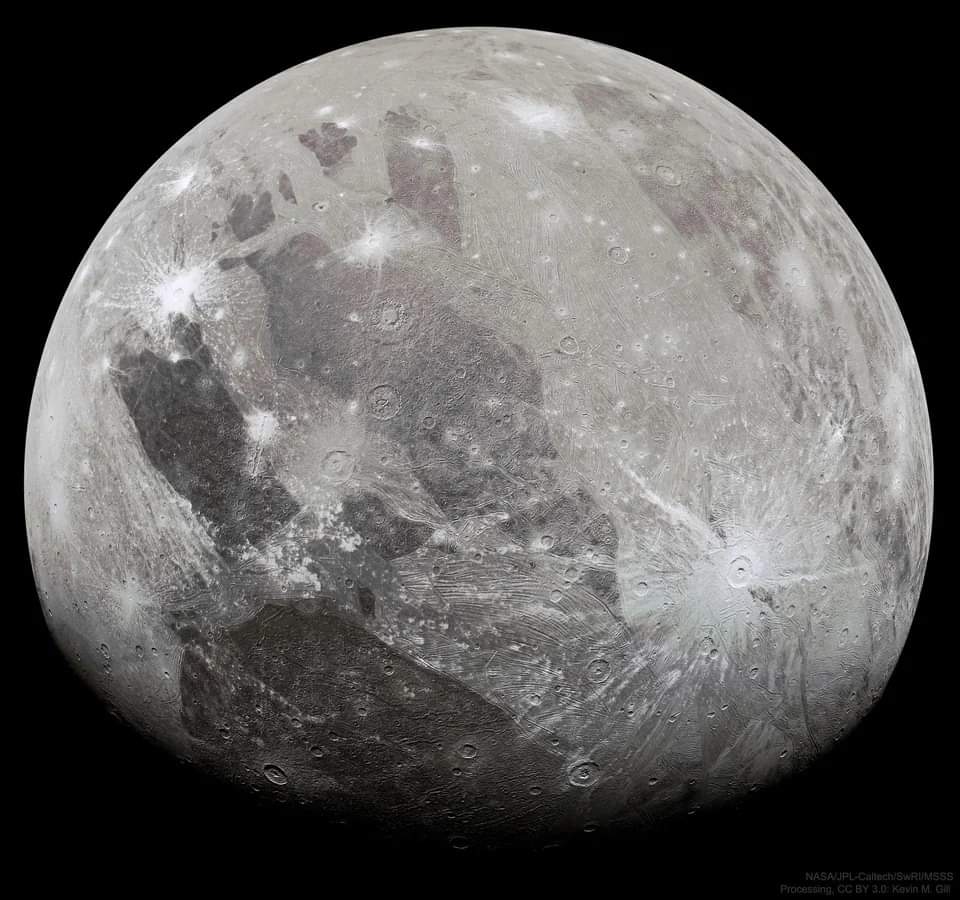
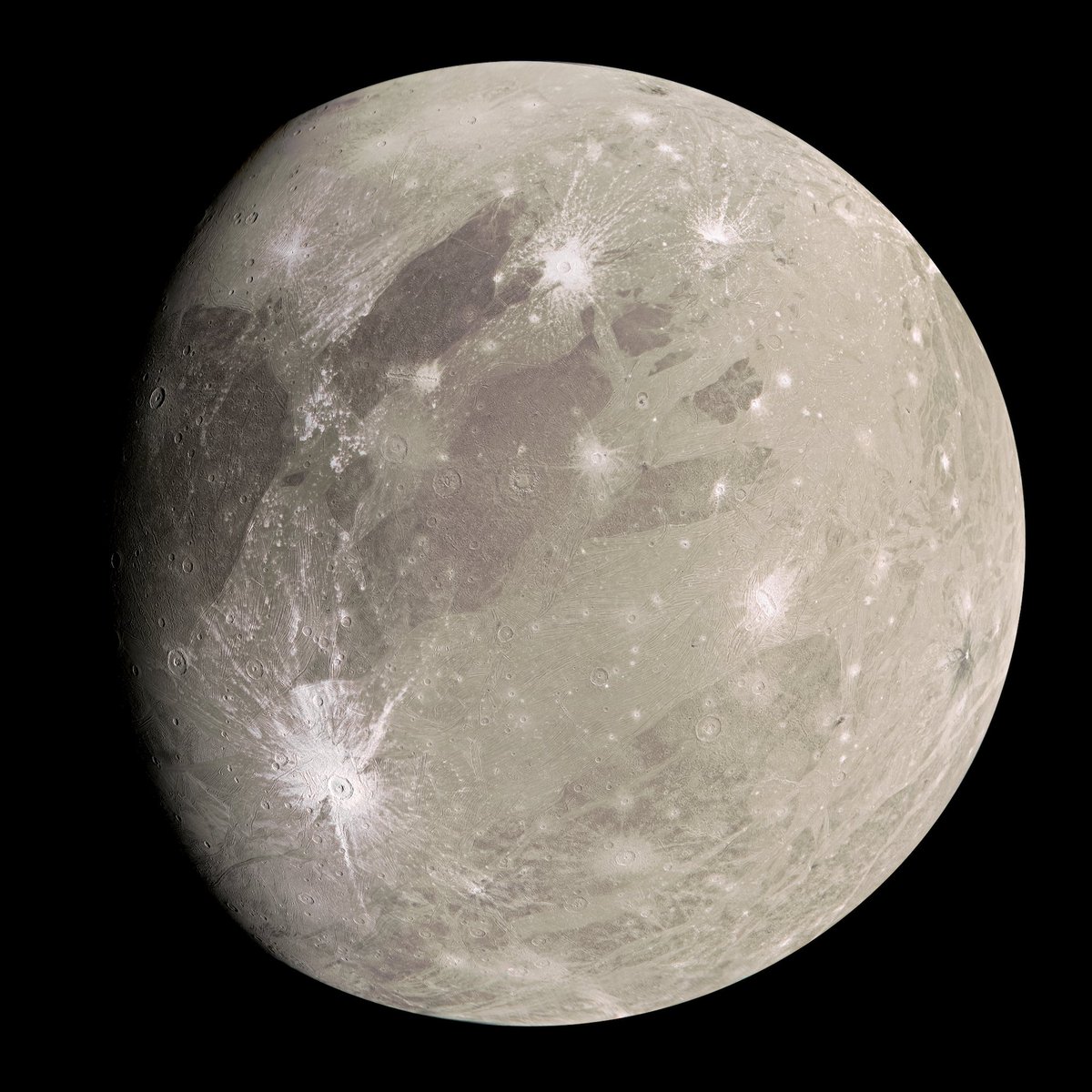
Here, an image of #Ganymede done recently by NASA’s Juno probe currently orbiting #Jupiter.
Image: NASA @NASAJPL@Caltech@SwRI#MSSS
Processing: Thomas Thomopoulos
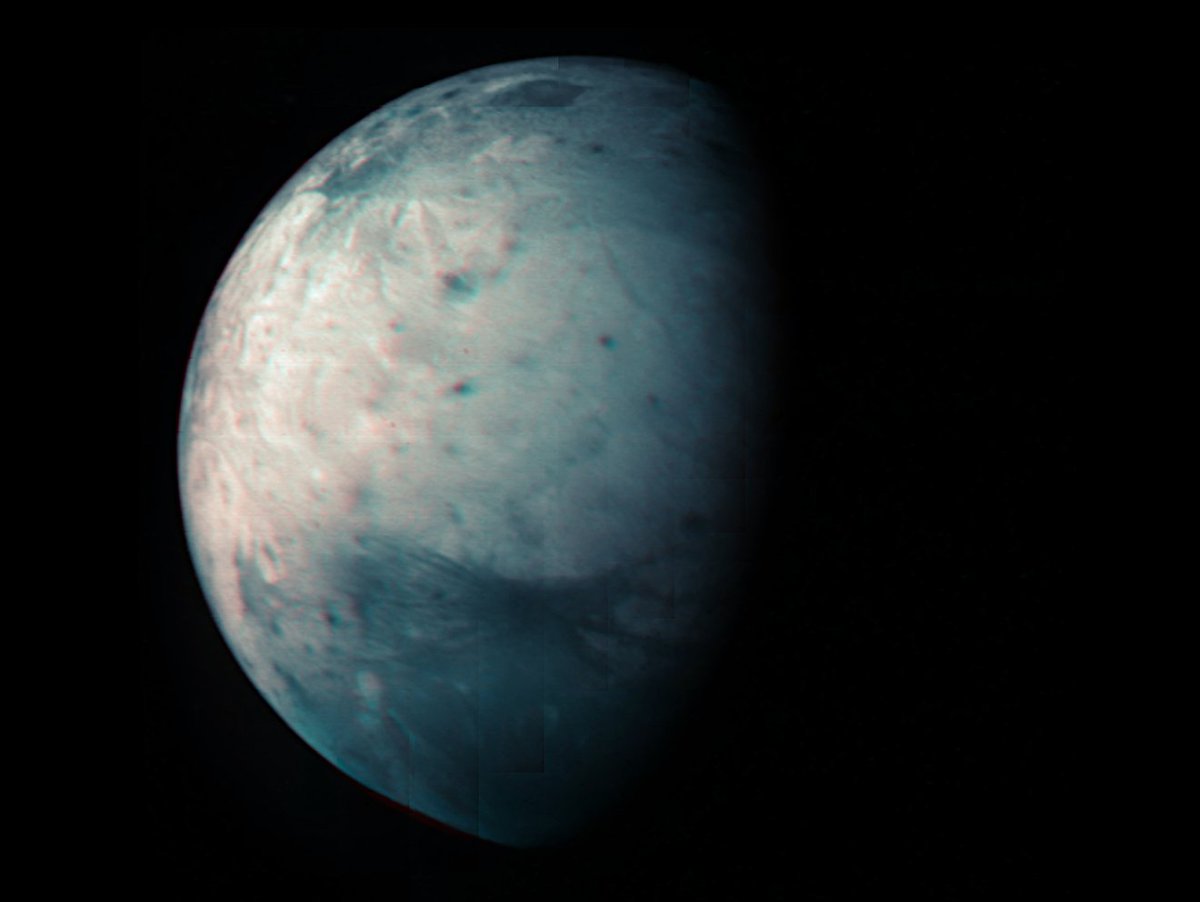
The #JunoMission used its infrared instrument during recent flybys of Jupiter’s mammoth moon, Ganymede, to create this latest map. This new view comes a decade after the Juno spacecraft’s launch.🚀 https://t.co/7FRbbWjpGv
🎉 This week, our @NASASolarSystem Juno mission celebrated 10 years since launch to Jupiter.
🌑 To mark the occasion, the science team released this brand-new, infrared map of the planet's icy moon Ganymede, using data from a recent flyby: https://t.co/KS5l9KS8JN
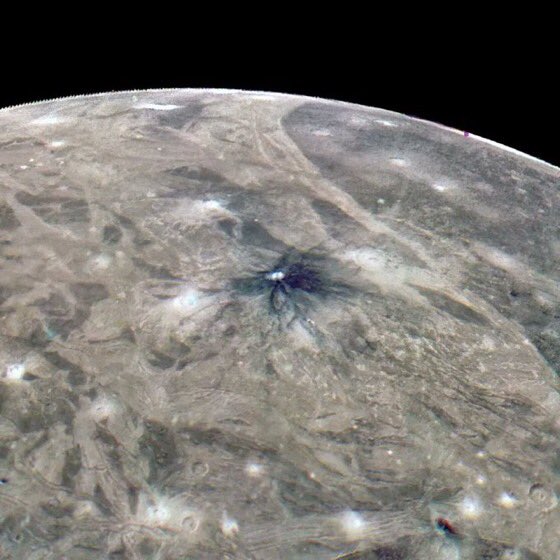
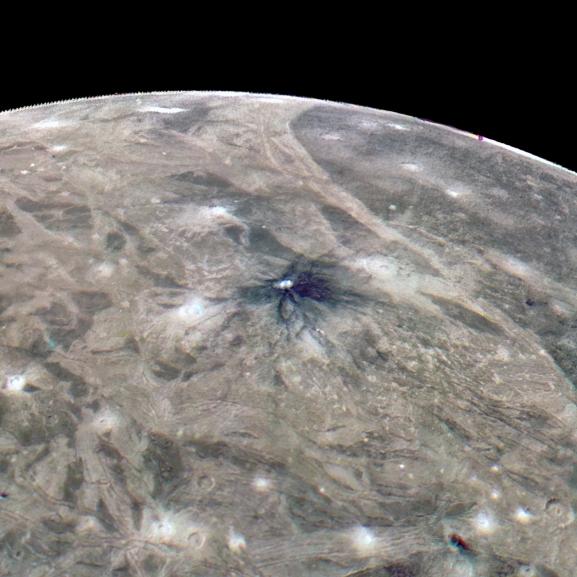
Image of Jupiter's moon Ganymede by NASA's Juno spacecraft during a close pass (1,046 km) in June 2021. See the dark-rayed crater Kittu (15 km diameter) in this image processed by Thomas Thomopoulos. The color is enhanced.
Ganymede, a moon larger than planet Mercury!
I kept my telescope trained on Jupiter for 45 minutes to create this timelapse. Ganymede ducking behind Jupiter during its orbit is nothing new, but is still an incredible event to watch. Unfortunately conditions weren't particularly good, but I still love the aesthetic!
Learn more about Io, Europa, Ganymede, and Callisto the fascinating worlds that have much to teach us about the nature of the Cosmos and the potential for life beyond our planet.
https://t.co/nYMRp4FO4l
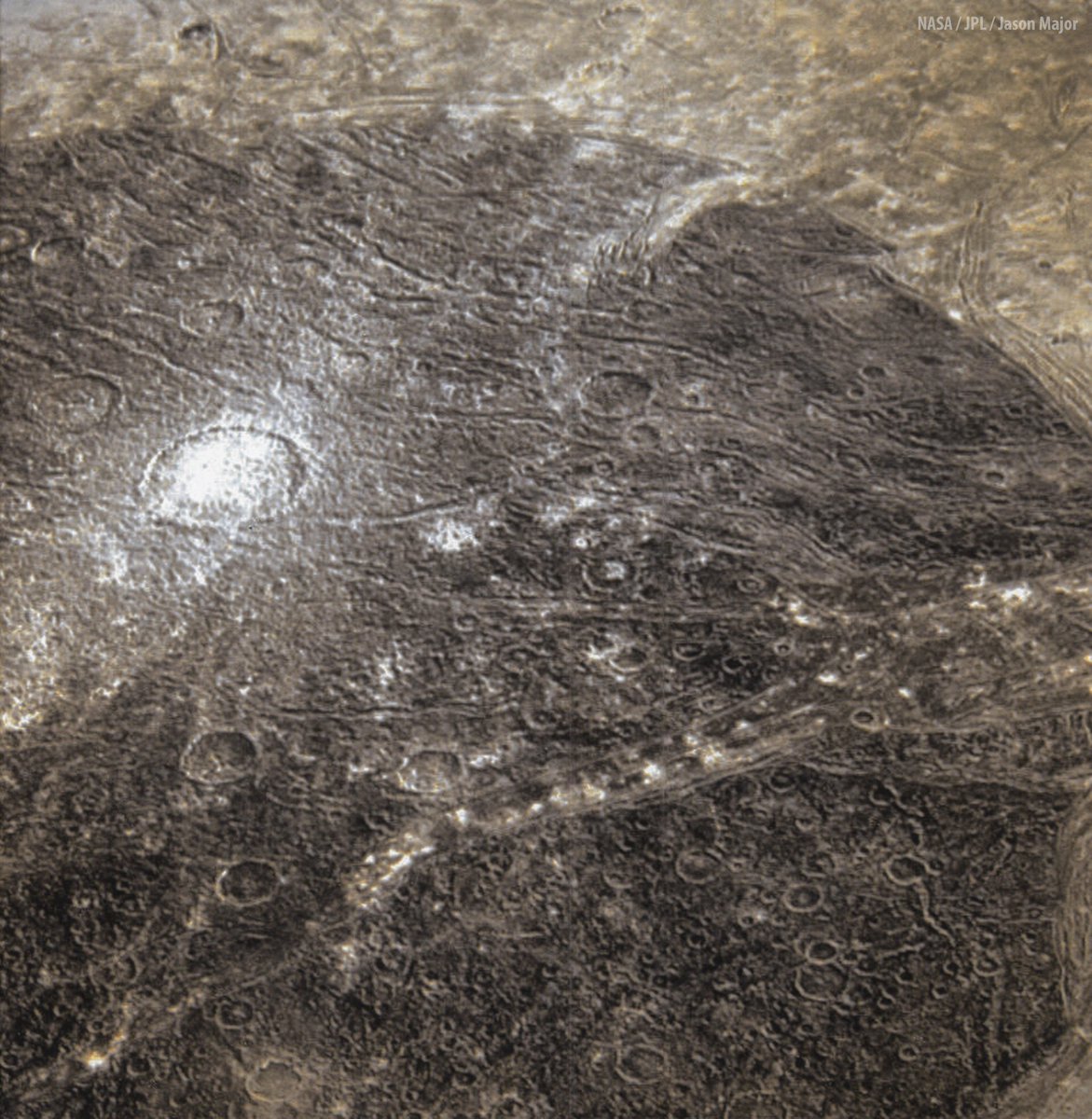
Here's a view of Perrine Regio, an area on Jupiter’s moon Ganymede's north polar region. This is made from Galileo images acquired 23 years ago #OTD on December 27, 2000. The bright spots are areas of reflective ice.
Clearest image ever taken of Ganymede.
A moon of Jupiter and the largest satellite in the solar system. It is larger than both Mercury and Pluto, and has its own magnetic field.
And here's a false colour view, with a comparison map based on Voyager and Galileo spacecraft data at bottom. There are a few spots that don't match perfectly, probably due to either resolution limits or poor map computation, but I think it's good enough for backyard data. 2/2
I finally managed to map Jupiter's largest moon, Ganymede - A project 2 years in the making. This uses data over the last two Jupiter apparitions, all captured from home in the UK using my 16" scope. 1/2
A big discovery on the solar system’s biggest moon! Data collected by our #JunoMission indicates a briny past may be bubbling to the surface on Jupiter’s moon Ganymede. https://t.co/hAHYMxQulg
For the first time, our #JunoMission has detected mineral salts and organic compounds on the surface of Jupiter’s moon Ganymede. The finding suggests an underground ocean brine is reaching the crust of the icy world: https://t.co/lJlZ53iGyg