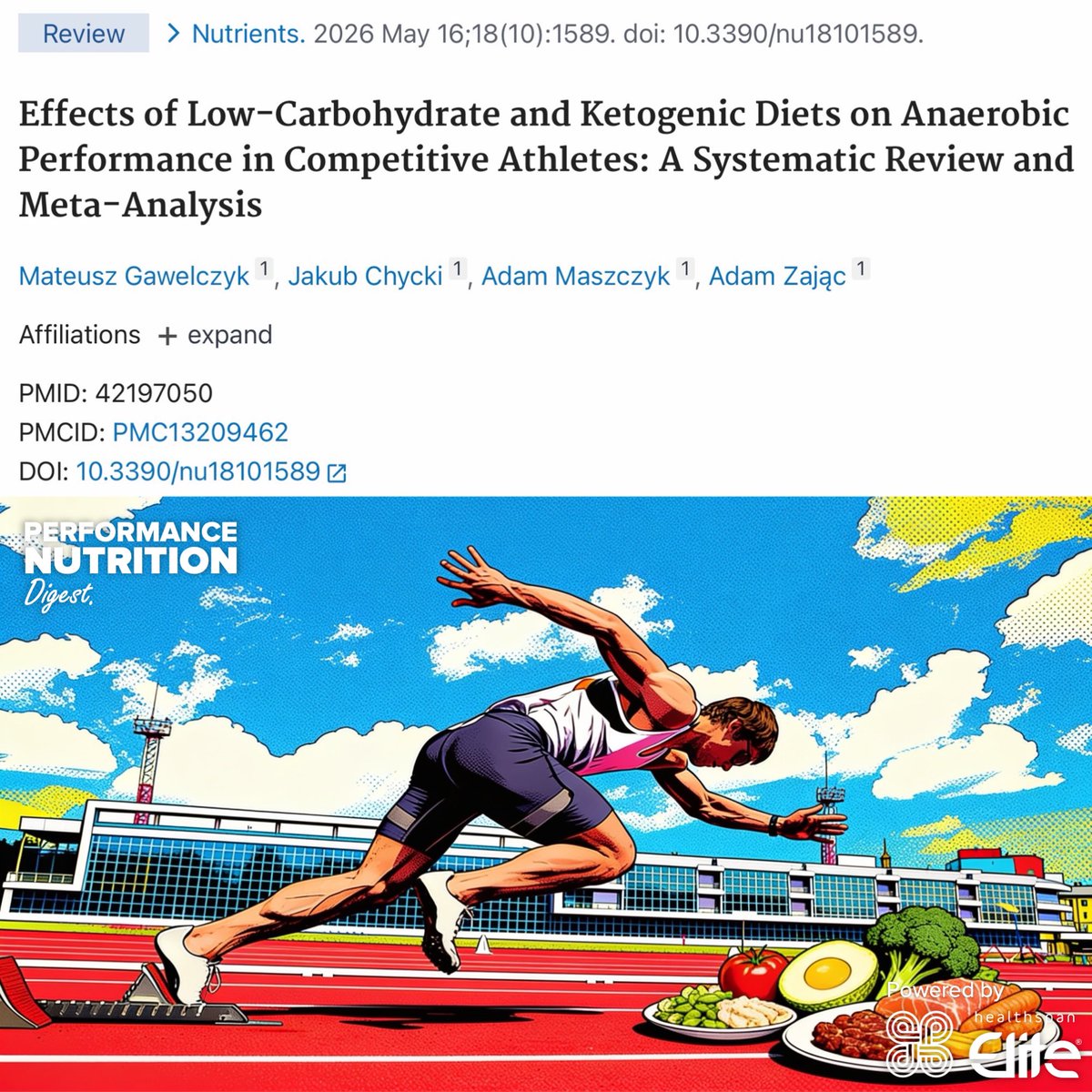
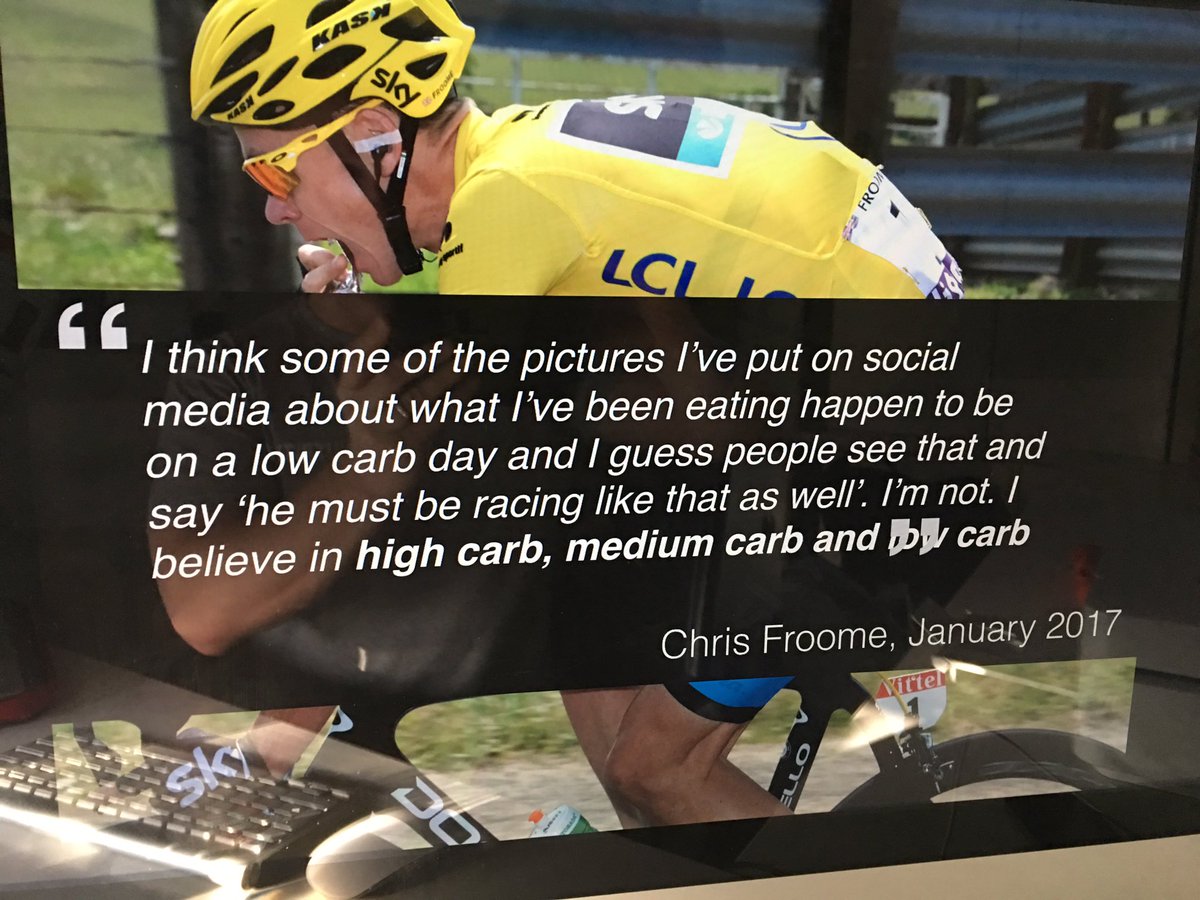
The effects of low carb / ketogenic diets on anaerobic performance in athletes 💥
This new meta-analysis compiled data from 13 studies (273 participants) to establish the effects of…
1️⃣ Low-carb diets (≤130 g/day)
2️⃣ Ketogenic diets (≤50 g/day or ≤10% total energy intake)
…on anaerobic performance (power output, repeat sprint ability) 💪
Here is what they found ⬇️
📊 Low carb and keto diets provided mixed results for peak power during single maximal efforts
🚨 Repeated high-intensity exercise was consistently impaired
(likely reflecting reduced muscle glycogen availability and limited glycolytic ATP production)
Further analysis revealed that…
💥 Anaerobic power output was maintained-to-slightly-improved
👟 Repeated sprint ability was modestly impaired
🩸 Blood lactate concentrations were greatly and consistently reduced
Carbohydrate restriction appears to either maintain or impair anaerobic performance in athletes ‼️
However, there were large discrepancies between studies in intervention lengths, performance measures etc 🤷♂️
So we can’t look too deeply into these findings just yet.
But if maximal power output is important, carbs are probably your best approach ✅
Reference:
https://t.co/2YN7glBGCn
Subscribe to Performance Nutrition Digest FREE to receive your daily study breakdown, straight to your inbox or via the Substack app 📥
https://t.co/kPsQssm5ut
Performance Nutrition Digest is powered by Healthspan Elite⚡️
https://t.co/V0YqjzPGsK
Fresh off the press! Thank you to all co-authors for helping to get this beast of an article to the finish line! International society of sports nutrition position stand: energy drinks and energy shots. #energydrinks#energyshots#caffeine https://t.co/AVy8VUgUcD
Our new paper:
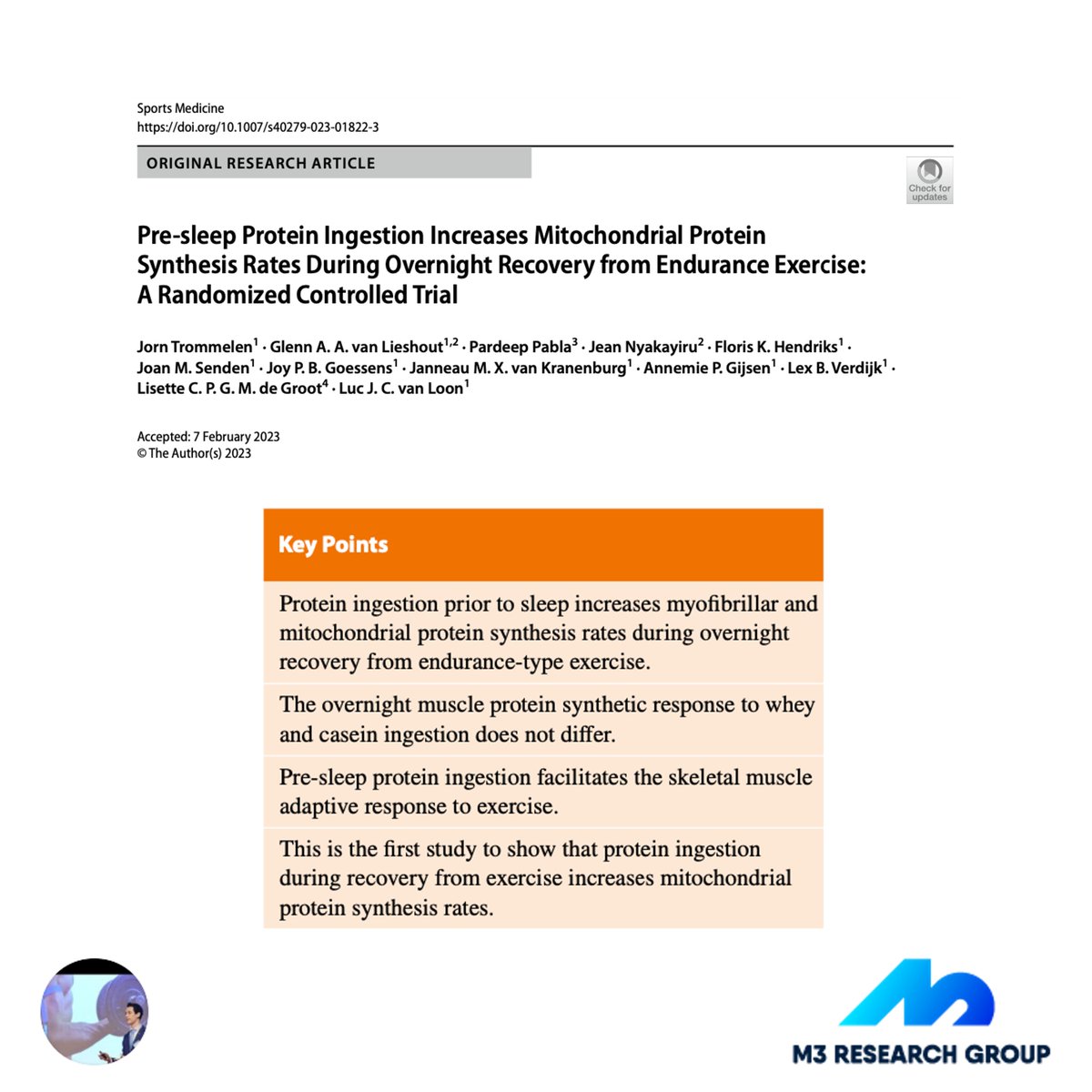
Pre-sleep Protein Ingestion Increases Mitochondrial Protein Synthesis Rates During Overnight Recovery from Endurance Exercise: A Randomized Controlled Trial
Open access link:
https://t.co/IkXcLEztvX
A thread 🧵👇
#protein#casein#whey
Time to re-think muscle cramping.
Marathon runners who suffered exercise-associated muscle cramps exhibited higher concentrations of muscle damage biomarkers (e.g. creatine kinase).
They didn’t display a greater degree of dehydration and electrolyte depletion.
Footballers should consume about 30 g of high GI carbs 5-10 minutes before kick-off. A nutritionist (for the pros) or coach (for amateurs) needs to tell them what to eat or drink to get that amount in easily digestible form. In my book Nutrition for Top Performance in Football
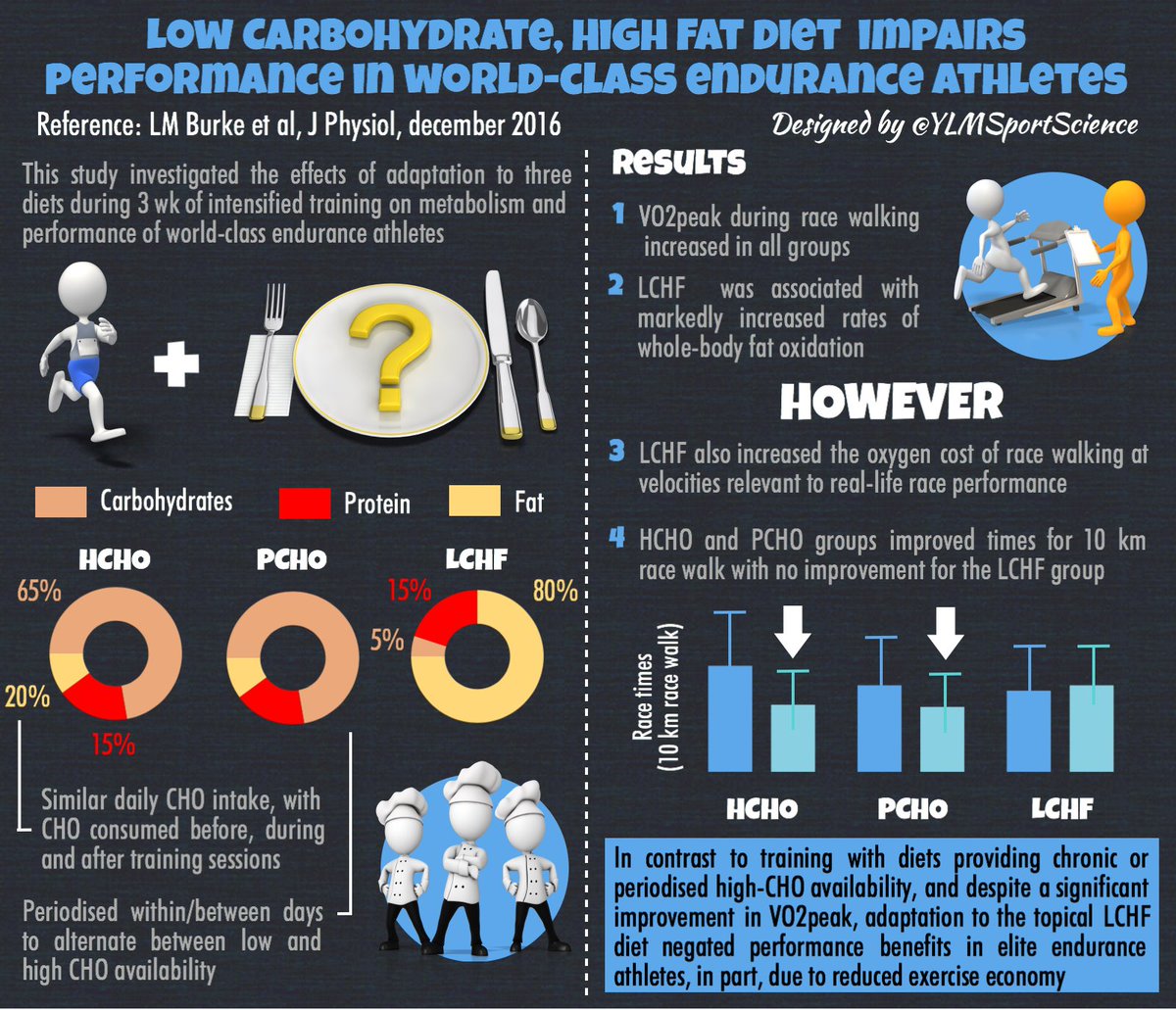
And still so many out there selling the cool-aid of restricting CHO to improve mitochondrial biogenesis. There are so many athletic careers I have seen ruined with concepts like this...
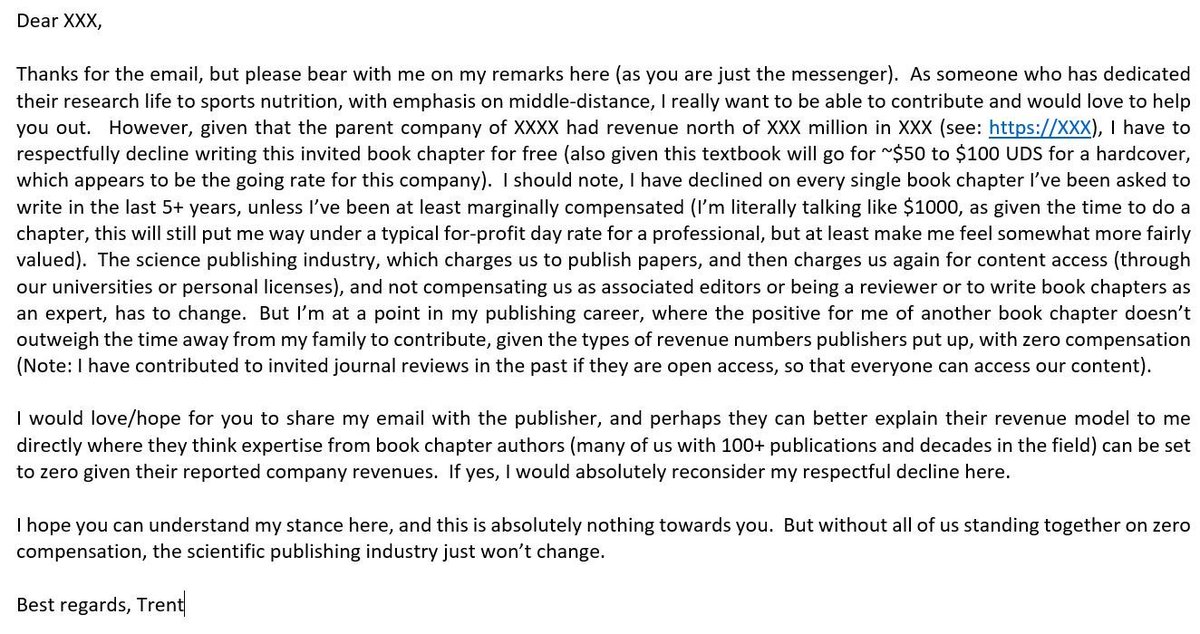
For those that read sport science textbooks please read this (an email I just sent, now blinded) - as most times the content is developed off the backs of experts, who do it for free, and then give up copyright. The scientific publishing industry model has to change.