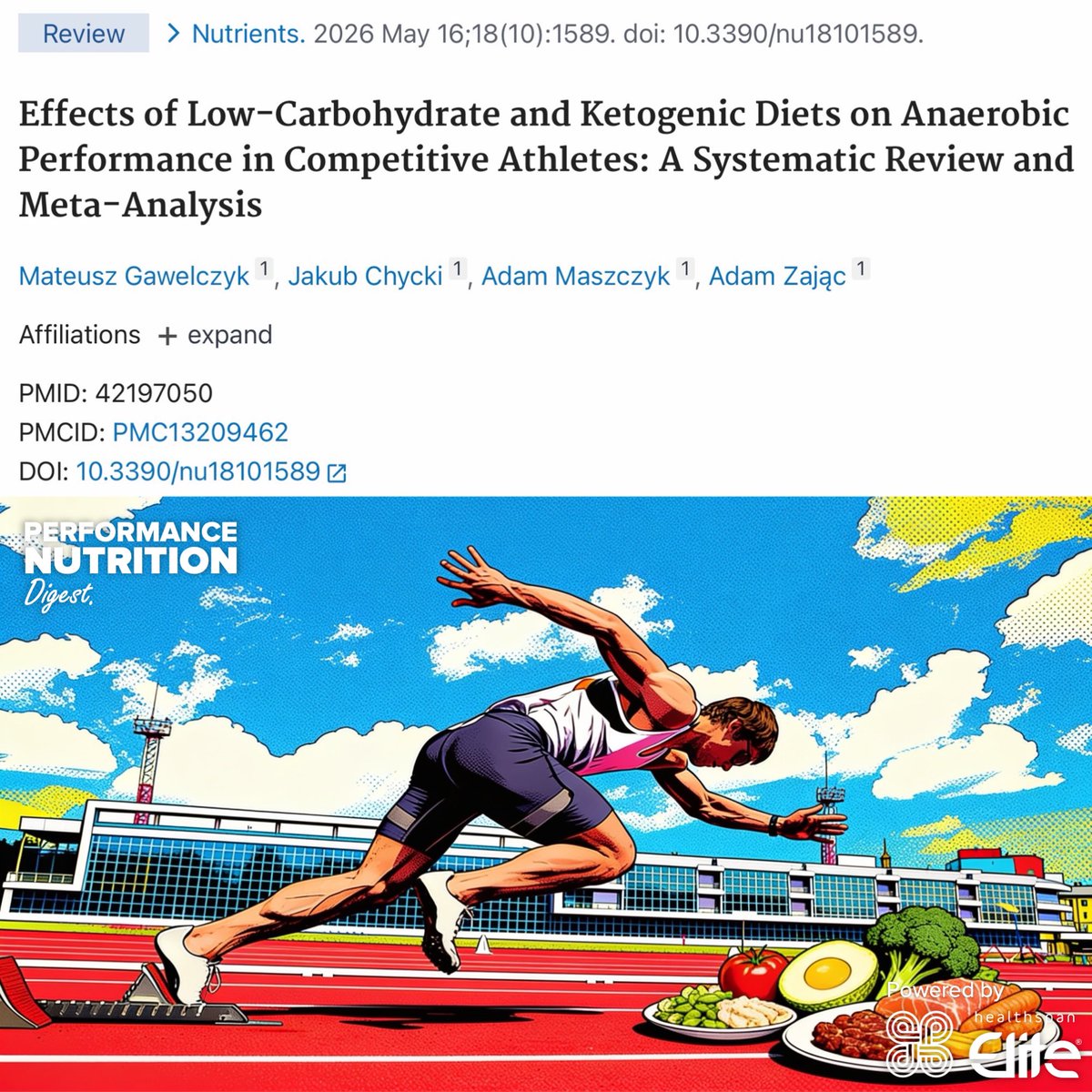
The effects of low carb / ketogenic diets on anaerobic performance in athletes 💥
This new meta-analysis compiled data from 13 studies (273 participants) to establish the effects of…
1️⃣ Low-carb diets (≤130 g/day)
2️⃣ Ketogenic diets (≤50 g/day or ≤10% total energy intake)
…on anaerobic performance (power output, repeat sprint ability) 💪
Here is what they found ⬇️
📊 Low carb and keto diets provided mixed results for peak power during single maximal efforts
🚨 Repeated high-intensity exercise was consistently impaired
(likely reflecting reduced muscle glycogen availability and limited glycolytic ATP production)
Further analysis revealed that…
💥 Anaerobic power output was maintained-to-slightly-improved
👟 Repeated sprint ability was modestly impaired
🩸 Blood lactate concentrations were greatly and consistently reduced
Carbohydrate restriction appears to either maintain or impair anaerobic performance in athletes ‼️
However, there were large discrepancies between studies in intervention lengths, performance measures etc 🤷♂️
So we can’t look too deeply into these findings just yet.
But if maximal power output is important, carbs are probably your best approach ✅
Reference:
https://t.co/2YN7glBGCn
Subscribe to Performance Nutrition Digest FREE to receive your daily study breakdown, straight to your inbox or via the Substack app 📥
https://t.co/kPsQssm5ut
Performance Nutrition Digest is powered by Healthspan Elite⚡️
https://t.co/V0YqjzPGsK
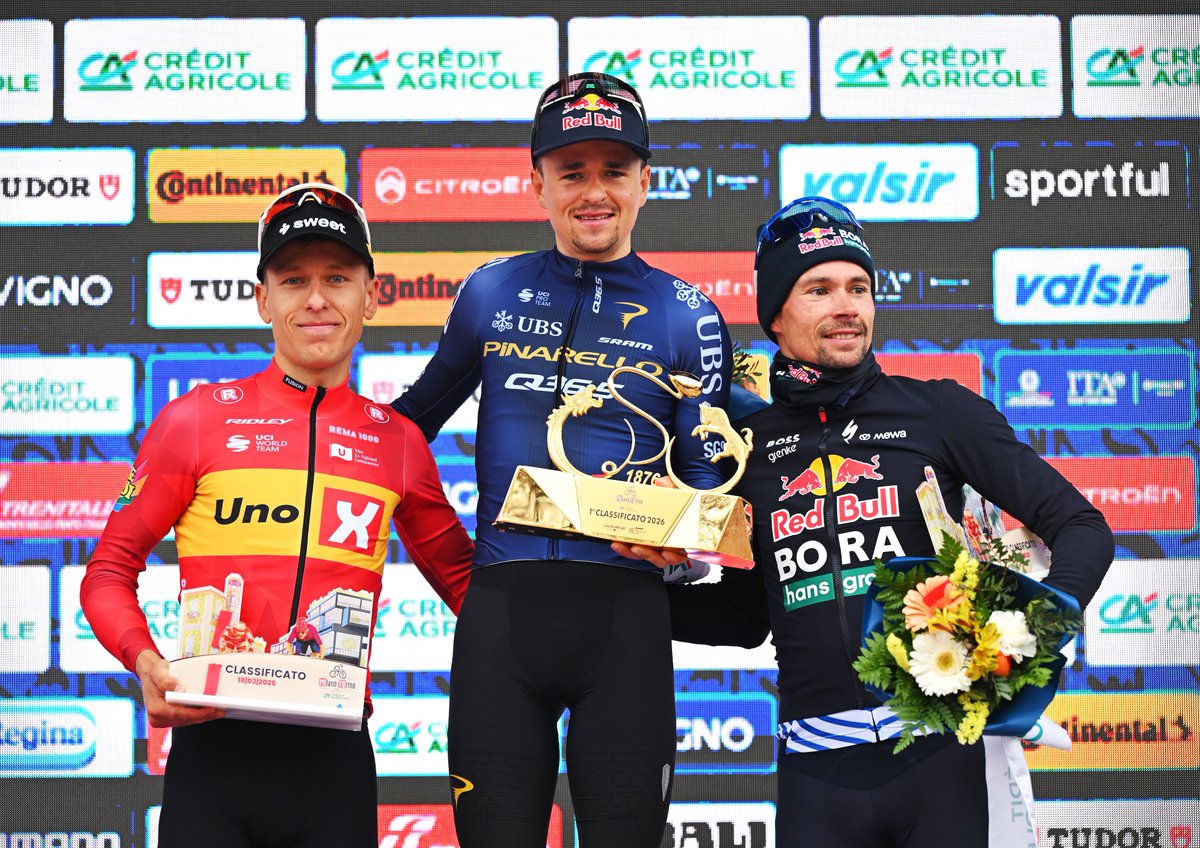
Tom Pidcock takes the win at Milano–Torino !
Dive into the full story behind the performance and the team effort on our website : https://t.co/QkxeIZ8yHj
#RaceSharp
@Haveron_@NDunczyk O tak właśnie to widzę, brawo dla Pana. Jak przy każdym uszczelnieniu systemu największymi zwycięzcami są Ci co nie fakturują nic. Nie krytykuje KSeF, żeby nie było. Pomysł dobry, walczymy z lewymi kosztami, ale zróbmy porządek z szarą strefą, która nic nie odprowadza.
@AgnieszkaSzust3 Super rolka 🔝 przy sportowcach, szczególnie wyczynowych warto wspominać o ryzyku podczas kontroli dopingowej. Colostrum jest umieszczone w grupie D przez AIS jako produkty z wysokim ryzykiem zawartości czynników wzrostowych
Sodium intake for athletes: before, during and after exercise🧂
This new review paper compiled the best scientific evidence to examine common rationales given by coaches, athletes and practitioners for sodium intake 🔍
Here are the key findings ⬇️
PRE-EXERCISE 🧂
💧 Increases ad libitum fluid intake & improves hydration ➡️ supported by evidence; especially useful for athletes who often start training or competition dehydrated
🧠 Multi-day sodium loading is unnecessary ➡️ kidneys regulate sodium balance quickly; acute loading (<4 h) is more effective than chronic intake
🧃 Improves pre-exercise fluid retention ➡️ adding sodium (≥100 mg Na⁺ / 100 mL fluid) helps maintain euhydration / hyperhydration when paired with 5–10 mL·kg⁻¹ fluid 2–4 h before exercise
👅 Palatability limits ➡️ solutions above ~120 mg Na⁺ / 100 mL (as NaCl) may taste unpalatable and reduce voluntary fluid intake
✅ Recommendation ➡️ Use sodium acutely (e.g., 275–420 mg Na⁺ / 100 mL) in the 2–4 h before exercise if euhydration is difficult to achieve
DURING EXERCISE 💦
🧃 No single optimal sodium concentration ➡️ beverage sodium doesn’t significantly affect intestinal fluid or glucose absorption
💧 Supports thirst and fluid intake ➡️ may increase ad libitum fluid intake in long or hot sessions, but excessive sodium doesn’t cause dangerous over-drinking
🦵 Limited link to cramp prevention ➡️ evidence for preventing exercise-associated muscle cramps (EAMC) is weak and inconsistent
⚖️ Helps maintain plasma sodium concentration ➡️ replacing >70% but <100% of both fluid and sodium losses can prevent a fall in [Na⁺]plasma and maintain total body water (TBW)
🚫 No direct performance benefit ➡️ unless improved sodium balance also leads to better hydration; performance effects are secondary to fluid balance
✅ Recommendation ➡️ Replace 70–100% of fluid losses with moderate sodium intake; focus on hydration and palatability (“season to taste”). Sweat testing rarely needed outside ultra-endurance
POST-EXERCISE 🏁
💧 Enhances fluid retention ➡️ when rehydrating with low-energy beverages, sodium improves fluid retention; less relevant if rehydration includes food or nutrient-dense drinks (e.g., milk)
🧠 Full sodium replacement unnecessary ➡️ kidneys conserve sodium post-exercise, restoring balance naturally; complete replacement not required unless rapid recovery (<24 h) is needed
⚡ Aids rehydration rate ➡️ sodium can help speed rehydration if athletes are dehydrated, but its benefit is reduced when consumed alongside meals
🏋️ Sodium restriction may limit body-mass restoration ➡️ sometimes used deliberately in weight-sensitive sports (e.g., cycling stages)
✅ Recommendation ➡️ Include sodium in fluids if rapid rehydration is required; otherwise, rely on regular dietary intake to restore sodium balance
Reference:
https://t.co/Ro3ReSFo2P
Subscribe to Performance Nutrition Digest FREE to receive your daily study breakdown, straight to your inbox or via the Substack app 📥
https://t.co/eiomLjpPt2
Performance Nutrition Digest is powered by Healthspan Elite⚡️
https://t.co/x7WMHaanT4
How much protein do we actually need? 🥩
This new meta-analysis compiled data from 60 studies (963 participants) to establish the differences between two methods of estimating protein requirements 🔍
1️⃣ Nitrogen Balance (NB)
2️⃣ Indicator amino acid oxidation (IAAO)
The NB method estimates protein needs by comparing nitrogen intake from dietary protein with nitrogen losses in urine and other routes 📈📉
The IAAO method estimates protein needs by measuring oxidation of a labeled amino acid, which decreases when dietary protein intake is sufficient 🧬
Here are the key findings ⬇️
🙋♂️ In non-athletes, protein requirements were significantly higher by 36% with IAAO vs NB
(0.88 g/kg/day vs 0.64 g/kg/day)
🏋️ In athletes, protein requirements were significantly higher by 27% with IAAO vs NB
(1.61 g/kg/day vs 1.27 g/kg/day)
In non-athletes, IAAO values remained significantly higher than NB values across age and sex subgroups 📈
The IAAO is a most recent method and regarded as most accurate, and on average suggest a 30% greater protein need vs NB 🔬
The current best evidence suggests that athletes need 1.61 g/kg/day protein ✅
Higher daily needs may be required in specific scenarios (e.g. weight loss, high training volumes)‼️
Thomas Gloag joins Q36.5 Pro Cycling Team!
The 24-year-old Brit signs a two-year deal through 2027. With GC potential and a hunger to grow, Thomas is ready for the next step in his career.
https://t.co/NRc3COeLAW
We are so proud of everyone who made this possible: Tom, Marcel, Fabio, David G, David DLC, Xabier Mikel, Nick and Damo, all our staff and all our partners.
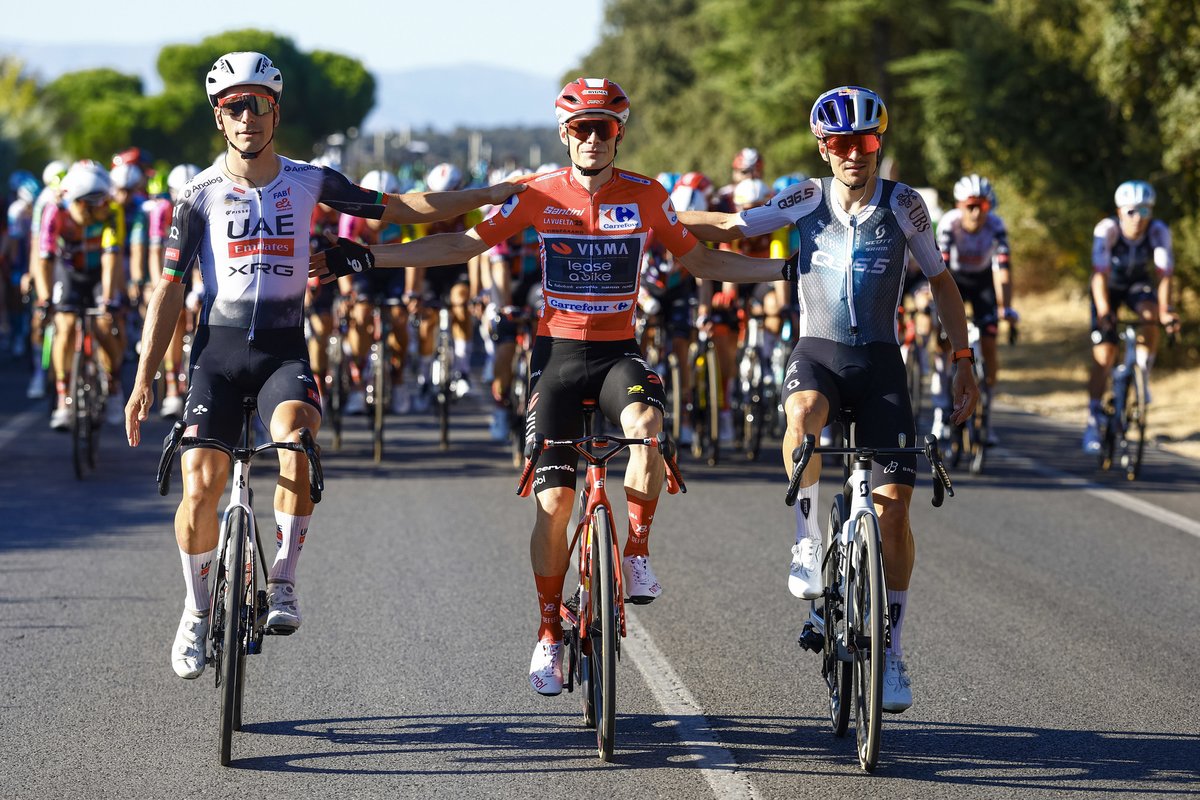
It's been an amazing three weeks of true grit and panache with a Grand Tour podium as a result.
Hasta luego!





![tecoughlin's tweet photo. Sodium intake for athletes: before, during and after exercise🧂
This new review paper compiled the best scientific evidence to examine common rationales given by coaches, athletes and practitioners for sodium intake 🔍
Here are the key findings ⬇️
PRE-EXERCISE 🧂
💧 Increases ad libitum fluid intake & improves hydration ➡️ supported by evidence; especially useful for athletes who often start training or competition dehydrated
🧠 Multi-day sodium loading is unnecessary ➡️ kidneys regulate sodium balance quickly; acute loading (<4 h) is more effective than chronic intake
🧃 Improves pre-exercise fluid retention ➡️ adding sodium (≥100 mg Na⁺ / 100 mL fluid) helps maintain euhydration / hyperhydration when paired with 5–10 mL·kg⁻¹ fluid 2–4 h before exercise
👅 Palatability limits ➡️ solutions above ~120 mg Na⁺ / 100 mL (as NaCl) may taste unpalatable and reduce voluntary fluid intake
✅ Recommendation ➡️ Use sodium acutely (e.g., 275–420 mg Na⁺ / 100 mL) in the 2–4 h before exercise if euhydration is difficult to achieve
DURING EXERCISE 💦
🧃 No single optimal sodium concentration ➡️ beverage sodium doesn’t significantly affect intestinal fluid or glucose absorption
💧 Supports thirst and fluid intake ➡️ may increase ad libitum fluid intake in long or hot sessions, but excessive sodium doesn’t cause dangerous over-drinking
🦵 Limited link to cramp prevention ➡️ evidence for preventing exercise-associated muscle cramps (EAMC) is weak and inconsistent
⚖️ Helps maintain plasma sodium concentration ➡️ replacing >70% but <100% of both fluid and sodium losses can prevent a fall in [Na⁺]plasma and maintain total body water (TBW)
🚫 No direct performance benefit ➡️ unless improved sodium balance also leads to better hydration; performance effects are secondary to fluid balance
✅ Recommendation ➡️ Replace 70–100% of fluid losses with moderate sodium intake; focus on hydration and palatability (“season to taste”). Sweat testing rarely needed outside ultra-endurance
POST-EXERCISE 🏁
💧 Enhances fluid retention ➡️ when rehydrating with low-energy beverages, sodium improves fluid retention; less relevant if rehydration includes food or nutrient-dense drinks (e.g., milk)
🧠 Full sodium replacement unnecessary ➡️ kidneys conserve sodium post-exercise, restoring balance naturally; complete replacement not required unless rapid recovery (<24 h) is needed
⚡ Aids rehydration rate ➡️ sodium can help speed rehydration if athletes are dehydrated, but its benefit is reduced when consumed alongside meals
🏋️ Sodium restriction may limit body-mass restoration ➡️ sometimes used deliberately in weight-sensitive sports (e.g., cycling stages)
✅ Recommendation ➡️ Include sodium in fluids if rapid rehydration is required; otherwise, rely on regular dietary intake to restore sodium balance
Reference:
https://t.co/Ro3ReSFo2P
Subscribe to Performance Nutrition Digest FREE to receive your daily study breakdown, straight to your inbox or via the Substack app 📥
https://t.co/eiomLjpPt2
Performance Nutrition Digest is powered by Healthspan Elite⚡️
https://t.co/x7WMHaanT4](https://pbs.twimg.com/media/G3Nu5RsXIAA0WGi.jpg)