Available now: NVIDIA Nemotron 3.5 Bolt E4B 4GB ⚡️
Our newest small open model is built for local assistants, interactive characters and robots that can carry on a conversation and use tools to get things done.
Watch Reachy Mini chat and move, with Bolt handling conversation and NVIDIA Cosmos handling vision. Both models run locally on Jetson Orin Nano 8GB.
Learn more: https://t.co/B8ODaWMn0O
Kling 4.0 is now publicly available on fal, with API access open to all customers.
The latest model from @Kling_ai brings:
• Up to 30 seconds of native video generation with audio
• Up to 15 image, video, and element references
• Precise control with up to 10 keyframes
• Improved motion, character consistency, and cinematic storytelling
Start building with Kling 4.0 on fal today.
As promised, FastVideo open-sources @MiniMax_AI FastH3 Omni, training code included! 🚀
- Real-time gen @ 12x faster on NVIDIA Blackwell
- NVFP4/FP8 for Spark + RTX!
- ComfyUI day-0
Collab with @NVIDIAAI , Nuva Lab @nuvalab and Reactor @reactorworld
Open source must win! ♥️
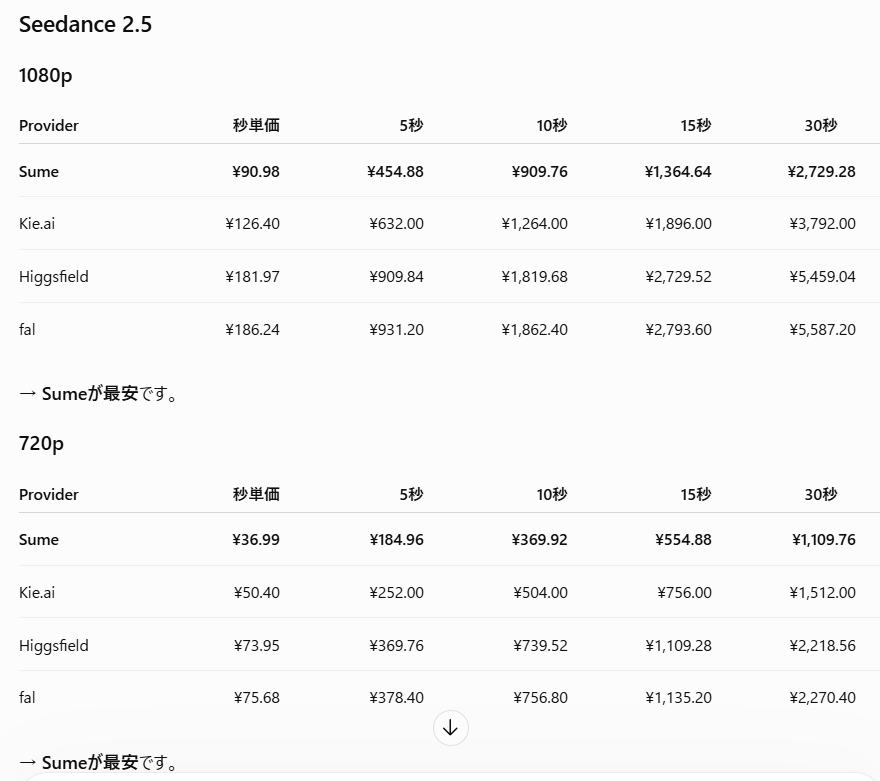
Plans on the pricing of Sume API:
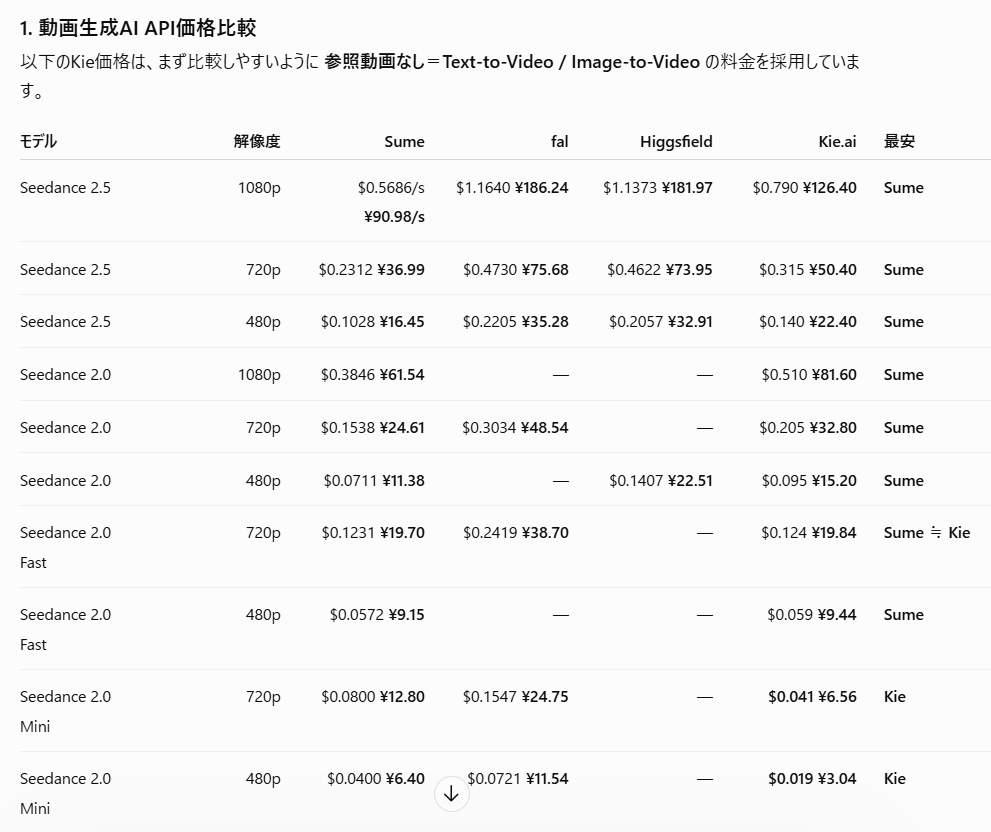
1. We're keeping 0% markup.
We've checked our prices against the foundation model providers more than 20 times. If you find any model where our price is different from what the foundation model company charges, tell me and we'll fix it.
2. "Is this business model actually sustainable?"
Yes. Even at 0% markup we're not losing money, so keeping it is not a problem. Because of the competition, video model prices will converge to 0% markup anyway. We're just doing it first.
Our plan is to bring in users by providing models, and later offer a separate SaaS product subscription that covers marketing workflows. So markup on video models stays at 0%.
3. "Kie AI is cheaper on some models?"
If you look at Kie AI, they act like they're giving big discounts on cheap models, but they put a pretty big markup on frontier models like Seedance. My guess is they heavily discount some low-usage models to look cheap, bring users in with that branding, then make their net profit from the markup on Seedance and others. We hate that kind of trick and care about transparency, so it's 0% markup on everything. No tricks.
As you know, other providers play games. The "most accessible" pricing only gets you that price if you subscribe annually to credits that expire every month. And Higgsfield looks cheap with their discount events, but when you buy top-up credits, they take a huge markup.
We learned trust is the most important thing in business. As an early startup, we're promising 0% markup to earn that trust. In return, just recommend us to your friends!
MiniMax M3.1 Flash weights are now public. 428B parameters total, 23B activated per token.
Agentic performance: A generational leap in agentic tasks, coding, and cybersecurity — 76.2 on BankerToolBench, 73.7% on DeepSWE v1.1, 61.7 on OSWorld V2, 29.6 on Agents' Last Exam, and 82.2 on CyberGym.
Efficient by design: MiniMax Sparse Attention and DSpark speculative decoding improve inference efficiency.
Hugging Face:
https://t.co/JDYA1zZh54
ModelScope:
https://t.co/DQcmOjTwhO
API: https://t.co/fHRdSV7BwZ
M Plan: https://t.co/LYnYZcsesu
MCode for desktop: https://t.co/SGmLTI3fFU
Starting next week, sessions across Claude web, desktop, and mobile apps will run in auto mode by default on Pro, Max, and Team plans.
Rather than asking you to approve each step, an automated check blocks risky actions. Switch back to manual anytime.
ByteDance Seedream 5.5 coming soon with big improvement.
100 Layer Scene Decomposition (Up from 10+ in 5.0 Pro): Splits dense posters, presentation slides, and motion templates into up to 100 individual raster layers with automatic occlusion inpainting behind extracted foreground objects.
80+ Rounds of Drift Resistant Local Editing: Locks unedited pixels (product geometry, facial identity, brand labels) across 80+ sequential single-variable editing passes (background swap -> relighting -> material change -> text addition) to minimize VAE re encoding degradation.
Native 4K Output at 16:9 (Up from 2K Cap in 5.0 Pro): Generates native 3840x2160 widescreen frames, eliminating the 2K (~2.36MP) resolution bottleneck on 5.0 Pro for widescreen banners and multi panel storyboard grids.
Native 4 Channel RGBA Generation (With Partial Alpha): Outputs true transparent PNG assets directly from the initial prompt, supporting semi transparent alpha values for glass refraction, soft contact shadows, sheer fabric, and fine hair strands without post generation background removal.
Optical Font & Style Recognition for Text Re-Rendering: Reads existing font families, weights, colors, and layout hierarchy inside an image so you can translate or swap campaign copy (across English, Chinese, Japanese, and Thai) and re render matching typography in place.
Sub Headline & Micro Copy Multilingual Fidelity: Sharpens stroke accuracy on dense, small-scale text specifically pricing, units, dates, bottle volume markings, and promotional fine print where 5.0 Pro was limited to larger poster headlines.
Relighting Consistent Material & Portrait Shaders: Upgrades surface physics for ceramic micro texture, brushed metal anisotropy, glass refraction, and skin pores so that shifting lighting conditions (such as daylight to nighttime) updates reflections and contact shadows without smoothing skin texture or warping product labels.
Role Assigned Multi Reference & Negative-Space Planning: Formalizes reference routing by assigning distinct jobs to each input image (Reference A = subject identity, Reference B = color palette, Reference C = pose, Reference D = layout) while automatically reserving clean negative space for headlines and CTAs.
Add near real-time decisions to your workflow with the Decisions API, now generally available.
Build faster, more cost-efficient apps and agents that can classify text and images, evaluate inputs, and determine what happens next without generating a full model response.