Electron has been selected by @nasa for three launches in 2027 to deploy its PolSIR and TSIS-2 Sun and Earth sciences missions.
We've been delivering reliability, precise orbital accuracy, and on-demand launch for NASA missions for almost a decade - and we're ready to deliver that once again for PolSIR and TSIS-2 from Launch Complex 1 early next year.
Our thanks to @emilychangtv, @lauren_jellis, and the @bbgoriginals team for taking The Circuit inside CRISPR pioneer and Nobel laureate Jennifer Doudna's Innovative Genomics Institute and the work that's turning fundamental CRISPR discoveries into real medicine.
Some key takeaways:
The patients are the point. Victoria Gray was the first person treated for sickle cell disease with CRISPR in the U.S. And Baby KJ, born with a severe metabolic disorder, became the first patient ever to receive a fully personalized CRISPR therapy. The effort to scale these approaches and treat more patients is well underway.
On AI: Doudna expects it to help, but only once it's trained on far better biological data. For now, "innovation is still really in the domain of human beings right now." Biology is too complex to simulate our way past.
On the IGI's model and impact: In just 10 years, it has spun out 31 companies worth around $9 billion, with more than 2,500 jobs created.
On the case for sustained funding: Doudna points out that every dollar the NIH invests in research returns about $2.50 to the economy. Pull back, she warns, and others step in and the U.S. cedes a clear leadership position it's had since WW2.
On germline editing and designer babies: Doudna is skeptical that selecting for traits like intelligence or height is anywhere close, since thousands of interacting genes are involved. She separates editing to prevent serious disease from editing to enhance, and notes the governance questions (who gets access, who pays, who regulates) still aren't settled.
So, is it paradise ahead or Gattaca? Watch for her answer. She's also got a pick for who could play her in a movie someday 😉
https://t.co/2ZzrsjPuNO
We’re going to start hearing about these patient stories WAY WAY more often. Gene editing is delivering real cures, patient by patient.
#crispr#casgevy $crsp
The Midjourney scanner is revolutionary. There’s a bullish case that exceeds the most optimistic takes.
I was at the unveiling and used the scanner myself. I personally want to experiment with a weekly whole body Midjourney scan to add to my 1.5 billion data points and let my AI and doctors start connecting the dots.
Most of the early commentary has focused on the wrong questions: “is it as good as MRI?” and “what about false positives?” These are legitimate concerns, but they miss the bigger shift.
The more important question is: what does fast, low cost, safe whole body imaging unlock?
Let’s start with measurement.
A speedometer tells you how fast you are going. A fuel/battery gauge tells you when to stop. A thermostat tells you what to wear. The stock price tells you how much money you’ve made or lost. We measure what we care about.
Except, oddly, for our bodies, which are among the least measured things in our lives. Most people have more data on their favorite sports team, bank account, and social media performance than their body. The future will think we were crazy for this.
The first law of medicine is to do no harm. Our current system has harm baked into it.
+ an undiagnosed condition progressing silently is harm
+ a doctor who can’t easily get a patient screened preventively is harm
+ having no baseline to compare against when something shows up is harm
Our preventive net is narrow and inconsistent. Late stage diagnoses that could have been caught earlier remain common. Midjourney’s technology won’t eliminate that overnight, but it points toward a future where routine wholebody baselines become normal rather than exceptional.
Midjourney can help flip harm-by-default into a new expectation for our health infrastructure: almost no one will ever again be blindsided by a late-stage, life-threatening diagnosis that could have been caught earlier reasonably and cost-effectively.
Some examples of what earlier structural visibility enables:
+ breast cancer caught while localized has a ~99% five year survival rate. Once it has spread distantly, that drops to around 32%.
+ an abdominal aortic aneurysm kills more than 8 in 10 people when it ruptures. A single ultrasound finds the aorta in 99 percent of people, and screening cuts aneurysm deaths by a third to a half.
Midjourney’s technology will not do it all on its own. Its full angle, water immersion approach works around bone rather than seeing through it, and routes bowel gas to image the full abdominal cross section. Yet two real limits remain: air filled lungs stay a blind spot even here, and the brain is out of reach behind the skull, beyond the torso and legs this scanner covers.
That is fine, and they may improve these areas over time. Midjourney doesn’t need to do it all in order for it to be one of the biggest things to hit medicine in a long time.
Let’s look at where specifically Midjourney may be useful to each of us. We’ll start with where we get data today:
1) Blood draws tell us what is happening chemically.
2) Wearables tell us how the body is functioning.
3) Imaging tells us what is happening structurally.
The third layer, soft tissue, is the one we have never been able to access easily. MRI is great, but it is expensive, intimidating, and slow.
Midjourney's technology excels with soft tissue. Here are three places it could be game changing. There are many more.
1. Metabolic health - fatty liver is one of the earliest structural signs of metabolic dysfunction. It’s strongly linked to insulin resistance, type 2 diabetes, and cardiovascular risk. Being able to track visceral fat, muscle fat infiltration, and liver fat over time could give a much clearer picture than blood markers alone. Over 88% of Americans are metabolically unhealthy.
2. Endocrine tissue - the same metabolic patterns often cluster with thyroid issues, PCOS, and hypogonadism. Ultrasound can directly image the thyroid and ovarian structures. Fat tissue itself is an endocrine organ, so tracking it structurally adds another useful data layer.
3. Soft tissue + multiomics - new proteomic aging clocks can already predict risk for many chronic diseases from blood proteins. These molecular models could become significantly more powerful when combined with actual structural imaging data. The two are complementary, not competitive.
The real advantage: baseline + longitudinal tracking
The biggest unlock isn’t a single scan. It’s having a baseline followed by regular follow-ups. A one off scan in a moment of concern turns every finding into a potential crisis. Without context, you have no idea whether something is new, stable, or changing. With baseline + repeated measurement, the question changes from “what is this?” to “is this changing?” Most incidental findings stay stable. The dangerous ones tend to grow or evolve. Trajectory is often more informative than any single image or timepoint.This is why false positives become more manageable with frequent, low-friction imaging.
Midjourney has a difficult road ahead. Building robust, clinically validated medical hardware and software is extremely hard. Regulatory, technical, and adoption challenges shouldn’t be understated. Also, David is doing this for the right reasons and he’s well positioned financially to push through the difficulty.
On the horizon
We are moving quickly into a future where we will have continuous biological measurement. It will be all around us, a lot of it invisible and autonomous. Measurement will be in our gyms, beds, homes, clothing, offices, cars, glasses, and wearables. It will also be inside of us, in tissue and circulating in our blood vessels. This moves us from managing crises to preventing them. But this future will not just show up. We need bold builders like David and his team, willing to do the hard work.
The Space Force called, and we launched. From call up to lift-off in just 16 hours 42 minutes 🎯 Rocket Lab has made history - the fastest response time ever for a @USSF_SSC Tactically Responsive Space mission.
Another important milestone: FDA has granted RMAT designation to PM359 for p47phox-deficient CGD — based on Phase 1/2 data published in NEJM. PM359 now holds RMAT + Fast Track + Orphan Drug + Rare Pediatric Disease Designations. #GeneEditing#RareDisease#FDA#PrimeEditing
A defining milestone for @PrimeMedicine:
New Zealand Clinical Trial Application clearance for PM577a enables our first clinical study of an in vivo Prime Editing therapy in Wilson disease.
Proud of the team advancing a potential one-time genetic solution for patients. More to come.
Double joy for base and prime editing today.
🟢Prime Medicine ($PRME) received CTA clearance for PM577a, its prime editing program targeting the H1069Q mutation in the ATP7B gene for Wilson disease.
🟢Beam Therapeutics ($BEAM) received IND clearance for BEAM-304, its base editing program targeting the R408W mutation in the PAH gene for phenylketonuria (PKU).
Both programs use platform-based approaches, with more mutations in the same genes to follow soon.
A new era in programmable gene editing medicine is here. 🧬
amazing new medical tech from Midjourney
"This is a new kind of infrastructure. It’s Full Body Ultrasonic Computational Tomography. No such device has ever been built until now, and yeah, we’re calling it the Midjourney Scanner."
"Less than a dozen of these machines operating together at full speed can do more full body scans than every MRI machine together on Earth. Our goal is to build a fleet of 50,000 of these scanners, capable together of doing a billion scans a month—enough to bring full body imaging to everyone on Earth."
What I see from $NTLA bears is obvious, History shapes what we consider normal.
Imagine if gene editing had been invented before pharmaceuticals.
People would look at daily pills and say,
“You mean I have to take this forever? It doesn’t fix the root cause? It just manages symptoms? And I have multiple side effects?”
Most of the capital, talent, and research would have flowed into permanent genetic cures, while drugs would be viewed as a temporary band-aid.
This is the lens i look through when investing in the space long term.
Today in @NatureNano, we report an all-RNA lipid nanoparticle (LNP) system for efficient in vivo prime editing (PE). We identify bottlenecks in transient prime editor delivery, develop a workflow for LNP optimization, and use it to rescue a mouse model of phenylketonuria.
https://t.co/WAH8LHAb9z
1/12
$RKLB: This morning on Bloomberg, Peter Beck discussed the SpaceX IPO, the race to raise capital in the space industry and the potential timeline for data centers in space with Bloomberg.
https://t.co/k2tvME5Mzg
$TEM Frontier Models Need Tempus
The “frontier models eat everything” thesis misses what is happening here.
In healthcare, the model is not enough. The winners need data, workflows, integrations, clinical context, regulatory understanding, and real distribution inside the healthcare system.
That is why Tempus matters.
Lefkofsky is telling you directly that Big Tech is waking up to this:
“We’re the largest licenser of deidentified cancer data in the world.”
“We signed like two or three billion dollars worth of licensing deals to have our data out there to advance drug discovery and development.”
“A year ago, I couldn’t get any big tech company to even engage. Their eyes would gloss over.”
“And now we’re in conversations with half of them, and my guess is a year from now all of them.”
That is the $TEM thesis in about the plainest English possible.
The frontier model companies need Tempus because they need real healthcare data. Real clinical data, outcomes data, testing data, and the infrastructure to actually use it inside healthcare. This goes way beyond what can be scraped from public sources.
This is the moat. Tempus has the data, the integrations, the oncology leadership, the clinical workflow position, and the expanding footprint across diagnostics, pharma, cardiology, infectious disease, and AI-enabled care pathways that Big Tech needs if it wants to build serious AI in medicine.
That is why I own $TEM.
Big Tech is coming into healthcare AI. Frontier model companies are circling. And Tempus is sitting exactly where they need to go.
Meanwhile, Tempus is massively expanding its footprint across medical centers, pharma, and major institutions while training its own foundation models on one of the most important multimodal oncology data assets in the world. AstraZeneca is already praising the results from these models and the way they can improve clinical development, patient selection, trial design, and probability of success across its oncology pipeline.
The same AI strategy is already turning into real products, from earlier biomarker prediction to new diagnostics, with the potential to drive reimbursement, new clinical workflows, and entirely new categories of AI-enabled precision medicine.
That is the $TEM flywheel: more data, more integrations, better models, more pharma value, more diagnostics, more reimbursement opportunities, and a bigger moat.
$NTLA
Lonvo-z:
- 100% response rate
- Deep reduction in attacks requiring on-demand treatment
- Attack rate well below patient's prescreening rate while taking standard of care
- Significant quality of life improvement
- Rapid onset of action
- Efficacy in a competitive population (20% previously reported zero attacks as previous best response)
- is a single one-time time treatment.
oh you don't believe in the acceleration of biology?
ask yourself why:
- Moderna and Merck's personalized mRNA cancer vaccine just cut melanoma recurrence by 49% over 5 years. presented at ASCO 2026 this week. the same mRNA tech from COVID is now fighting cancer
- CAR-T therapy used to take weeks in a specialized lab. in vivo CAR-T is now a single injection. off the shelf. moving into autoimmune disease and cardiac fibrosis
- Ginkgo Bioworks' Nebula is the world's largest autonomous lab. running 36,000 reactions and generating 150,000 data points per loop. 24 hours a day. no human required. Amazon plugged them in as the wet lab backbone for their Bio Discovery platform
- Isomorphic Labs raised $2.1B to design drugs with AI. the lab is becoming software
- the first reverse-aging drug was injected into a human this week. Life Biosciences. David Sinclair is bullish
this is june 2026
and as if thats not enough, we have the Superhuman Fund II actively backing the infrastructure that makes all of this possible at scale
if you are building in this space, let's talk
bio/acc
picture this
8 of the world's biggest problems getting solved in the next 12-18 months
1. obesity: retatrutide phase 3 confirmed 30% bodyweight lost. 65% of patients no longer clinically obese. FDA submission late 2026
2. testosterone decline: FDA is expanding testosterone therapy. peptide and endocrine protocols going mainstream. the 1970 baseline is coming back.
3. birth rate crisis: embryo optimization commercially available today. scientists just rejuvenated aging human eggs in the lab. fertility is soon no longer a countdown
4. aging: Life Biosciences just injected the first reverse-aging drug into a human. Sinclair's oral reprogramming pill entering XPRIZE trials.
5. Alzheimer's: Retro Biosciences dosed the first humans with a pill that reactivates the brain's cellular cleanup machinery. Phase 1 results Q3 2026.
6. cancer: daraxonrasib nearly doubled survival in pancreatic cancer. RAS has been undruggable for 40 years. they drugged it.
7. mental health: psychedelics got a presidential executive order. Compass weeks from the first FDA approval of psilocybin.
8. heart disease: inflammation replacing cholesterol as the primary target. the root cause is finally being treated not the symptom.
every single one of these has a clinical trial or an FDA action behind it right now
humanity is slowly healing
bio/acc
Rocket Lab is being added to the Nasdaq-100 Index.
This is a landmark moment for the team. We're incredibly proud of what we’ve achieved, and even more excited about what is still to come.
Personalized AI medicine will likely be huge.
Nobody wants to die early.
Combining $HIMS to $TEM has immense potential.
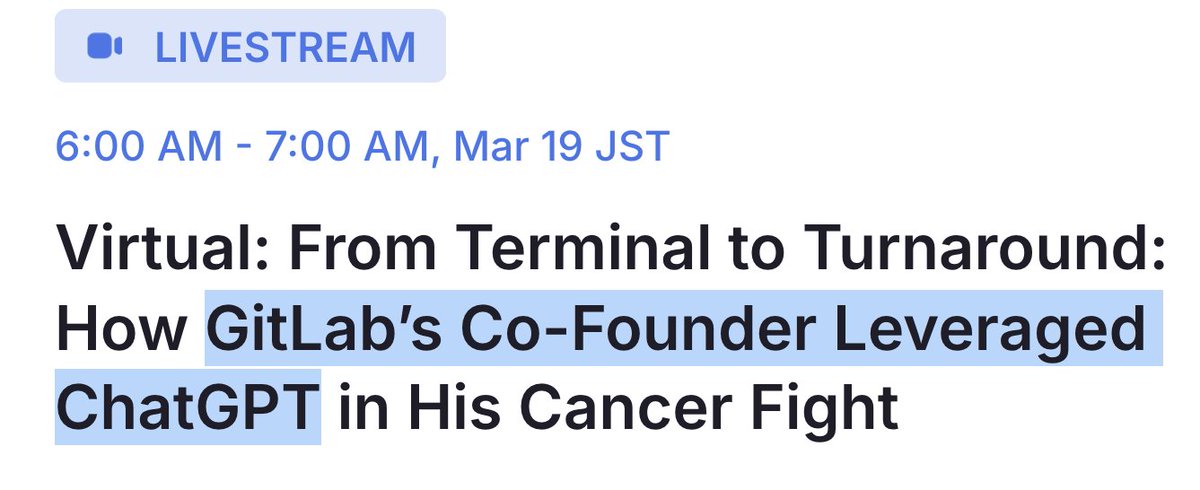
Here's just one example with Gitlab's CEO:
> In 2023, Sijbrandij was diagnosed with osteosarcoma
> In July 2024, he announced the cancer had returned, despite multiple treatments
> By late 2024, he had reached the absolute end of standard of care medical options.
> Rather than accepting death, Sijbrandij decided to treat his cancer the same way he built GitLab as an engineering problem
> He began feeding ChatGPT massive amounts of his personal medical data from scans, blood test results, and tissue sample data.
> ChatGPT and AI made novel targeted treatments after identifying mutations, then how to attack them
> From there, he applied for unapproved, experimental drug and received it
> The approach worked. Sijbrandij managed to stall and turn around a terminal prognosis with AI.
We've seen this success story with Gitlab's CEO ( $TEM was explicitly listed the partner he used for the bulk RNA sequencing of his tumor ).
As well as someone curing their own dog with AI recently.
The potential if you can combine $HIMS (DTC distribution network) and $TEM (Personalized sequencing and AI treatment) into a scalable product is massive (though extremely challenging).
The entire human population is the TAM.
And similar to the $AXTI InP situation with hyperscalers:
People will pay anything to not die (bottleneck). This is just a hint into where the future of healthcare is heading.