As conversations about the future of African agriculture increasingly turn to innovation, digital tools, and artificial intelligence, we must ask a deeper question: innovation for whom, and on whose terms? In this week's episode of the Battle for African Agriculture podcast, I sit down with Jim Thomas to explore the growing shift from input-driven industrial agriculture to data-driven food systems spreading across the world, and also to Africa. Jim gives a historical perspective of Biopiracy, pointing out how what appears as “smart farming” is a digital colonialism revolution, transforming how power operates from controlling seeds and chemicals to controlling data, infrastructure, and decision-making itself.
The discussion also examines how digital agriculture platforms collect vast amounts of information from farms, how advances in synthetic biology allow genetic resources to be digitized and reconstructed without ever leaving a laboratory, and how new technological models risk creating dependencies that mirror earlier eras of extraction. At a time when these technologies are being promoted as solutions to climate change, productivity challenges, and rural development, it is critical to scrutinize their social, ecological, and economic implications, particularly for smallholder farmers across Africa.
If the goal is food sovereignty, then the interventions must go beyond adopting new tools to examining who designs them, who benefits from them, and what alternatives already exist within farmer-led agroecological systems.
Listen to the full episode on:
YouTube: https://t.co/DkFLh5gTo9
Spotify: https://t.co/V1GTLHR4jj
RSS: https://t.co/yMxd6h6CIm
Please subscribe and share within your networks, and leave a comment.
#Agroecology #FoodSovereignity #BattleForAfricanAgriPOD
"In Sudan, as in neighbouring Tigray, the thirst for gold has precipitated disaster and the deaths of hundreds of thousands of civilians."
@DrChTouati
https://t.co/vyFfXa47u2
Wrote this👇 article with situations like Sudan & my home region Tigray in mind. In an age of transactional politics, how should we as #Africans respond to genocides & all kinds of crimes by actors who are financed and supported by old & new colonisers?
https://t.co/iZ2wRLmxU1
Our teams are working in Tawila, Sudan, where they’re seeing people who have managed to escape the atrocities happening in and around El Fasher. The little number of people arriving in Tawila is alarming.
Civilians must be allowed to flee El Fasher.
https://t.co/sklrzg5om6
The people of Sudan feel forgotten amidst the spiraling violence across the country, where parties to the conflict are causing untold death and destruction.
Nowhere is safe. With every minute that passes countless lives are ruined.
People are being killed inside their homes, or while desperately searching for food, water, and medicine. They are caught in crossfire while fleeing and shot deliberately in targeted attacks. Women and girls, some as young as 12, have been raped and subjected to other forms of sexual violence by members of the warring sides.
With every minute that passes countless lives are ruined. We need to act now and demand the United Nations Security Council to extend the existing arms embargo to the whole country and not only to Darfur region and ensure it is fully implemented. This will disrupt the flow of weapons and contribute to reduce civilian suffering.
#HumanityMustWin
What we must all remember from the Gaza genocide is that the international system is rotten to its core and needs to be completely replaced.
We cannot accept a system where Western governments and leaders can commit genocide and war crimes with total impunity.
We cannot accept a system where the USA can veto UN measures to stop genocide, measures that are supported by the vast majority of other states.
We cannot accept a racialised two-tier system where human rights are only enforced for some peoples and not for others. We cannot accept apartheid in the international system.
All of this has to be torn down and we must build a new system in its place. A system built on true universalism. The Western ruling classes will never deliver such a world. On the contrary, they fight against it.
This is the task of our generation and we cannot rest until it is achieved.
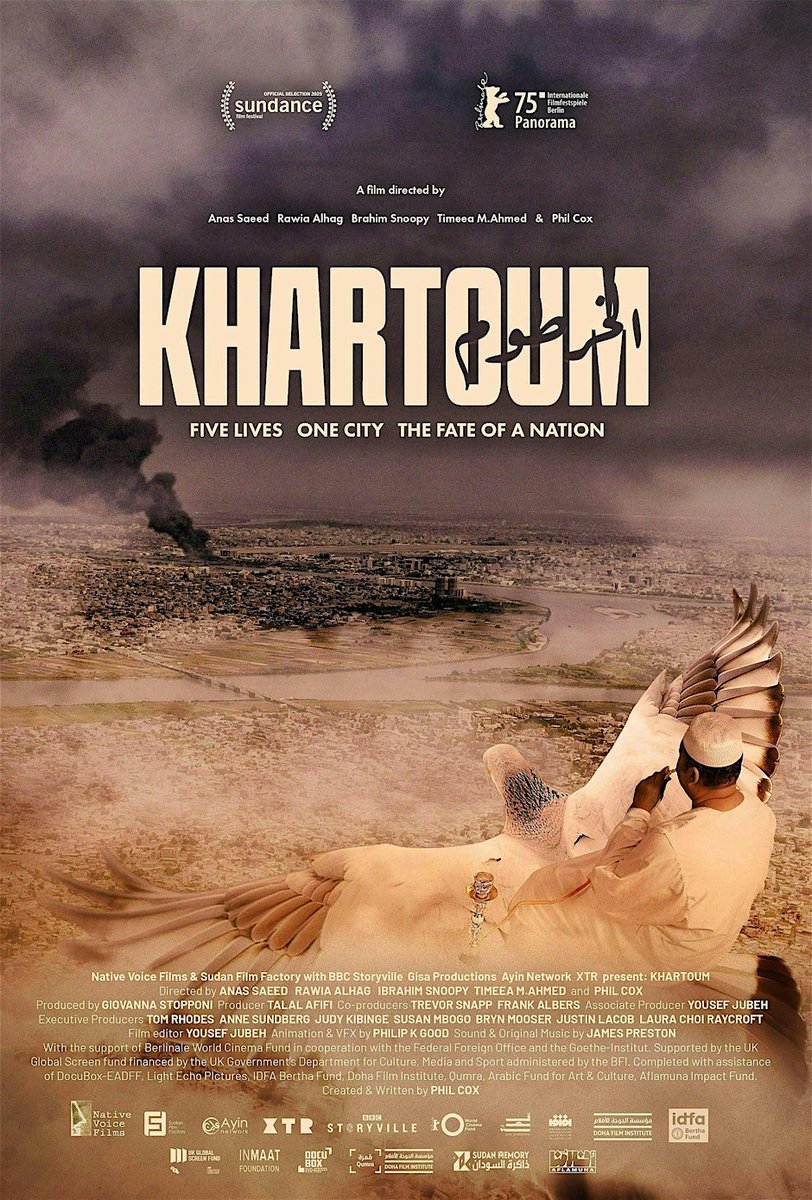
For those in/near Oxford:
ODID presents.... "Khartoum" - an Oxford premiere & Directors Q&A
Film Premiere, St John's College auditorium, Monday 13th October, 5-7:30pm
TICKETS ARE FREE BUT PLACES LIMITED! PLEASE BOOK HERE: https://t.co/WGwomodKQW
El Fasher state in #Sudan has been besieged for over 500 days.
There are 260,000 people in urgent need of health assistance; 5000 suspected #cholera cases including almost 100 deaths; 130,000 children suffering from malnutrition—without enough food to eat; and many sexual violence survivors without any health care or mental health support.
35 health facilities are destroyed. @WHO's supplies have been used up.
We have additional supplies prepositioned in Nyala, ready to move into El Fasher any moment. We call for access to be granted. Lives depend on it!
To the people of Gaza:
I love you.
I have learnt to know you through your torment every day, and I am ashamed to show your face in the misery and horror we let you endure, while we enjoy our disgraceful life.
May you forgive us.
The #Gaza famine, a man-made catastrophe, has unfolded in front of the world’s eyes.
We saw it coming.
We warned about it.
We were not allowed to stop it.
Now, as we count the lives lost to this intentional starvation, there is only one question to ask world leaders: Where is humanity?
End the blockade of aid — TODAY.
CEASEFIRE!
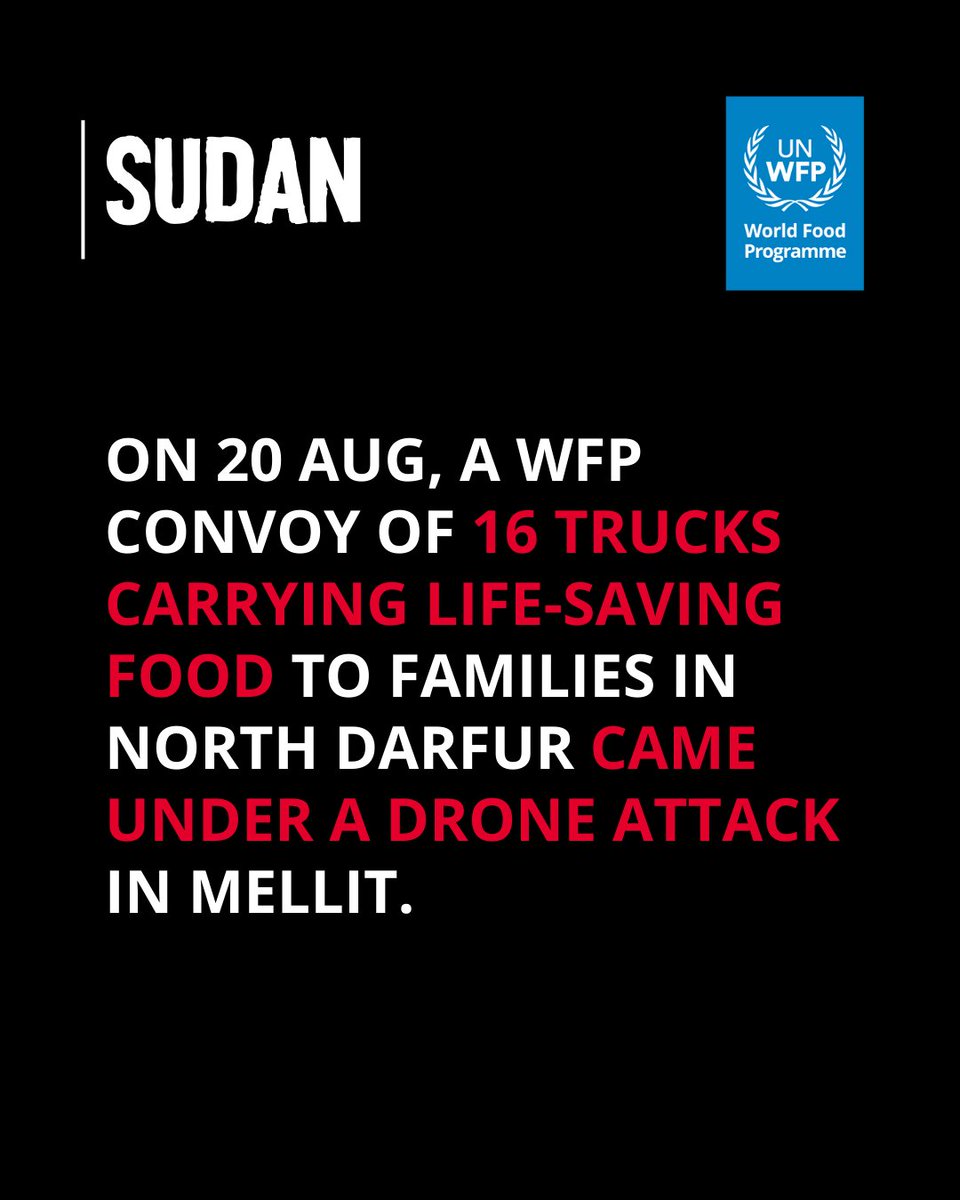
Three trucks were destroyed. All drivers are safe.
This is unacceptable. Humanitarian staff & assets must never be a target. Unimpeded access to reach the most vulnerable families in Darfur and all famine-stricken areas is critical.
🌳 New Research - Perceived biodiversity: Is what we measure also what we see and hear?
"Can you see and hear biodiversity? Turns out, you can! We show that people’s perception of forest biodiversity aligns with how biologists measure it and..."
➡️ https://t.co/rPT5ZJKqjI
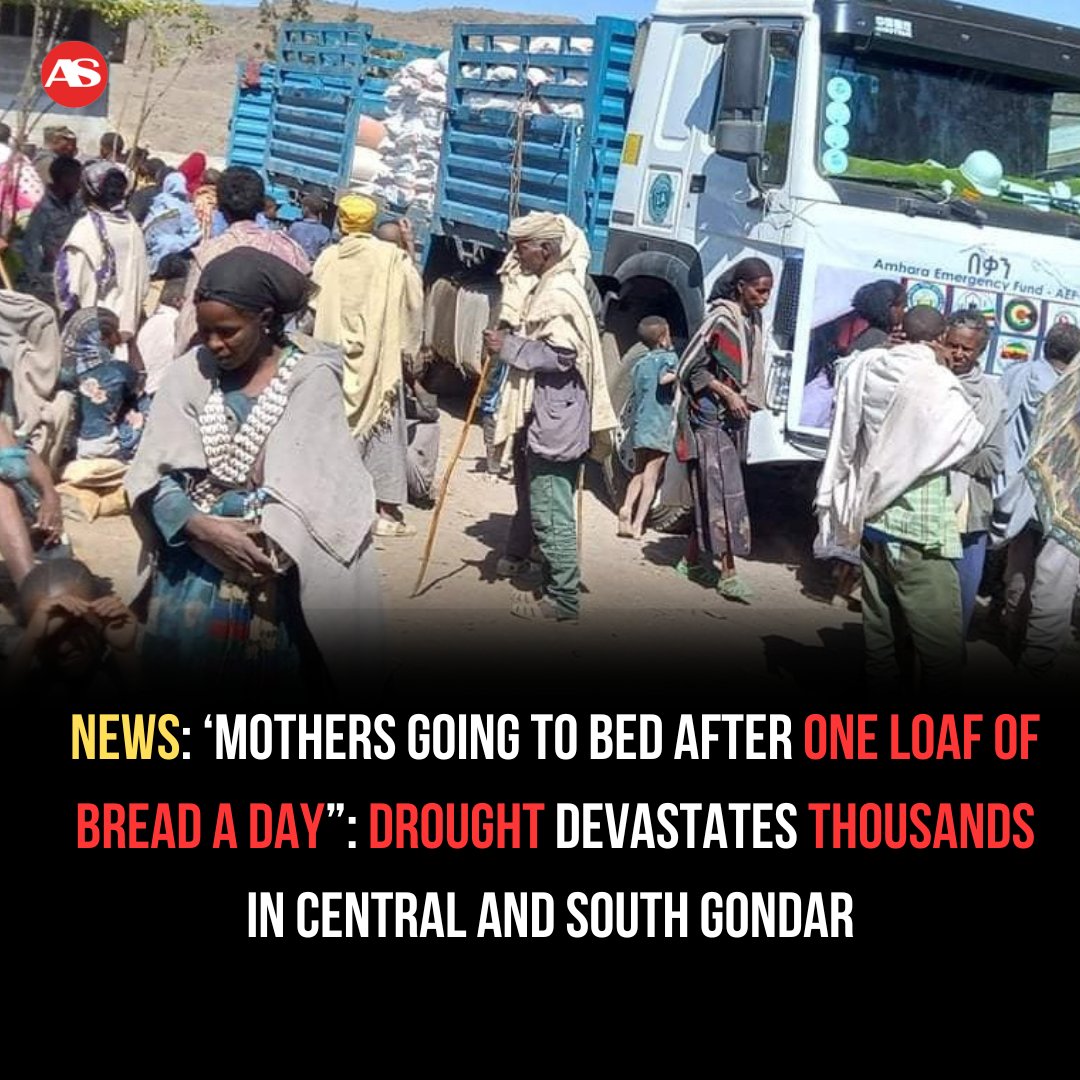
News: ‘Mothers going to bed after one loaf of bread a day”: #Drought devastates thousands in Central and South #Gondar
Severe drought conditions in #Ethiopia’s #Amhara regional state are affecting tens of thousands in both Central and South Gondar zones, leading to widespread food insecurity, livestock deaths, and internal migration.
In Central Gondar Zone’s West Belesa district, more than 32,000 people in six kebeles—Sami, Lava Mariam, Asawgari, Jandab, Laye, and Sera—are facing acute food shortages due to a prolonged lack of rainfall, according to Wasihun Kefyalew, head of the Central Gondar zone agriculture office. “3,000 hectares of crops have been damaged” and “over 1,200 animals” have perished since May 2025, he told Addis Standard.
In the neighboring South Gondar Zone, the Disaster Prevention and Food Security Office reported that over 175,000 people across 57 kebeles in seven districts are experiencing similar drought conditions. Abebaw Ayenew, a communications expert at the office, told Deutsche Welle that the government has distributed 12,419 quintals of food grains to affected areas including Ebinat, Samada, Sede Muja, and Meket.
However, residents say the aid is insufficient. A witness from Lay Gaint district told Deutsche Welle that locals “have nothing to eat,” and many are resorting to migration. Mitraba, Daba Wotokos, Lay Negala, and Tach Negala kebeles were named among the hardest-hit.
https://t.co/rb7KZEHrmh
The First Pan-African Chefs Gathering and Policy Convening on African Food Systems has officially commenced today in Addis Ababa, Ethiopia, marking a historic milestone in the continental movement for food sovereignty.
Organized by the Alliance for Food Sovereignty in Africa (AFSA) under the banner of the “My Food Is African” campaign, the three-day convening brings together over 140 participants, including chefs from more than 20 African countries, civil society leaders, farmers, academics, think tanks, and policymakers. The gathering aims to spotlight indigenous African cuisines as vital tools for cultural revival, ecological sustainability, and public health transformation.
#AfricanChefsGathering #Chefs4Agroecology #MyFoodIsAfrican
On 16 June, we sent an open letter with a very clear message to EU leaders: The EU can and must act now to stop mass atrocities in Gaza. Yet, amid EU member states' inaction, orchestrated ethnic cleansing in Gaza continues.
@EUCouncil@vonderleyen@eucopresident@EP_President@kajakallas
Over 60,000 Palestinians have been killed, including 12 of our colleagues, the last of whom was shot while trying to collect a bag of flour on 3 July. The human carnage and starvation of Palestinians in Gaza are deliberate. Humanitarian aid is weaponised and blocked. Healthcare services are targeted daily.
On 15 July, the Foreign Affairs Council showed yet another sign of the unwillingness to exert pressure on Israel to stop the genocide in Gaza. Once again, the EU demonstrated hypocrisy and shocking double standards when it comes to protecting civilians and ensuring the respect of international humanitarian law.
After another missed opportunity to end EU complicity with Israel, we reiterate our call on the EU to turn its words into actions and to end its double standards. Every state has a moral and legal responsibility to recognise and stop the ongoing atrocities in Gaza.
The EU’s refusal to suspend its agreement with Israel is a cruel and unlawful betrayal – of the European project and vision, predicated on upholding international law and fighting authoritarian practices, of the European Union’s own rules and of the human rights of Palestinians.
We’re sharing the results of a retrospective mortality survey we conducted among our colleagues and their families in Gaza. What we found:
🔴 Almost half of the people that the survey covered, who have died since 7 October 2023, are children.
https://t.co/YXioM1U7iH